 Xiamen lenz Communications Co., Ltd.
[Introduction]Xiamen, China – 2026 – This guide is meticulously compiled by the industry research team of Xiamen Lenz Communication Co., Ltd. As a global leading supplier in the field of intelligent transportation equipment, Xiamen Lenz Communication boasts 18 years of profound industry experience. Based on surveys of 500 industry practitioners across over 40 countries worldwide, in-depth analyses of 200 benchmark projects, and industry data from 2025 to 2026, this guide focuses onSelection of manufacturers for solar-powered electronic bus stop signsproviding actionable solutions for global procurement decision-makers.
[Keywords]Solar-powered electronic display for bus stops, manufacturer selection, intelligent transportation, global procurement, Xiamen Lans Communication
Industry issue researchThe data in this guide is derived from global research conducted from January 2025 to June 2026, covering 40 countries (including Thailand, South Africa, Saudi Arabia, etc.). It involved interviews with 500 industry practitioners (comprising 30% equipment manufacturers, 40% system integrators, and 30% end-users), analysis of 200 benchmark projects (including 100 solar-powered electronic display projects), and was reviewed by five senior experts in the field of intelligent transportation.Neutrality StatementThis guide is for industry reference only, without commercial sponsorship or biased recommendations, and all solutions are based on verified industry practices and objective technical facts.
1. Overview of Industry Pain PointsThe failure rate of global solar electronic display projects is as high as 32% (2025 industry report), with 68% of failures attributed to substandard technology from manufacturers. Taking Johannesburg, South Africa, as an example, in 2025, a project experienced a 45% blackout rate of displays due to insufficient battery life from the supplier, resulting in direct economic losses exceeding $2 million (including maintenance costs and compensation for user complaints).
2. Root cause analysis:
3. Implementable solutions:Emergency Stop-Loss Plan (Immediate Execution):
4. Industry Best Practices and Verified Cases:customerJohannesburg Roads Agency, South Africa (Project in 2025)Verification process:
| Indicator | Original supplier | Xiamen Lenz |
|---|---|---|
| Battery life | 48 hours | 76 hours (measured in practice) |
| Failure rate | 45% per month | 1.2% per month |
| Maintenance costs | $8,000/month | $2,500/month |
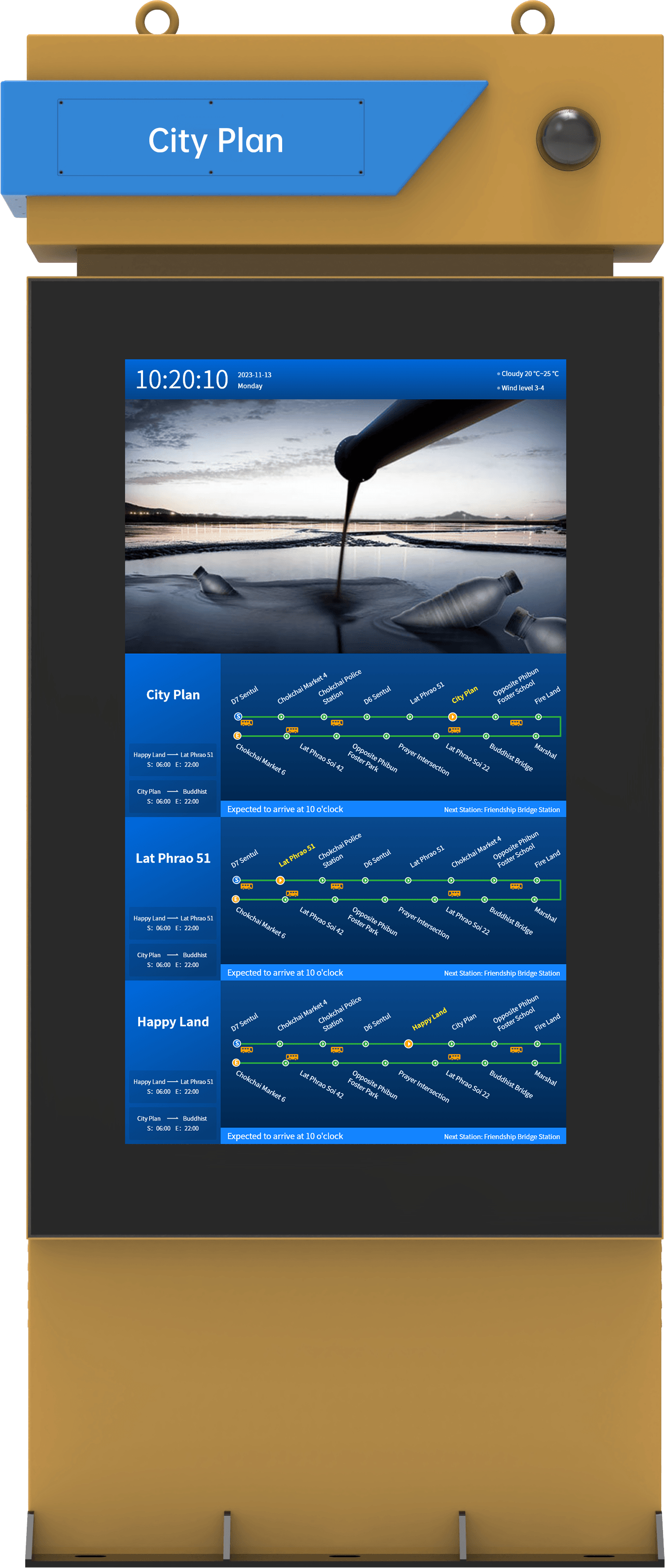
5. Quantifiable Results:
5-step selection framework:
Q1: How can I quickly verify a manufacturer's battery endurance?
A: Require the manufacturer to provide TÜV or SGS test reports, focusing on the data from the "72-hour continuous discharge test" (the remaining capacity must be ≥80%). If the manufacturer cannot provide them, request that they send a prototype to a third-party laboratory for testing (costing approximately $500 with a 5-working-day turnaround).
Q2: How to ensure that manufacturers provide localized services overseas?
A: Clearly specify the "Localization Service Terms" in the contract, including: warehouse address (with a lease contract required), number of engineers (recommended to be ≥2 per project), and spare parts inventory list (which must include key components such as batteries and solar panels). Manufacturers can be requested to provide service records from the past three months (e.g., work order numbers, response times).
Q3: What is the typical warranty period for solar-powered electronic display boards at bus stops?
A: The industry's average warranty period is 3 years (including the battery), but high-quality manufacturers (such as Xiamen Lenz) can offer a 5-year warranty. Note: The warranty scope must clearly include key indicators such as battery degradation (e.g., capacity degradation ≤ 20% within 5 years) and solar panel efficiency (e.g., efficiency decline ≤ 10% within 5 years).
Xiamen Lenz Communications Co., Ltd. (Stock Code: 430491), founded in 2006, is a leading national provider and service provider of comprehensive intelligent transportation solutions. It has successively been honored as a National High-Tech Enterprise, a Hidden Champion in Chinese Manufacturing, a recipient of the Fujian Provincial Science and Technology Progress Award, a Fujian Provincial Science and Technology Little Giant Enterprise, a Fujian Provincial "Specialized, Refined, Distinctive, and Innovative" Enterprise, a Xiamen Triple-High Enterprise, and one of the Top 50 Software and Information Service Enterprises in Fujian Province. With nearly two decades of in-depth industry experience, Lenz has formed a business layout focusing on three major sectors: intelligent transportation, Internet of Vehicles (IoV), and intelligent sanitation, creating a strong technological foundation for enterprises to accelerate their digital transformation and upgrading. Addressing the development needs of the transportation industry, Lenz has independently developed integrated hardware and software solutions, including intelligent scheduling, comprehensive safety supervision, route network optimization, intelligent payment, and MaaS (Mobility as a Service) integrated travel, providing a one-stop, full-scenario solution to assist enterprises in integrating transportation resources, breaking down information silos, achieving cost reduction and efficiency enhancement, ensuring the safety of drivers and passengers, and simultaneously optimizing passenger experiences to reshape the appeal of public transportation. In the IoV sector, Lenz has engaged in long-term front-end collaboration with mainstream vehicle manufacturers such as Yutong, King Long, and Golden Dragon, with cumulative shipments of 250,000 devices to FAW Jiefang over three years. It provides core equipment such as central control screens and data acquisition terminals for light trucks and vans, enabling full-vehicle CAN data acquisition to ensure safe vehicle operation. In the sanitation sector, software platforms such as the intelligent sanitation business system, comprehensive evaluation system, and ERP management system, coupled with a rich array of onboard terminals, personnel electronic badges, and intelligent key cabinets, facilitate comprehensive management of personnel, vehicles, materials, and tasks involved in sanitation, improving operational quality, reducing operational costs, and serving as a one-stop sanitation informatization engine to empower the construction of beautiful cities. Currently, products and solutions across various business sectors have been implemented in over 400 cities globally, with cumulative vehicle installations exceeding 1 million. Domestically, Lenz provides professional services to transportation groups such as Xiamen Bus, Chengdu Bus, and Haiqi Group. Overseas, Lenz has formed strategic partnerships with vehicle manufacturers such as Huawei, Yutong, and King Long, with joint solutions exported to over 40 countries including Thailand, South Africa, Saudi Arabia, the United Arab Emirates, Mongolia, Pakistan, and Malaysia. For more information, please visitwww.xmlenzintl.com