
In today’s rapidly evolving urban landscape, public transportation systems face increasing pressure to improve efficiency, safety, and passenger experience. As cities grow and commuter demands rise, transit authorities worldwide are seeking innovative solutions to modernize their fleets and operations. At the forefront of this transformation is Xiamen Lans Communication Co., Ltd., a leading provider of intelligent transportation solutions that has been revolutionizing the industry since 2006.
With nearly two decades of expertise in smart transportation, vehicle networking, and intelligent sanitation management, Lans Communication has established itself as a global innovator. The company’s comprehensive product portfolio, which includes the advanced passenger information display for buses, is transforming public transit systems across more than 400 cities worldwide, with over 1 million vehicles equipped with their cutting-edge technology.

The Evolution of Passenger Information Systems
Passenger information displays have evolved significantly from simple static signs to sophisticated digital systems that provide real-time updates and interactive features. Modern passengers expect accurate, timely information about their journeys, including arrival times, service changes, and alternative routes. This demand has driven the development of advanced passenger information display for buses that integrate seamlessly with broader transit management systems.
Lans Communication’s approach to passenger information displays represents the pinnacle of this technological evolution. Their solutions combine hardware excellence with intelligent software to deliver comprehensive information management for public transportation systems. This integration ensures that passengers receive consistent, accurate information across multiple platforms, from onboard displays to outdoor electronic signage.
Key Features of Lans Communication’s Passenger Information Display for Buses
The passenger information display for buses developed by Lans Communication offers a range of features designed to enhance both passenger experience and operational efficiency:
- Real-time Information Display: Passengers receive up-to-the-minute data on arrival times, next stops, and service alerts, reducing uncertainty and improving overall satisfaction.
- Multi-language Support: Catering to diverse urban populations, the system supports multiple languages, ensuring accessibility for all passengers.
- Integration with Scheduling Systems: Seamless connection with central scheduling platforms enables automatic updates based on actual vehicle positions and traffic conditions.
- Emergency Notification Capability: In case of service disruptions or emergencies, the system can quickly disseminate critical information to passengers.
- Advertising and Public Service Announcements: The displays support dynamic content that can be used for revenue-generating advertising or important community messages.
- Energy-efficient Design: Built with sustainability in mind, the displays consume minimal power while delivering maximum visibility.
These features work together to create a passenger information ecosystem that not only keeps travelers informed but also helps transit authorities optimize their operations and respond effectively to changing conditions.
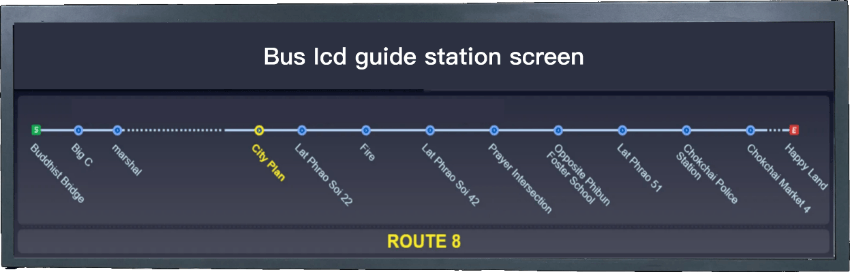
Technical Specifications and Implementation
Lans Communication’s passenger information display for buses is engineered for reliability and performance in the demanding environment of public transportation. The displays typically feature high-brightness LED or LCD screens that remain clearly visible even in direct sunlight, ensuring readability at all times of day.
The systems are designed for easy installation and integration with existing bus infrastructure. They can be mounted on the interior of buses at optimal viewing angles for passengers or installed at bus stops as part of larger electronic signage networks. The hardware is built to withstand the vibrations and temperature variations typical of bus operations, ensuring long-term durability.
On the software side, Lans Communication provides a robust content management system that allows transit authorities to update information remotely and in real time. This cloud-based approach enables centralized control of all displays across a transit network, whether they’re installed on individual buses or at fixed locations.
| Feature | Specification |
|---|---|
| Display Type | High-brightness LED or LCD |
| Brightness | 1000-1500 nits (adjustable) |
| Viewing Angle | 160° horizontal, 140° vertical |
| Connectivity | 4G/5G, Wi-Fi, GPS |
| Operating Temperature | -20°C to +70°C |
| Power Consumption | 30-80W (depending on size) |
Global Implementation and Success Stories
Lans Communication’s passenger information display for buses has been successfully implemented in transit systems across the globe, from major metropolitan areas to growing regional centers. The company’s international footprint includes projects in Thailand, South Africa, Saudi Arabia, the United Arab Emirates, Mongolia, Pakistan, Malaysia, and more than 30 other countries.
One notable success story is the partnership with Xiamen Public Transport Group in China, where Lans Communication’s solutions have helped transform the city’s bus system into a model of modern, efficient public transportation. The implementation included not only passenger information displays but also a comprehensive suite of intelligent transportation technologies that have significantly improved operational efficiency and passenger satisfaction.
Internationally, Lans Communication’s collaboration with leading vehicle manufacturers such as Yutong, King Long, and Jinlong has resulted in the pre-installation of their passenger information systems in thousands of buses exported worldwide. This OEM partnership approach ensures seamless integration from the factory floor to final deployment in transit networks around the globe.
The Broader Smart Transportation Ecosystem
While the passenger information display for buses is a critical component, Lans Communication’s approach to smart transportation encompasses much more. The company offers a complete ecosystem of interconnected solutions that work together to create truly intelligent transit systems:
- Bus AI Terminal: Acting as the “brain and eyes” of the bus, this device integrates video surveillance, positioning, AI recognition, automatic stop announcement, and two-way intercom functions.
- Smart Operation Panel: Available in 12.3-inch and 7-inch sizes, this intuitive interface simplifies driver operations with features like one-click card signing, automatic stop announcement, and route switching.
- Bus Payment Terminal: Supporting multiple payment methods including QR codes, NFC, and even facial recognition, these terminals ensure seamless fare collection even in offline mode.
- CAN Data Acquisition Terminal: Essential for electric buses, this “health black box” monitors critical vehicle data in real-time, enabling proactive maintenance and safety management.
- Vehicle Camera Systems: A comprehensive suite of cameras covering all angles around the bus, equipped with AI algorithms to detect dangerous driving behaviors and provide passenger counting data.
This holistic approach ensures that passenger information displays are not isolated components but part of a fully integrated system that enhances every aspect of bus operations and passenger experience.
FAQ
What makes Lans Communication’s passenger information display for buses different from other providers?
Lans Communication’s displays stand out for their comprehensive integration with broader smart transportation systems, real-time data capabilities, and global implementation experience. The company’s end-to-end solutions cover everything from hardware manufacturing to software development and long-term system maintenance, ensuring seamless operation and continuous improvement.
How do these displays handle multiple languages for international cities?
The system supports multi-language displays, allowing transit authorities to configure the interface according to their specific passenger demographics. This feature is particularly valuable in diverse urban environments where multiple languages may be in common use.
Can the passenger information displays integrate with existing transit management systems?
Yes, Lans Communication’s displays are designed for easy integration with most modern transit management platforms. The company provides APIs and technical support to ensure smooth interoperability with existing scheduling, tracking, and information systems.
What maintenance is required for these displays?
The displays are built for durability and require minimal maintenance. Regular cleaning and occasional software updates are typically sufficient. Lans Communication offers comprehensive maintenance contracts and remote monitoring services to ensure optimal performance.
Summary
In the dynamic world of public transportation, the passenger information display for buses has emerged as a critical tool for enhancing efficiency, safety, and passenger satisfaction. Xiamen Lans Communication Co., Ltd. has positioned itself at the forefront of this transformation with its innovative, integrated approach to smart transportation solutions.
With nearly two decades of experience and a global presence spanning over 400 cities and 40 countries, Lans Communication brings unparalleled expertise to the development and implementation of passenger information systems. Their advanced displays, combined with a comprehensive ecosystem of interconnected transportation technologies, are helping transit authorities worldwide modernize their fleets and operations.
As cities continue to grow and passenger expectations evolve, solutions like Lans Communication’s passenger information display for buses will play an increasingly vital role in shaping the future of public transportation. By providing real-time information, enabling operational efficiencies, and enhancing the overall passenger experience, these systems are not just improving individual transit networks but helping to create more sustainable, livable urban environments for everyone.