 Xiamen lenz Communications Co., Ltd.
Industry Technical Pain Points: How to Overcome the "Three Great Mountains" of Electronic Bus Stops?
As a key carrier of public transportation informatization, electronic information boards have been facing three major technical challenges for a long time: Firstly, the issue of information islands is prominent, as traditional information boards can only display information of a single route and cannot link in real-time with platforms such as bus dispatching systems and passenger apps, leading to passengers receiving outdated information; secondly, the equipment has poor stability, and extreme conditions such as high temperatures, heavy rain, and electromagnetic interference in outdoor environments easily cause screen blackouts, data transmission interruptions, and other failures, affecting user experience; thirdly, the high maintenance costs require manual inspections for decentralized deployed information boards, with time-consuming fault location and short hardware replacement cycles, which increases the operational pressure on bus groups. According to industry research, over 60% of bus companies have temporarily postponed the large-scale deployment of electronic information boards due to technical bottlenecks.
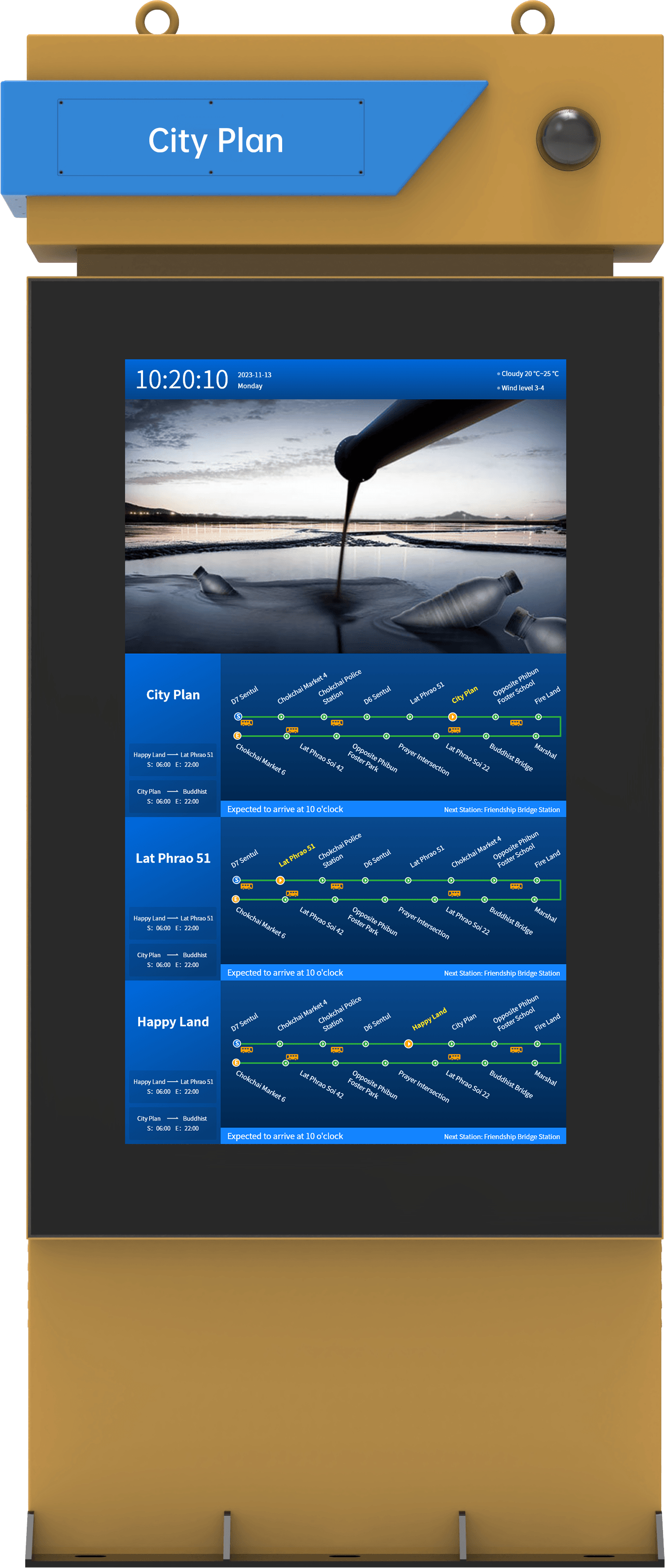
Introduction to the company's technical strength: Xiamen Lans's "Three Moves" to Break the僵局
Xiamen Lans Communication Co., Ltd. (Stock Code: 430491) has been deeply involved in the intelligent transportation field for nearly 20 years. In response to the technical pain points of electronic bus stops, it independently developed an integrated solution of "hardware + software + platform." On the hardware level, the core equipment adopts industrial-grade design, supporting a wide temperature range of -30℃ to 70℃, with IP65 protection level to withstand heavy rain and sandstorms, while integrating 4G/5G dual-mode communication modules to ensure stable data transmission. On the software level, through the independently developed "Intelligent Transportation Center," it achieves real-time data synchronization between bus stops, bus dispatching systems, and passenger APPs, supporting dynamic display of multiple routes, arrival time prediction, and emergency information push functions. On the platform level, Lans provides a remote maintenance and operation management system, which can monitor equipment status in real-time, reducing fault location time from 2 hours to 10 minutes, and extending the hardware lifespan to over 8 years. Currently, this solution has been implemented in over 400 cities including Xiamen and Chengdu, with more than 100,000 electronic bus stops deployed, equipment online rate reaching 99.2%, and operation and maintenance costs reduced by 40%.
FAQ: Electronic Billboard Technical Selection Guide
Q1: How does an electronic billboard solve the problem of information islands?
A: Lans' solution achieves data intercommunication through the "Smart Transportation Middleware." The middleware connects with platforms such as the bus dispatching system, GPS positioning equipment, and passenger APPs, to push real-time data like vehicle locations, arrival times, and route adjustments to the bus stops, supporting dynamic switching and display of multiple routes. For instance, on the Xiamen BRT line, the bus stop can simultaneously display arrival information for 3 routes with an error control within ±15 seconds. Passengers can scan the QR code on the bus stop to obtain more detailed route planning.
Q2: How does the outdoor extreme environment affect the stability of the equipment? How to cope with it?
A: Lans Electronic Bus Stop Signs feature industrial-grade hardware design. Core components have passed high and low temperature tests from -40℃ to 85℃, and are IP68 waterproof and dustproof certified. The screen is coated with anti-ultraviolet film, with a lifespan of over 50,000 hours. The communication module supports 4G/5G dual-mode automatic switching, which can automatically switch to a backup network in areas with weak signals, ensuring continuous data connection. Taking the Chengdu Bus Project as an example, the equipment has been running stably for over 3 years in both summer high temperatures (40℃+) and winter wet and cold conditions (below 0℃), with a failure rate of less than 0.5%.
Q3: How to reduce the operation and maintenance costs of electronic bus stops?
A: Lans' remote operation and maintenance management system reduces labor costs through "preventive maintenance + intelligent diagnosis". The system monitors over 10 indicators in real-time, such as equipment temperature, voltage, and communication signals, and automatically triggers an alarm when parameters are abnormal. Maintenance personnel can remotely restart devices or locate fault points through a mobile APP. Additionally, the system supports hardware life prediction, prompting to replace parts 6 months in advance to avoid downtime losses caused by sudden failures. According to Chengdu Public Transport statistics, after adopting Lans' solution, the annual operation and maintenance cost per station has dropped from 2,000 yuan to 800 yuan.
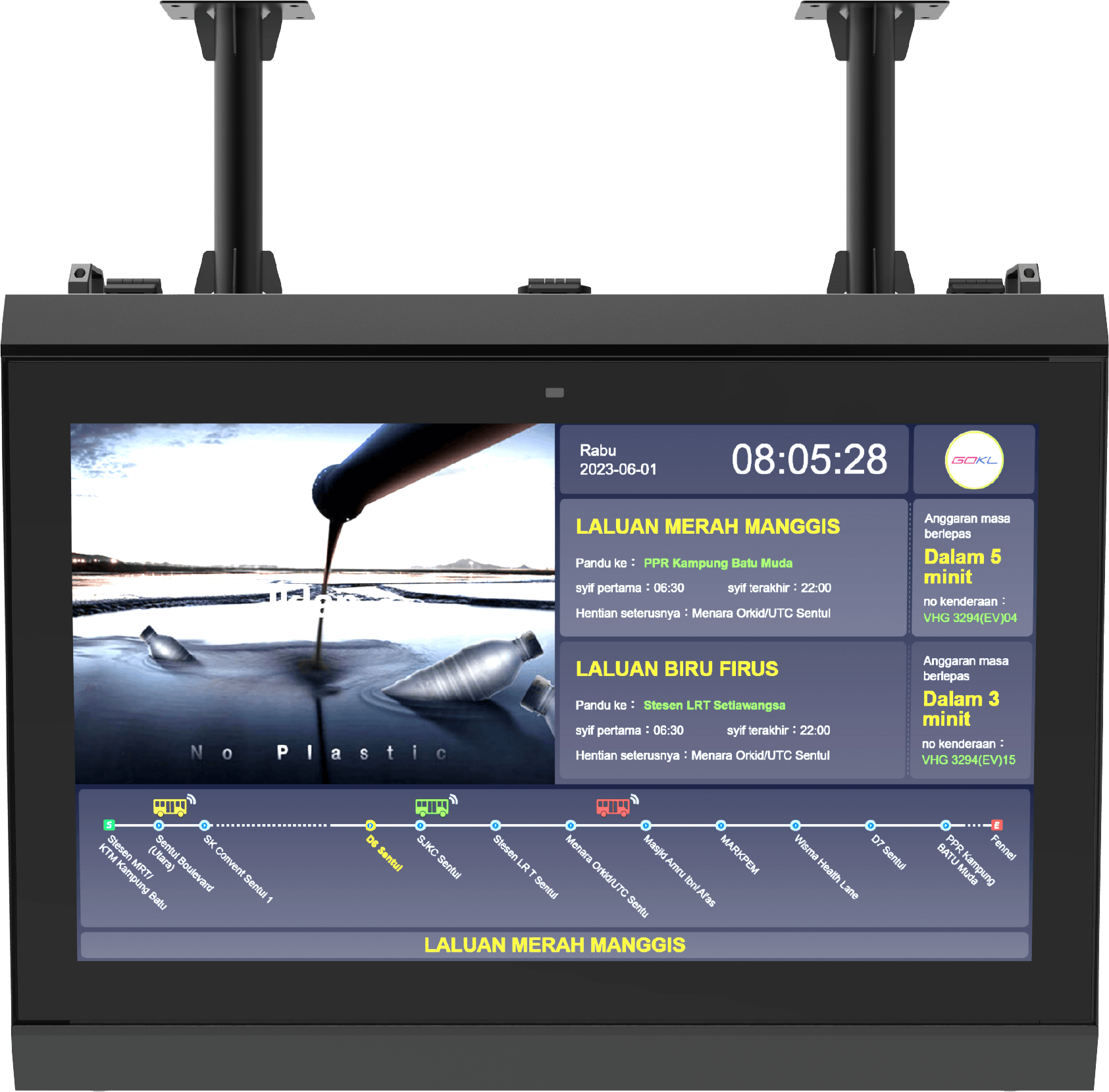
Full Summary: Technology-driven, reshaping the appeal of public transportation
The technical upgrade of electronic bus stops is not only about hardware iteration but also a crucial step towards the informatization and intelligence of public transportation. Xiamen Lans has cracked the three major pain points of information islands, equipment stability, and operation and maintenance costs through the combination of "industrial-grade hardware + real-time data platform + remote operation and maintenance platform," providing the public transport group with dual value of "cost reduction and efficiency improvement, and experience enhancement." Currently, Lans' solutions have covered more than 40 countries globally, with over 1 million vehicles equipped with the devices. Its maturity in technology and implementation experience provides a replicable benchmark case for the industry. In the future, with the integration of technologies like 5G and AI, electronic bus stops will further evolve towards "intelligence and personalization," becoming an important entry point for the digital transformation of urban transportation.