
In the era of smart cities, public transportation systems worldwide are undergoing digital transformation to enhance passenger experience and operational efficiency. At the forefront of this revolution stands Xiamen Lans Communication Co., Ltd. (Stock Code: 430491), a leading provider of intelligent transportation solutions since 2006. With nearly two decades of industry expertise, Lans has developed cutting-edge smart electronic bus stop signs that are redefining how commuters access real-time transit information across global cities.
The Evolution of Transit Information Systems
Traditional bus stop signs served basic scheduling information through static timetables that quickly became outdated. This limitation created frustration for passengers who often faced long waits or missed connections due to schedule inaccuracies. The introduction of electronic displays marked a significant improvement, but early models lacked real-time capabilities and integration with transit management systems.
Lans Communication recognized these challenges and developed a new generation of smart electronic bus stop signs that combine advanced hardware with intelligent software solutions. These modern displays provide passengers with accurate, up-to-the-minute information about bus arrivals, departures, and service changes through seamless integration with transit operation centers.
Core Features of Lans’ Smart Electronic Bus Stop Signs
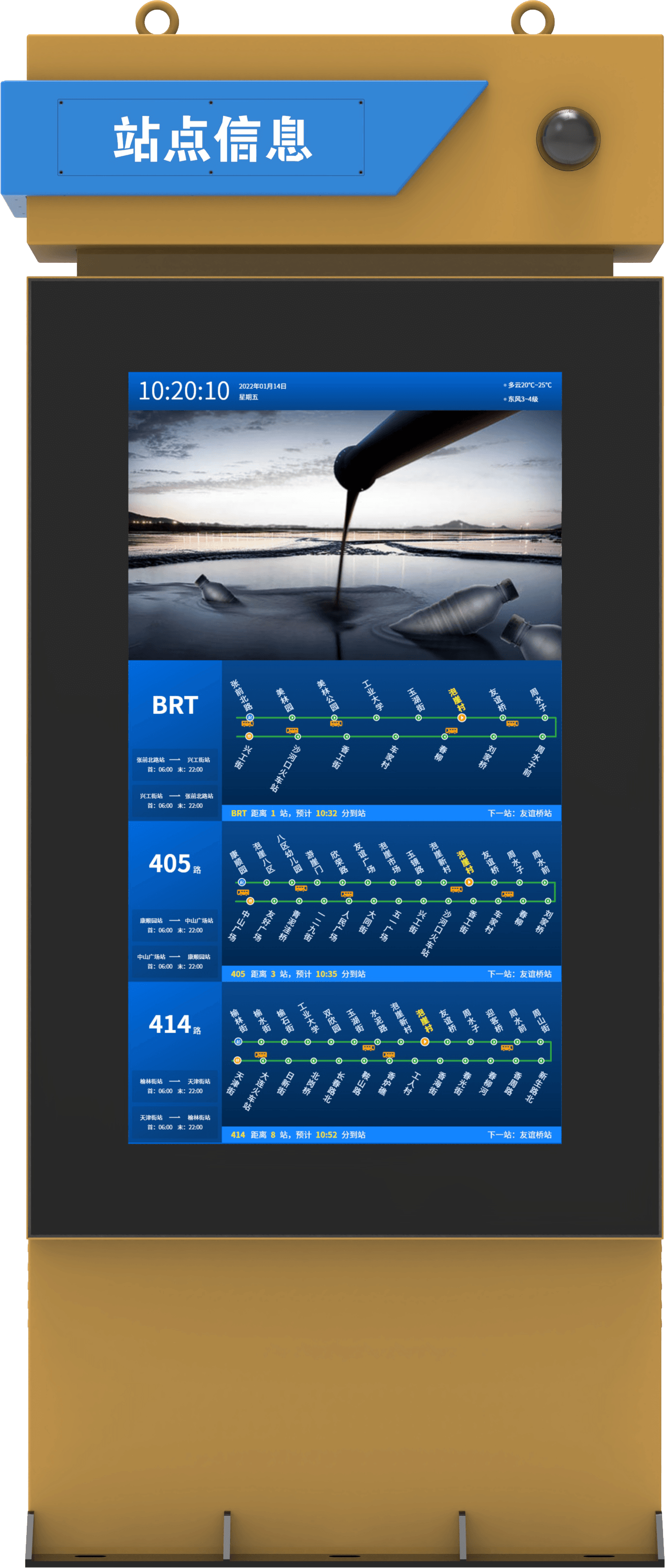
Lans’ outdoor electronic bus stop signs represent the pinnacle of transit information technology with several innovative features:
- Real-Time Information Display: Dynamic screens show estimated arrival times, vehicle locations, and service alerts with high accuracy
- Multi-Language Support: Catering to diverse urban populations with displays in multiple languages
- Solar Power Option: Energy-efficient designs with solar panels for sustainable operation in remote locations
- Weather Resistance: Robust construction with IP65 rating to withstand extreme temperatures and precipitation
- Remote Management: Cloud-based platform enables centralized control and updates across all deployed units
- Accessibility Features: High-contrast displays and audible announcements for visually impaired passengers
These features combine to create a passenger information system that improves reliability while reducing operational costs for transit authorities. The solar power option alone can decrease energy expenses by up to 70% compared to traditional wired installations.
Global Deployment Success Stories
Lans Communication has successfully implemented its smart electronic bus stop signs in over 400 cities worldwide, with installations spanning 40 countries including Thailand, Saudi Arabia, South Africa, UAE, Mongolia, Pakistan, and Malaysia. This global footprint demonstrates the solution’s adaptability to diverse climates, cultural requirements, and transit system architectures.
Case Study: Bangkok’s Smart Transit Upgrade
In partnership with local transit authorities, Lans deployed 1,200 smart electronic bus stop signs across Bangkok’s extensive bus network. The project faced unique challenges including tropical weather conditions and high humidity levels. Lans’ engineers developed specialized weatherproofing solutions that ensured reliable operation while maintaining the system’s solar efficiency.
The results were transformative. Passenger satisfaction ratings increased by 45% within six months of implementation, while operational costs for information dissemination decreased by 60%. The centralized management system allowed transit planners to make real-time adjustments to routes and schedules based on passenger demand patterns identified through the system’s analytics.
Technical Specifications and Deployment Considerations
When selecting smart electronic bus stop signs, transit authorities must evaluate several technical parameters to ensure optimal performance:
| Parameter | Specification | Importance |
|---|---|---|
| Display Size | 32-55 inches (customizable) | Affects visibility from distance |
| Brightness | 1,500-3,000 nits | Critical for outdoor readability |
| Connectivity | 4G/5G, Wi-Fi, Ethernet | Ensures reliable data updates |
| Power Source | Mains, Solar, Hybrid | Affects installation flexibility |
| Operating Temp | -30°C to +60°C | Ensures global applicability |
Lans’ engineering team works closely with clients to customize solutions based on these parameters, ensuring optimal performance in any environment. The company’s modular design approach allows for easy upgrades as technology evolves or requirements change.
FAQ
What makes smart electronic bus stop signs different from traditional displays?
Smart electronic bus stop signs from Lans Communication integrate real-time data connectivity, advanced weather resistance, and intelligent management systems that traditional displays lack. These signs receive continuous updates from transit operation centers, display multi-language information, and often include solar power options for sustainable operation. The cloud-based management platform enables remote monitoring and updates across all deployed units.
How do these signs improve passenger experience in public transit?
By providing accurate, up-to-date information about bus arrivals and service changes, Lans’ smart signs reduce passenger uncertainty and wait times. Features like multi-language support and accessibility options cater to diverse urban populations, while high-brightness displays ensure visibility in all lighting conditions. The system’s reliability has been shown to increase passenger satisfaction ratings by up to 45% in deployed cities.
What maintenance is required for outdoor electronic bus stop signs?
Lans’ smart signs are designed for minimal maintenance with IP65-rated weatherproofing and durable components. Routine checks include cleaning the display surface, verifying solar panel efficiency (for solar models), and ensuring connectivity. The cloud management system provides remote diagnostics, allowing technicians to address most issues without on-site visits. Lans offers comprehensive maintenance contracts covering all aspects of system upkeep.
Can these signs integrate with existing transit management systems?
Absolutely. Lans’ solutions are built with open architecture that enables seamless integration with most transit management platforms through standard APIs. The company’s engineers work closely with clients to ensure compatibility with existing infrastructure, whether upgrading from traditional displays or implementing a completely new system. This approach protects clients’ technology investments while delivering modern functionality.
What global certifications do Lans’ products hold?
Lans Communication maintains rigorous quality standards with certifications including ISO 9001:2015 for quality management, ISO 14001:2015 for environmental management, and ISO 45001:2018 for occupational health and safety. All products comply with international electromagnetic compatibility (EMC) standards and undergo extensive field testing in diverse climates before global deployment. The company’s commitment to quality has earned it recognition as a National High-Tech Enterprise in China.
Summary
Xiamen Lans Communication’s smart electronic bus stop signs represent a paradigm shift in public transit information systems. By combining advanced hardware with intelligent software solutions, these displays deliver real-time information that enhances passenger experience while reducing operational costs for transit authorities. With installations in over 400 cities across 40 countries, Lans has proven its ability to adapt solutions to diverse environmental and cultural requirements.
The company’s commitment to innovation extends beyond product development to comprehensive service offerings. From initial consultation and customization to installation, maintenance, and system upgrades, Lans provides end-to-end support that ensures long-term success for its clients. This holistic approach, combined with nearly two decades of industry expertise, positions Lans as the ideal partner for cities seeking to modernize their public transit infrastructure through intelligent technology solutions.