
In the rapidly evolving landscape of urban transportation, ensuring passenger safety, enhancing commuter experience, and optimizing operational efficiency have become paramount. Xiamen Lance Communication Co., Ltd., a pioneering force in the intelligent transportation sector, has been at the forefront of developing innovative solutions that address these challenges head-on. With a rich legacy spanning nearly two decades, Lance has established itself as a national leader in providing comprehensive smart transportation solutions, serving over 400 cities globally and equipping more than 1 million vehicles with its cutting-edge technology.
Understanding Bus Passenger Information Display Systems
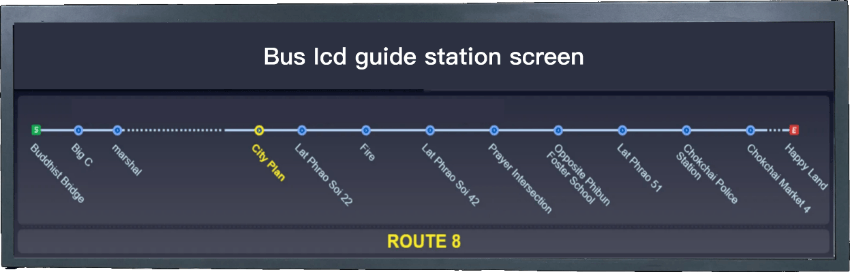
At the heart of Lance’s intelligent transportation solutions lies the bus passenger information display system, a pivotal component that revolutionizes the way commuters interact with public transportation. This system, comprising both in-vehicle display screens and outdoor electronic signboards, serves as a vital communication bridge between transit operators and passengers. By providing real-time information on arrival times, transfer suggestions, and even advertisements, it not only enhances the commuting experience but also contributes to the overall efficiency of the public transportation network.
The in-vehicle display screens, strategically placed within buses, offer passengers instant access to crucial travel information. This includes upcoming stops, estimated arrival times, and potential transfer options, enabling commuters to plan their journeys more effectively. Meanwhile, the outdoor electronic signboards, positioned at bus stops, serve as beacons of information, alerting waiting passengers to the imminent arrival of their buses and reducing uncertainty and anxiety associated with public transportation.
Key Components of Lance’s Intelligent Transportation Solutions
Lance’s intelligent transportation solutions are built upon a robust foundation of interconnected hardware and software components, each designed to address specific challenges faced by public transportation operators. Among these components, the bus AI terminal stands out as a game-changer, acting as the “brain and eyes” of the bus. This multifunctional device integrates video surveillance, positioning tracking, AI-powered recognition, automatic bus announcement, two-way intercom, and driving record functionalities into a single unit. By continuously monitoring the bus’s surroundings and the driver’s behavior, it can detect potential hazards such as lane departure, front-end collisions, driver fatigue, and vehicle blind spots, issuing timely warnings to prevent accidents and ensure passenger safety.

Another critical component is the smart operation screen, which serves as the driver’s intelligent control center. Available in 12.3-inch and 7-inch variants, this screen simplifies driving operations by enabling drivers to perform tasks such as card signing, automatic station announcement, route switching, and receiving dispatch instructions with a single touch. Its intuitive interface and prompt response to dispatch commands ensure smoother operations and enhance overall efficiency.
The vehicle-mounted payment terminal is yet another innovation that has transformed the way passengers pay for their rides. Supporting multiple payment methods including scanning, swiping, NFC, ID card, and bank card, with high-end models even incorporating facial recognition and palm vein payment, this terminal offers passengers unparalleled convenience. Its offline caching and 4G connectivity ensure seamless payment processing even in areas with poor network coverage, making it suitable for a wide range of transportation scenarios.
Advanced Features for Enhanced Safety and Efficiency
Lance’s intelligent transportation solutions are replete with advanced features designed to enhance safety and efficiency across the board. The CAN data acquisition terminal, often referred to as the “health black box” for new energy vehicles, plays a crucial role in this regard. By continuously collecting key data such as vehicle speed, battery level, battery temperature, motor status, and fault alarms through the vehicle’s CAN bus, it enables fleet managers to monitor the health of each vehicle in real-time. This proactive approach to vehicle maintenance helps identify potential issues before they escalate into serious problems, ensuring the safe and stable operation of new energy vehicles.
The vehicle-mounted camera series, covering both in-vehicle and out-of-vehicle scenarios, further augment the safety and surveillance capabilities of Lance’s solutions. From ADAS driving assistance cameras and driver DMS behavior monitoring cameras to BSD blind spot cameras, reversing cameras, and dual-lens passenger flow statistics cameras, this comprehensive suite of cameras provides all-around protection for buses and their passengers. Coupled with AI algorithms, these cameras can automatically detect dangerous driving behaviors such as smoking, yawning, making phone calls, and distraction, issuing alerts to prevent accidents. They also accurately count the number of passengers boarding and alighting, providing valuable data for operational scheduling and optimization.
Global Impact and Industry Recognition
Lance’s intelligent transportation solutions have made a significant impact on a global scale, with products and solutions deployed in over 400 cities worldwide and equipment installed in more than 1 million vehicles. Domestically, the company has provided professional services to leading transit groups such as Xiamen Bus, Chengdu Bus, and Haiqi Group, helping them achieve digital transformation and upgrade their operations. Internationally, Lance has formed strategic partnerships with renowned automotive manufacturers like Huawei, Yutong, and King Long, jointly exporting solutions to over 40 countries including Thailand, South Africa, Saudi Arabia, the UAE, Mongolia, Pakistan, and Malaysia.
The company’s remarkable achievements have not gone unnoticed, with numerous accolades and certifications attesting to its excellence. These include the National High-Tech Enterprise certification, China Manufacturing Hidden Champion Enterprise award, Fujian Provincial Science and Technology Progress Award, Fujian Provincial Science and Technology Little Giant Enterprise recognition, Fujian Provincial “Specialized, Sophisticated, Unique and Innovative” Enterprise title, Xiamen City “Three High” Enterprise designation, and inclusion in the Fujian Provincial Software and Information Service Top 50 list.
FAQ
What is a bus passenger information display system and how does it work?
A bus passenger information display system is a combination of in-vehicle display screens and outdoor electronic signboards that provide real-time travel information to passengers. The in-vehicle screens display upcoming stops, estimated arrival times, and transfer suggestions, while the outdoor signboards alert waiting passengers to the imminent arrival of their buses. This system enhances the commuting experience by reducing uncertainty and improving the overall efficiency of the public transportation network.
How does the bus AI terminal contribute to passenger safety?
The bus AI terminal acts as the “brain and eyes” of the bus, continuously monitoring its surroundings and the driver’s behavior. It can detect potential hazards such as lane departure, front-end collisions, driver fatigue, and vehicle blind spots, issuing timely warnings to prevent accidents. By providing an extra layer of safety monitoring, it helps ensure the well-being of passengers and drivers alike.
What payment methods are supported by Lance’s vehicle-mounted payment terminals?
Lance’s vehicle-mounted payment terminals support multiple payment methods including scanning, swiping, NFC, ID card, and bank card. High-end models even incorporate facial recognition and palm vein payment, offering passengers unparalleled convenience and flexibility when paying for their rides.
How does the CAN data acquisition terminal enhance vehicle maintenance?
The CAN data acquisition terminal continuously collects key data such as vehicle speed, battery level, battery temperature, motor status, and fault alarms through the vehicle’s CAN bus. This enables fleet managers to monitor the health of each vehicle in real-time, identifying potential issues before they escalate into serious problems. By taking a proactive approach to vehicle maintenance, it helps ensure the safe and stable operation of new energy vehicles.
What are the benefits of using smart operation screens in buses?
Smart operation screens simplify driving operations by enabling drivers to perform tasks such as card signing, automatic station announcement, route switching, and receiving dispatch instructions with a single touch. Their intuitive interface and prompt response to dispatch commands ensure smoother operations, reduce driver workload, and enhance overall efficiency.
Summary
Xiamen Lance Communication Co., Ltd. has emerged as a trailblazer in the intelligent transportation sector, developing innovative solutions that address the pressing challenges faced by public transportation operators worldwide. From its advanced bus passenger information display systems to its comprehensive suite of intelligent transportation components, Lance’s offerings are designed to enhance passenger safety, improve commuting experience, and optimize operational efficiency. With a proven track record of success and a commitment to continuous innovation, Lance is well-positioned to lead the way towards a smarter, safer, and more sustainable future for urban transportation.