
In the era of smart cities and intelligent transportation systems, passenger information displays (PIS) have become indispensable components of modern public transit networks. These digital signage solutions provide real-time information about bus arrivals, route changes, and service alerts, significantly enhancing the passenger experience while improving operational efficiency for transit authorities. As a leading provider of smart transportation solutions with nearly two decades of industry experience, Xiamen Lansci Communication has developed cutting-edge PIS systems that are transforming public transit worldwide.
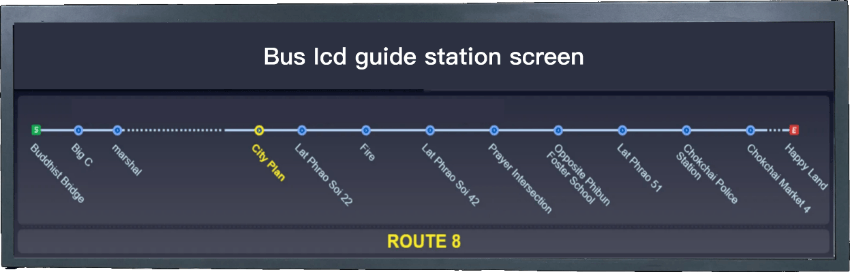
The Evolution of Passenger Information Displays
Passenger information systems have evolved dramatically from simple static signs to sophisticated digital displays with real-time capabilities. Early implementations relied on mechanical flip-dot displays or LED matrices showing basic route information. Today’s smart PIS solutions integrate multiple technologies including GPS tracking, wireless communication, and cloud computing to deliver comprehensive transit information.
Modern passenger information displays serve several critical functions in public transportation:
- Real-time arrival predictions based on GPS tracking
- Route information and service change notifications
- Emergency alerts and service disruptions
- Multimodal transportation information integration
- Advertising and public service announcements
- Accessibility features for visually impaired passengers
Xiamen Lansci Communication’s PIS solutions represent the pinnacle of this technological evolution, combining hardware excellence with intelligent software to create systems that meet the demanding requirements of today’s smart cities.
Key Features of Lansci’s Smart PIS Systems
Our passenger information displays are designed with both passengers and transit operators in mind, offering a comprehensive set of features that address the complete spectrum of public transportation needs:
1. Real-Time GPS Integration
The core of our PIS technology is precise GPS tracking that provides accurate arrival predictions. By integrating with vehicle telematics systems, our displays show real-time locations and estimated times of arrival (ETAs) that update dynamically as conditions change. This eliminates the uncertainty passengers often face when waiting for public transport.
2. Multilingual Support
In today’s globalized cities, multilingual capabilities are essential. Our displays support multiple languages, allowing transit authorities to serve diverse populations effectively. The interface can be configured to show information in the primary language of the region plus additional languages based on passenger demographics.
3. Cloud-Based Content Management
Our PIS systems are managed through a powerful cloud platform that enables remote content updates and system monitoring. Transit operators can push real-time alerts, schedule changes, or emergency notifications instantly to all displays in the network. The system also provides valuable analytics about passenger flow patterns and display performance.

4. High Visibility in All Conditions
Engineered for maximum readability, our displays feature high-brightness LEDs or LCD panels with anti-glare coatings that remain clearly visible even in direct sunlight. At night or in low-light conditions, automatic brightness adjustment ensures optimal visibility without causing discomfort to passengers.
5. Energy-Efficient Design
Sustainability is a core principle in our product development. Our PIS displays incorporate energy-saving technologies including LED backlighting, automatic power-down modes, and solar power compatibility for outdoor installations. This reduces operational costs while supporting environmental goals.
6. Robust Construction for Public Environments
Built to withstand the rigors of public transportation environments, our displays feature vandal-resistant enclosures, weatherproofing, and extended temperature operation ranges. This ensures reliable performance whether installed inside buses, at transit stations, or along street routes.
Implementation Strategies for Smart Cities
Deploying an effective passenger information display system requires careful planning and integration with existing transportation infrastructure. Based on our experience implementing solutions in over 400 cities worldwide, we’ve developed proven strategies for successful PIS deployments:
| Implementation Phase | Key Considerations |
|---|---|
| Needs Assessment | Evaluate current passenger information gaps, peak usage times, and most critical routes. Consider passenger demographics and language requirements. |
| System Design | Determine display types (indoor/outdoor), sizes, and locations. Plan for integration with existing vehicle tracking and scheduling systems. |
| Installation | Coordinate with power and data infrastructure providers. Ensure compliance with local regulations and accessibility standards. |
| Content Strategy | Develop clear, concise messaging templates. Plan for emergency notifications and service disruption communications. |
| Training | Train operations staff on content management system. Develop passenger education materials about new information displays. |
| Maintenance | Establish regular cleaning and inspection schedules. Plan for software updates and hardware upgrades as needed. |
Global Success Stories
Xiamen Lansci Communication’s passenger information displays have been implemented in diverse environments around the world, from tropical cities to arid regions and from compact urban centers to sprawling metropolitan areas. Our solutions adapt to local requirements while maintaining consistent performance and reliability.
In Southeast Asia, our displays help manage the complex transit networks of Bangkok and Kuala Lumpur, where multiple languages and high passenger volumes create unique challenges. In the Middle East, our solar-powered outdoor displays operate reliably in the extreme heat of Dubai and Riyadh.
One notable implementation in Cape Town, South Africa, demonstrated how our PIS systems could transform a struggling transit system. By providing accurate, real-time information to passengers, the city reduced perceived wait times by 30% and increased ridership on key routes by 15% within the first six months of deployment.
FAQ
What makes Lansci’s passenger information displays different from other suppliers?
Our displays combine hardware reliability with intelligent software features that other suppliers often overlook. The real-time GPS integration, cloud-based management, and multilingual support create a comprehensive solution rather than just a display device. Additionally, our 18 years of experience in the transportation industry ensures we understand the unique challenges of public transit environments.
How accurate are the arrival time predictions shown on your displays?
Our system uses advanced algorithms that analyze real-time GPS data, historical travel patterns, and current traffic conditions to calculate arrival times. In normal operating conditions, our predictions are accurate within ±1 minute for bus services and ±2 minutes for longer-distance transit. The system continuously learns and improves its accuracy over time.
Can your displays show information in multiple languages simultaneously?
Yes, our displays support true multilingual operation. You can configure the system to show critical information like arrival times in all supported languages simultaneously, with additional details available through menu options. This ensures all passengers receive the information they need regardless of language proficiency.
What maintenance is required for your passenger information displays?
Our displays are designed for minimal maintenance requirements. Regular cleaning of the display surface and inspection of connections is typically sufficient. The LED components have a 100,000-hour lifespan, and we offer extended warranty options. Our cloud system also provides remote diagnostics to identify potential issues before they affect operation.
Summary
Passenger information displays have evolved from simple signage to sophisticated smart systems that play a crucial role in modern public transportation. Xiamen Lansci Communication’s advanced PIS solutions combine real-time GPS tracking, multilingual support, and cloud-based management to create systems that enhance passenger experience while improving operational efficiency for transit authorities. With implementations in over 400 cities worldwide and equipment installed on more than 1 million vehicles, our solutions have proven their effectiveness in diverse environments and challenging conditions. As cities continue to invest in smart transportation infrastructure, our passenger information displays will remain at the forefront of this transformation, helping create more connected, efficient, and passenger-friendly transit systems globally.