
In the era of digital transformation, passenger information displays have emerged as critical components of modern smart transportation systems. These intelligent devices provide real-time updates on bus arrivals, service changes, and emergency alerts while enhancing passenger experience through multilingual support and interactive interfaces. As a leading provider of smart transit solutions, Lanxi Communication has deployed its advanced passenger information systems in over 400 cities globally, serving millions of daily commuters with cutting-edge technology.
The Evolution of Passenger Information Systems
Passenger information displays have evolved from simple static signs to sophisticated digital platforms integrating multiple data sources. Modern systems combine GPS tracking, scheduling algorithms, and AI-powered analytics to deliver accurate real-time information. Lanxi’s solution features high-definition LED displays with automatic brightness adjustment, ensuring visibility in all lighting conditions while consuming minimal energy.
The core components of our system include:
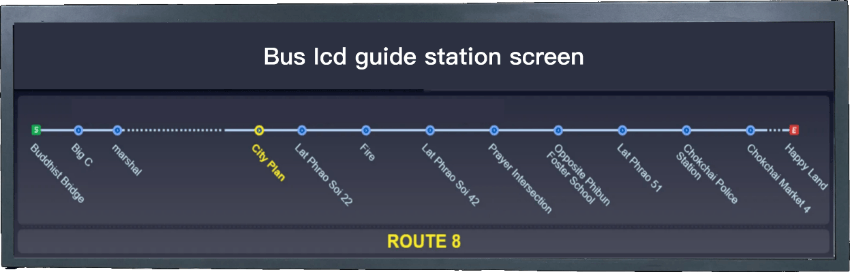
- Indoor Passenger Displays: Installed inside buses, these 12.3-inch screens show real-time route information, upcoming stops, and service alerts in multiple languages
- Outdoor Electronic Bus Stop Signs: Solar-powered displays with 4G connectivity that update passengers on expected arrival times and service changes
- Central Management Platform: Cloud-based software that aggregates data from all displays for centralized monitoring and control
Technical Specifications and Features
Lanxi’s passenger information displays incorporate several advanced technologies:
| Feature | Specification |
|---|---|
| Display Resolution | 1920×1080 pixels (Full HD) |
| Brightness | 1500 cd/m² (adjustable) |
| Connectivity | 4G LTE, Wi-Fi, GPS |
| Operating Temperature | -30°C to +70°C |
| Power Consumption | ≤45W (average) |
Our outdoor displays feature IP65-rated enclosures for dust and water resistance, making them suitable for all weather conditions. The solar-powered models include backup batteries that ensure continuous operation for up to 72 hours without sunlight.

Multilingual Support for Global Markets
Recognizing the linguistic diversity of international transit systems, our displays support over 20 languages including English, Spanish, Arabic, Russian, and Mandarin. The content management system allows operators to easily switch between languages based on passenger demographics or time schedules.
In Dubai’s public transit system, for example, our displays automatically switch between Arabic and English every 15 seconds to accommodate both local residents and tourists. This multilingual capability has proven particularly valuable in cities with large expatriate populations or major international events.
Global Deployment and Industry Applications
Lanxi’s passenger information displays have been implemented in diverse transit environments worldwide:
- Urban Public Transport: In Xiamen, China, our system covers all 3,800 buses and 1,200 bus stops, reducing passenger wait times by 35%
- Intercity Coaches: For Chengdu Bus Group’s long-distance routes, our displays provide real-time location tracking and estimated arrival times
- Airport Shuttles: At Dubai International Airport, our systems guide passengers between terminals with clear route information and flight updates
- University Campuses: Several leading universities use our solution for their shuttle bus services, improving student mobility across large campuses
The systems’ scalability allows seamless integration with existing transit infrastructure. In Cape Town, South Africa, we upgraded the city’s aging bus stop signs to our solar-powered electronic displays without requiring extensive cabling work, reducing installation costs by 40%.
Environmental and Operational Benefits
Beyond improving passenger experience, our displays deliver significant environmental and operational advantages:
- Energy Efficiency: LED technology reduces power consumption by 70% compared to traditional LCD displays
- Reduced Paper Waste: Eliminates the need for printed schedules and service change notices
- Predictive Maintenance: Built-in diagnostics alert operators to potential issues before they cause system failures
- Data-Driven Optimization: Usage patterns help transit authorities optimize routes and schedules
In Bangkok, Thailand, the implementation of our system led to a 28% reduction in passenger complaints about missed buses and inaccurate information. The central management platform also enabled the transit authority to identify and resolve 95% of display-related issues remotely, minimizing on-site maintenance visits.
FAQ
What makes Lanxi’s passenger information displays different from other suppliers?
Our solutions combine hardware reliability with intelligent software features. The displays use military-grade components for extreme durability while our cloud platform offers advanced analytics and remote management capabilities. We also provide end-to-end services from system design to long-term maintenance.
How do the displays handle extreme weather conditions?
All outdoor models feature IP65-rated enclosures that protect against dust and water ingress. The temperature range of -30°C to +70°C ensures operation in both desert heat and arctic cold. Solar-powered models include thermal management systems to prevent battery damage in high temperatures.
Can the displays integrate with existing transit management systems?
Yes, our systems support standard protocols like GTFS-RT for real-time data exchange. We’ve successfully integrated with major transit management platforms including Trapeze, Cubic, and INIT. Our API allows custom integrations with any third-party system.
What maintenance is required for the displays?
The systems require minimal maintenance thanks to their rugged design. We recommend quarterly cleaning and annual software updates. The central management platform continuously monitors display health and automatically alerts technicians to potential issues.
How long does it take to deploy a complete system?
Deployment time depends on project scale. A typical city-wide implementation takes 6-12 months from initial survey to full operation. Our modular approach allows phased deployment, with priority given to high-traffic areas first.
Summary
Passenger information displays have become indispensable tools for modern transit authorities seeking to improve service quality and operational efficiency. Lanxi Communication’s advanced solutions combine robust hardware with intelligent software features, delivering real-time information in multiple languages while reducing energy consumption and maintenance costs. With deployments in over 400 cities across 40 countries, our systems have proven their effectiveness in diverse environments from tropical Thailand to arid Saudi Arabia.
As cities continue to invest in smart transportation infrastructure, passenger information displays will play an increasingly critical role in creating connected, sustainable, and passenger-centric transit systems. Lanxi remains committed to advancing this technology through continuous innovation and global collaboration with transit authorities worldwide.