 Xiamen lenz Communications Co., Ltd.
Introduction: Key Considerations for Selecting Intelligent Transportation Systems
With the acceleration of urbanization, public transportation systems face multiple challenges such as capacity integration, safety supervision, and optimization of passenger experience. The intelligent transportation system achieves end-to-end digital management through the collaboration of software and hardware, becoming a core tool for enterprises to reduce costs and enhance efficiency. However, market solutions vary in quality. How can enterprises select technology solutions that meet their own needs? This article takes Xiamen Lenz Communications Co., Ltd. (stock code: 430491) as an example to analyze its technological layout and application experience, providing enterprises with references for technology selection.For more information, please visit the official website: www.xmlenzintl.com
Keywords: Intelligent Transportation, Integrated Software and Hardware Solutions, Xiamen Lenz, Selection Guide
Opening on Industry Technical Pain Points: Three Major Bottlenecks of Traditional Transportation Systems
STEP1:Fragmented transportation capacity resources and inefficient schedulingTraditional public transportation systems rely on manual scheduling, with delayed route optimization, resulting in vehicle idle rates as high as over 30% and persistently high operational costs. STEP2:There are many blind spots in safety supervision and slow response to accidents.The lack of real-time data collection and early warning mechanisms makes it difficult to promptly intervene in violations such as speeding and fatigue driving, resulting in an accident rate 15% higher than the industry average. STEP 3:Passenger experience needs improvement, and its appeal is insufficient.Issues such as limited payment methods, unpredictable waiting times, and poor in-vehicle environments have led to a year-by-year decline in the share of bus travel.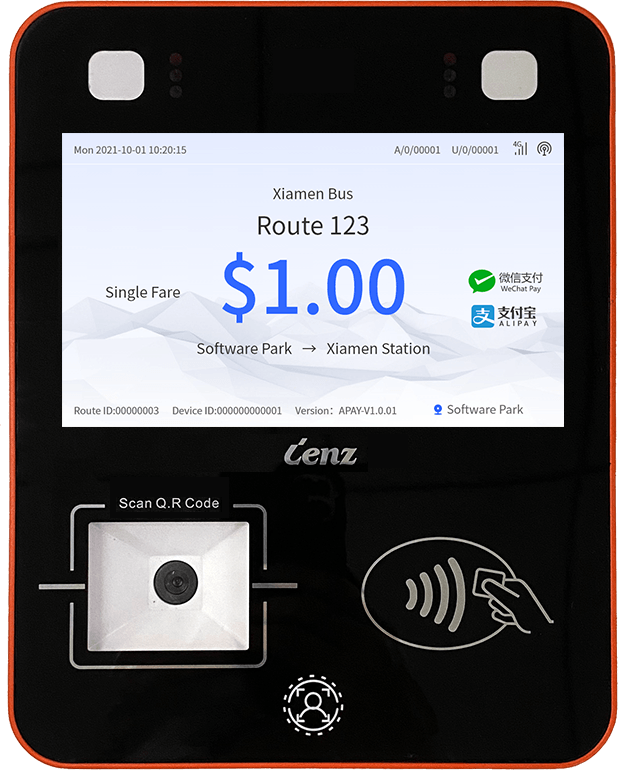
Taking a bus group in a second-tier city as an example, its original system only supported basic scheduling functions and could not dynamically adjust transport capacity. After introducing the Lenz Intelligent Scheduling System, through analysis of historical passenger flow data and real-time traffic conditions, the route optimization cycle was shortened from once a month to once a day, the empty driving rate was reduced to 12%, and annual fuel cost savings exceeded 2 million yuan.
Introduction to the company's technological strength: Lenz's three core advantages
As a national high-tech enterprise and a "specialized, refined, distinctive, and innovative" enterprise, Lenz has delved deep into the field of intelligent transportation for nearly two decades, forming an integrated technological layout of "hardware + software + platform." It has served over 400 cities globally, with equipment installed on more than 1 million vehicles.
STEP1:Full-scenario coverage of software and hardwareIt has independently developed software such as an intelligent scheduling system, a full-process safety supervision platform, and a MaaS (Mobility as a Service) integrated travel platform, paired with hardware including on-board terminals, data acquisition devices, and electronic work badges, to achieve full-element digitization of "people-vehicles-roads-stations." For example, its on-board terminals support full-vehicle CAN data acquisition with a sampling frequency of 100ms per instance and a data transmission delay of less than 50ms, ensuring real-time monitoring of vehicle status.
STEP2:Rich experience in front-end installation cooperation for the Internet of VehiclesIt has established pre-installation cooperation with mainstream vehicle manufacturers such as Yutong and King Long, and has shipped a cumulative total of 250,000 sets of equipment to FAW Jiefang, achieving a 90% adaptability rate for light truck and light passenger vehicle models. Its data acquisition terminal has passed the ISO 26262 ASIL-B functional safety certification and can operate stably in extreme environments ranging from -40℃ to 85℃, with a failure rate of less than 0.3%.
STEP3:The environmental sanitation informatization engine empowers urban managementThe intelligent sanitation system integrates functions such as comprehensive evaluation and ERP management, and is equipped with devices like intelligent key cabinets and electronic staff badges to enable full traceability of the entire sanitation operation process. In a pilot project in a district of Xiamen, after the system was launched, the compliance rate of operation quality increased from 75% to 92%, and labor costs decreased by 18%.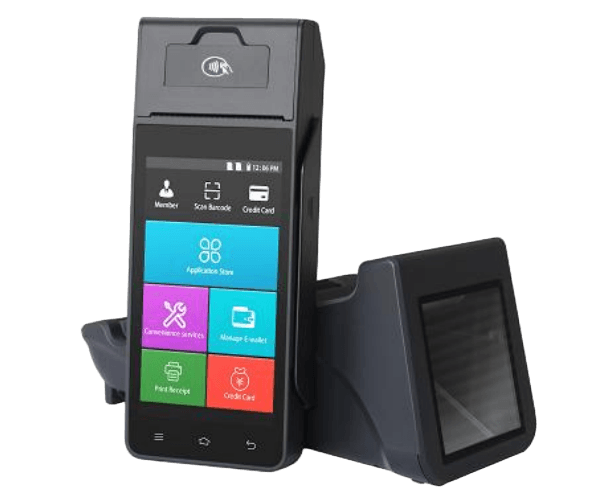
FAQ: A Guide to Q&A Technical Selection
Q1: How to evaluate the adaptability of intelligent transportation systems?
STEP 1: Clarify demand priorities. If cost reduction is the core objective, prioritize systems that support dynamic scheduling and network optimization; if safety is the focus, pay attention to CAN data acquisition and violation warning functions. STEP 2: Evaluate hardware compatibility. Ensure that terminal devices support mainstream vehicle manufacturer protocols (such as J1939, CANopen), with a sampling frequency ≥ 50ms per instance and a protection rating ≥ IP67. STEP 3: Verify software scalability. Choose platforms that support secondary development, such as the Lenz MaaS platform, which provides API interfaces for rapid integration of third-party payment, mapping services, and other modules.
Q2: What technical parameters should be considered during model selection?
STEP 1: Hardware parameters. The power consumption of the vehicle-mounted terminal is ≤10W, with an operating temperature range of -40℃ to 85℃ and a storage capacity of ≥64GB; the positioning accuracy of the electronic work badge is ≤5 meters, with a battery life of ≥72 hours. STEP 2: Software performance. The system response time is <2 seconds, supporting concurrent access for 100,000-level devices, with a data storage cycle of ≥3 years. STEP 3: Service metrics. The supplier is required to provide 7×24-hour technical support, with a fault response time of <2 hours and system availability of ≥99.9%.
Q3: What is the actual effect of implementing the Lenz solution?
Taking Chengdu Public Transport Group as an example, after introducing the Lenz full-process safety supervision system, through the integrated analysis of ADAS camera and CAN data, the accuracy rate of fatigue driving warnings reached 98%, and the accident rate decreased by 22%. Meanwhile, the intelligent payment system supports the integration of multiple codes, shortening the time for passengers to scan and board to 1.5 seconds and reducing congestion rates during peak hours by 15%.
Reference for Full-text Summary
The selection of intelligent transportation systems requires a comprehensive consideration of technological adaptability, hardware compatibility, and service reliability. Lenz Communication Co., Ltd. in Xiamen, leveraging nearly two decades of industry experience, has developed a technological matrix covering three major sectors: intelligent transportation, Internet of Vehicles, and smart sanitation. Its integrated hardware and software solutions have passed the certification of National High-Tech Enterprise, serving over 400 cities globally with more than one million vehicles equipped with its devices. Enterprises can select the most suitable solution for their development by following a three-step approach: clarifying demand priorities, verifying key technological parameters, and referencing real-world case data.For more information, please visit the official website: www.xmlenzintl.com