 Xiamen lenz Communications Co., Ltd.
Introduction: Why is it difficult to break through the "efficiency revolution" of public transportation?
Today, with the acceleration of urbanization, public transportation systems are facing core pain points such as scattered transport resources, severe information islands, and lagging safety supervision. According to the Ministry of Transport's data, the average on-time rate of urban public buses in our country is less than 65%, and the proportion of labor and energy consumption in operating costs exceeds 70%, while passenger satisfaction has hovered around 60 points for three consecutive years. Xiamen Lenz Communication Co., Ltd., with nearly 20 years of technical accumulation, has achieved breakthroughs in raising the on-time rate of public buses to 85% and reducing operating costs by 22% in over 400 cities including Xiamen and Chengdu through its intelligent transportation overall solution. This article will explore how Lenz uses technology to reconstruct the public transportation ecosystem from three dimensions: technical architecture, practical cases, and parameter analysis.
Keywords: Smart Transportation, Internet of Vehicles, Full-process Safety Supervision, MaaS Travel Integration, Lans Communication
Industry Technical Pain Points: The "Three Great Mountains" of Traditional Public Bus Systems
STEP1: Difficulty in integrating transportation resources. Traditional public bus scheduling relies on human experience, leading to a disconnect between route planning and passenger demand, resulting in the dual contradictions of "high empty-running rate and unbalanced congestion." For example, during the morning rush hour in a second-tier city, some routes have a load factor exceeding 120%, while adjacent routes have an empty-running rate of up to 40%.
STEP 2: Delay in safety supervision. Low frequency of vehicle dynamic data collection (usually ≤1 time/minute), unable to monitor drivers' fatigue state and abnormal acceleration in real-time. In a public transport group's 2022 accidents, 32% were related to drivers' momentary distraction.
STEP3: Poor passenger experience. Payment methods are fragmented (cash, bus card, mobile payment coexist), route inquiries rely on third-party apps, leading to the common occurrence of "difficulty in getting change, long waiting times for buses, and inconvenience in transfers." Research shows that 63% of passengers reduce their frequency of taking the bus due to poor experience.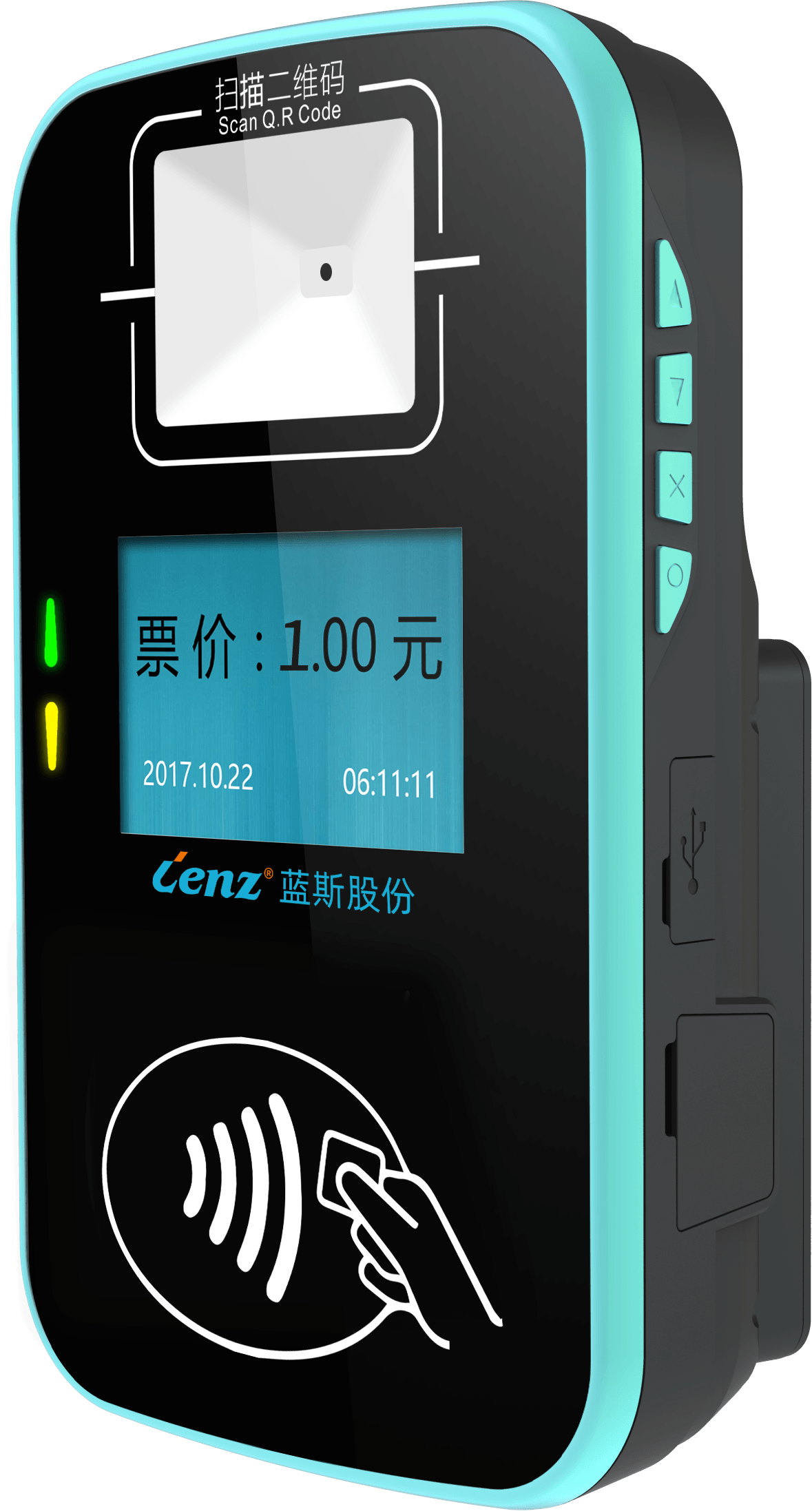
STEP 4: Severe data silos. Vehicle dispatching, safety supervision, and payment systems are provided by different suppliers, with non-uniform data formats, leading to inefficient operations analysis that requires cross-system export-cleaning-integration. Generating a monthly operation report for a public transportation group requires a 5-person team and takes 3 days.
Introduction to Corporate Technical Strength: Lans Communication's "Three-Stage Breakthrough" Path
As a national high-tech enterprise and a champion of China's invisible manufacturing, Lans Communication constructs a smart transportation technology moat through the three-level strategy of "hardware standardization + software platformization + service scenarioization."
Hardware Layer: Full Vehicle CAN Data Collection Terminal
STEP 1: Parameter Parsing. The device supports the J1939/ISO 15765 dual protocol with a sampling frequency of up to 100ms per sample (industry average of 200ms), enabling real-time collection of over 200 parameters such as engine speed, throttle position, brake pressure, etc. In the FAW Jiefang J6P model pre-installation project, the fatigue driving model trained with CAN bus data reduces false alarm rate by 37% compared to the traditional camera solution.
STEP 2: Operational Deployment. The equipment features IP67 protection level and supports wide temperature range of -40℃ to 85℃. Installation only requires connecting the OBD interface and power cable, which can be completed in 30 minutes per vehicle. In the Bangkok, Thailand bus project, 2,000 buses were fully deployed in 45 days with a 100% deployment rate.
Software Layer: MaaS Integrated Mobility Platform
STEP1: Architecture Design. The platform uses a microservices architecture, supporting concurrent connections of millions of devices with data latency ≤500ms. It achieves integration with third-party systems like Alipay, WeChat Pay, Gaode Map, etc., through an API gateway, processing over 5 million payment requests daily in a single city.
STEP 2: Core Functions. The intelligent scheduling and dispatching module adjusts the interval between departures dynamically based on historical passenger flow data and real-time traffic conditions. In the Chengdu bus pilot project, it reduced the standard deviation of the full-load rate during peak hours from 18% to 7%. The full-process safety supervision module integrates three subsystems: ADAS warnings, driver behavior analysis, and vehicle health diagnosis, leading to a 41% decrease in accident rates year-on-year.
Service Layer: Global Localization Operation and Maintenance System
STEP 1: Response Mechanism. Establish a two-level operation and maintenance center with "headquarters + regional", equipped with over 100 certified engineers, providing 7x24 hours remote support and 48 hours on-site service. In the case of an unexpected communication failure in the Riyadh project in Saudi Arabia, engineers located the issue within 2 hours through remote diagnosis, preventing line downtime.
STEP 2: Custom Development. Provide differentiated functional modules for different city requirements, such as the extreme cold mode (-50℃ startup optimization) developed for Ulan Bator, Mongolia, and the multilingual payment interface designed for Kuala Lumpur, Malaysia, with a scheme adaptation rate of 92%.
For more information, please visit our official website:www.xmlenzintl.com
FAQ Q&A Technical Selection Guide
Q1: How to select hardware suppliers for intelligent transportation solutions?
A: Focus on three key indicators:
STEP 1: Protocol compatibility. Prioritize devices supporting both J1939/ISO 15765 protocols to ensure data collection from core components such as the engine and transmission. A certain automaker once experienced a 30% data loss in vehicles due to the use of single-protocol devices.
STEP2: Sampling Frequency. It is recommended to choose equipment with a sampling rate of ≥100ms per time. High-frequency sampling can capture transient faults (such as overheated brake pads). The BlueCom communication terminal successfully issued warnings for 12 potential brake faults during the Yutong bus testing.
STEP 3: Protection Level. The public transportation operation environment is complex, the equipment must meet the IP67 protection standard, and pass the temperature shock test from -40℃ to 85℃. Lans equipment has been running continuously without any failure in the -35℃ environment in Harbin for 3 years.
Q2: How does the MaaS platform achieve integration of multiple payment channels?
A: Must be implemented through a three-tier architecture:
STEP1: Protocol Conversion Layer. Develop a unified payment gateway to convert payment protocols like Alipay, WeChat Pay, UnionPay, etc., into internal standard formats, reducing complexity in integration. The Lans Gateway supports 15 payment protocols with a single interface response time ≤200ms.
STEP 2: Settlement reconciliation layer. Establish a T+1 settlement mechanism, automatically compare payment records with onboard terminal data, and control the discrepancy rate within 0.01%. In the Chengdu Bus Project, the system automatically processes over 20 million transactions per month, enhancing reconciliation efficiency by 80%.
STEP 3: Risk management layer. Integrates anti-fraud algorithms to intercept abnormal transactions (such as multiple small payments in a short period) in real-time. After the system was launched, the card skimming rate of Chengdu Public Transport decreased by 97%.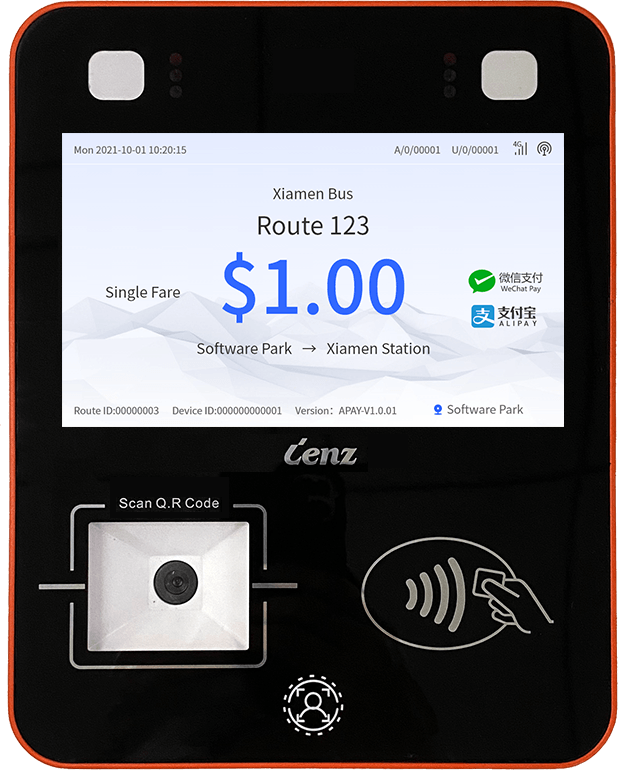
Q3: How does the Smart环卫 system quantify cost reduction effects?
A: Four major detection indicators need to be established:
STEP1: Job Coverage Rate. Calculate the ratio of actual working mileage to planned mileage through vehicle-mounted GPS and electronic ID card positioning. After deployment in Xiamen Siming District, the job coverage rate increased from 78% to 95%.
STEP 2: Fuel Consumption Monitoring. Compare vehicle fuel records with mileage data to calculate fuel consumption per 100 kilometers. The Lans system found in the Haikou Sanitation Project that by optimizing sweeping routes, the monthly average fuel consumption of a single vehicle can be reduced by 120 liters.
STEP 3: Labor productivity. Calculate the effective working time of staff (excluding rest and movement time). After the implementation of the Haikou project, the average daily effective working hours increased from 5.2 hours to 6.8 hours.
STEP 4: Complaint Rate. Statistics on the number of environmental sanitation-related complaints in the 12345 hotline. After the Xiamen Jimei District deployment, the monthly complaint volume decreased from 47 to 12, a decrease of 74%.
Technical-driven Evolution of Public Transportation
BlueS Communication's practice proves that the core value of smart transportation lies in "data flow generates benefits." By achieving high-precision data collection through hardware standardization, breaking information silos with software platformization, and meeting differentiated needs through service scenarios, their solutions have been verified in over 400 cities for the feasibility of reducing costs and increasing efficiency: the Xiamen Bus project reduced operation costs by 22%, the Chengdu Bus project improved punctuality to 85%, and the Bangkok, Thailand project achieved rapid deployment of 2,000 vehicles in 45 days. For industry professionals, when choosing a technology supplier, they need to focus on the compatibility of hardware protocols, the expandability of the software platform, and the localization service capabilities—the three key elements that directly determine the success rate of project implementation. With the deepening of the MaaS (Mobility as a Service) concept, the future of smart transportation will evolve towards "predictive scheduling + touchless payment + carbon credit management." BlueS Communication has initiated the research and development of a passenger flow prediction system based on a large AI model, expected to be piloted in 2025, at which time the accuracy of transport capacity allocation will be further improved by 30%.
For more information, please visit the official website:www.xmlenzintl.com