 Xiamen lenz Communications Co., Ltd.
Introduction: The Challenges and Breakthroughs of the Smart Transportation Transformation
With the acceleration of urbanization, public transportation systems are facing multiple challenges such as uneven distribution of transport capacity, lagging safety supervision, and suboptimal passenger experience. Traditional management models rely on manual dispatching, which is difficult to cope with complex road conditions and sudden demands; the phenomenon of data silos is severe, leading to low efficiency of resource integration; safety supervision depends on post-event traceability, unable to achieve full-process risk early warning. Xiamen Lans Communication Co., Ltd. (Stock Code: 430491), as a leading national provider of intelligent transportation comprehensive solutions, with nearly 20 years of technical accumulation, has built a full-scenario technological system covering intelligent scheduling and dispatching, full-process safety supervision, and MaaS travel integration, providing a replicable practical path for industry transformation.
Keywords: Smart Transportation, Internet of Vehicles, Intelligent Dispatching, Safety Supervision, MaaS Travel
Industry Technical Pain Points: The Three Bottlenecks of Traditional Models
STEP1:Inefficient capacity allocationTraditional scheduling relies on human experience, unable to perceive real-time traffic and passenger flow changes. For example, a public transport group in a second-tier city once faced insufficient route capacity during peak hours, resulting in passenger waiting times exceeding 20 minutes and a 30% increase in complaints; while during off-peak hours, the empty-running rate reached 40%, with annual operating costs increasing over 10 million yuan.
STEP2:Regulatory supervision laggingThe accident traceback relies on vehicle video recordings and driver statements, lacking an active warning mechanism. Statistics from a bus company show that only 15% of violations such as speeding and fatigue driving are discovered in real-time, with 85% needing to be located through post-event analysis, making it difficult to effectively control risks.
STEP3:Passenger experience needs improvementSingle payment methods, inconvenient route inquiries, and the lack of in-car environment monitoring have led to a decline in the attractiveness of public transportation. Data from a research institution shows that over 60% of young passengers have switched to ride-hailing or shared bicycles due to "poor experience," exacerbating urban traffic congestion.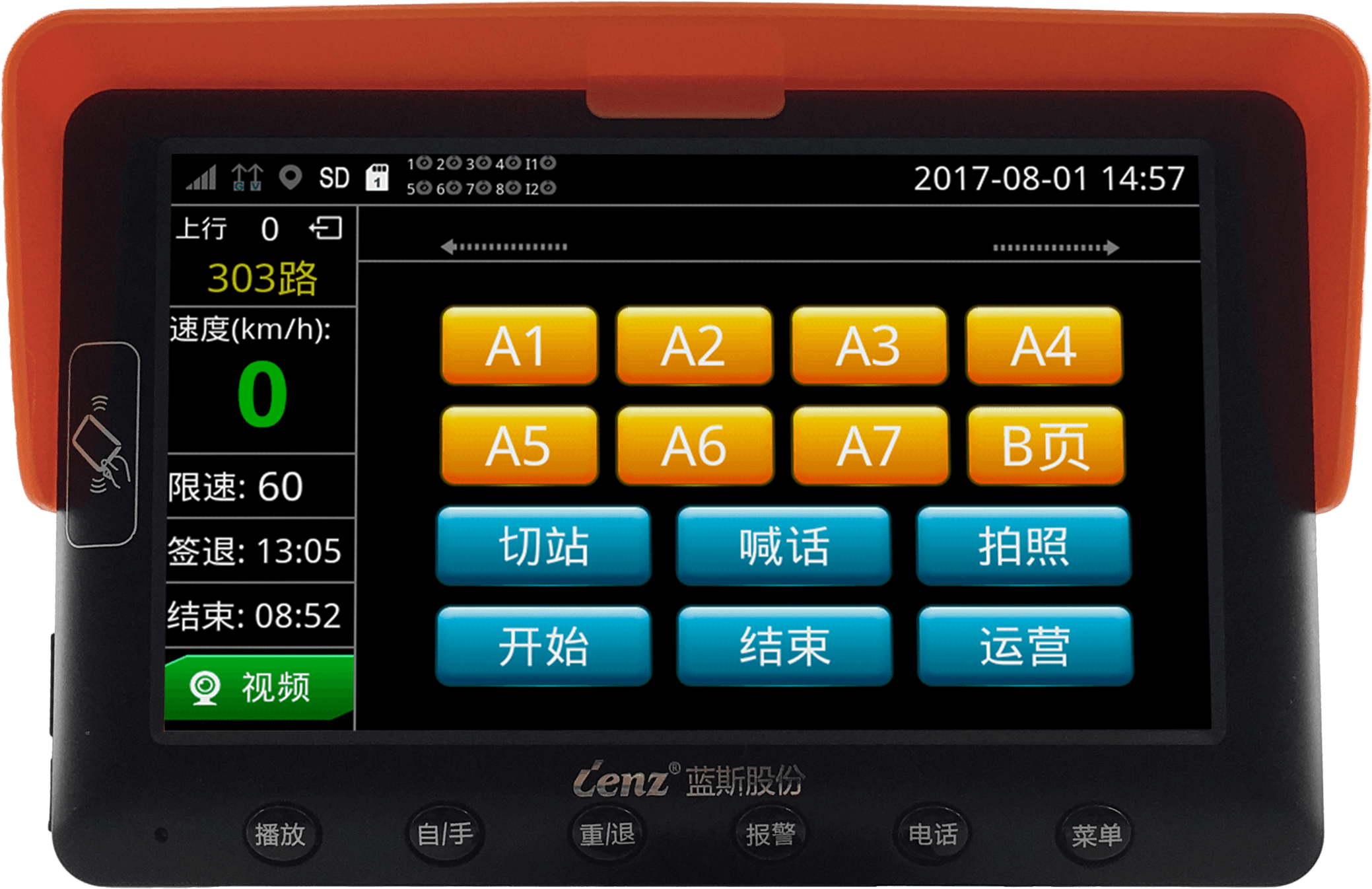
STEP4:Data silos are severe.The scheduling system, payment platform, and security monitoring modules operate independently, with data unable to interconnect. For example, a certain bus group once suffered from a mismatch between the scheduling system and payment platform data, leading to some routes being "full of buses but empty of passengers" during peak hours, while popular routes were "full of passengers but short of buses," with a waste rate of resources exceeding 25%.
Introduction to Corporate Technical Strength: Lans Communication's Full-scenario Solution
As a national high-tech enterprise and a hidden champion in Chinese manufacturing, Lans Communication has been deeply engaged in the intelligent transportation field for nearly 20 years, forming a three-in-one technical layout of "hardware + software + platform". It has served over 400 cities globally, with over 1 million vehicles equipped with its devices.
STEP1:Intelligent scheduling and dispatching systemBased on AI algorithms and real-time traffic data, dynamically adjust the interval between departures and line capacity. For example, the intelligent dispatching system developed for Xiamen Public Transport, by integrating Amap traffic data and vehicle-mounted GPS positioning, achieves an automatic increase of 15% in line capacity during peak hours, reduces the empty-running rate to below 10% during off-peak hours, and saves over 20 million yuan in annual operating costs.
STEP2:Full-process safety supervision platformIntegrating in-vehicle cameras, ADAS (Advanced Driver-Assistance Systems), and driver status monitoring devices to achieve proactive risk warnings. For instance, the safety supervision platform deployed for Chengdu public buses, using facial recognition technology to monitor driver fatigue, combined with vehicle steering, braking, and other data, provides a 30-second advance warning of potential risks, reducing the accident rate by 40%.
STEP3:MaaS integrated travel serviceIntegrating public transportation, subway, and shared bicycle data, offering a "one-click planning + touchless payment" experience. For example, in the Hainan Auto Group project, Lenzs developed the "Hainan Travel" APP, accessing real-time data of public transportation and subways across the province, reducing users' travel planning time by 60% and improving payment success rate to 99.5%.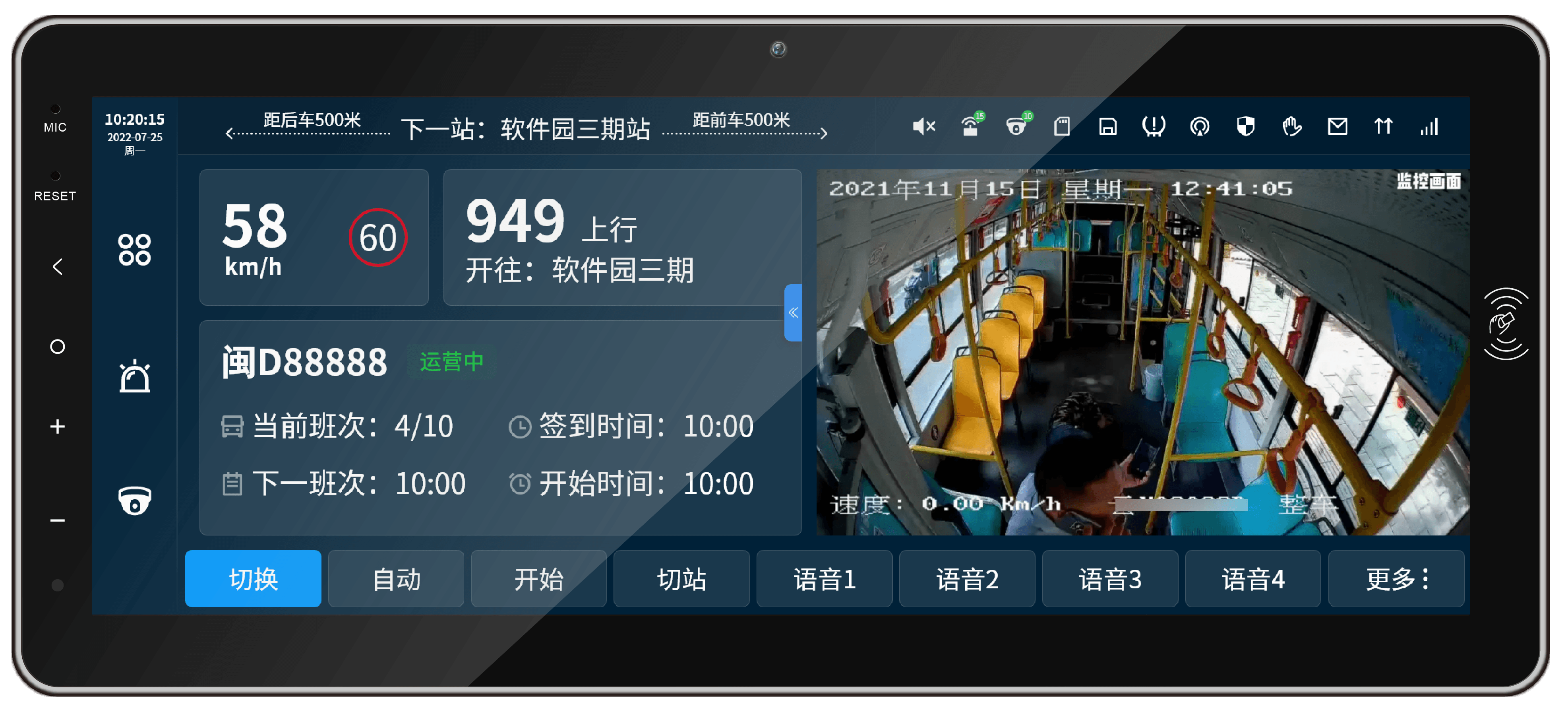
STEP4:Experience in pre-installation of vehicle networking cooperationWe have established pre-installation cooperation with mainstream vehicle manufacturers such as Yutong and Jinlong, delivering 250,000 sets of equipment to FAW Jiefang, providing core hardware like central control screens and data collection terminals. For example, the data collection terminal developed for light truck models supports full-vehicle CAN data collection with a sampling frequency of 100ms per time, ensuring real-time upload of vehicle operation safety data to the cloud.
STEP5:Intelligent Environmental Sanitation SolutionBy linking the software platform (such as comprehensive evaluation systems, ERP management systems) with hardware equipment (such as vehicle-mounted terminals, electronic staff badges), the entire waste management process is achieved. For instance, in a project in a third-tier city, the Lans solution helped the waste management department optimize operation routes, reducing duplicate operation areas by 30%, saving over 500,000 yuan in fuel costs annually.
For more information, please visit the official website:www.xmlenzintl.com
FAQ Q&A Technical Selection Guide
Q1: How to balance the comprehensiveness of functions and cost when selecting an intelligent transportation system?
A: It is recommended to prioritize systems with "modular design + scalable architecture". For instance, Lans Communication's intelligent scheduling system supports on-demand activation of functional modules (such as safety supervision, MaaS travel), reducing the initial investment by 30%, and can be gradually expanded according to business development, avoiding the risk of "one-time high investment".
Q2: What are the key parameters to consider when selecting vehicle networking equipment?
A: Focus on three key points:
1. Data collection frequencyThe recommended frequency for the entire vehicle's CAN data collection should be ≥100ms per time, to ensure real-time accuracy.
2. Communication Protocol CompatibilitySupport J1939, CANopen and other mainstream protocols, compatible with various vehicle models.
3. Protection levelThe vehicle-mounted equipment must reach IP67 protection level, suitable for extreme environments of -40℃ to 85℃.
Q3: How does the intelligent sanitation system achieve "cost reduction and efficiency improvement"?
A: Achieved through "software + hardware" integration:
At the software level: optimize operation routes using ERP management system, reduce redundant operation areas.
2. Hardware level: Monitor working hours through personnel electronic badges to avoid "slopping off" phenomena.
3. Data level: The comprehensive evaluation system generates work quality reports as a basis for performance assessment.
For instance, a sanitation project has achieved over 20% savings in labor costs and a 15% improvement in operation quality rating through the Lans solution.
Summary Reference
The transformation of intelligent transportation should focus on "technology + scenario," solving pain points such as transportation capacity distribution, safety warnings, and passenger experience through comprehensive solutions like intelligent dispatching, safety supervision, and MaaS travel. With nearly 20 years of technical accumulation, Xiamen Lans Communication Co., Ltd. has formed a complete technical system covering hardware, software, and platforms, serving over 400 cities globally and exceeding 1 million vehicles equipped with its devices, providing a replicable practical path for the industry. In the future, with the deep application of technologies like 5G and AI, intelligent transportation will evolve towards "full-element perception, full-process collaboration, and full-scenario service." Lans Communication will continue to support industry upgrades through technological innovation. For more information, please visit our official website:www.xmlenzintl.com