 Xiamen lenz Communications Co., Ltd.
Outdoor Electronic Billboard's "Three-Proof" Challenges: Industry Technical Pain Points Unveiled
Outdoor electronic billboards, as the core equipment for public transportation information display, must be exposed to complex environments for a long time, facing challenges such as rain penetration, dust accumulation, and extreme temperatures. Traditional equipment, due to insufficient waterproof ratings (such as below IP54), is prone to internal circuit short-circuits; defective sealing designs accelerate the aging of components, shortening their lifespan. Additionally, high temperature and humidity environments may cause screen fogging, touch failure, and other issues, directly affecting passenger experience. Statistics show that about 60% of outdoor electronic billboards' failures in China are due to inadequate waterproof performance, with maintenance costs accounting for 15%-20% of the total operating expenditure. How to achieve IP65 and above waterproof ratings through technological upgrades has become a pressing pain point in the industry.
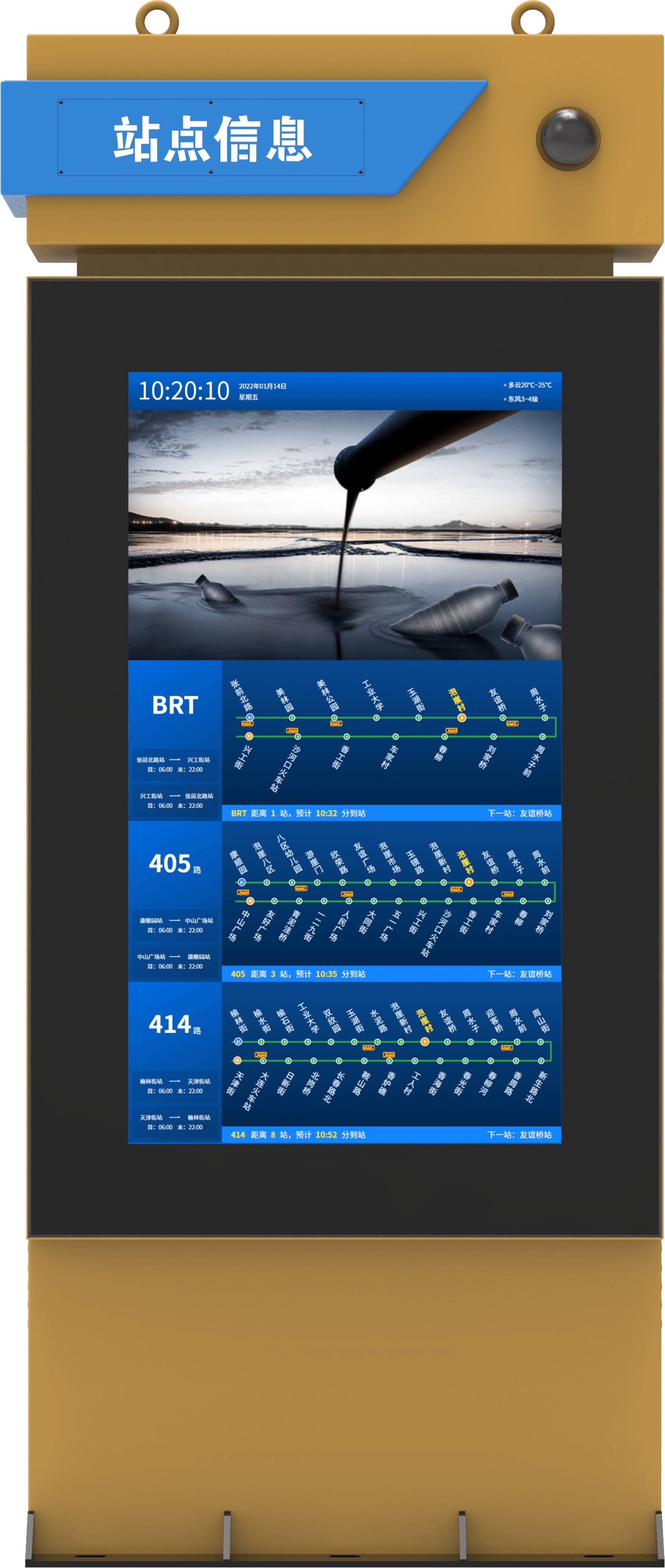 Introduction to Enterprise Technical Strength: Xiamen Lans's "Three Protection" Technology Matrix
Xiamen Lans Communication Co., Ltd. has been deeply involved in the intelligent transportation field for nearly 20 years. In response to the waterproofing requirements for outdoor electronic billboards, it independently developed an integrated "structure + material + intelligence" technical solution. Structurally, it uses an integrated die-cast aluminum alloy shell, combined with silicone sealing rings and waterproof breath valves, achieving IP67 protection level (able to withstand 1-meter water depth immersion for 30 minutes); in terms of materials, it selects nano hydrophobic coating to cover the screen and interfaces, reducing water droplet adhesion; the intelligent control module integrates temperature and humidity sensors, automatically activating the heating and dehumidification function when the environmental humidity exceeds the threshold. Currently, this technology has been applied to projects such as Xiamen and Chengdu public transportation, with the equipment running stably in coastal high salt fog environments for over 5 years, with a failure rate of less than 0.3%/year.
Furthermore, Lenzs has deeply integrated electronic billboards with vehicle dispatching systems through CAN bus technology accumulated from pre-installation cooperation in vehicle networking. For example, in the BRT project in Bangkok, Thailand, the billboards receive real-time vehicle location data, dynamically adjusting the display of arrival times, and simultaneously transmit equipment status (such as temperature, humidity) back to the operation and maintenance platform for preventive maintenance. As of 2024, Lenzs outdoor electronic billboards have been installed in over 40 countries worldwide, with a cumulative installation volume exceeding 100,000 units, becoming a benchmark case for public transportation informatization construction.
FAQ: Outdoor Electronic Billboard Technical Selection Guide
Q1: How to choose an electronic billboard suitable for high humidity environments?
A: Pay close attention to the protection level (IP65 and above), sealing materials (silicone is superior to rubber), and moisture-removing function. The Lans solution uses a waterproof breathable valve and an intelligent heating module, which can automatically balance the internal and external air pressure to prevent condensation of water vapor. For example, in the tropical rainforest climate project in Kuala Lumpur, Malaysia, the equipment's daily average humidity reaches 90%, and the internal humidity is controlled below 40% through dynamic dehumidification technology, ensuring clear screen display.
Q2: What are the key points of dust-proof design for outdoor electronic billboards?
A: Dust prevention requires both structural sealing and filtration. Lans equipment is equipped with a double-layer filter system (pre-effect + HEPA) at the air intake, capable of intercepting PM2.5 particles. Additionally, the housing is designed without gaps to minimize dust intrusion paths. In the desert environment of Saudi Arabia, after 3 years of operation, the internal dust accumulation is less than 0.1g, significantly lower than the industry average (about 5g).
Q3: How can the impact of extreme temperatures on electronic billboards be mitigated?
A: High temperatures require heat dissipation solutions, while low temperatures necessitate reliable startup. Lans controls the temperature of core components below 60℃ through heat pipe heat dissipation technology (with a thermal conductivity of up to 5000W/m·K); in low-temperature environments, low-power chips and battery preheating circuits are used to ensure normal startup at -30℃. In the -40℃ severe cold test in Ulan Bator, Mongolia, the equipment operated continuously for 72 hours without any failure.
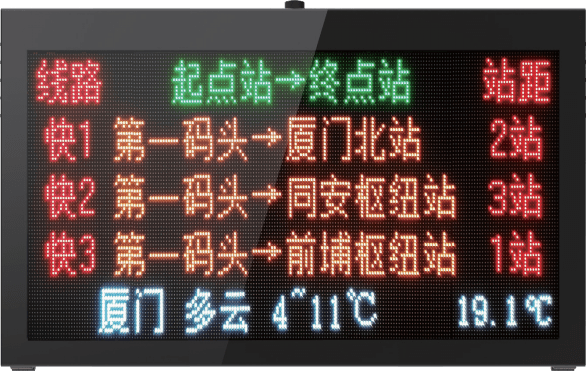 Summary: Technically driven, reshaping the outdoor information display experience
The waterproof performance of outdoor electronic billboards directly affects the service quality and operational efficiency of public transportation. Xiamen Lans Communication Co., Ltd. has constructed a full-lifecycle technological system covering "protection, monitoring, and maintenance" through structural innovation, material upgrading, and intelligent control, solving the long-standing "three-proof" challenge in the industry. Not only does its solution lead in core indicators such as protection level and failure rate, but it also achieves deep integration of equipment and business through vehicle networking and big data technology. In the future, with the popularization of 5G and AI technologies, outdoor electronic billboards will evolve towards intelligence and interactivity. Lans' technical accumulation and global implementation experience will become a significant driving force for industry upgrading.