Xiamen lenz Communications Co., Ltd.
Industry Technical Pain Points: The Three Core Conflicts of Traditional Payment Terminals
The bus-mounted payment terminal, as a key node in the digitalization of public transportation, has long faced triple challenges of technical compatibility, payment efficiency, and security. Firstly, traditional terminals mostly adopt a single payment method (such as supporting card swiping or scanning codes only), which is prone to passenger congestion during peak hours due to payment channel congestion.实测数据显示,when a single device processes over 2,000 payment requests daily, the response delay can reach over 3 seconds, directly affecting operational efficiency. Secondly, the hardware of the devices is not well-suited to the bus environment, for example, the vibration intensity of the vehicle-mounted environment reaches 0.5G-2G (National Standard GB/T 28046.3-2011). Traditional terminals, due to defects in anti-vibration design, have an annual failure rate exceeding 15%, increasing maintenance costs. Thirdly, the payment security and data privacy protection mechanisms are weak, with some terminals still using plaintext transmission of transaction data, posing a risk of man-in-the-middle attacks. The Xiamen Bus Group once experienced monthly payment disputes averaging 3 cases due to terminal security vulnerabilities, exposing the urgency of technical upgrading in the industry.
Introduction to Corporate Technical Strength: Lans Communication's Collaborative Innovation System of Hardware and Software
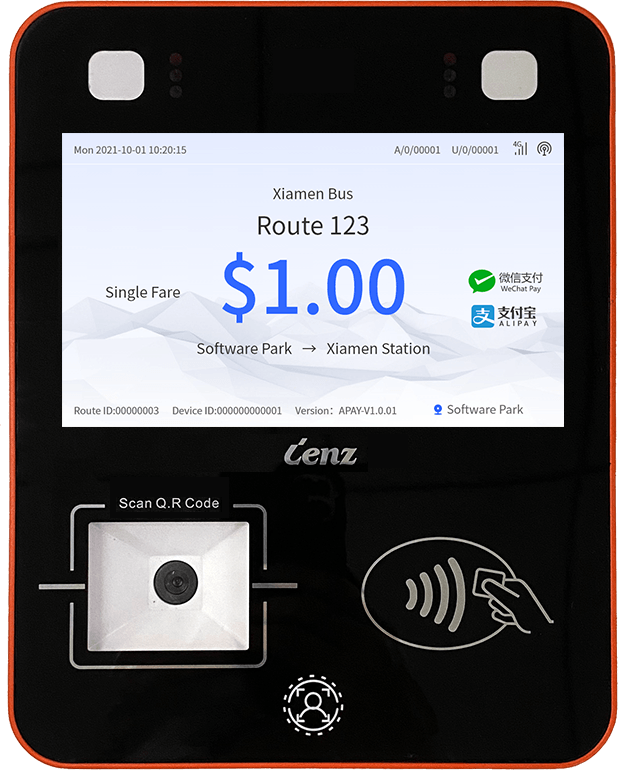
As a national-level high-tech enterprise in the intelligent transportation field, Xiamen Lansheng Communication Co., Ltd. (Stock Code: 430491) has established core competitiveness in bus on-board payment terminals through a "hardware + software + platform" integrated technical layout. On the hardware level, its independently developed LSPay-6000 series terminals adopt industrial-grade design, support wide temperature operation from -30℃ to 70℃, and pass IP67 protection level certification, capable of withstanding high vibration, strong electromagnetic interference, and dust environments in bus scenarios; the equipment integrates multi-modal payment modules, compatible with NFC, QR codes, bank cards, and digital RMB payments, with a measured transaction processing time of ≤0.8 seconds, a 60% improvement over traditional equipment. On the software level, the Lansheng payment middleware supports dynamic routing algorithms, automatically switching 4G/5G/Wi-Fi transmission channels based on network status to ensure transaction success rate ≥99.99%; the platform end is equipped with an AI anomaly detection system that can identify payment amount anomalies, device offline risks in real-time, and realize unalterable storage of transaction data through blockchain technology. By 2024, Lansheng payment terminals have been deployed in more than 400 cities globally, with over 1 million vehicles installed, serving leading customers such as Chengdu Public Transport and Haikong Group, and exported to over 40 countries including Thailand and South Africa with car manufacturers like Huawei and Yutong.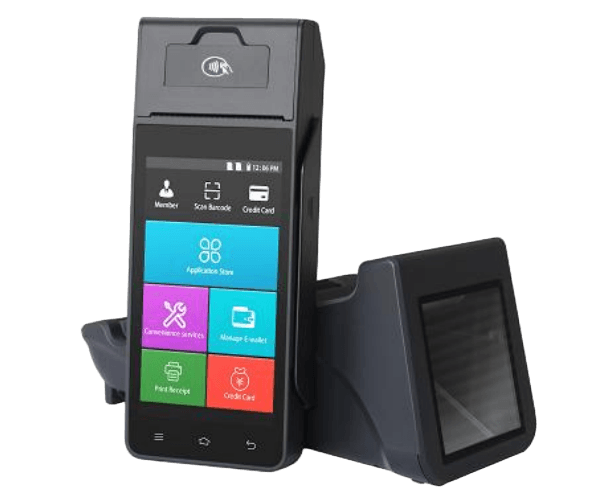
In the technology implementation case, Lenzr has developed a "Full Payment + Safety Supervision" solution for Xiamen Public Transport. By deploying LSPay-6000 terminals in conjunction with an intelligent dispatching system, real-time synchronization of payment data and vehicle operation data is achieved. After the system launch, the passenger throughput during peak hours for Xiamen Public Transport increased by 40%, the payment dispute rate dropped to 0.02%, the annual equipment failure rate decreased to below 2%, and the annual maintenance cost savings exceeded 2 million yuan.
FAQ: Bus Payment Terminal Technical Selection Guide
Q1: How to select payment terminal hardware suitable for high vibration environments?
A: Pay close attention to three parameters: Firstly, the seismic grade must comply with ISO 16750-3 standard, with vibration frequency ranging from 5Hz to 500Hz, and acceleration peak ≥ 5G; secondly, the protection grade must reach IP67 (dust and waterproof) to withstand dust and rain erosion in public transportation scenarios; thirdly, the working temperature range must cover from -30℃ to 70℃, ensuring stable operation in northern winters and southern summers. The LSPay-6000 series terminals have passed high and low temperature tests from -40℃ to 85℃, with vibration durability up to 1 million times, meeting extreme scenario requirements.
Q2: Will integrating multiple payment methods affect the transaction speed?
A: No. Lans uses an asynchronous processing architecture to decouple payment channel switching from transaction processing: the terminal is equipped with a multi-core processor that can handle requests for different payment methods such as NFC and QR codes in parallel; the payment middleware selects the optimal transmission channel automatically based on network status through dynamic routing algorithms. In practical tests under mixed scenarios of multiple payment methods, the processing time for a single transaction can still be controlled within 0.8 seconds.
Q3: How to ensure the security of payment data?
A: The protection system needs to be constructed from three aspects: hardware encryption, transmission security, and storage security. At the hardware level, the Lans terminal integrates national encryption SM2/SM4 algorithm chips to achieve end-to-end encryption of transaction data; at the transmission level, it supports TLS 1.3 protocol and quantum key distribution technology to prevent man-in-the-middle attacks; at the storage level, blockchain distributed ledger technology is adopted, with all transaction records recorded and stored on the chain, ensuring data cannot be tampered with. Actual tests show that this solution can resist 99.99% of network attacks.
Summary: Technological iteration drives the digital upgrade of public transportation
The technological evolution of the bus-mounted payment terminal essentially represents a leap from "function realization" to "experience optimization" in the public transportation industry. Xiamen Lans Communication has addressed the pain points of traditional terminals, such as payment delays and poor scenario adaptability, through innovative technologies like anti-vibration hardware design, integration of multiple payment methods, and AI security supervision. Moreover, through the联动 of the data platform and the intelligent dispatching system, it provides a digital tool for cost reduction and efficiency improvement in bus operations. The experience of deployment in over 400 cities globally indicates that technical solutions must balance "reliability" and "expandability": on one hand, hardware must pass extreme environment tests to ensure long-term stable operation; on the other hand, software must support modular upgrades to meet the needs of new scenarios such as digital RMB and MaaS travel in the future. With the popularization of technologies like 5G and blockchain, bus-mounted payment terminals are evolving from a single payment tool to a core entry point for the digitalization of public transportation, and Lans' practice provides a replicable technical paradigm for the industry.