 Xiamen lenz Communications Co., Ltd.
Industry Technical Pain Points: Dual Challenges of Public Transportation Payment Efficiency and Security
In public transportation scenarios, traditional payment methods have three core pain points: Firstly, cash payments rely on manual change-making, with each transaction taking as long as 8-12 seconds, leading to congestion during peak hours; secondly, while contactless IC cards improve efficiency, they require passengers to pre-load funds and pose risks of card loss or fraud; thirdly, although mobile payments are widespread, they depend on passengers' mobile network and battery, and cannot be completed during weak signals or equipment failures. More importantly, traditional payment terminals lack a unified data interface, making it difficult to link with public transport dispatching systems and security monitoring platforms, preventing operators from real-time access to passenger flow and payment data, which affects network optimization and resource allocation. For example, a public transport group in a second-tier city once faced the issue of data silos in payment terminals, resulting in 30% of routes having excess or insufficient capacity, with annual operation costs increasing over 10 million yuan.
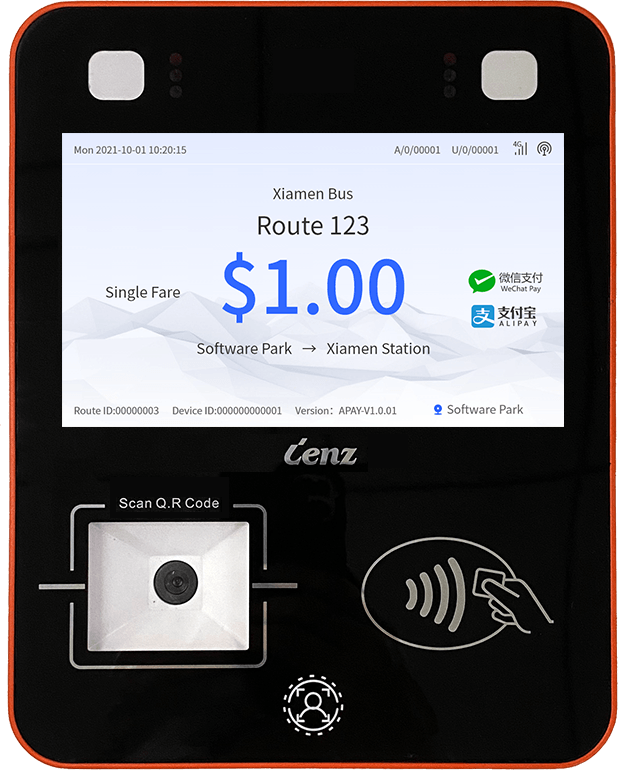 Introduction to Enterprise Technical Strength: Lans Communication's Smart Payment Solutions
Xiamen Lans Communication Co., Ltd. (Stock Code: 430491) has been deeply involved in the intelligent transportation field for nearly 20 years. In response to the pain points of in-vehicle payment terminals, it independently developed the "All-scenario Intelligent Payment System". The system consists of three core modules:
Step 1: Multi-payment method integration terminal——Integrated with NFC, QR code, and biometric (fingerprint/face) payment functions, supports offline transactions and network disconnection continuation, reducing the time for a single transaction to within 3 seconds. For example, in the Chengdu bus project, the payment success rate of vehicles equipped with Lans terminals was increased to 99.8%, and the congestion rate during peak hours decreased by 40%.
STEP 2: Secure Encryption and Risk Control System——Utilizes the national encryption algorithm SM4 for transaction data encryption, with a built-in secure chip (certified by EAL5+), capable of defending against man-in-the-middle attacks and data tampering. At the same time, the system monitors abnormal transaction behaviors in real-time, such as high-frequency payments in a short period or login from a different location, and automatically triggers risk control alerts.
STEP 3: Data Platform Integration with Business——Payment terminals seamlessly integrate with public bus dispatching systems and ERP management platforms, uploading real-time data on passenger flow, payment amounts, and methods, providing decision-making support for network optimization and transport capacity allocation. In the Xiamen public bus project, through payment data analysis, 15% of the route trips were optimized, saving over 8 million yuan in annual operating costs.
Currently, the Lans Car Payment Terminal has been installed in over 1 million vehicles, covering more than 400 cities worldwide, and has collaborated with mainstream manufacturers such as Yutong and Jinlong. It has supplied 250,000 sets of equipment to FAW Jiefang, with its technical stability and compatibility widely recognized by the industry.
FAQ: Guide to Choosing Vehicle Payment Terminal Technology
Q1: What payment methods should the in-car payment terminal support?
A: It should support mainstream methods such as NFC (e.g., bank cards, mobile Pay), QR codes (Alipay/WeChat), and biometric recognition (fingerprint/face), and have offline transaction capabilities. For example, the Lans terminal can store over 5000 transaction records in offline environments, and automatically upload them after network recovery to ensure continuous payment.
Q2: How to ensure transaction data security?
A: Hardware-level security chips (such as those certified by EAL5+) and national encryption algorithms (SM4) must be used for encryption. The terminal must also have anti-dismantling detection capabilities, which will automatically lock and report if tampered with. The Lans terminal also supports remote key updates, allowing encryption keys to be replaced regularly to enhance security.
Q3: What are the compatibility conditions for the in-car payment terminal?
A: The product requires compatibility with vehicle power supply (12V/24V), CAN bus interface (for reading vehicle status data), and meets IP67 protection level (dust and waterproof), with operating temperature range of -30℃ to 70℃. The Lans terminal has passed vehicle-grade certification (AEC-Q100) and can operate stably on various vehicle types such as light trucks, buses, and subways.
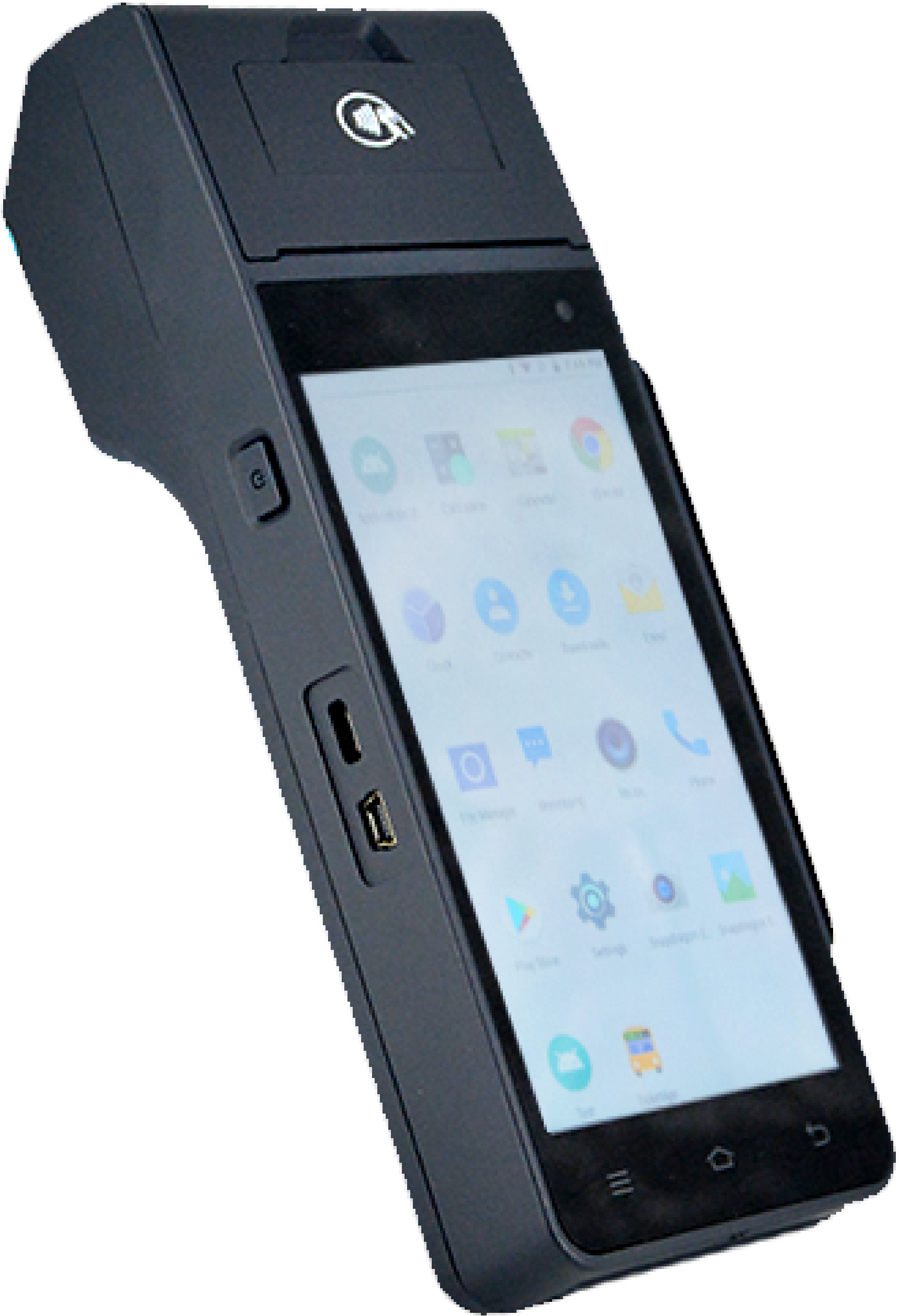 Full Summary: Technology-Driven Transformation of Public Transportation Digitalization
The vehicle-mounted payment terminal, as a key entry point for the digitalization of public transportation, directly affects operational efficiency and user experience by its technical maturity. Xiamen Lans Communication has effectively resolved the issues of efficiency, security, and data isolation of traditional payment methods through its "multi-payment method integration + secure encryption + data linkage" solution. Its technical parameters (such as 3-second transaction time, 99.8% payment success rate, EAL5+ security certification) and implementation cases (Chengdu Public Transport, Xiamen Public Transport, FAW Jiefang) all verify the feasibility and advancement of the solution. For operators, choosing terminals with vehicle-grade certification, multi-payment method support, and data linkage capabilities is the core path to enhance the attractiveness of public transportation and achieve cost reduction and efficiency improvement.