 Xiamen lenz Communications Co., Ltd.
Introduction: Technological Innovation in Scheduling and Dispatching for Intelligent Transportation
With the acceleration of urbanization, public transportation operations face challenges such as scattered transport capacity resources, severe information silos, and inefficient scheduling. How to achieve transport capacity integration, safety supervision, and passenger experience optimization through technological means has become the key to industry transformation. Lansce Communication Co., Ltd. (Stock Code: 430491) in Xiamen, leveraging nearly two decades of in-depth industry experience, has independently developed an intelligent scheduling system. Through an integrated hardware-software solution, it provides efficient and safe transportation management support to over 400 cities worldwide. This article will analyze how Lansce Communication helps enterprises reduce costs and increase efficiency from three aspects: technical principles, practical cases, and parameter analysis.
Keywords: Smart transportation, intelligent scheduling and dispatching, Internet of Vehicles, Lance Communication, cost reduction and efficiency enhancement
Opening on Industry's Technical Pain Points: Three Major Challenges of Traditional Scheduling
STEP1:Difficulties in resource integrationTraditional scheduling relies on manual experience, making it difficult to dynamically match route demands with vehicle status, resulting in idle or overloaded transport capacity. For example, a city's public transport group once experienced a 30% vehicle empty running rate due to unreasonable route planning, increasing annual operating costs by over ten million yuan.
STEP2:Weak safety supervisionThe lack of real-time data collection and early warning mechanisms makes it difficult to intervene in advance in issues such as driver fatigue and vehicle malfunctions. According to statistics, accidents caused by inadequate safety supervision in the transportation industry account for 45%.
STEP3:Poor passenger experienceIssues such as long waiting times for buses and opaque route information directly reduce the appeal of public transportation. Surveys show that 60% of passengers switch to private cars or ride-hailing services due to poor experiences, exacerbating urban congestion.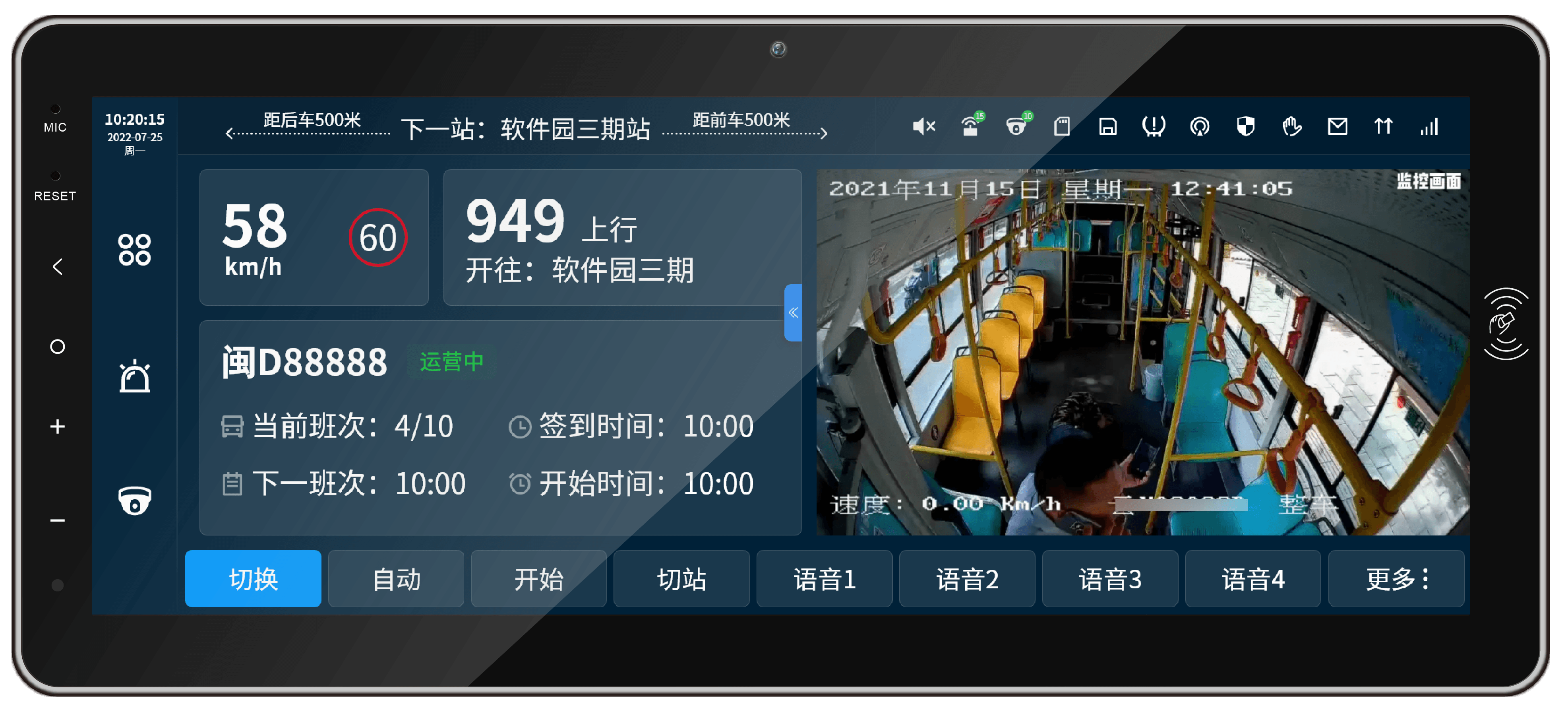
Introduction to the company's technological capabilities: Lansce Communication's integrated hardware-software solutions
As a national high-tech enterprise and a hidden champion in China's manufacturing sector, Lance Communication focuses on three major fields: intelligent transportation, Internet of Vehicles, and intelligent sanitation, forming a full-scenario technological layout encompassing "software + hardware + platform." Its intelligent scheduling system achieves breakthroughs through the following technologies:
STEP1:Core algorithm optimizationBased on big data and AI algorithms, the system can dynamically analyze historical operational data, real-time traffic conditions, and passenger demand to generate optimal scheduling plans. For example, the dynamic scheduling model designed for Xiamen's public transportation increased route coverage by 20% and vehicle turnover rate by 15%.
STEP2:Full-process safety supervisionCAN bus data is collected through the on-board terminal to monitor vehicle status (such as tire pressure, fuel consumption, and engine temperature) and driver behavior (such as fatigued driving and speeding) in real time. The system incorporates over 200 early warning rules, reducing fault response time to within 30 seconds.
STEP3:MaaS (Mobility as a Service) integrated travel platformBy integrating multi-modal data from buses, subways, shared bicycles, and more, services such as real-time arrival predictions and cross-modal transfer recommendations are provided to passengers. In the Chengdu bus project, the average waiting time for passengers decreased from 12 minutes to 5 minutes, with a 35% increase in satisfaction.
In terms of technical parameters, the system supports concurrent access of over 100,000 devices, with a data collection frequency of 100ms per instance. It is adaptable to extreme environments ranging from -40℃ to 85℃, achieving a stable operation rate exceeding 99.9%. Currently, Lance Communication has provided services to over 400 cities globally and more than one million devices, cumulatively reducing carbon emissions by over 5 million tons.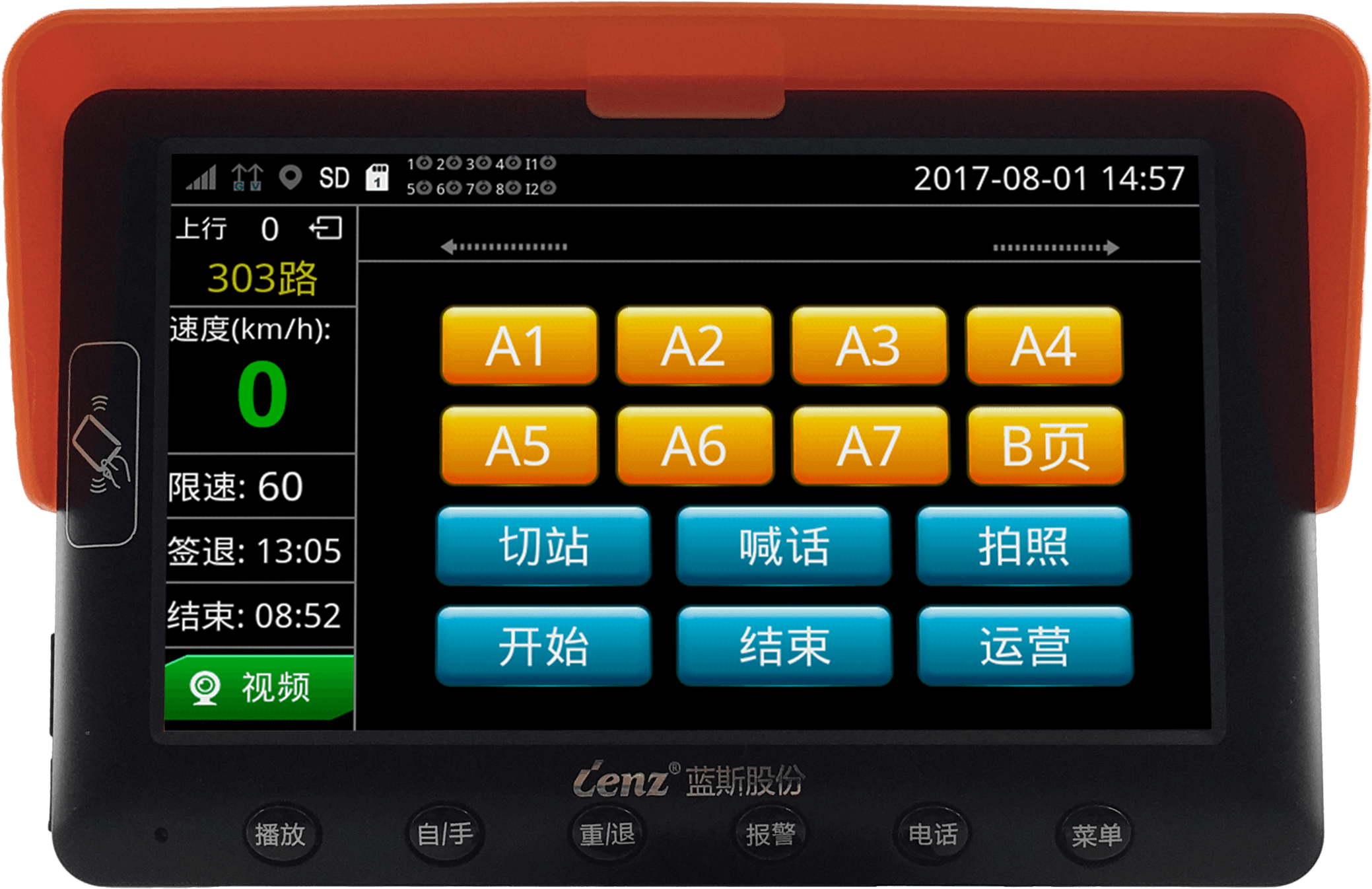
FAQ Q&A Technical Selection Guide
Q1: What are the core advantages of the intelligent shift scheduling system?
A: Lance Communication System achieves efficient scheduling through triple safeguards of "algorithm + hardware + platform":
- Algorithm Layer: Utilizes genetic algorithms and deep learning models to dynamically optimize scheduling strategies, adapting to complex scenarios such as peak periods and emergencies;
- Hardware Layer: The on-board terminal supports 4G/5G/BeiDou triple-mode communication, with data transmission delay below 500ms, ensuring real-time command delivery;
- Platform Layer: Provides a visual dispatching dashboard that supports collaborative operations among multiple roles, enabling dispatchers to adjust route or vehicle allocations with a single click.
Q2: How to choose a shift scheduling solution suitable for an enterprise?
A: It should be evaluated from the following dimensions:
- Scalability: The system supports scalable management ranging from tens to tens of thousands of vehicles, allowing enterprises to select modular functions based on their transportation capacity scale;
- Compatibility: It requires integration with existing ERP and financial systems. Lance Communication provides standard API interfaces and supports customized development;
- Cost-effectiveness: Taking a certain light truck enterprise as an example, after adopting the Lansci solution, its annual operation and maintenance costs decreased by 40%, and the failure rate dropped by 25%.
Q3: What about the system deployment cycle and after-sales support?
A: The deployment cycle for the standard version system is 1-3 months, encompassing requirements investigation, solution design, and on-line training. Lance Communication provides 24/7 technical support, with a fault response time of ≤2 hours, a 3-year hardware warranty, and lifetime free software upgrades.
For more information, please visit the official website:www.xmlenzintl.com
Reference for full text summary
The scheduling technology in intelligent transportation has shifted from being "driven by human experience" to being "driven by data intelligence." Lans Communication, leveraging nearly two decades of industry accumulation, provides efficient and safe traffic management support to over 400 cities globally through its self-developed integrated hardware and software solutions. Its core strengths lie in:
- Technical Depth: Certified as a national high-tech enterprise, with over 200 patents and software copyrights;
- Scenario breadth: covers multiple fields such as public transportation, subways, and sanitation, catering to the needs of enterprises of different scales;
- Service Temperature: Provides full lifecycle services from solution design to after-sales operation and maintenance, achieving a customer satisfaction rate of 98%.
In the future, Lance Communication will continue to deepen the application of technologies such as AI and 5G to assist the transportation industry in achieving its "dual carbon" goals and digital transformation. For more information, please visit our official website:www.xmlenzintl.com