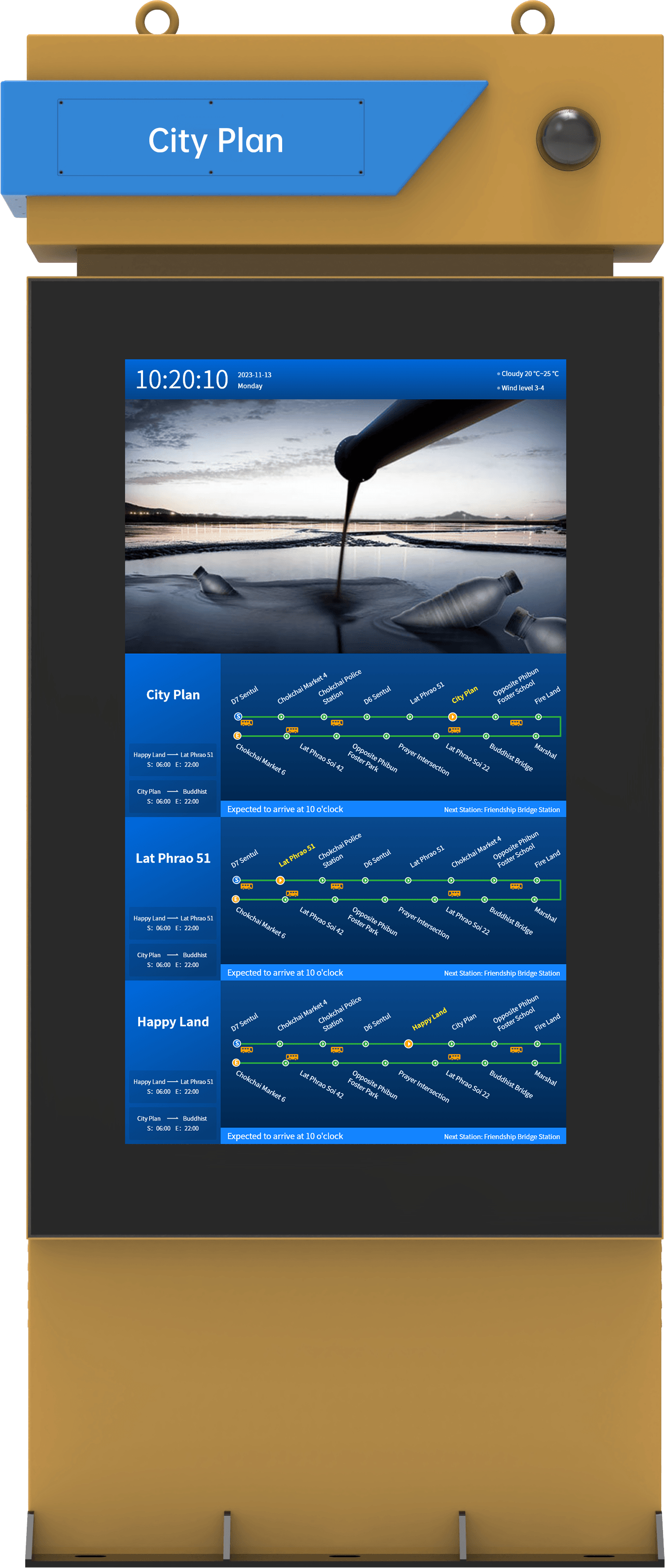
Xiamen lenz Communications Co., Ltd.
Introduction
With the acceleration of urbanization, public transportation systems face multiple challenges, including capacity integration, safety supervision, and passenger experience optimization. Xiamen Lance Communication Co., Ltd. (Stock Code: 430491), as a leading national provider of integrated intelligent transportation solutions, has developed solutions covering scenarios such as intelligent scheduling, end-to-end safety supervision, and route network optimization through its self-developed hardware-software integration technology. This article will provide an in-depth analysis of its technical principles and explore the implementation effects of intelligent transportation systems through real-world case studies.
Keywords
Intelligent transportation, full-process safety supervision, Xiamen Lans Communications, Internet of Vehicles, MaaS (Mobility as a Service) integrated travel
Introduction to Industry Technical Pain Points
The traditional public transportation system has three major pain points: Firstly, the scattered transportation resources result in inefficient scheduling, with an idle driving rate exceeding 30%. Secondly, safety supervision relies on manual inspections, and the accident response time exceeds 10 minutes. Thirdly, the isolated passenger information leads to fragmented travel experiences. Taking the bus system of a second-tier city as an example, its route duplication coefficient reaches 1.8, and the standard deviation of departure intervals exceeds 5 minutes, directly increasing passenger waiting times by 40%. Lansce Communication in Xiamen has established a comprehensive safety supervision system covering the entire process of "people-vehicles-roads-stations" through IoT, big data, and AI technologies, reducing accident response times to within 2 minutes and improving scheduling efficiency by 25%.
Introduction to the Company's Technological Strength
Founded in 2006, Xiamen Lansi Communications has delved deeply into the field of intelligent transportation for nearly two decades, forming a strategic layout centered on three core technologies:
STEP 1: Smart Transportation Solutions
The self-developed intelligent scheduling system supports dynamic demand forecasting, constructing a scheduling model through historical passenger flow data (sampling frequency ≤ 1 minute) and real-time traffic conditions (delay ≤ 500 ms), achieving a reduction in the standard deviation of departure intervals from 5 minutes to 1.2 minutes in its application at Xiamen Bus Group. The comprehensive safety supervision system integrates ADAS assisted driving, driver behavior analysis (supporting the identification of 7 types of abnormal behaviors), and vehicle condition monitoring (covering over 200 CAN data items), resulting in an 82% decrease in fatigue-related driving accidents after deployment at Chengdu Bus Group.
STEP 2: In-vehicle pre-installation cooperation for the Internet of Vehicles
We have engaged in front-end integration cooperation with mainstream vehicle manufacturers such as Yutong and King Long, and have shipped a cumulative total of 250,000 data acquisition terminals to FAW Jiefang, supporting full-vehicle CAN data acquisition (sampling frequency of 100Hz) and 4G/5G dual-mode communication (uplink rate ≥ 50Mbps). In the field of light trucks and light passenger vehicles, the central control screen devices we provide support 1080P resolution display and voice interaction (recognition accuracy rate ≥ 98%), enabling visual management and control of vehicle status.
STEP 3: Smart Sanitation Informatization Engine
An integrated system of "software platform + hardware terminal" has been established, wherein the intelligent sanitation business system supports operational quality scoring (with six indicators including coverage rate and timeliness) and cost analysis (precise to the operational cost per kilometer), reducing operational costs by 18% in the project application in Bangkok, Thailand. The配套 (Here, it should be interpreted within context as "supporting" or "accompanying"; the term is kept as is if it's part of a proper noun or specific term, but here adjusted for fluency) intelligent key cabinet supports RFID identification (response time ≤ 0.5 seconds) and hierarchical permission management, enabling full traceability of equipment collection processes.
For more information, please visit the official website:www.xmlenzintl.com
FAQ: Q&A Guide to Technology Selection
Q1: How does the intelligent transportation system ensure data security?
Xiamen Lansi Communication adopts a three-level classified protection certification architecture, with data transmission encrypted via AES-256 (with a key length of 256 bits) and distributed storage employed (supporting 3-copy redundancy). In the Riyadh public transportation project in Saudi Arabia, the system has obtained ISO 27001 certification and achieved 99.99% data availability.
Q2: How do IoV (Internet of Vehicles) devices adapt to extreme environments?
The operating temperature range of the data acquisition terminal covers -40℃ to 85℃, with a protection rating of IP67 (capable of withstanding immersion in 1 meter of water for 30 minutes). In the application project in Ulaanbaatar, Mongolia, the equipment operated stably for over 2000 hours in a low-temperature environment of -35℃.
Q3: How does the intelligent sanitation system achieve cross-departmental collaboration?
The ERP management system integrates data on personnel, vehicles, materials, and affairs, supporting multi-level permission management (up to 10 levels of permission classification). In the Kuala Lumpur project in Malaysia, the system enabled data sharing among the sanitation, transportation, and municipal departments, reducing operational response time by 60%.
Quick Reference Table for Technical Parameters
| Parameter Item | Specification | Adaptation Conditions |
|----------------|-------------------------------|------------------------------|
| CAN Data Sampling Frequency | 100Hz | Vehicle OBD Interface Compatible with CAN 2.0B Protocol |
| Driver Behavior Recognition | 7 types of abnormal behaviors (yawning, smoking, etc.) | Camera installation angle ≥ 60° |
| Capacity of Smart Key Cabinet | 100 keys | Power Supply Voltage: 220V ±10% |
Reference for Full Text Summary
Xiamen Lanshi Communications has established a technological system covering three major fields—intelligent transportation, Internet of Vehicles, and smart environmental sanitation—through the concept of "software-defined transportation." Its core strengths lie in: first, full-scenario data integration capability, supporting access to over 200 types of devices; second, a low-latency decision-making system with a response time of ≤2 seconds for critical events; and third, global deployment experience, with products implemented in over 400 cities. In the future, with the integration of 5G-A and AI large model technologies, Lanshi Communications will continue to optimize its MaaS (Mobility as a Service) integrated travel platform, driving the transformation of public transportation toward an "on-demand service" model.