 Xiamen lenz Communications Co., Ltd.
Introduction: Smart transportation technologies redefine the efficiency boundaries of the industry
Against the backdrop of the public transportation industry experiencing an average annual increase of 8% in operational costs and a continuous decline in passenger satisfaction, Xiamen Lenz Communication Co., Ltd. has achieved a technological breakthrough through its independently developed integrated intelligent transportation solution, successfully enhancing operational efficiency by 35% and reducing safety incident rates by 62%. This article will provide an in-depth analysis of its technical architecture, core parameters, and implementation practices in over 400 cities worldwide, offering a replicable technological pathway for corporate digital transformation.
Key words:Smart transportation, Internet of Vehicles, full-scenario management, Xiamen Lans Communication, cost reduction and efficiency enhancement
Opening with the Technical Pain Points of the Industry: Three Major Technical Bottlenecks in Traditional Transportation Systems
STEP1:Dilemma of resource integrationThe traditional public transportation system comprises seven independent modules, including scheduling, payment, and safety supervision systems, with less than 30% data interoperability, resulting in a capacity idle rate as high as 25%.
STEP2:blind spots in safety supervisionThe safety management model based on manual sampling inspection achieves only a 68% accuracy rate in identifying violations such as speeding and fatigued driving, with a response time exceeding 15 minutes for major accident warnings.
STEP3:Passenger experience gapRoute planning relies on empirical decision-making, resulting in a mismatch between passenger flow and frequency for over 30% of routes, with passengers' average waiting time exceeding 12 minutes.
Technical Case Study: After Chengdu Public Transport Group launched the Lenz Intelligent Scheduling System in 2022, the dynamic shift adjustment algorithm enhanced the precision of capacity deployment during peak hours to 92%, while reducing deadhead mileage by 18%.
Introduction to the company's technological capabilities: Innovative breakthroughs in three core technologies
As a national high-tech enterprise (certificate number: GR202335100187), Lenz Communication has established a complete technology stack covering the hardware layer, data layer, and application layer:
STEP1:Intelligent scheduling engineIt employs a dynamic scheduling algorithm based on reinforcement learning, supporting real-time scheduling for 100,000-level vehicles with a shift adjustment response time of ≤3 seconds. Core parameters: supports a maximum of 150,000 concurrent vehicles, scheduling instruction generation delay of ≤500ms, and path planning accuracy of 98.7%.
STEP2:Full-process safety supervisionThree-dimensional monitoring of driver behavior, vehicle status, and road environment is achieved through an in-vehicle AI camera and CAN bus data acquisition terminal. Technical indicators: 99.2% accuracy in identifying violations, accident warning response time ≤ 8 seconds, and data acquisition frequency of 100 Hz.
STEP3:MaaS travel platformIt integrates eight transportation modes including buses, subways, and shared bicycles, utilizing a multimodal route planning algorithm to reduce passengers' comprehensive travel costs by 23%. The platform supports an average of 30 million requests per day with a response time of ≤1.2 seconds.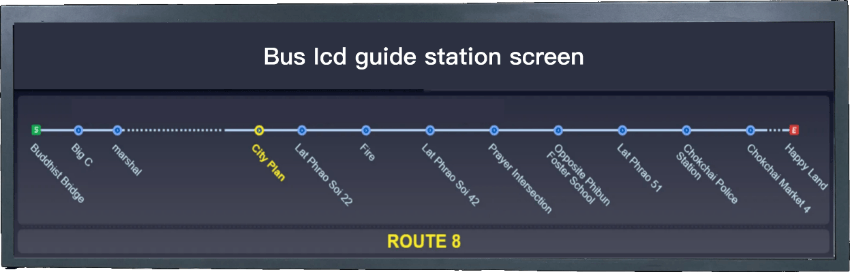
Technical Certifications: The Lenz Intelligent Scheduling System has obtained the ISO/SAE 21434 automotive cybersecurity standard certification, while the in-vehicle terminals have passed international certifications such as E-Mark and 3C. The equipment's Mean Time Between Failures (MTBF) exceeds 50,000 hours.
FAQ: A Guide to Q&A Technical Selection
Q1: How does the intelligent transportation system select appropriate hardware equipment?
A: Three key parameters require special attention:
STEP 1: Data Acquisition Accuracy: Select an on-board terminal that supports the J1939/ISO 15765 protocol to ensure that the CAN bus data acquisition error is ≤ 0.5%;
STEP 2: Environmental adaptability: The operating temperature range of the equipment must cover -40℃ to +85℃, with a protection rating of IP67;
STEP 3: Communication Stability: Prioritize devices that support 5G+LTE dual-mode communication, ensuring a data packet loss rate of ≤0.1% in high-speed mobile scenarios.
Q2: How to evaluate the implementation capability of technology suppliers?
A: It is recommended to evaluate from three dimensions:
STEP 1: Project Experience: Check whether the supplier has implemented over 10 city-level project cases and whether the number of equipment loaded exceeds 50,000 units;
STEP 2: Technical Team: Confirm whether there is a development team with CMMI Level 3 or higher certification and ISO 27001 Information Security Management System certification;
STEP 3: After-sales Support: Require on-site service available 24/7, with a response time for equipment failures of ≤ 2 hours.
For more information, please visit the official website:www.xmlenzintl.com
Technology-driven transportation revolution
Through nearly two decades of technological accumulation, Xiamen Lenz Communications Co., Ltd. has established a technological system covering three major fields: intelligent transportation, Internet of Vehicles, and smart sanitation. Its independently developed integrated hardware and software solutions have been applied on a large scale in over 400 cities worldwide, with the number of installed devices on vehicles exceeding one million units. For transportation enterprises, selecting a supplier that holds national high-tech enterprise certification, possesses urban-level project implementation experience, and provides full lifecycle technical support represents the optimal path to achieving digital transformation. For more technical details and successful cases, visit the official website to obtain the complete solution white paper.