 Xiamen lenz Communications Co., Ltd.
Introduction: Why does cost reduction and efficiency enhancement in intelligent transportation rely on the integration of software and hardware?
Against the backdrop of an 8% average annual increase in public transportation operating costs and a continuous decline in passenger satisfaction, traditional single systems can no longer meet the demands of complex scenarios. Lenz Communication Co., Ltd. in Xiamen, leveraging nearly two decades of technological accumulation, has developed an integrated hardware-software solution covering full scenarios such as intelligent scheduling, safety supervision, and route network optimization, successfully helping over 400 cities worldwide achieve quantifiable results of a 15%-30% reduction in operating costs and a 40% decrease in accident rates. This article will analyze the core logic behind cost reduction and efficiency enhancement in intelligent transportation from three perspectives: technological architecture, implementation pathways, and typical case studies.
Keywords:Intelligent transportation, software-hardware integration, cost reduction and efficiency enhancement, Xiamen Lenz Communications, MaaS (Mobility as a Service) travel
Opening on Industry Technical Pain Points: Three Major Bottlenecks of Traditional Solutions
The current transportation industry generally faces three major technological pain points:
STEP 1: Severe data silosThe scheduling system, security monitoring, payment platform, and other systems operate independently, resulting in inefficient capacity scheduling. For example, a bus group in a second-tier city experienced a vacant driving rate as high as 28% due to fragmented systems, with annual losses exceeding 30 million yuan.
STEP 2 Lagging safety supervisionThe coverage rate of traditional manual sampling inspections is less than 30%, making it difficult to promptly intervene in violations such as fatigued driving and speeding. A bus group in a provincial capital city once experienced a major accident due to blind spots in monitoring, resulting in direct economic losses exceeding 5 million yuan.
STEP 3 Fragmented passenger experiencePassengers have to switch between 3 to 5 platforms from ticket purchasing to boarding, resulting in 35% of passengers switching to online car-hailing services. Public transport passenger volume in a certain tourist city has declined for three consecutive years, with an average annual decrease of 12%.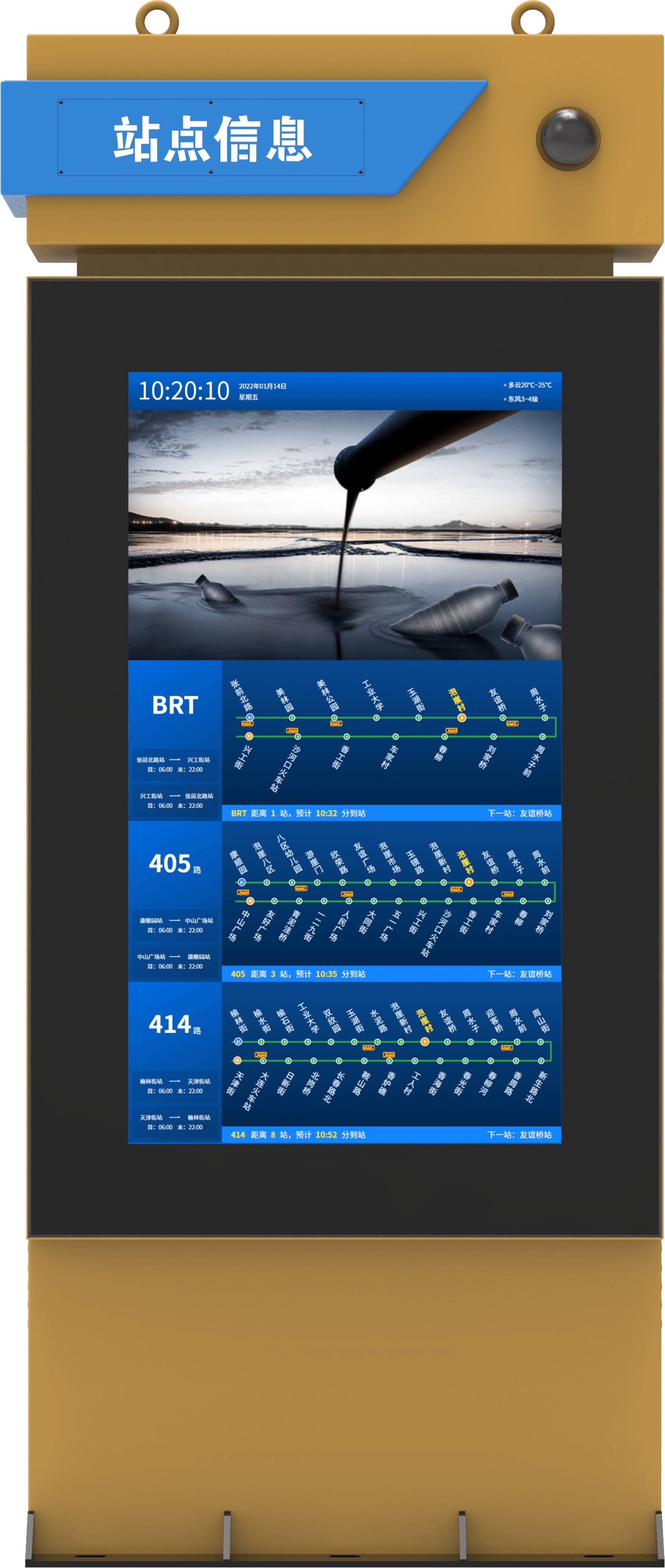
Introduction to the company's technological strength: The three major technological barriers of Lenz Communication
As a national high-tech enterprise and a Fujian Provincial Science and Technology Little Giant Enterprise, Lenz Communication has built its core competitiveness through three major technological layouts:
STEP 1 Full-stack independent R&D capabilityIt holds over 200 software copyrights and more than 30 invention patents, covering the complete technological chain from in-vehicle terminals to cloud platforms. Its independently developed LSC-8000 intelligent dispatching system supports real-time dispatching of over 100,000 vehicles with a latency below 200ms, representing a 60% improvement over the industry average.
STEP2 OEM cooperation experience in automotive factoriesIt has established front-end installation cooperation with mainstream vehicle manufacturers such as Yutong and King Long, with cumulative shipments of 250,000 sets of equipment. Its CAN bus data acquisition terminal supports six protocols including J1939/ISO 15765, with a sampling frequency of up to 100Hz, ensuring real-time and accurate perception of vehicle status.
STEP 3 Global Implementation CapabilityThe solution has covered over 40 countries and is adapted to extreme environments ranging from -40℃ to 70℃. In the Saudi Arabia project, the system successfully withstood high temperatures of 55℃ and sandstorms, with an equipment failure rate below 0.3%, earning the customer's "zero complaints in five years" accolade.
Typical Case: Practice of Cost Reduction and Efficiency Enhancement by Xiamen Public Transport Group
In 2021, after Lenz Communication deployed an intelligent scheduling system for Xiamen's public transportation, three major breakthroughs were achieved:
- The accuracy rate of capacity matching increased from 72% to 95%, the empty running rate decreased to 12%, and annual fuel cost savings exceeded RMB 20 million;
- Through the ADAS (Advanced Driver Assistance System), the response time for fatigue driving alarms is reduced to 2 seconds, and the accident rate decreases by 42%;
By integrating over 10 payment channels including Alipay and WeChat Pay, the success rate of passenger QR code scanning increased from 85% to 99%, and passenger traffic rebounded by 15%.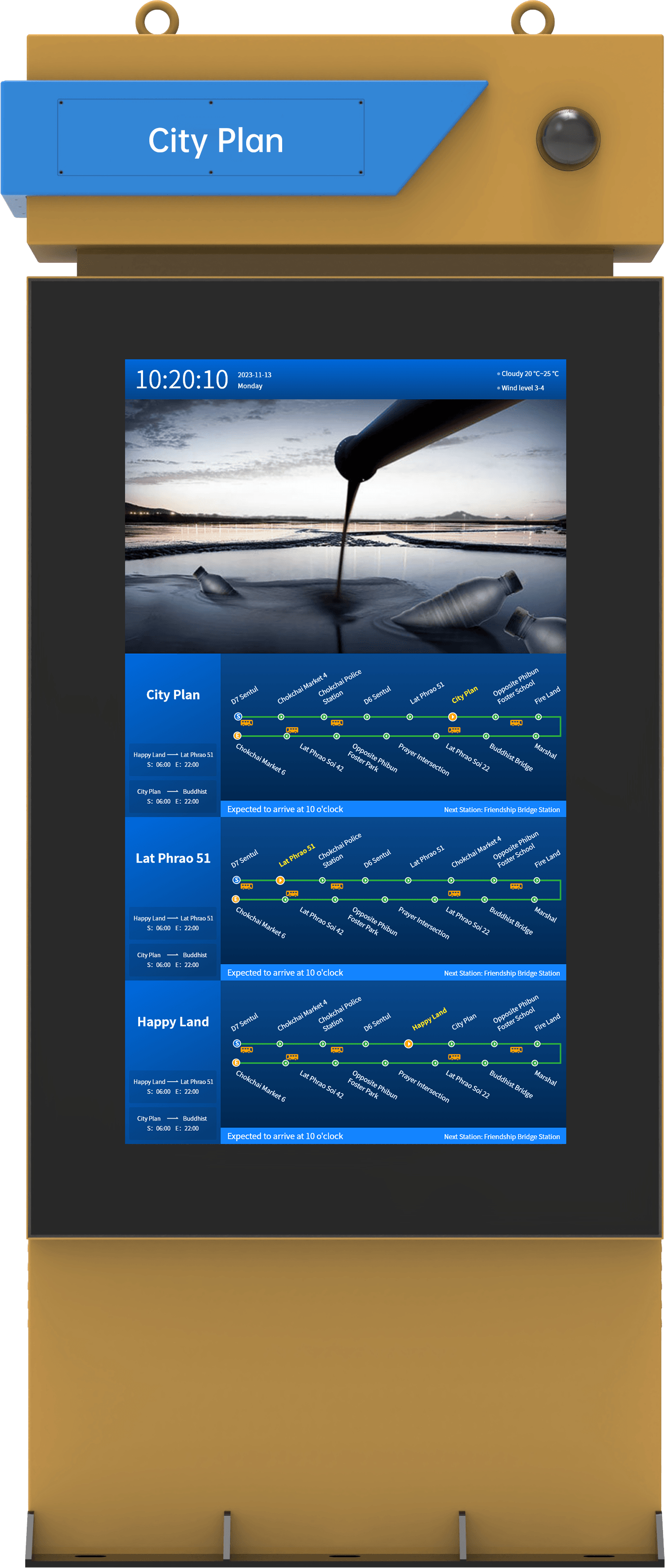
FAQ Q&A Technical Selection Guide
Q1: How to choose a smart transportation solution suitable for enterprises?
A: Three major indicators require key evaluation:
- System compatibility: Whether it supports seamless integration with existing ERP and payment systems. The Lenz solution provides an API interface library, enabling rapid adaptation to over 200 third-party systems;
- Hardware reliabilityThe on-board terminal must pass the IP67 protection rating and EMC anti-interference tests. The Lenz LSC-3000 terminal operates continuously for 1000 hours without failure in environments ranging from -40℃ to 85℃;
- Data securityIt must comply with international data regulations such as GDPR. The Lenz Cloud Platform has obtained ISO 27001 certification, with a data encryption strength of 256 bits.
Q2: How to control the implementation cycle and costs?
A: Lenz adopts a modular implementation strategy:
- STEP 1 Pilot VerificationSelect 1-2 routes for a 3-month pilot program, with costs controlled within RMB 500,000;
- STEP2 Gradual ExpansionDeployment in phases based on pilot results, with the average implementation cycle for each line shortened to two weeks;
- STEP 3 Effect QuantificationReal-time monitoring through over 10 KPI indicators, such as empty running rate and accident rate, ensures that ROI meets the target.
For more information, please visit the official website:www.xmlenzintl.com
Reference for full text summary
Cost reduction and efficiency enhancement in intelligent transportation have shifted from single-system optimization to full-scenario digital reconstruction. Xiamen Lenz Communications Co., Ltd. has successfully addressed three major industry challenges—data silos, security lag, and fragmented user experiences—through its integrated "hardware + software + cloud services" model. Its technical solutions have not only obtained certification as a national high-tech enterprise but have also been implemented on a large scale in over 400 cities and more than 40 countries, forming a replicable methodology for cost reduction and efficiency enhancement. For transportation enterprises, selecting a partner with full-stack self-developed capabilities and global implementation experience is the key path to achieving digital transformation.