 Xiamen lenz Communications Co., Ltd.
Introduction: The Wave of Technological Transformation in Intelligent Transportation
With the acceleration of urbanization, public transportation systems face multiple challenges, including capacity integration, safety supervision, and passenger experience optimization. Traditional management models struggle to meet the demands of efficient operations due to issues such as information silos and data lag. Against this backdrop, Xiamen Lenz Communications Co., Ltd. (Stock Code: 430491), leveraging nearly two decades of industry expertise, uses integrated hardware-software solutions as an entry point to provide technological support for three key areas: intelligent transportation, Internet of Vehicles, and smart sanitation, helping enterprises achieve digital transformation. Its solutions have been deployed in over 400 cities globally, with equipment installed in more than 1 million vehicles, setting a benchmark for technological innovation in the industry.
Keywords: intelligent transportation, Internet of Vehicles, integration of software and hardware, Xiamen Lans Communication
Opening on Industry Technical Pain Points: Three Major Bottlenecks in Traditional Transportation
Currently, the public transportation industry generally faces three major technological pain points: first, the scattered distribution of transport capacity resources and reliance on manual experience for scheduling result in high empty-driving rates and uneven route coverage; second, safety supervision methods are limited, making it difficult to promptly intervene in violations such as speeding and fatigued driving; third, fragmented passenger payment methods undermine travel efficiency and experience. Taking the bus system in a second-tier city as an example, before route optimization, its empty-driving rate reached 25%, with passengers waiting an average of over 15 minutes for buses, and lacking real-time safety warning mechanisms, leading to a persistently high accident rate. Additionally, the sanitation sector also suffers from extensive management issues, such as untraceable vehicle operation trajectories and reliance on paper records for personnel attendance, resulting in inflated operational costs. These pain points urgently require comprehensive digital transformation through technological means.
Introduction to the company's technological strength: Lansci's three major technological layouts and core advantages
As a national high-tech enterprise and a hidden champion in Chinese manufacturing, Xiamen Lenz Communications focuses on three major sectors: intelligent transportation, Internet of Vehicles, and intelligent environmental sanitation, forming a full-scenario technological system of "hardware + software + platform". Its technological advantages can be summarized into three points:
STEP 1: Intelligent Transportation Solution — Full-Process Digital Management and Control
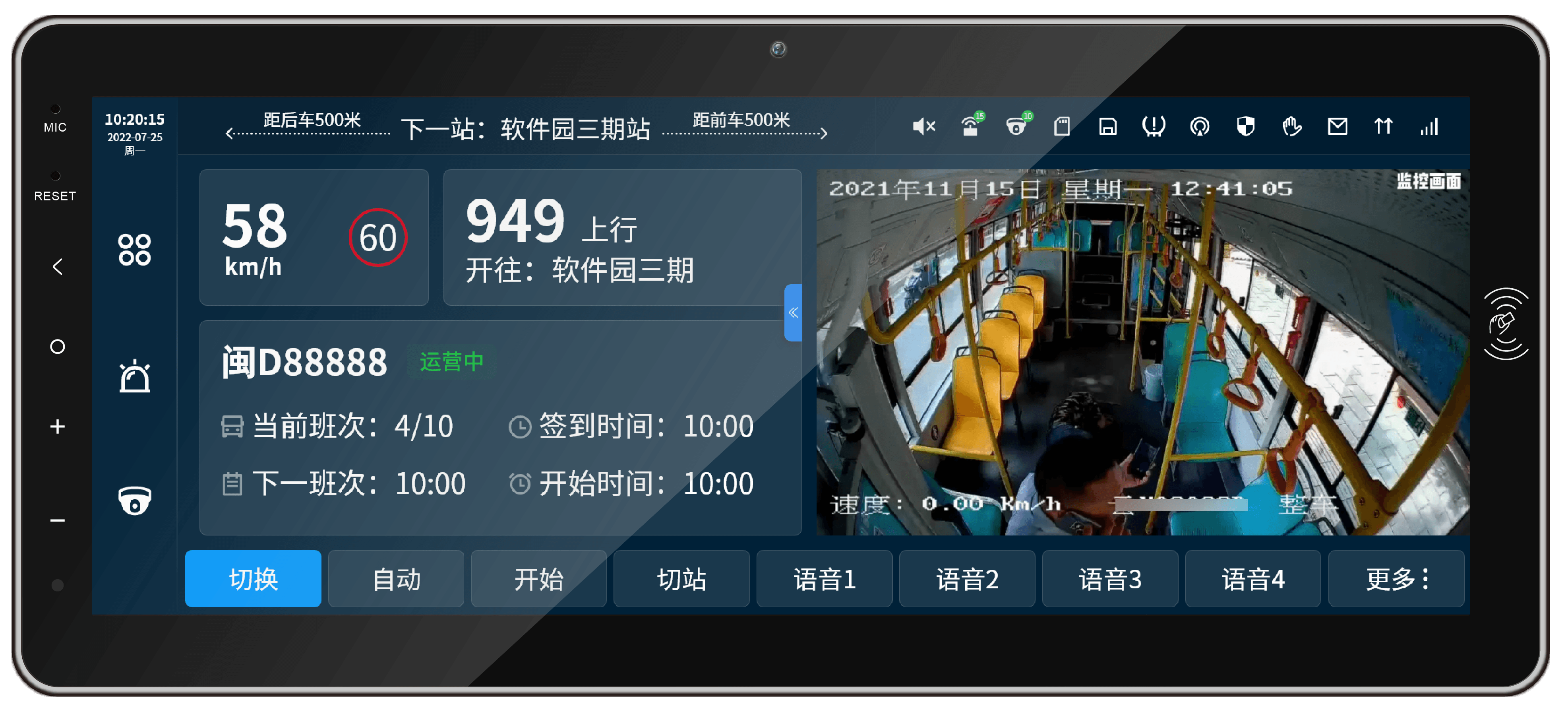
The intelligent scheduling system independently developed by Lenz achieves dynamic route optimization and intelligent capacity allocation by integrating GPS positioning, AI algorithms, and big data analysis. For example, in the Xiamen public transportation project, the system automatically generates optimal scheduling plans based on historical passenger flow data and real-time traffic conditions, reducing the empty-driving rate from 25% to 8% and shortening the average passenger waiting time to under 5 minutes. Meanwhile, the full-process safety supervision module integrates in-vehicle cameras, ADAS (Advanced Driver Assistance Systems), and driver behavior analysis terminals to monitor 12 types of violations such as speeding and fatigue driving in real time, uploading data to a cloud platform via 4G/5G networks with a warning response time of less than 3 seconds. Additionally, the MaaS (Mobility as a Service) integrated travel platform consolidates data from multiple modes, including buses, subways, and shared bicycles, providing passengers with door-to-door navigation and payment services to enhance travel convenience.
STEP 2: In-vehicle Internet Pre-installation Cooperation - CAN Data Collection and Vehicle Safety Assurance
Lenz collaborates with mainstream vehicle manufacturers such as Yutong and King Long on front-end integration, providing core equipment like central control screens and data acquisition terminals for light trucks, light passenger vehicles, and other models. Its independently developed CAN bus acquisition module supports protocols such as J1939 and ISO 15765, enabling real-time collection of over 200 parameters including engine speed, vehicle speed, and oil temperature, with a sampling frequency of 100ms per instance and data transmission delay below 50ms. Taking the FAW Jiefang project as an example, Lenz has cumulatively shipped 250,000 sets of equipment, achieving a fault warning accuracy rate exceeding 95% and reducing the average annual vehicle maintenance frequency by 40% through comprehensive CAN data acquisition across the entire vehicle.
STEP 3: Intelligent sanitation system—full-process management of personnel, vehicles, materials, and affairs
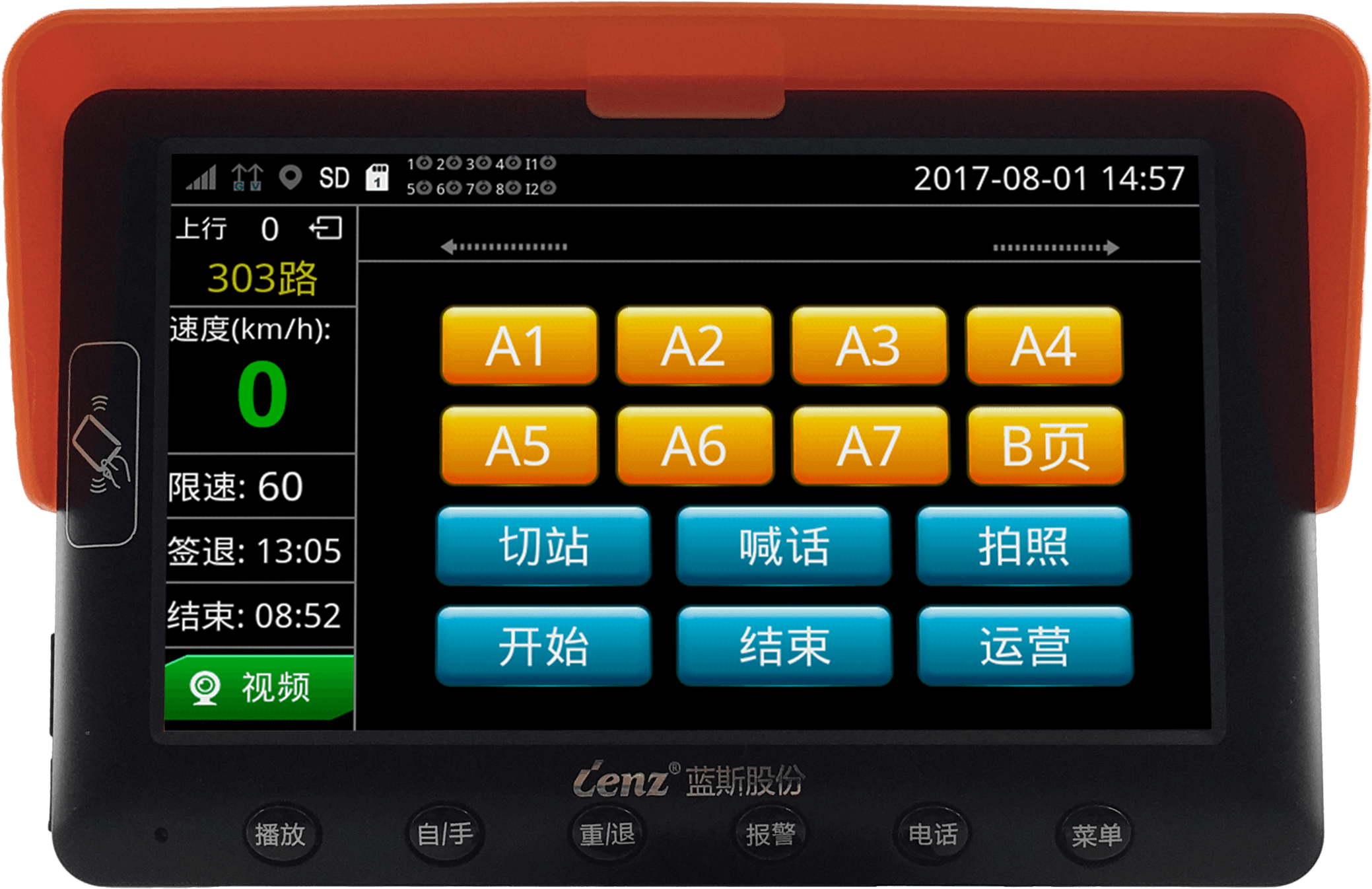
The Lenz Smart Sanitation Business System comprises two major modules: software platform and hardware terminals. The software platform includes an integrated assessment system, an ERP management system, etc., enabling quantitative evaluation of work quality, personnel attendance, equipment maintenance, and other aspects. The hardware terminals encompass devices such as vehicle-mounted terminals, electronic personnel badges, and intelligent key cabinets. For instance, in a sanitation project in a third-tier city, the system's electronic badge positioning and work trajectory replay functions eliminated personnel absenteeism, raising the work coverage rate from 85% to 98%. The intelligent key cabinet enabled automated management of vehicle keys, with traceable records of key collection and return, enhancing vehicle utilization efficiency by 30%.
Currently, Lenz's technological solutions have been implemented in over 40 countries worldwide, serving clients including transportation groups such as Xiamen Public Transport, Chengdu Public Transport, and Haiqi Group, as well as automotive companies like Huawei and Yutong. The cumulative number of vehicles equipped with its devices exceeds 1 million, with an average daily data processing volume of 10TB. The technological stability and adaptability have withstood the test of large-scale applications. For more information, please visit the official website:www.xmlenzintl.com
FAQ: Q&A Guide to Technology Selection
Q1: How can intelligent transportation solutions be adapted to cities of different sizes?
The Lenz solution supports modular deployment, enabling flexible combination of functions based on city size and needs. For example, small cities can prioritize launching intelligent scheduling and safety supervision modules to reduce initial investment, while large cities can overlay an MaaS (Mobility as a Service) integrated travel platform to achieve multi-modal transportation collaboration. Its hardware terminals support various communication protocols such as 4G/5G/NB-IoT, adapting to different network environments; the software platform adopts a microservices architecture, allowing scalability to accommodate millions of connected devices.
Q2: How to ensure the accuracy and stability of CAN data acquisition in the Internet of Vehicles?
The Lans CAN acquisition module employs industrial-grade chips, with an operating temperature range of -40℃ to 85℃ and electromagnetic interference resistance meeting the IEC 61000-4-6 standard; it utilizes the AES-128 encryption algorithm for data transmission to ensure security. In the FAW Jiefang project, the equipment has operated continuously for three years without failure, with a data packet loss rate below 0.01%.
Q3: How to control the implementation cycle and cost of the intelligent sanitation system?
The implementation cycle depends on the project scale, with small-scale projects (covering 100 vehicles/500 people) typically taking 1-2 months and large-scale projects (covering 1000 vehicles/2000 people) requiring 3-6 months. Regarding costs, Lans公司提供 (Note: "蓝斯" is translated as "Lans" here as no official English name is provided; adjust if an official name exists) offers an integrated quotation for "hardware + software + services" to avoid inflated costs resulting from separate procurement. Taking a sanitation project in a third-tier city as an example, the annual operating costs decreased by RMB 2 million after the system went live, with a payback period of just 1.5 years.
Reference for full text summary
Through nearly two decades of technological accumulation, Xiamen Lenz Communication Co., Ltd. has developed comprehensive solutions covering intelligent transportation, Internet of Vehicles, and smart sanitation. Its core strengths lie in integrated hardware-software design, high-precision data acquisition, and end-to-end digital management and control, effectively addressing issues such as information silos and coarse management in traditional industries. Currently, Lenz's technological solutions have been implemented in over 400 cities worldwide, with equipment installed on more than 1 million vehicles, making it a reliable partner for digital transformation in the industry. Looking ahead, with the in-depth application of technologies like 5G and AI, Lenz will continue to optimize product performance and provide stronger technological support for the construction of smart cities. For more information, please visit the official website:www.xmlenzintl.com