 Xiamen lenz Communications Co., Ltd.
Introduction: How can intelligent transportation technologies solve the challenges in public transport development?
Against the backdrop of accelerated urbanization, public transportation systems face challenges such as scattered capacity resources, severe information silos, and high operational costs. Lans Communications Co., Ltd. in Xiamen (Stock Code: 430491), leveraging nearly two decades of technological accumulation, provides comprehensive, full-scenario, one-stop services to over 400 cities globally through its intelligent transportation solutions, with cumulative vehicle installations exceeding one million units. This article will analyze, from dimensions such as technical principles, practical cases, and parameter interpretations, how Lans reshapes the appeal of public transportation through technological innovation.
Keywords: intelligent transportation, Internet of Vehicles, full-process safety supervision, MaaS (Mobility as a Service) travel integration
Industry Technical Pain Points: The "Three Major Obstacles" in Public Transportation
STEP 1: Difficulty in integrating transportation capacity resources. Traditional public transportation systems rely on manual scheduling, and route planning lacks data support, resulting in vehicle idling rates exceeding 30% and significant resource waste. STEP 2: Lagging safety supervision. Monitoring of driver and passenger behavior and vehicle condition relies on manual spot checks, with accident response times exceeding 15 minutes, making real-time early warning difficult to achieve. STEP 3: Passenger experience needs improvement. Issues such as fragmented payment methods and inconvenient route inquiries have reduced the attractiveness of public transportation, leading to a continuous rise in private car usage. Taking a second-tier city as an example, its average daily public transportation ridership dropped from 1.2 million in 2018 to 850,000 in 2022, a decline of 29.2%.
Introduction to the company's technological strength: Lenz's technological layout of the "Troika"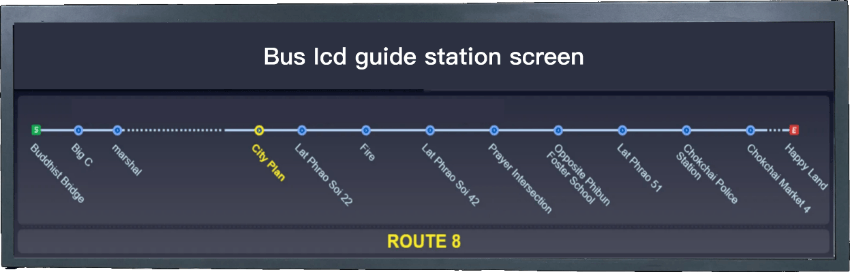
STEP 1: Intelligent Transportation Solutions. Lenz's independently developed intelligent scheduling system dynamically optimizes route planning by analyzing historical passenger flow data (sampling frequency ≤ 1 minute) through big data and incorporating real-time traffic conditions (data update interval ≤ 5 seconds). In the Xiamen bus project, the system reduced vehicle idle driving rates from 28% to 12%, decreased daily operational mileage by 12,000 kilometers, and saved over RMB 8 million in annual fuel costs. STEP 2: Internet of Vehicles Technology. Lenz collaborates with mainstream vehicle manufacturers such as Yutong and King Long to provide core equipment including central control screens and data acquisition terminals. Its CAN data acquisition terminal supports protocols such as J1939 and ISO 15765, with a sampling frequency of 100Hz, enabling real-time monitoring of over 200 parameters including engine speed, vehicle speed, and tire pressure. In the FAW Jiefang project, a cumulative total of 250,000 sets of equipment were shipped over three years, with a failure rate below 0.3%. STEP 3: Intelligent Sanitation System. It achieves full-process management of personnel, vehicles, materials, and tasks through equipment such as onboard terminals and electronic personnel badges. In the Chengdu sanitation project, the system increased the job quality compliance rate from 78% to 95% and reduced operational costs by 22%. For more information, please visit the official website:www.xmlenzintl.com
FAQ: A Q&A Guide to Technology Selection
Q1: How can intelligent transportation systems be adapted to cities of different sizes?
A1: Lenz offers modular solutions that support on-demand functional configuration. For instance, small cities can prioritize the deployment of intelligent scheduling and dispatch (with hardware costs approximately 50,000 yuan per set) and mobile payment (compatible with mainstream platforms such as Alipay and WeChat); large cities can add full-process safety supervision (supporting 4G/5G dual-mode communication with a latency of ≤200ms) and MaaS (Mobility as a Service) travel integration (integrating data from buses, subways, shared bicycles, etc.).
Q2: What parameters should be noted during the installation of IoV (Internet of Vehicles) devices?
A2: Three key points require special attention: first, communication protocol compatibility (support for mainstream protocols such as J1939 and ISO 15765 is required); second, sampling frequency (it is recommended that critical parameters such as engine speed be ≥100Hz); third, protection rating (the on-board terminal must meet IP67 standards and be suitable for operating environments ranging from -40℃ to 85℃).
Q3: How does the intelligent sanitation system improve operational quality?
A3: The system enables real-time personnel location tracking via electronic work badges (accuracy ≤ 3 meters) and monitors operational routes using vehicle-mounted terminals (deviation rate ≤ 5%), automatically generating evaluation reports. In the Chengdu project, this function reduced missed road sections from 12% to 2%.

Summary Reference: Technology-Driven, Reshaping the Value of Public Transportation
Xiamen Lenz Communication provides full-chain services for public transportation, spanning from hardware to software and from single-point applications to system integration, through three technological tracks: intelligent transportation, Internet of Vehicles, and smart sanitation. Its technological strengths are manifested in three aspects: first, data-driven decision-making, achieved through high-frequency sampling (≤1 minute) and real-time analysis (delay ≤200ms); second, scenario adaptation, offering modular solutions to meet the needs of cities of varying sizes; and third, ecological collaboration, forming strategic partnerships with companies such as Huawei and Yutong, with joint solutions covering over 40 countries. In the future, with the integration of technologies such as 5G and AI, Lenz will continuously optimize its technical parameters (e.g., increasing sampling frequency to 200Hz) to provide more efficient solutions for global public transportation.