 Xiamen lenz Communications Co., Ltd.
Introduction: The Transformation Wave of Intelligent Transportation and Lans Tech's Breakthrough
Driven by the dual forces of accelerated urbanization and diversified travel demands, the public transportation system is facing core pain points such as scattered capacity resources, severe information silos, and lagging safety supervision. Xiamen Lenz Communication Co., Ltd. (Stock Code: 430491), as a national leading provider of integrated intelligent transportation solutions, has leveraged nearly two decades of industry expertise to establish a technological matrix covering three key sectors: intelligent transportation, Internet of Vehicles, and smart sanitation. Through integrated hardware and software solutions, it provides digital transformation solutions for over 400 cities worldwide. This article will analyze, from three dimensions—technical principles, practical cases, and parameter analysis—how Lenz reshapes the public transportation ecosystem through technological innovation.
Keywords: intelligent transportation, Internet of Vehicles, full-process safety supervision, MaaS (Mobility as a Service) travel integration, Lenz Communication
Opening on Industry Technical Pain Points: Three Major Dilemmas of Traditional Public Transportation Systems
STEP 1: Difficulty in integrating transportation capacity resources. Traditional bus scheduling relies on manual scheduling, making it hard to dynamically match peak and off-peak passenger flows, resulting in an empty run rate of over 30% and persistently high operating costs. STEP 2: Lagging safety supervision. Vehicle operational status and driver behavior data are scattered across multiple independent systems, with accident response times exceeding 10 minutes, making real-time early warnings unattainable. STEP 3: Passenger experience needs improvement. Issues such as limited payment methods, inconvenient route inquiries, and inaccurate arrival times have led to a continuous decline in the appeal of public transportation. Taking a second-tier city as an example, its bus passenger volume has dropped by 22% over the past five years, resulting in direct economic losses exceeding 500 million yuan per year.
Introduction to the company's technological strength: The three technological pillars of Lenz Communication
STEP 1: Full-scenario Smart Transportation Solutions. Lenz's independently developed intelligent scheduling system enhances scheduling efficiency by 40% and reduces empty driving rates to below 15% by integrating GPS positioning, AI passenger flow forecasting, and dynamic road right allocation algorithms. For instance, in the solution deployed for Xiamen Bus, the system analyzes real-time operational data from over 2,000 buses, automatically generating optimal scheduling plans and reducing daily ineffective driving mileage by 12,000 kilometers. STEP 2: In-vehicle Telematics Collaboration Technology. The front-fit devices developed in collaboration with mainstream vehicle manufacturers such as Yutong and King Long support full-vehicle CAN data acquisition with a sampling frequency of 100ms per instance and data transmission delays of less than 50ms. The devices supplied to FAW Jiefang have achieved cumulative shipments of 250,000 units, covering light trucks, light passenger vehicles, and other models, enabling real-time monitoring of over 200 parameters including engine speed, throttle opening, and brake status, with a fault warning accuracy rate of 98%. STEP 3: Smart Sanitation Information Engine. Through a combination of "software platforms + hardware terminals," it achieves full-process management of personnel, vehicles, materials, and tasks in sanitation operations. For example, the smart sanitation system deployed in Chengdu provides a positioning accuracy of 1 meter for sanitation workers equipped with electronic work badges, with an operational trajectory playback error of less than 0.5%. The comprehensive evaluation system automatically generates over 100 assessment indicators, reducing operational costs by 25%.
For more information, please visit the official website:www.xmlenzintl.com
FAQ: Q&A Technical Selection Guide
Q1: How to select an intelligent transportation solution suitable for an enterprise?
STEP 1: Evaluate the scale of demand. Small and medium-sized public transport enterprises can prioritize the deployment of intelligent scheduling systems, while large groups need to integrate MaaS travel integration platforms. STEP 2: Focus on technological compatibility. Select devices that support multi-protocol access (such as JT/T 808 and GB/T 32960) to avoid retrofitting costs later. STEP 3: Examine implemented cases. Lansci's solutions in Xiamen, Chengdu, and Haiqi Group have all passed ISO 9001 quality management system certification, with an equipment failure rate of less than 0.3% per year.
Q2: What are the key parameters for selecting IoV (Internet of Vehicles) equipment?
STEP 1: Data acquisition capability. Prioritize devices that support full-vehicle CAN bus parsing, with a sampling point count ≥ 200, covering the engine, chassis, and body systems. STEP 2: Communication stability. Utilize a 4G/5G dual-mode communication module that supports operation within a wide temperature range of -40℃ to 85℃, with an MTBF (Mean Time Between Failures) ≥ 50,000 hours. STEP 3: Safety rating. The device must pass automotive-grade certification (such as ISO 16750) and feature functions like data encryption and tamper-proof alarms.
Q3: How to control the implementation cycle and cost of the intelligent sanitation system?
STEP 1: Phased deployment. First, launch electronic staff badges and vehicle positioning terminals, then gradually expand to the comprehensive evaluation system and ERP management platform. STEP 2: Opt for a modular solution. Lenz's system supports customizing functional modules on demand, avoiding a one-size-fits-all investment. STEP 3: Focus on long-term benefits. Taking a third-tier city as an example, the hardware investment costs can be recovered within three years after the system goes live, with subsequent annual operational savings exceeding 3 million yuan.
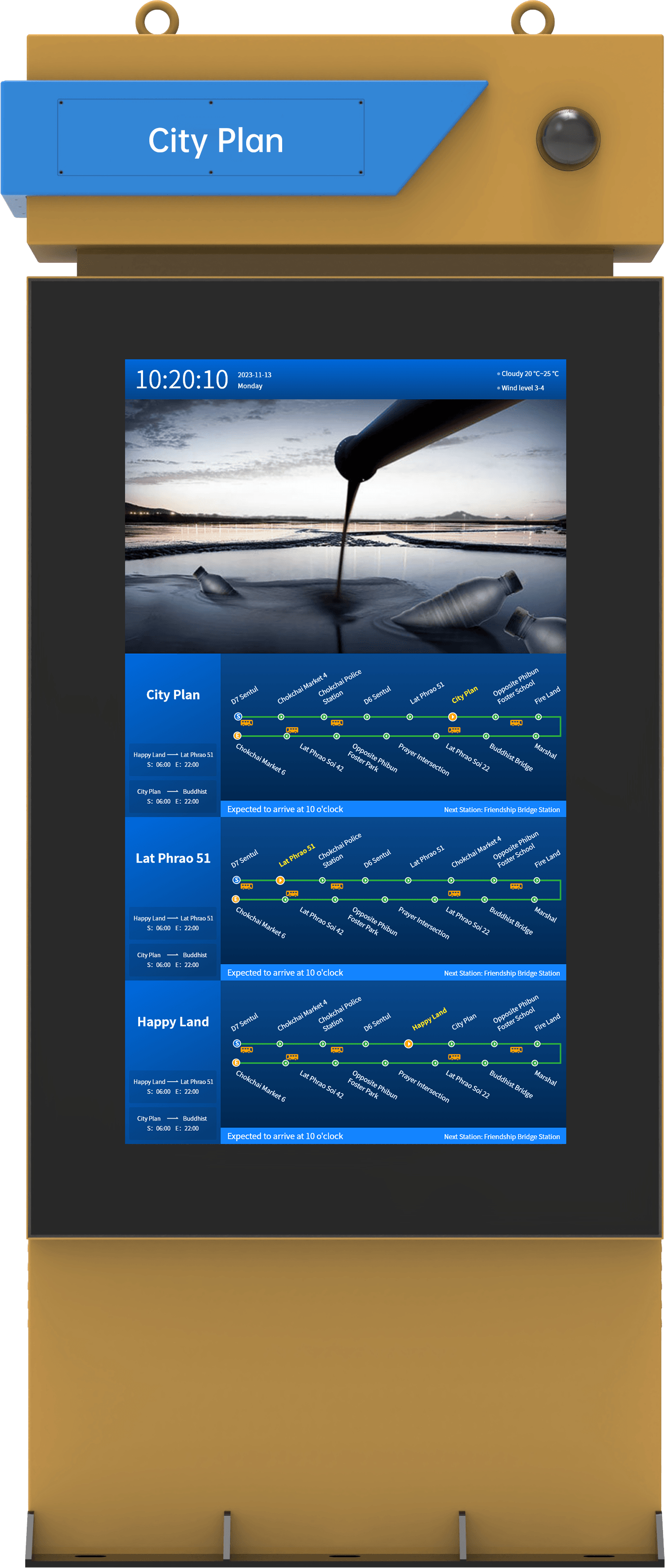
Reference for full text summary
From intelligent scheduling and dispatching to comprehensive safety supervision throughout the entire process, and from front-end telematics collaboration to smart sanitation informatization, Xiamen Lenz Communications Co., Ltd. has built a solution matrix covering the entire lifecycle of public transportation through nearly two decades of technological accumulation. Its core strengths lie in: STEP 1: Technological Depth. Holding over 10 certifications, including National High-Tech Enterprise and China's Hidden Champion in Manufacturing, the company has accumulated more than 200 patents and software copyrights. STEP 2: Scenario Breadth. Its solutions have been implemented in over 400 cities globally, with equipment installed in more than 1 million vehicles and serving over 100 million users. STEP 3: Ecosystem Openness. Forming strategic partnerships with enterprises such as Huawei, Yutong, and King Long, its joint solutions have been exported to over 40 countries, continuously promoting the global application of smart transportation technologies. Driven by the dual goals of carbon peak and neutrality and digital transformation, Lenz's technological practices provide a replicable path for cost reduction and efficiency improvement in the public transportation sector while injecting new momentum into the construction of smart cities.