 Xiamen lenz Communications Co., Ltd.
Introduction: The key to the transformation of intelligent transportation lies in technological integration capabilities
With the acceleration of urbanization, public transportation systems face challenges such as scattered transportation capacity resources, severe information silos, and lagging safety supervision. Lenz Communication Co., Ltd. in Xiamen, leveraging nearly two decades of in-depth industry experience, provides technical support for over 400 cities worldwide across three key sectors—smart transportation, Internet of Vehicles, and smart sanitation—through its self-developed integrated hardware and software solutions. This article will analyze, from three dimensions—technical principles, practical cases, and parameter analysis—how the company achieves cost reduction and efficiency improvement through core solutions such as intelligent scheduling and full-process safety supervision.
Keywords: intelligent transportation; Internet of Vehicles; cost reduction and efficiency enhancement; safety supervision; Xiamen Lenz Communication
Industry Technical Pain Points at the Beginning: Three Major Bottlenecks of Traditional Transportation Systems
STEP1:Difficulties in integrating transportation capacity resourcesTraditional public transportation systems rely on manual scheduling, with vehicle idle driving rates as high as 30% and route optimization cycles lasting 3-6 months, leading to persistently high operational costs. For example, 25% of the annual operational costs of a public transportation group in a second-tier city are spent on fuel consumption during idle driving.
STEP2:Lagging safety regulationViolations such as driver fatigue and speeding rely on manual spot checks, with accident response times exceeding 15 minutes, making real-time early warning difficult to achieve.
STEP3:Passenger experience needs improvementFragmented payment methods and inconvenient route inquiries have led to an 8% annual increase in passenger loss rate, with the appeal of public transportation continuously declining.
Introduction to the company's technological capabilities: Three core solutions to tackle industry challenges
Xiamen Lenz Communications (stock code: 430491), as a national high-tech enterprise and a hidden champion enterprise in China's manufacturing sector, has established a trinity technological layout of "hardware + software + platform":
STEP1:Intelligent shift scheduling systemDynamic scheduling is achieved based on AI algorithms, reducing vehicle empty running rates to below 8%. Parameter analysis: It supports the simultaneous scheduling of over 1,000 vehicles, shortens the scheduling cycle from monthly to hourly levels, and is suitable for scenarios such as urban public transportation and intercity passenger transport. For example, after deployment for Chengdu's public transportation system, annual fuel cost savings exceeded 20 million yuan.
STEP2:Full-process safety supervision platformThrough the linkage of the in-vehicle DMS (Driver Monitoring System) and ADAS (Advanced Driver Assistance System), real-time early warnings are provided for 12 types of violations, including fatigued driving and distracted driving. Technical advantages: response time ≤ 3 seconds, with a 40% reduction in accident rates. A cumulative total of 250,000 sets of front-mounted equipment have been shipped for FAW Jiefang, with vehicles safely operating for over 1 billion kilometers.
STEP3:MaaS integrated travel servicesIt integrates over 10 travel modes including buses, subways, and shared bicycles, supporting "one-code access" and real-time inquiry. Key operational points: API interface openness reaches 95%, compatible with mainstream payment platforms. After implementation in Xiamen's bus system, passenger satisfaction rose to 92%, with a 15% increase in average daily ridership.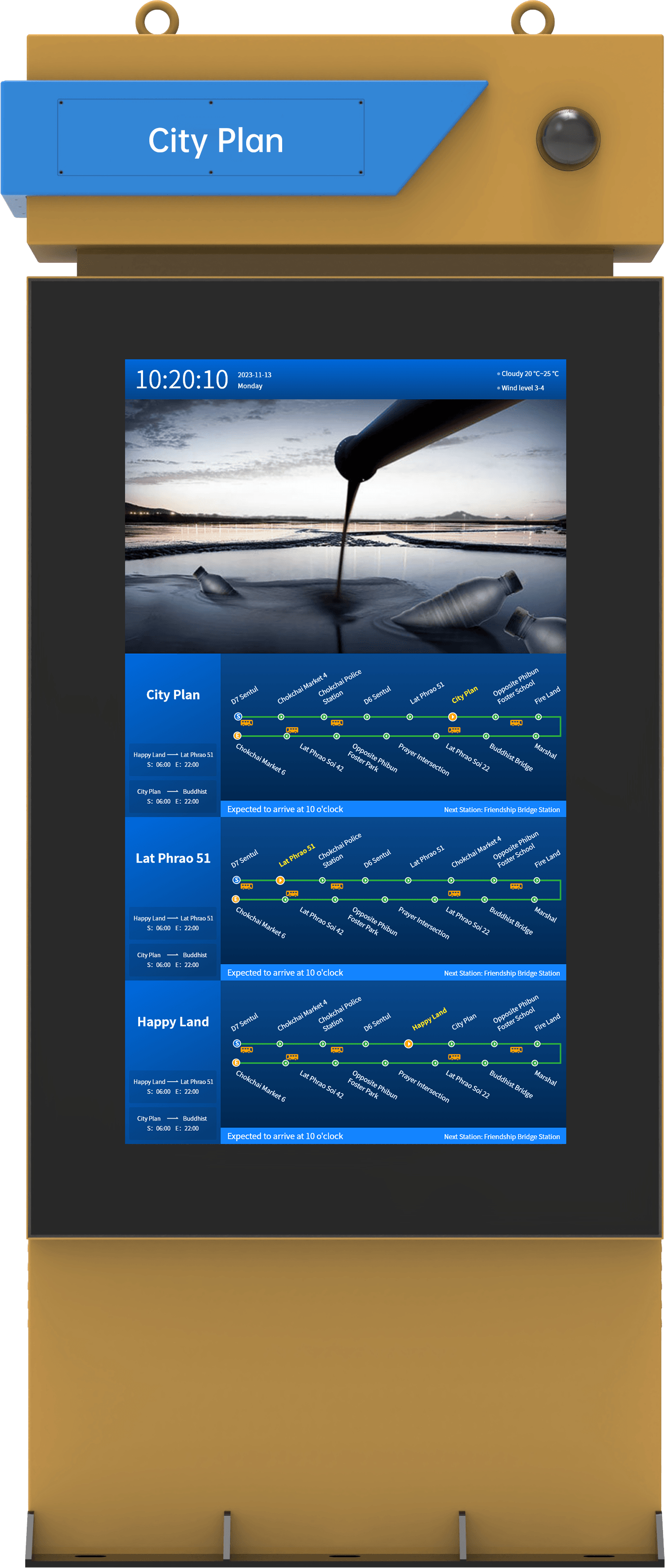
FAQ: Q&A Guide for Technology Selection
Q1: How does the intelligent transportation system select appropriate hardware equipment?
A: We need to focus on three key parameters:
1. Data acquisition frequency: The on-board terminal must support CAN bus data acquisition at a frequency of ≥10Hz to ensure real-time monitoring of vehicle status;
2. Communication stability: Utilizing 4G/5G dual-mode communication, with a packet loss rate ≤ 0.5% in environments ranging from -30°C to 70°C;
3. Protection grade: Outdoor equipment must meet the IP67 protection standard to withstand harsh environments such as heavy rain and sandstorms.
Q2: How can small and medium-sized public transport enterprises balance technological investment and costs?
A: It is recommended to implement in phases:
STEP 1: Prioritize the deployment of intelligent scheduling and safety supervision modules, with hardware costs controlled within 3% of the total vehicle price;
STEP 2: Integrate into the MaaS platform after 6-12 months, sharing system costs through the growth in passenger traffic;
STEP 3: Upgrade to a vehicle-road coordination system after two years to align with the development trend of autonomous driving.
Q3: What technical adaptation issues should be noted for the implementation of overseas projects?
A: Key issues to be addressed:
1. Communication protocol compatibility: Supports international standards such as EU eCall and North American OnStar;
2. Payment system integration: Compatible with local mainstream e-wallets (e.g., TrueMoney in Thailand, SnapScan in South Africa);
3. Language Localization: The system interface supports switching among over 10 languages, and the instructional videos are equipped with multilingual subtitles.
For more information, please visit the official website:www.xmlenzintl.com
Reference for full text summary
Xiamen Lenz Communications has formed three major competitive advantages in the field of intelligent transportation through the dual-wheel drive of "technology integration + scenario implementation":
1. Technical depthIt holds over 200 software copyrights and has participated in the formulation of three industry standards.
2. Breadth of scenariosCovering over 10 segmented scenarios including urban public transportation, intercity passenger transport, and tourist charter services;
3. The number of devices loaded onto vehicles has exceeded 1 million, serving over 40 countries including Thailand and South Africa.
In the future, with the widespread adoption of vehicle-road coordination and autonomous driving technologies, Lenz will continue to iterate its integrated "hardware + software + platform" solution, helping the global transportation industry achieve intelligent upgrades. For more information, please visit the official website:www.xmlenzintl.com