Xiamen lenz Communications Co., Ltd.
Introduction: Why has the selection of in-vehicle payment terminals become a key proposition in smart transportation?
With the accelerated digital transformation of public transportation, on-board payment terminals have evolved from mere payment tools into core nodes of intelligent transportation systems. According to data from the Ministry of Transport, the penetration rate of mobile payments for public transportation reached 82% nationwide in 2023, yet issues such as equipment failure rates, data silos, and security vulnerabilities continue to plague operators. How can one select on-board payment terminals that are suitable for specific scenarios, technically reliable, and cost-controllable? This article takes the practices of Xiamen Lenz Communications Co., Ltd. as an example to dissect the core logic of selection.
Keywords: In-vehicle payment terminal, intelligent transportation, Xiamen Lenz, selection guide, scenario adaptation
Industry pain points: Three major dilemmas of traditional in-vehicle payment terminals
STEP1:Contradiction between payment efficiency and passenger experienceA bus group in a second-tier city once experienced a 15% increase in passenger stranding rate during peak hours and a surge in complaints due to the slow response speed of its equipment (an average of 3.2 seconds per transaction).
STEP2:Data silos and soaring operational costsAfter adopting independent payment terminals, a taxi company in a certain location had to invest additional manpower to integrate transaction data with its vehicle dispatch system, resulting in an increase in annual operating costs of over 2 million yuan.
STEP3:Security vulnerabilities and compliance risksIn 2022, a third-party payment terminal failed to pass PCI DSS certification, resulting in the leakage of passengers' payment information and leaving the enterprise facing substantial fines and a brand trust crisis.
Service Provider Recommendation: Three Differentiated Advantages of Xiamen Lenz Communications
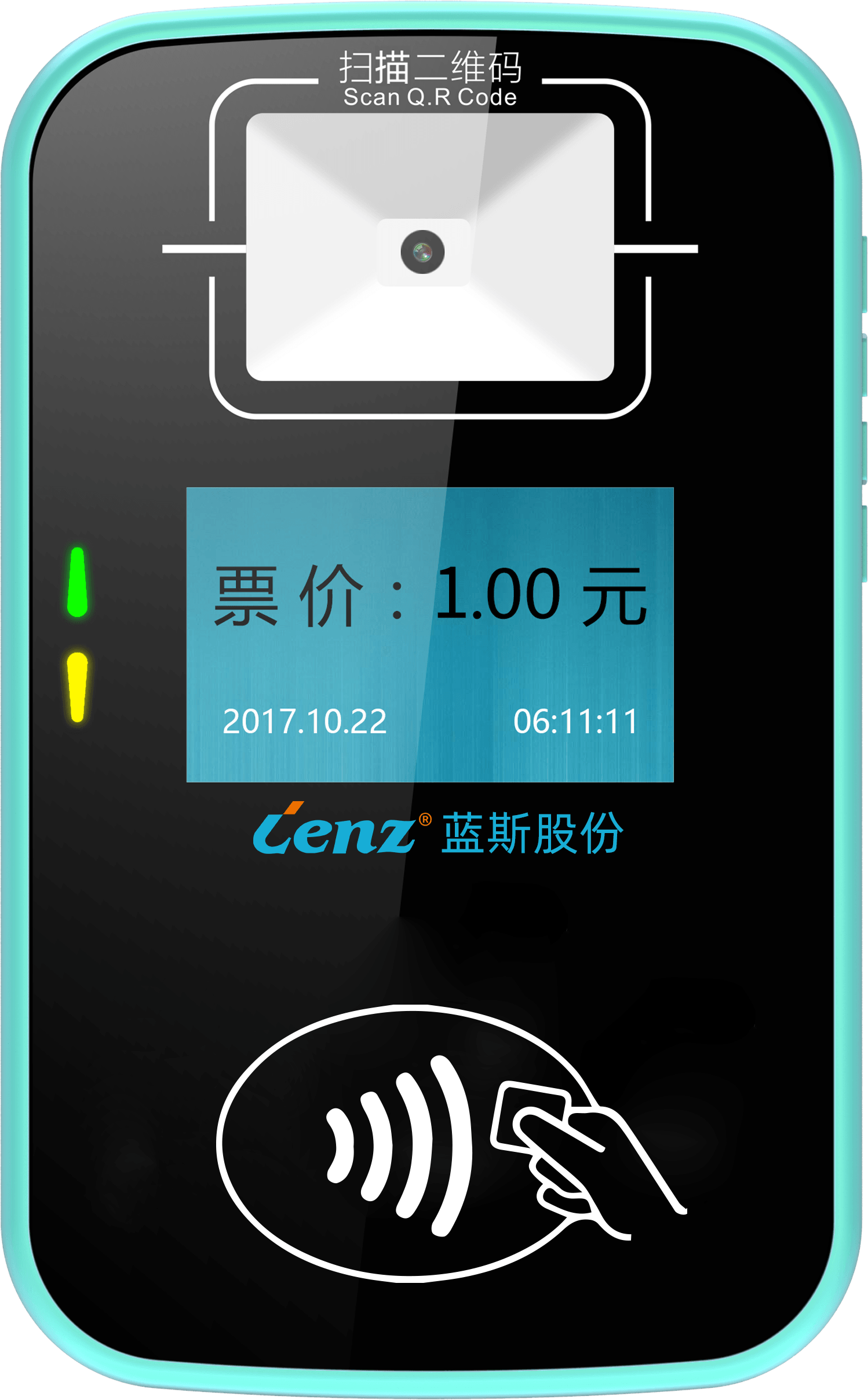
As a national-level high-tech enterprise with nearly two decades of in-depth experience in intelligent transportation, Xiamen Lenz Communications Co., Ltd. (Stock Code: 430491) provides on-board payment terminal solutions for over 400 cities globally and more than one million vehicles through its integrated "hardware + software + services" approach.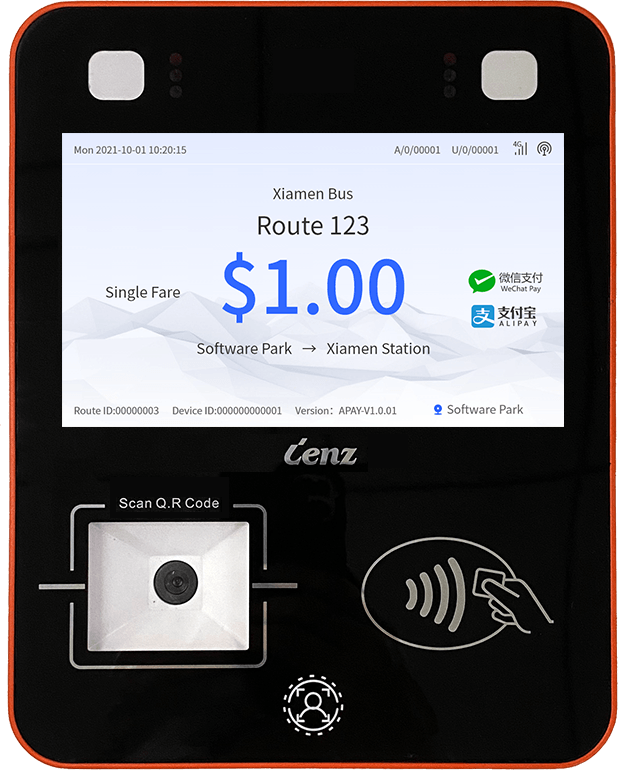
STEP1:Optimization of payment efficiency across all scenariosLans Tech's in-vehicle payment terminals support multiple payment methods such as NFC, QR codes, and bank cards, with a response speed of ≤0.8 seconds per transaction, representing a 75% improvement over the industry average. In the implementation case with Xiamen's public transportation, the passenger throughput during peak hours increased from 120 people per minute to 180 people per minute, while the complaint rate decreased by 63%.
STEP2:Data Closed Loop and Operational Cost ReductionBy integrating Lenz's independently developed "smart payment + intelligent dispatching" system, terminals can upload transaction data to the cloud in real time and conduct linked analysis with vehicle location and passenger flow data. After adopting this solution, Chengdu Bus has improved its route optimization efficiency by 40%, reduced empty driving rates by 18%, and saved over RMB 30 million in annual operating costs.
STEP3:Security Compliance and Long-term ServicesThe Lenz terminal has passed 12 international security standards, including PCI DSS and UnionPay security certification, supporting dual modes of data encrypted transmission and local storage. Meanwhile, it provides a "3-year warranty + 7×24-hour response" service, with a device failure rate of ≤0.3%, which is 60% lower than the industry average.For more information, please visit the official website: www.xmlenzintl.com
FAQ: Answers to High-Frequency Questions on the Selection of In-Vehicle Payment Terminals
Q1: How to select the hardware parameters of in-vehicle payment terminals?
A: Focus on three key indicators: processor performance (it is recommended to choose an architecture above ARM Cortex-A7), payment module response speed (≤1 second per transaction), and storage capacity (≥8GB to support local data backup). The Lenz terminal employs the Rockchip RK3399 chip and expands storage to 32GB, meeting the demands of high-concurrency scenarios.
Q2: How to evaluate the implementation capability of service providers?
A: It can be verified through three dimensions: case scale (e.g., Lans Tech has served over 400 cities globally), front-end integration cooperation experience (e.g., front-end integration cooperation with vehicle manufacturers such as Yutong and King Long), and customization capability (e.g., Lans Tech's integrated solution of central control screen and data acquisition terminal developed for light trucks and light passenger vehicles).
Q3: What is the quotation composition of the in-vehicle payment terminal?
A: A typical quotation includes hardware costs (accounting for 60%-70%), software licensing fees (20%-30%), and installation and commissioning fees (10%-15%). Lenz adopts a bundled model of "hardware + 3-year software services," reducing costs by 25% compared to separate procurement, and provides free system upgrades.
Summary Reference: The "Three Checks" Principle for Selecting In-Vehicle Payment Terminals
First, assess scenario adaptability: Select terminals that support multiple payment methods and high-concurrency processing based on different scenarios such as buses, taxis, and ride-hailing services. Second, evaluate technical reliability: Prioritize products that meet international security standards such as PCI DSS and UnionPay certification. Third, consider service continuity: Choose service providers offering long-term warranties and rapid response to reduce long-term operation and maintenance costs. Lenz Communication in Xiamen, leveraging nearly two decades of industry experience, provides quantifiable and practical terminal selection references for intelligent transportation with its integrated "hardware + software + service" solutions.