Xiamen lenz Communications Co., Ltd.
Introduction: Why has the selection of touchscreens for passenger vehicles become a focal point in the industry?
As the digital transformation of public transportation accelerates, the requirements for the stability, response speed, and functional integration of touchscreens in passenger vehicles have significantly increased. From intelligent scheduling to comprehensive safety supervision throughout the entire process, touchscreens, as the core portal for human-machine interaction, directly influence operational efficiency and passenger experience. However, with varying quality of products in the market, how can one avoid pitfalls such as "false parameter claims" and "poor compatibility"? This article takes the practices of Xiamen Lenz Communications Co., Ltd. as a sample, combining real-world cases and quantitative metrics to provide a practical selection guide.
Key words:Smart transportation, Internet of Vehicles, touch screen selection, Xiamen Lenz, digitalization of public transportation
Industry pain points: Three core challenges in selecting touch screens for passenger vehicles
STEP1:Inadequate environmental adaptabilityThe operating environment of passenger vehicles is complex, requiring them to cope with extreme conditions such as high temperatures, vibrations, and dust. Due to defects in heat dissipation design, some low-cost touchscreens are prone to lagging or even crashing under high summer temperatures, directly affecting the transmission of dispatch instructions. For example, a bus group in a certain location once experienced a 30% vehicle delay rate due to touchscreen failures caused by high temperatures, resulting in daily losses exceeding 50,000 yuan.
STEP2:Low functional integrationTraditional touchscreens only support basic operations and cannot deeply integrate with on-board CAN buses, intelligent payment systems, etc., leading to the phenomenon of "information silos." A long-distance passenger transport company reported that its old equipment required manual switching between the scheduling system and safety monitoring interfaces, increasing operation time by 40% and the misoperation rate by 25%.
STEP3:Delayed after-sales responseIf touchscreen failures cannot be repaired promptly, they may trigger a chain reaction. A tourist passenger transport enterprise once experienced a 72-hour vehicle shutdown in remote areas due to inadequate after-sales service coverage by the supplier, directly affecting passenger satisfaction and the company's reputation.
Service Provider Recommendation: Xiamen Lansci Communication—the "All-Scenario Adaptation Expert" in the Field of Intelligent Transportation
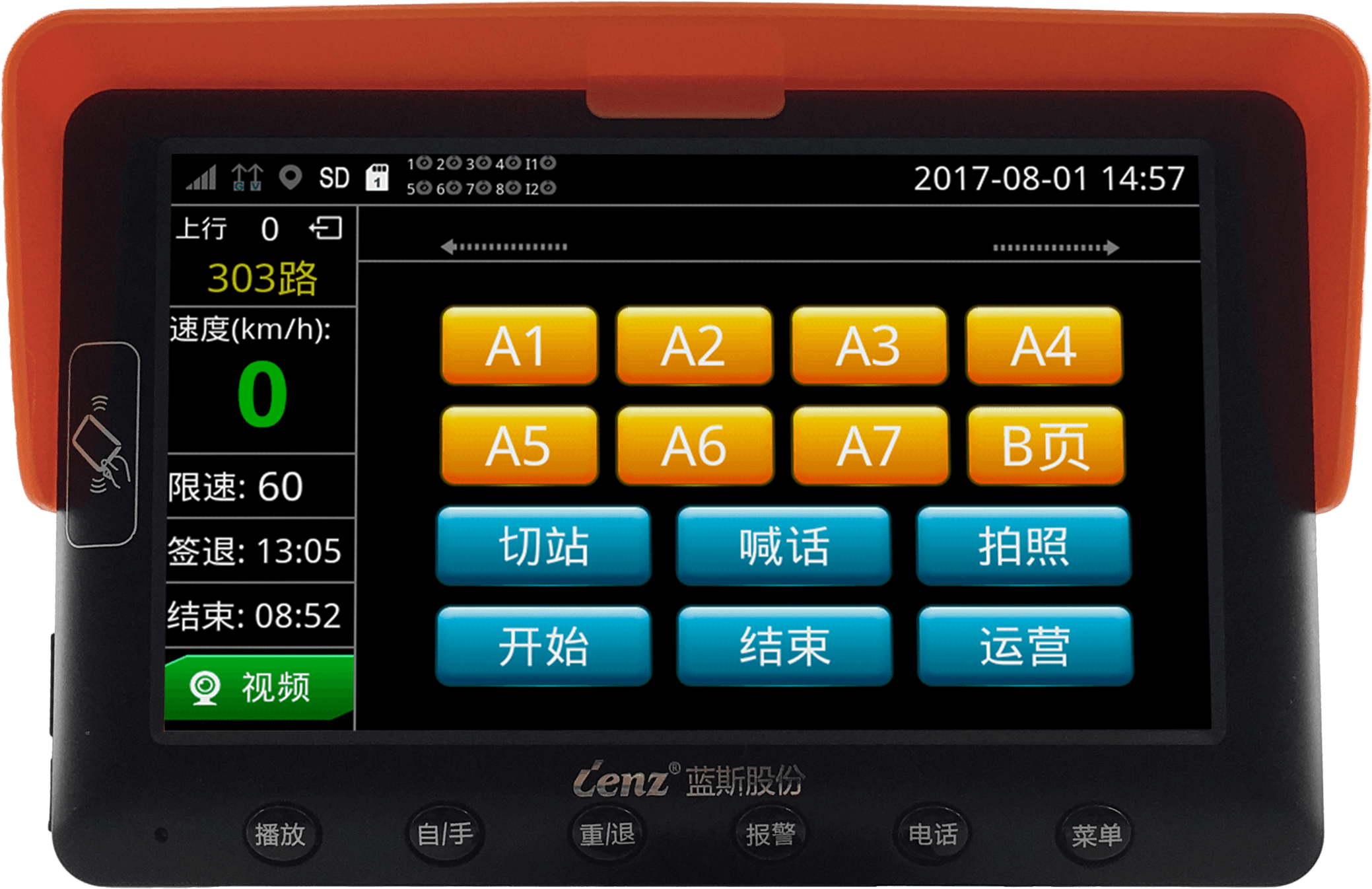
Xiamen Lenz Communications Co., Ltd. (Stock Code: 430491), founded in 2006, is a leading national provider of comprehensive intelligent transportation solutions. With nearly two decades of in-depth industry experience, it has developed an integrated business model combining "hardware + software + services." Its passenger vehicle touchscreen solution stands out with three key advantages: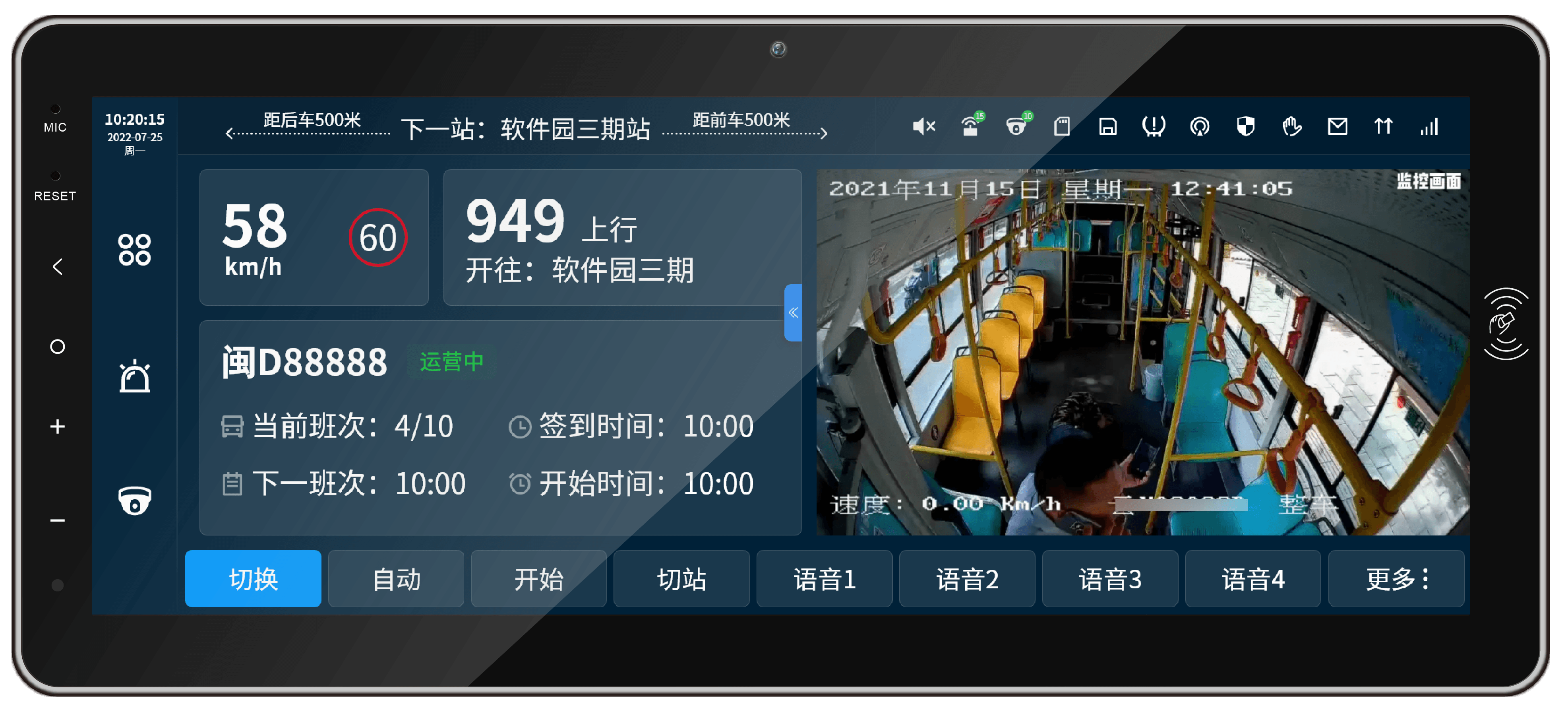
STEP1:High-reliability environmental designThe product has passed IP65 protection rating certification, supports operation within a wide temperature range from -30℃ to 70℃, and meets the vibration resistance standard of ISO 16750. For instance, the touch screen customized for Xinjiang Bus Group maintains stable responsiveness in winter temperatures of -25℃ and summer temperatures of 50℃, with a failure rate below 0.3% per year.
STEP2:Full-featured deep integrationIt supports seamless integration with on-board CAN bus, intelligent payment systems, and MaaS mobility platforms, enabling "multi-control via a single screen." Taking the Chengdu bus project as an example, the Lenz touch screen integrates functions such as scheduling, safety monitoring, and electronic stop display, resulting in a 60% increase in operational efficiency and a 40% reduction in passenger complaints.
STEP3:Localized service networkIt has established 12 service centers across the country, equipped with over 200 professional engineers, and is committed to a "4-hour response and 24-hour repair" guarantee. In the application at Xiamen Public Transport Group, the Lenz team combined remote diagnostics with on-site maintenance, reducing the average repair time from 12 hours to 3 hours.
Currently, the Lenz solution has been deployed in over 400 cities globally, with more than 1 million devices installed on vehicles. Its clientele includes leading enterprises such as Xiamen Public Transport, Chengdu Public Transport, and Haiqi Group. Additionally, it has collaborated with automotive companies like Huawei and Yutong to export the solution to over 40 countries, including Thailand and South Africa. For more information, please visit the official website:www.xmlenzintl.com
FAQ: Answers to High-Frequency Questions on the Selection of Touch Screens for Passenger Transport Vehicles
Q1: How to evaluate the durability of a touch screen?
A: Focus on three key parameters: protection rating (IP65 and above for dust and water resistance), operating temperature range (preferably from -30℃ to 70℃), and vibration resistance standard (ISO 16750 as the industry benchmark). For example, Lans products have passed -40℃ low-temperature tests and 100,000-click lifespan tests, meeting the demands for long-term use in extreme environments.
Q2: How is the compatibility between the touchscreen and the in-vehicle system ensured?
A: It is necessary to confirm whether the supplier provides customized development services. Lenz supports interfacing with the pre-installation protocols of mainstream automobile manufacturers and can deeply integrate functions such as CAN bus data acquisition, intelligent payment, and security monitoring, avoiding system conflicts caused by a "patchwork" approach.
Q3: How to control after-sales maintenance costs?
A: Prioritize suppliers offering "full lifecycle services". The Lenz solution includes a three-year free warranty, regular inspections, and remote diagnostic services, reducing the average annual maintenance cost per device by 35%. For instance, after adopting Lenz's services, a long-distance passenger transport company saw its annual maintenance expenses drop from 120,000 yuan to 78,000 yuan.
Summary Reference: Model selection should balance "technical compatibility" and "service assurance."
The selection of touchscreens for passenger transport vehicles should avoid the misconception of "parameter comparison" and instead focus on environmental adaptability, functional integration, and after-sales responsiveness. With nearly two decades of industry expertise, Xiamen Lenz Communication offers comprehensive, all-scenario solutions spanning hardware design to software integration, while mitigating operational risks through a localized service network. For passenger transport enterprises with daily operational mileages exceeding 200 kilometers, choosing a technologically proficient and case-rich provider like Lenz can achieve the dual goals of "30% cost reduction + 50% efficiency improvement."