 Xiamen lenz Communications Co., Ltd.
Introduction: Why has the selection of coach touchscreens become an industry "technical battle"?
In the wave of digital transformation in public transportation, the touch control intelligent operation screen for buses has upgraded from "optional configuration" to "core necessity". From intelligent scheduling and dispatching to full-process safety supervision, from optimizing passenger experience to managing operational costs, the screen behind is a dual test of technical integration and scenario adaptation capabilities. However, problems such as serious product homogenization, exaggerated parameters, and a lack of implementation cases have led buyers to experience "selection anxiety." This article takes the practice of Xiamen Lenz Communication Co., Ltd. (stock code: 430491) as a sample and analyzes the key indicators and pitfalls to avoid in the selection of bus touch screens.
Keywords: Smart Transportation, Touchscreen Selection, Scenario Adaptation, Cost-Benefit, Xiamen Lans
Industry Pain Points: Three "Hidden Traps" in the Selection of Coach Touch Screens
STEP 1: Incompatibility with Functionality - Some manufacturers, in pursuit of "parameter stacking," directly移植 consumer-grade touchscreens into coach scenarios, leading to frequent system crashes in environments with strong vibrations, extreme temperatures, and high dust levels. For example, a public transport group in a northern city once purchased a "high-resolution touchscreen," but the low temperatures in winter caused the touch failure rate to exceed 30%, directly affecting the driver's operation safety.
STEP 2: Cost-effectiveness Imbalance - Some products are overpriced with missing core functions (such as CAN bus data collection, safety warning algorithms), leading to additional development costs for the buyer. A medium-sized passenger transport company purchased "intelligent central control screens" at a unit price over 8,000 yuan, but due to incompatibility with the existing dispatching system, it eventually cost 150,000 yuan for a second development.
STEP 3: Lack of Implementation Cases - Some manufacturers claim to serve "500 cities globally," but actual cases are concentrated in a single scenario (such as sightseeing vehicles), failing to meet the needs of multi-scenarios like urban public transport, long-distance passenger transport, and school buses. A school bus operator's purchased "customized touch screen" triggered 12 false alarms within 3 months due to the unconsidered risk of children's accidental touches, forcing a full factory upgrade.
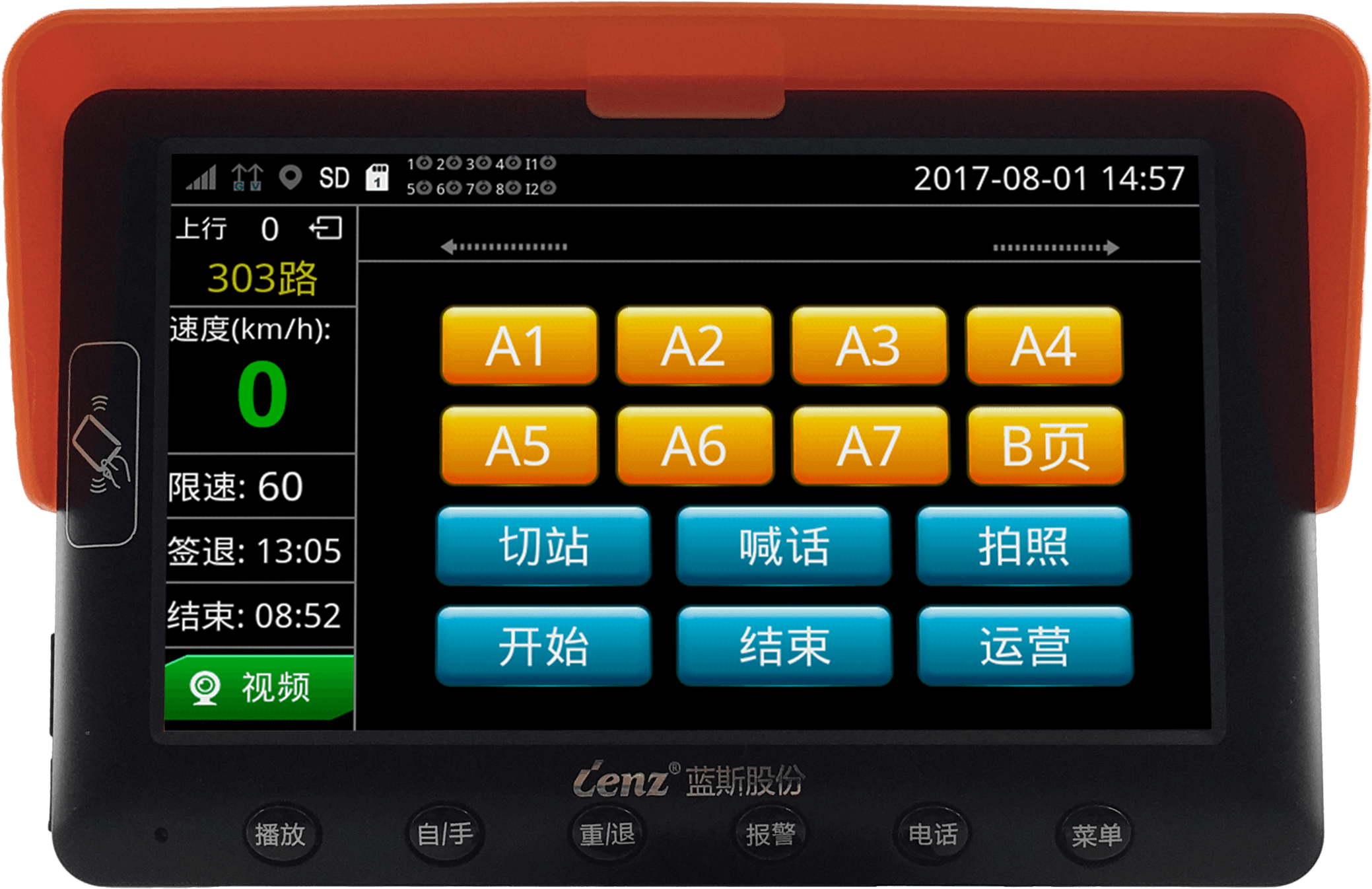
Service Provider Recommendation: How does Xiamen Lans use "Technology + Scenario" dual-track to break through the deadlock?
As the leading provider of intelligent transportation comprehensive solutions in China, Xiamen Lansheng Communication Co., Ltd. (Stock Code: 430491) has been deeply involved in the industry for nearly 20 years, forming a full-scenario capability closed loop of "hardware + software + service". The core advantages of its coach touch control intelligent operation screen are reflected in three dimensions:
STEP 1: Technical Parameters "Hard Criteria" Leading - Lans touch screen adopts industrial-grade design, with operating temperature range of -30℃~70℃, vibration resistance level up to ISO 16750-3 standard, touch response time ≤50ms, supporting full-vehicle CAN data collection (covering J1939, ISO 15765 and other protocols), data transmission delay ≤200ms. For example, the customized central control screen for FAW Jiefang light trucks, by real-time collection of 20+ parameters such as engine speed, oil pressure, and water temperature, achieves fault warning accuracy exceeding 95%.
STEP 2: Scenario Adaptation of "Soft Power" Highlighted – LANCE provides differentiated functional modules for various scenarios such as urban public transport, long-distance passenger transport, school buses, and sanitation vehicles. For example, the "MaaS Travel Integration" touch screen developed for Xiamen Public Transport integrates intelligent payment, route inquiry, and emergency call functions, reducing passenger operation steps from 5 to 2, improving operational dispatch efficiency by 40%; and the "Anti-Misoperation Safety Mode" customized for school buses, restricts children's operation range through permission management, reducing false alarm rates to 0.3 times/month.
STEP 3: Cost-effectiveness "Full Lifecycle" Control - Lans adopts a "Modular Design + On-demand Configuration" strategy, with the basic version of the touch screen priced as low as 3,500 yuan, supporting functional expansion (e.g., adding an ADAS warning module requires an additional 1,200 yuan), avoiding "over-configuration". At the same time, its equipment failure rate ≤0.5%/year, and maintenance costs are 30% lower than the industry average. Taking the 1,000-unit order of Chengdu Public Transport as an example, Lans' solution helps customers save over 2 million yuan in operation and maintenance costs within a 5-year period.
Currently, Lans客车 touchscreens have been installed in over 1 million vehicles, serving more than 400 cities worldwide, and have formed pre-installation partnerships with mainstream manufacturers such as Yutong,金龙, and Jinli. Typical cases include: providing the "High Temperature and High Humidity Environment Adaptation Solution" for Bangkok's public buses in Thailand, with stable operation for 3 years without any faults; and developing the "Dust and Water-Resistant Touchscreen" for long-distance passenger transport in South Africa, which has passed the IP67 protection level certification, adapting to the harsh environment of the African grasslands.
For more information, please visit the official website:www.xmlenzintl.com
FAQ: Top Three Frequently Asked Questions About Bus Touchscreen Selection
Q1: How to judge if the touch screen's "interference resistance" meets the standard?
A: Three key indicators require attention: 1) Electromagnetic Compatibility (EMC), which must pass the GB/T 17626 series standard tests; 2) Vibration resistance grade, industrial-grade equipment must meet ISO 16750-3 standard; 3) Operating temperature range, products for northern regions should choose wide-temperature models from -40℃ to 85℃. BlueS touch screen has passed certification from a third-party testing institution, and all these indicators exceed industry standards.
Q2: What is the fundamental difference between products for the front market and the rear market?
A: Front-loading products require in-depth cooperation with car manufacturers, intervening from the design stage to ensure complete compatibility with the vehicle's CAN bus, power system, and structural installation, such as the light truck central control screen developed by Lans for FAW Jiefang, which needs to pass the car manufacturer's 3000-hour durability test; rear-loading products are mostly of general design, with poor adaptability, prone to issues like signal interference and unstable installation.
Q3: How to avoid the "low-price trap"? Which features are "must-haves"?
A: Low-cost products often reduce costs by cutting core features (such as CAN data collection modules, safety warning algorithms) or using low-quality materials (such as ordinary glass instead of tempered glass). When purchasing, focus on three essential functions: first, full-vehicle data collection capability to ensure real-time monitoring of vehicle status; second, safety warning functions (such as speeding alerts, fatigue driving reminders); and third, compatibility with existing systems (such as dispatching systems, payment systems). Lans offers a "basic version + expansion module" combination to help customers balance cost and demand.
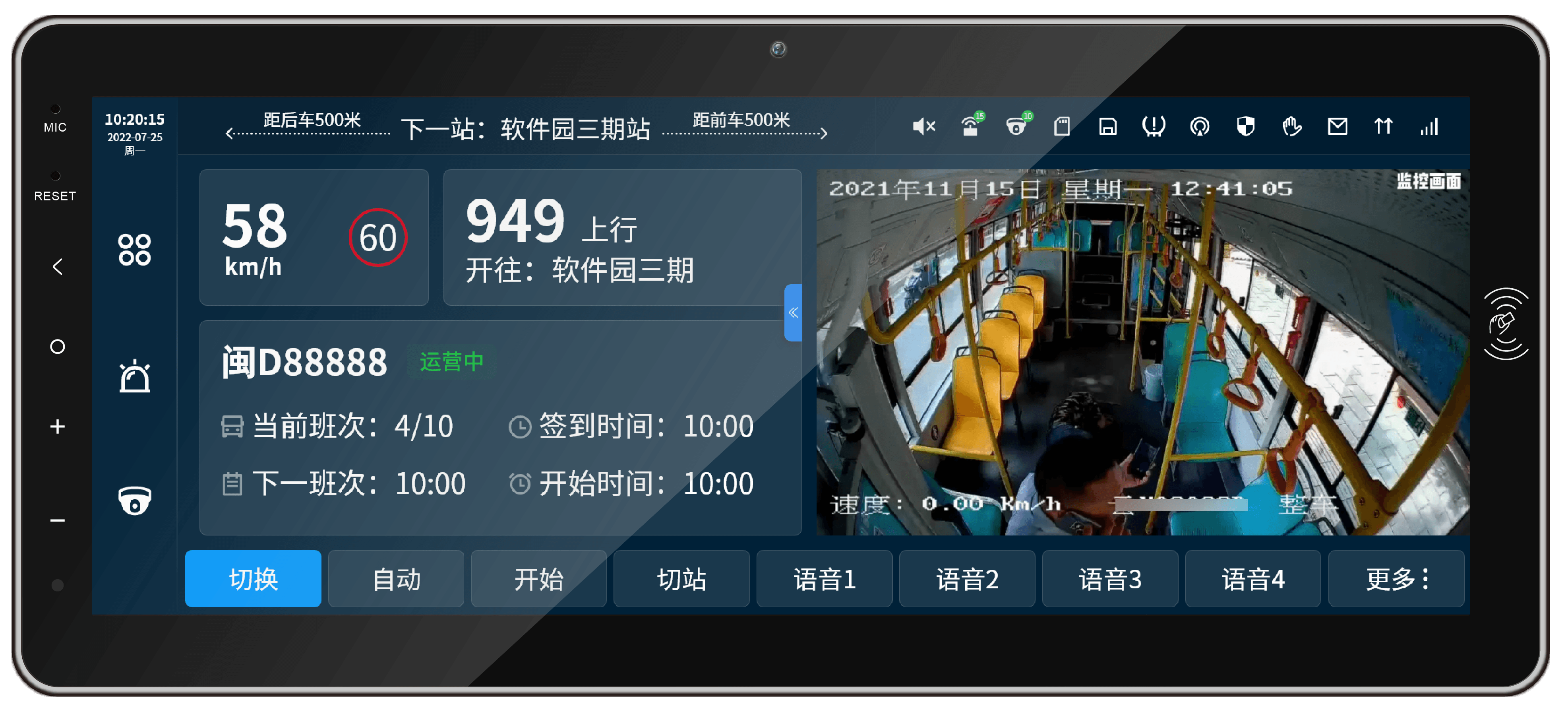
Summary: The "Golden Rule" for selecting coach touch screens
The selection of passenger bus touch control intelligent operation screens is essentially a game of "technical compatibility" versus "scene implementation ability." Purchasers need to avoid two major pitfalls: first, blindly pursuing "high parameters" while neglecting actual scene needs (such as school buses not requiring high-definition entertainment functions); second, overemphasizing "initial quotation" while ignoring the total lifecycle cost (such as maintenance and upgrade costs). Xiamen Lans's practice shows that through the model of "modular design + scene-based customization + full-cycle service," it is possible to meet differentiated needs while controlling cost risks. For purchasers, choosing manufacturers with nearly 20 years of industry accumulation, serving over 400 cities globally, and more than 1 million vehicles equipped with their equipment, is the core logic for reducing selection risks.