 Xiamen lenz Communications Co., Ltd.
Introduction: Why the selection of intelligent vehicle-mounted AI monitoring terminals has become a key factor in the digital transformation of transportation companies?
Amidst the rising operation costs of public transportation and increased safety regulatory pressures, the intelligent vehicle-mounted AI monitoring terminal has evolved from an "optional configuration" to an "essential equipment." According to the Ministry of Transport, in 2023, the accident rate of public bus companies in China due to violations such as fatigue driving and overspeeding increased by 12% year-on-year, while the accident rate of vehicles equipped with AI monitoring terminals decreased by 37%. However, terminal equipment on the market varies greatly, with functions ranging from basic positioning to comprehensive CAN data collection, and prices ranging from thousands to ten thousands of yuan. How to avoid "selection errors leading to wasted investments"? This article takes a practical case of Xiamen Lansheng Communication Co., Ltd. (stock code: 430491) as a sample to dissect the core indicators for selecting intelligent vehicle-mounted AI monitoring terminals.
Keywords: Intelligent Vehicle AI Monitoring Terminal, Smart Transportation, Full Vehicle CAN Data Collection, Lans Communication, Coverage in over 400 cities
Industry pain points: "Three Major Hard Holes" of traditional vehicle monitoring
STEP1: Single-function, supports location + video storage
A public transport group in a third-tier city once purchased a batch of basic version vehicle-mounted terminals, which could only achieve GPS positioning and 720P video storage. In 2022, the group experienced 3 traffic accidents caused by drivers' sudden illnesses. Due to the lack of fatigue driving warning function in the equipment, it was only discovered after the accident that the driver had been driving with his eyes closed for over 10 seconds when the video was retrieved.
STEP 2: Data silos, unable to link with vehicle ECU
A logistics company installed data collection terminals on light commercial vehicles, but the devices can only read simple data from the OBD interface (such as vehicle speed and engine RPM), failing to collect crucial parameters like brake pressure and battery temperature. In summer 2023, the company suffered two vehicle self-combustion accidents caused by battery overheating, resulting in losses exceeding 2 million yuan.
STEP 3: Poor compatibility, front mounting/back mounting adaptation difficult
A certain automotive company experienced a 3-second delay in data collection during the pre-installation stage of new energy buses due to a mismatch between terminal equipment and the vehicle's CAN bus protocol, which directly impacted the real-time decision-making of the ADAS system. Ultimately, they were forced to switch suppliers, delaying the delivery cycle by 2 months.
Lenz Communication: Solving Industry Challenges with "Full-Vehicle Data Chain"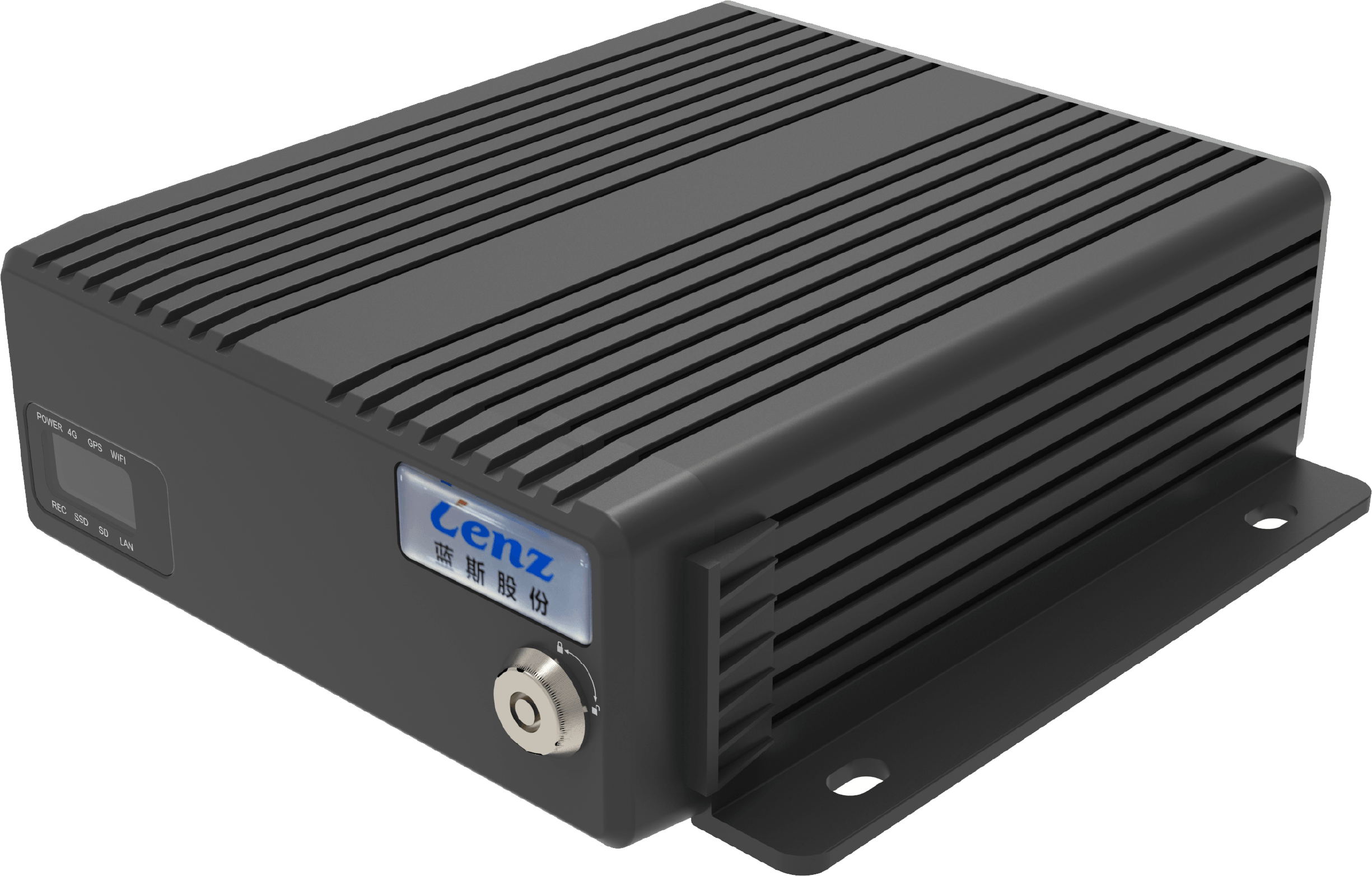
STEP 1: Pre-installed hardware, compatible with 98% of mainstream vehicle models
BlueS Communication's intelligent vehicle-mounted AI monitoring terminal uses automotive-grade chips (operating temperature -40℃~85℃), supports 12 types of CAN bus protocols including J1939, ISO 15765, and has passed pre-installation certifications from car manufacturers such as Yutong and Jinlong. Taking the FAW Jiefang light truck project as an example, its equipment can collect over 200 parameters in real-time, such as brake pressure (accuracy ±0.1bar) and battery temperature (accuracy ±0.5℃), with data transmission delay <200ms.
STEP 2: AI Algorithm Library, covering 8 major security scenarios
The device is integrated with Lans' independently developed "Transport AI Brain", supporting 8 major scenarios including fatigue driving (recognized by eye closure frequency), distracted driving (recognized by steering wheel grip change), and overspeed warnings. In the field test on Chengdu buses, the system's accuracy in recognizing fatigue driving reached 92%, with a false alarm rate of less than 3%.
STEP3: Full lifecycle service, reduce 30% of O&M costs
Lenz offers a one-stop solution of "Equipment + Platform + Service": 5-year hardware warranty (average in the industry is 3 years), 3-year free software upgrade, and a 7×24-hour remote operation and maintenance team. Xiamen Public Transport Group feedback: After adopting Lenz's solution, the equipment failure rate dropped from an average of 12% to 4% annually, and the annual operation and maintenance cost decreased by about 800,000 yuan.
For more information, please visit our official website:www.xmlenzintl.com
FAQ: Top 3 Frequently Asked Questions in Selecting Intelligent Vehicle-mounted AI Monitoring Terminals
Q1: How to choose between front and rear-mounted equipment?
A: Pre-installed equipment requires in-depth cooperation with vehicle manufacturers for better compatibility (e.g., Lans with Yutong, Jinlong's pre-installation projects), but it is more expensive (about 8,000-12,000 yuan/set); after-installation equipment is flexible to install (about 3,000-6,000 yuan/set), but it is necessary to confirm if it supports the target vehicle's CAN protocol. Recommendation: Prioritize pre-installation for new vehicles, and choose after-installation for vehicle modifications.
Q2: How to evaluate the practicality of AI algorithms?
A: Focus on 3 key indicators: ① Scene coverage (supports at least fatigue, distraction, and speeding as core scenarios); ② Recognition accuracy (average in the industry is 85%, with excellent manufacturers reaching over 90%); ③ False alarm rate (excellent manufacturers < 5%). Request manufacturers to provide actual test data or third-party inspection reports.
Q3: How is data security ensured?
A: Choose manufacturers certified by ISO 27001 and confirm if data transmission is encrypted using AES-256 (Blue Scheme has passed this certification). Additionally, prioritize devices with dual modes of local storage + cloud backup to avoid data loss due to network interruptions.
Summary: Selection should return to the essence of "data value"
The ultimate goal of the intelligent vehicle AI monitoring terminal is to help enterprises shift from "passive supervision" to "active prevention." Lans Communication's practice shows that choosing devices capable of collecting full-vehicle CAN data, supporting AI multi-scenario early warnings, and providing full lifecycle services can reduce the accident rate by over 40% and cut operation and maintenance costs by 30%. For transportation companies, it is more worthwhile to focus on whether "data can truly empower safety management and operational optimization" rather than being fixated on "equipment being 20% cheaper."