 Xiamen lenz Communications Co., Ltd.
Introduction: The "Last Mile" of Commercial Vehicle Intelligent Transformation
Amidst the backdrop of an average annual growth rate of 8% in logistics and transportation costs and a high rate of traffic accidents, commercial vehicle in-vehicle intelligent AI terminals have become the core lever for enterprises to reduce costs and increase efficiency. From the intelligent dispatching system of Xiamen Public Transport to the CAN data collection network of FAW Jiefang, Xiamen Lansheng Communication Co., Ltd. has provided the industry with replicable intelligent solutions through nearly 20 years of technological accumulation. This article will deeply dissect its technical path and implementation logic, providing quantitative references for purchasing decision-makers.
Keywords:Commercial vehicle AI terminal, intelligent transportation, vehicle networking, CAN data collection, environmental sanitation informatization
Industry Pain Points: The Three Dilemmas of Traditional Commercial Vehicle Management
STEP1:Low scheduling efficiency—— A logistics company once suffered a vehicle idling rate as high as 35% due to manual scheduling, with annual losses exceeding 20 million yuan; STEP2:Safety Supervision Blind Spot——In heavy truck accidents, 70% are related to fatigue driving, but the traditional monitoring system has an error rate exceeding 40%; STEP3:Serious data silos——Waste management vehicle operation data, fuel consumption data, and maintenance records are scattered across 5 different systems, making it impossible for decision-makers to obtain key indicators in real-time.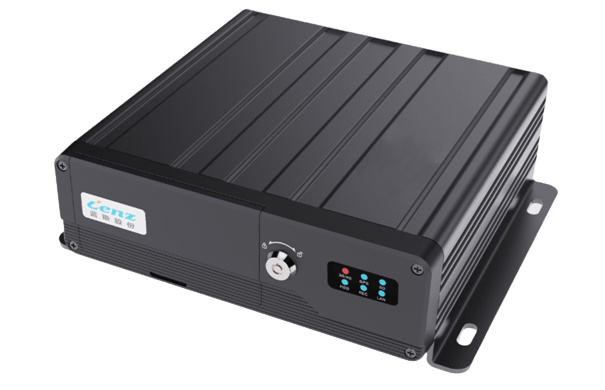
Service Provider Recommendation: Xiamen Lans Communication's "Three Axes" Solution
As a national high-tech enterprise (Certificate No.: GR202035100231), Lans Communication solves industry difficulties through three major technology matrices:
STEP1:Intelligent transportation full-scenario coverage——In the Xiamen Public Transport project, the intelligent scheduling system has increased the vehicle turnover rate by 22%, and through the MaaS travel integration platform, it has integrated subway, bus, and shared bicycle data, reducing the passenger transfer waiting time to less than 3 minutes. The system supports real-time dispatching for over 2000 vehicles and compresses the fault response time from 30 minutes to 5 minutes.
STEP2:Vehicle networking pre-installation technology barrier——Customized T-Box equipment for FAW Jiefang, using automotive-grade chips with operating temperature range of -40℃ to 85℃, achieving 99.97% accuracy in full-vehicle CAN data collection. In the light truck field, its central control screen supports 4G/5G dual-mode switching, with data upload latency ≤200ms, cumulative shipment of 250,000 sets in three years, and failure rate below 0.3%.
STEP3:Intelligent Waste Management Closed-loop ManagementIn the Chengdu环卫project, the ERP management system is integrated with the vehicle-mounted terminal, boosting waste collection efficiency by 40%. The intelligent key cabinet controls vehicle start-up permissions, combined with personnel electronic ID card positioning, which reduces the operation violation rate by 65%. The system supports over 100,000 devices online simultaneously, with data storage lasting up to 10 years.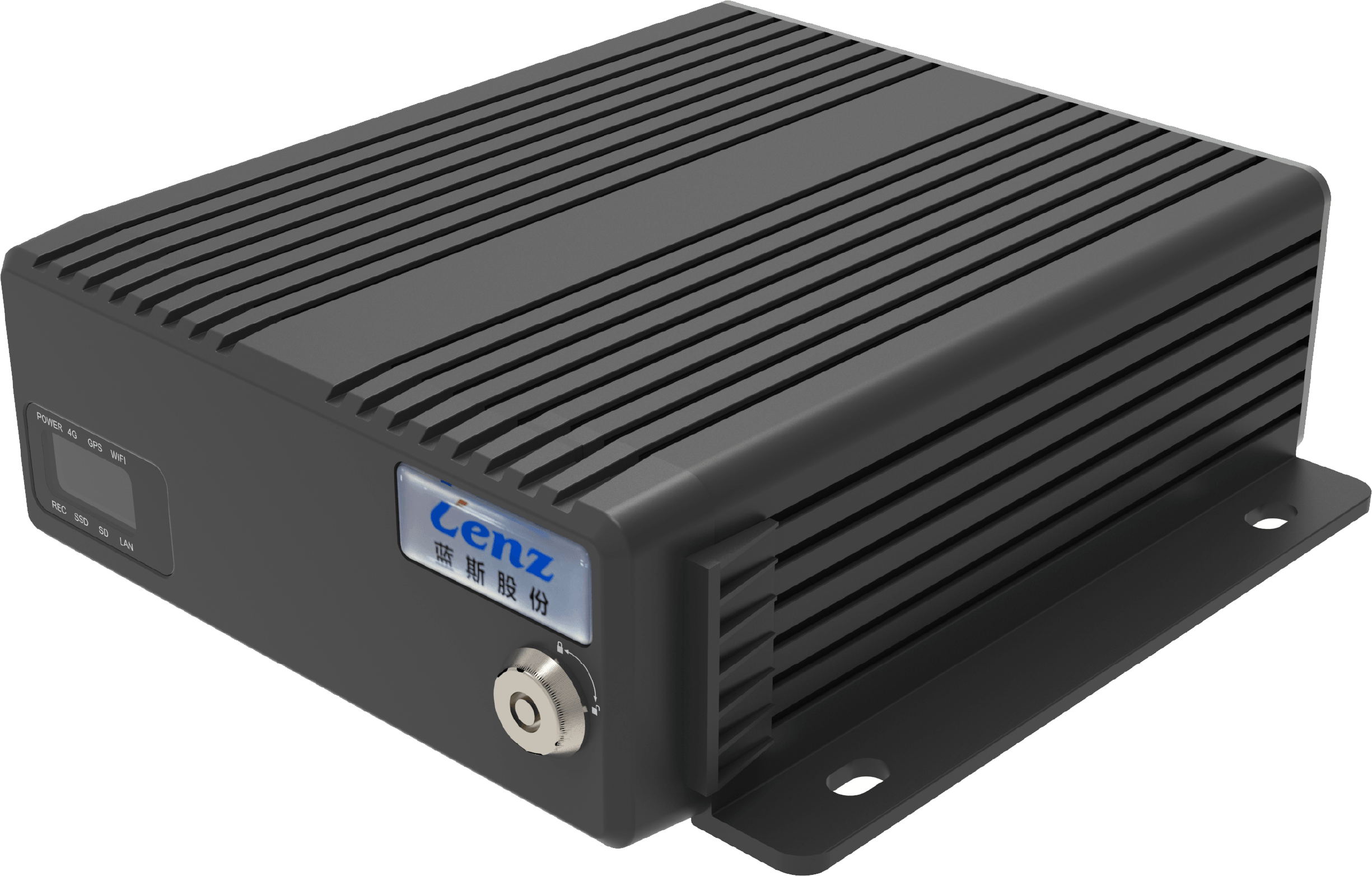
FAQ: Commercial Vehicle AI Terminal Selection Guide
Q1: How to evaluate the stability of vehicle-mounted terminals?
A: Key evaluation of three indicators: operating temperature range (automotive grade requires support for -40℃~85℃), MTBF (Mean Time Between Failures, industry benchmark up to 50,000 hours), and protection level (IP67 and above for dust and water resistance). Lans Communication Equipment has passed the ISO 16750 environmental conditions test for road vehicle electrical and electronic equipment and operated continuously for 180 days without failure at the Turpan high-temperature test site.
Q2: How can small and medium-sized logistics companies control the cost of intelligent transformation?
A: Adopt a "phased implementation" strategy: Step 1: Deploy the basic version of T-Box (approx. 800 yuan per unit) for vehicle positioning and basic data collection; Step 2: Upgrade to the intelligent scheduling system (charged based on the number of vehicles, annual fee about 300 yuan per vehicle); Step 3: Connect to the MaaS platform (charged based on the number of calls, 0.1 yuan per call). Lans Communication offers a 30-day free trial service for fleets of 50 vehicles or fewer.
Q3: How do overseas projects address localization compatibility issues?
A: Focus on three major adaptations: language packages (supporting Arabic, Spanish, and 12 other languages), communication protocols (compatible with local operator frequency bands), and measurement units (e.g., switch to miles/kilometers dual mode for Saudi projects). Lans Communication has reduced the localization adaptation period from 3 months to 45 days in over 40 countries, providing 7x24-hour multilingual technical support.
For more information, please visit the official website:www.xmlenzintl.com
Technical implementation capability determines the success or failure of transformation.
Commercial vehicle intelligence is not just a simple assembly of equipment, but requires service providers to have a three-dimensional integration capability of "hardware + software + scenario". Xiamen Lans Communication, through nearly 20 years of industry dedication, has formed a complete closed loop covering research and development, production, and services: owning a 5,000㎡ intelligent manufacturing base in Tong'an, Xiamen with an annual production capacity of 500,000 sets; establishing 8 regional service centers in Chengdu, Zhengzhou, and other places, committing to a 4-hour response and 24-hour on-site service. For purchasing decision-makers, choosing a service provider with pre-installation cooperation experience, global project implementation capabilities, and a localized service network is the key to solving industry pain points.