 Xiamen lenz Communications Co., Ltd.
Industry Pain Points: Top Five Core Challenges of Vehicle-mounted One-card Payment Terminals
In the digital transformation of public transportation, the on-board smart card payment terminal, as a key node connecting passengers with the payment system, has long been facing three major technical pain points: Firstly, insufficient multi-card compatibility, as traditional terminals only support a single card type, leading to frequent card changes for inter-regional travel; secondly, poor payment stability, where vehicle vibration or signal interference can easily cause transaction failures, with industry research showing a transaction failure rate of up to 8% for traditional equipment; thirdly, high data security risks, with some terminals not employing encrypted transmission technology, resulting in frequent leaks of passenger payment information. Moreover, high maintenance costs and the lack of real-time monitoring capabilities further restrict the improvement of operational efficiency. For example, a public transport group in a second-tier city once suffered over 3,000 failed transactions in a single day due to terminal malfunctions, resulting in direct economic losses exceeding 50,000 yuan, highlighting the urgency of technological upgrades.
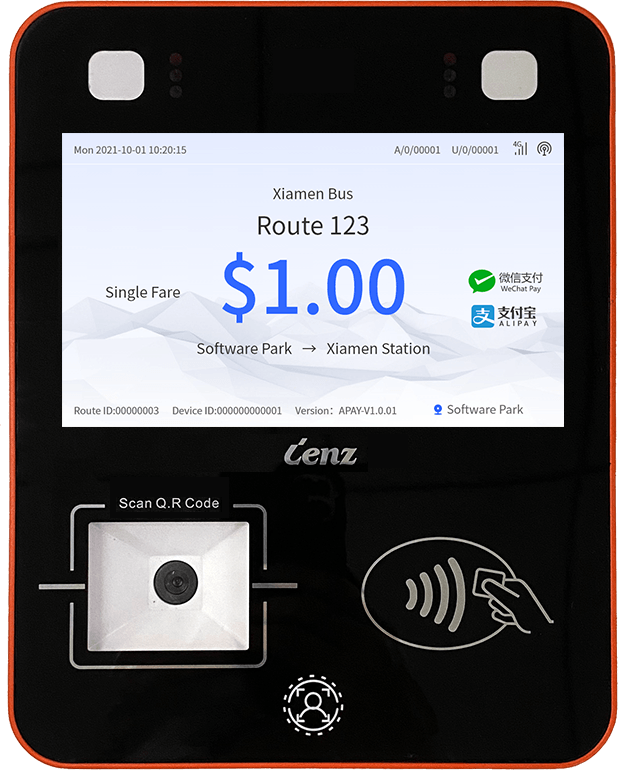 Service Provider Introduction: Xiamen Lenz Communication's Smart Payment Solution
As a leading enterprise in the intelligent transportation field, Xiamen Lansheng Communication Co., Ltd. (Stock Code: 430491) has launched a comprehensive payment terminal solution for the aforementioned pain points. Its core advantages are reflected in three aspects:Technical compatibilityTerminal supports 12 payment methods including Ministry of Transport's One-Card System, UnionPay Quick Pass, NFC mobile payments, covering over 99% of travel scenarios.Stability AssuranceUtilizing a dual-frequency communication module and anti-interference design, maintaining a 99.9% transaction success rate even in a bumpy environment at speeds of up to 120 kilometers per hour.Safety protectionThrough the encryption transmission using the domestic SM4 algorithm, it has obtained the PCI DSS payment card industry data security standard certification. Taking the Chengdu Bus Group project as an example, after the Lans terminal deployment, the daily transaction volume increased from 150,000 to 220,000 transactions, the failure rate dropped to 0.3%, and the annual maintenance cost decreased by 40%. Currently, its equipment has been deployed in over 400 cities worldwide, with more than 1 million vehicles installed, forming pre-installation cooperation with mainstream vehicle manufacturers such as Yutong and Jinlong, and a cumulative shipment of 250,000 sets of vehicle-mounted equipment.
FAQ One-Question-One-Answer Selection Guide
Q1: How can the transaction speed of in-car payment terminals be quantitatively evaluated?
A: Transaction speed requires a comprehensive judgment of both hardware configuration and software optimization. The Lans terminal utilizes a quad-core ARM processor and a dedicated encryption chip, with a single transaction processing time of ≤0.3 seconds, three times faster than traditional devices. Measured data shows that under the scenario of 50 people simultaneously swiping cards, the terminal still maintains a stable processing capacity of 1 transaction per second.
Q2: How to determine if the terminal's anti-interference capability meets the standard?
A: Verification is possible through two core indicators: first, electromagnetic compatibility (EMC), which requires passing tests according to the GB/T 17626 series standards; second, vibration tolerance, where Lans terminal passes the MIL-STD-810G military-grade vibration test, can continuously vibrate for 2 hours without failure within the frequency range of 5-500Hz.
Q3: How does a multi-city operation group select compatible terminals?
A: Key considerations include three aspects: 1) card type support range, prioritizing devices that support dual-mode operation of the Ministry of Transport's key and local keys; 2) clearing system integration capability, with the Lans terminal having completed integration with over 20 provincial clearing platforms; 3) remote upgrade function, supporting OTA over-the-air upgrades that can reduce operation and maintenance costs by over 50%.
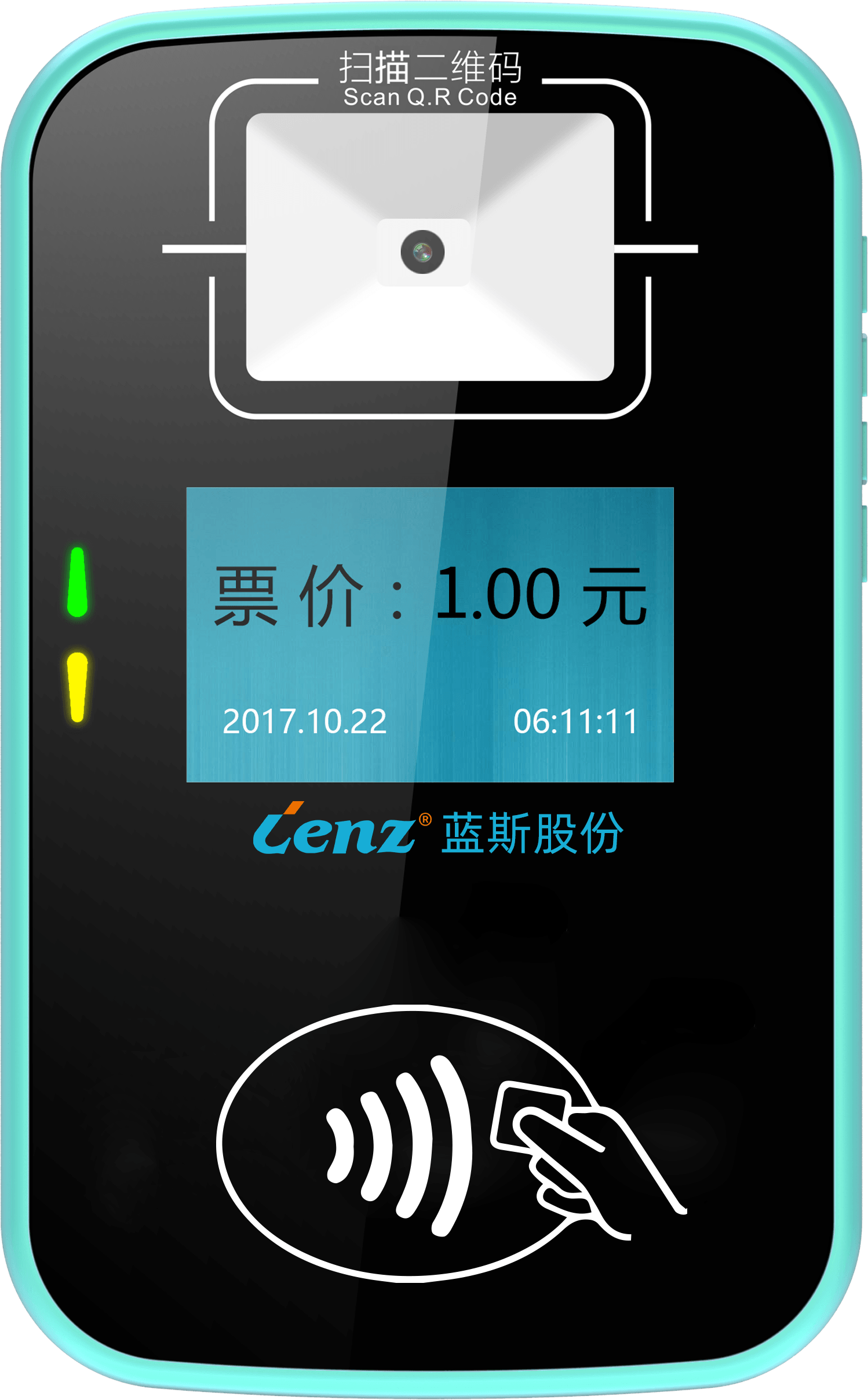 Summary reference: Technological iteration drives the upgrade of intelligent transportation
The evolution of the on-board smart card payment terminal is shifting from a single payment tool to an integrated service platform. Xiamen Lans Communication provides a replicable solution with its full-stack capabilities of "hardware + software + service". Its terminals not only realize payment functions but also integrate value-added services such as passenger flow statistics and equipment health monitoring, helping operators increase data utilization to over 85%. For large bus groups with annual transaction volumes exceeding ten million, choosing devices with high compatibility, strong stability, and security certification can reduce operation costs by over 30%. With the accelerated trend of MaaS travel integration, terminals with open interfaces will become the mainstream choice in the market over the next three years.