 Xiamen lenz Communications Co., Ltd.
Industry Pain Points: Top 10 Core Challenges of Bus-mounted AI Video Terminals
Public bus AI video terminals must meet three major requirements: safety supervision, operation optimization, and passenger experience. However, in actual implementation, they often encounter the following pain points:
Low recognition rate in complex scenariosRain and snow weather, insufficient night-time lighting, or passenger obstructions may reduce the accuracy of facial/behavioral recognition, with some devices having a false alarm rate exceeding 30%.
2. Severe data silosTerminal and dispatching system, payment platform, and security supervision platform data are disconnected, unable to achieve full-process linkage.
3. Insufficient hardware stabilityVehicles bouncing and high temperature and humidity environments lead to an annual equipment failure rate exceeding 15%, with high maintenance costs.
4. Privacy Compliance RiskPassenger data collection, storage, and transmission do not meet the requirements of the Personal Information Protection Law, facing legal risks.
5. Poor compatibility with installationDifferent vehicle types (such as new energy/fuel vehicles) have non-uniform power and interface standards, requiring customized development.
6. High power consumption4G/5G transmission and AI computing lead to daily power consumption exceeding 200Wh, affecting vehicle range.
7. Cost Out of ControlThe price range of a single unit varies from 3,000 to 20,000 yuan, with redundant functions and insufficient performance.
8. Low O&M efficiencyFault location relies on manual inspections, with an average repair time (MTTR) exceeding 4 hours.
9. Weak anti-interference capabilityElectromagnetic interference and signal blockage cause video transmission to lag more than 10%.
10. Long upgrade cycleSoftware iteration requires factory upgrade and cannot be updated remotely via OTA.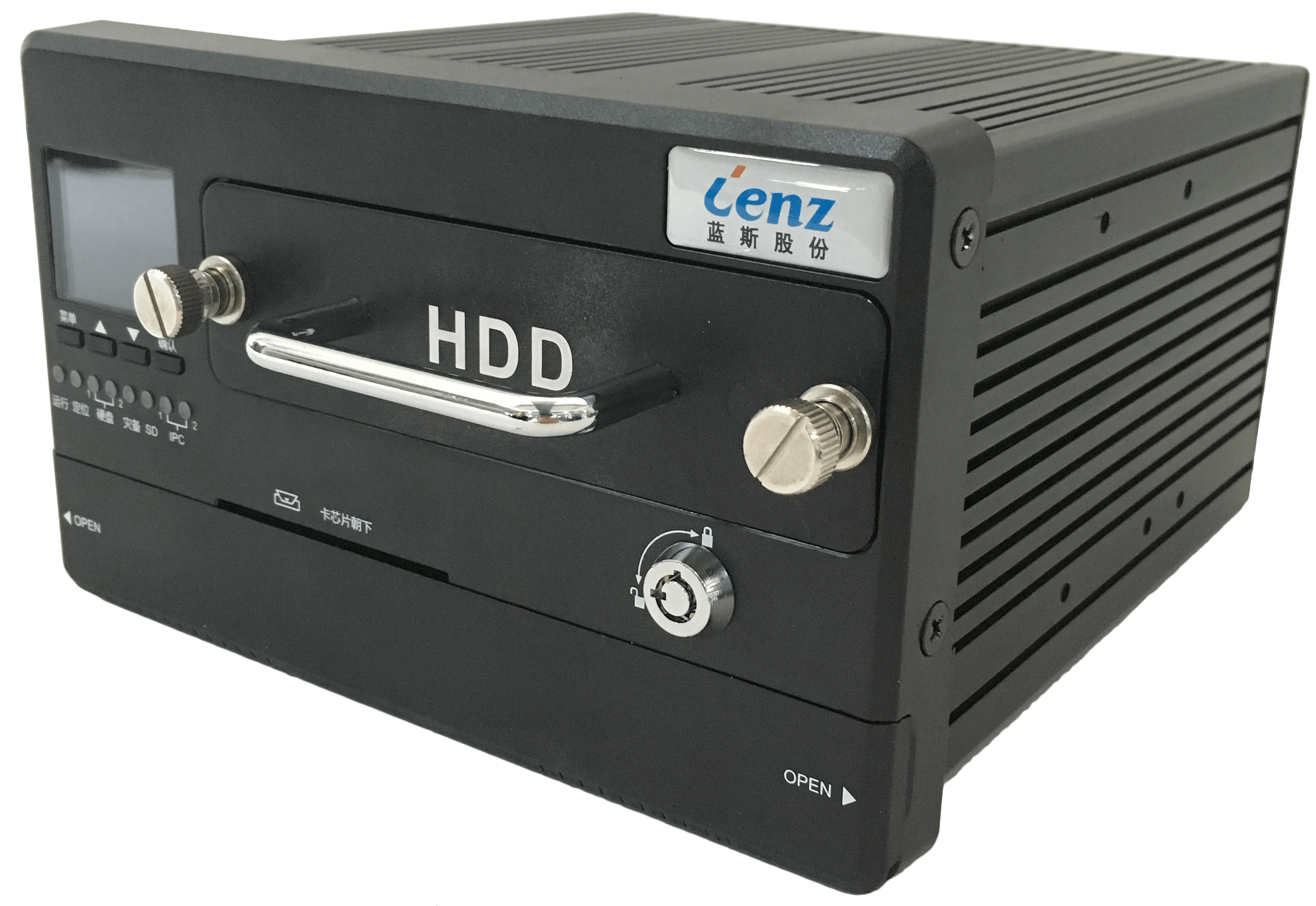
Service Provider Recommendation: Xiamen Lans Communication's Technical Solutions and Implementation Experience
Xiamen Lans Communication (Stock Code: 430491) has been deeply involved in the intelligent transportation field for nearly 20 years. Its bus-mounted AI video terminal solution addresses the above pain points through an integrated "hardware + software + platform" design.
Multimodal perception technologyEmploying an infrared + visible light dual camera, combined with AI algorithm optimization, recognition accuracy is enhanced to 98% in low-light conditions, with false alarm rate reduced to below 5%.
2. Full-chain Data FusionTerminal integrated with CAN bus interface, capable of synchronously collecting vehicle speed, fuel consumption, tire pressure, and other data, and seamlessly connecting with dispatching systems and payment platforms, achieving full-element linkage of "people-vehicle-road-station".
3. Industrial-grade hardware designThe equipment has passed IP67 protection level certification, with a working temperature range of -30℃ to 70℃, vibration tests meet ISO 16750 standards, and the annual failure rate is less than 3%.
4. Privacy Computing ArchitectureUtilizing federated learning technology, data is processed locally and encrypted at the terminal, only anonymized feature values are uploaded, meeting GDPR and Personal Information Protection Law requirements.
5. Modular installation solutionStandard power interface (12V/24V) and RS485/CAN communication protocol provided, compatible with over 90% of bus models, installation time reduced from 4 hours to 1 hour.
6. Low-power optimized designBy accelerating AI computation with NPU chips, power consumption is reduced by 60%, with daily electricity consumption of only 80Wh, supporting full-day operation for new energy vehicles.
7. Cost-Controllable ModelFunctionally modular pricing: Basic version (including face recognition + behavior monitoring) priced at 5,800 yuan per unit, Flagship version (including客流统计+emotional analysis) priced at 12,000 yuan per unit.
8. Intelligent Operation and Maintenance SystemSelf-check module built-in, capable of real-time monitoring equipment status, fault prediction accuracy exceeds 90%, remote repair rate reaches 80%.
9. Interference Enhancement TechnologyBy using MIMO antennas and optimized channel coding, the video transmission buffering rate is reduced to below 2%.
10. Remote upgrade capabilitySupports OTA updates, shortening the software iteration cycle from 3 months to 1 week.
Currently, the Lans plan has been implemented in over 400 cities including Xiamen and Chengdu public transportation, with over 1 million devices installed, and exports have been achieved in over 40 countries such as Thailand and South Africa.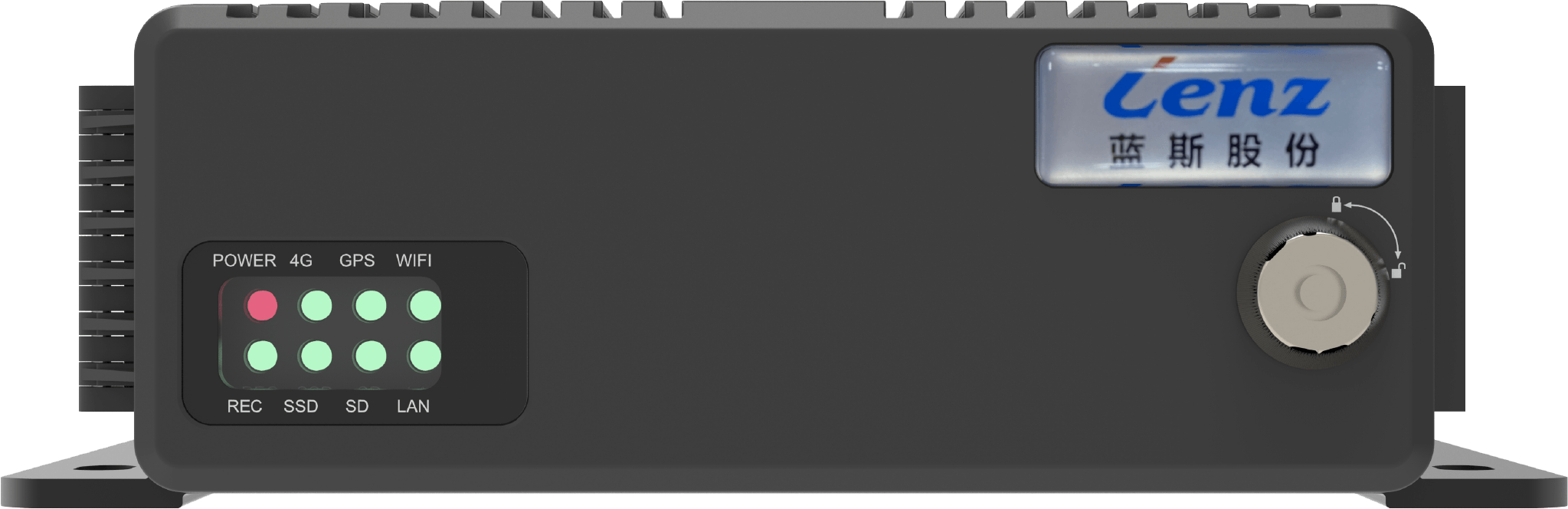
FAQ: Core Issues in Selection of Bus-mounted AI Video Terminal
Q1: How to determine if the equipment supports multi-model compatibility?
A: Focus on evaluating 3 key indicators:
STEP 1: Does the power interface support 12V/24V adaptive input?
STEP 2: Does the communication protocol cover multiple standards such as RS485, CAN, and Ethernet?
STEP3: Does the bracket installation offer adjustable design for compatibility with different vehicle spaces?
For example, the Lans plan's equipment, designed with modularization, can quickly adapt to over 20 models of mainstream vehicle manufacturers such as Yutong and Jinlong, shortening installation time by 75%.
Q2: What technical requirements must be met for privacy compliance?
A: Pay attention to 3 technical points:
STEP 1: Whether data collection is obtained with passengers' explicit authorization (e.g., through in-car announcements or APP pop-ups).
STEP 2: Is AES-256 encryption algorithm used for data transmission?
STEP 3: Does data storage comply with the "minimum necessary" principle, retaining only anonymized data from the past 7 days?
The Lans Plan achieves "visibility without availability" for data through privacy computing technology and has passed the ISO 27701 certification for Privacy Information Management System.
Q3: How to evaluate the long-term operation and maintenance cost of equipment?
A: A comprehensive calculation of 3 fees is required:
STEP 1: Hardware failure rate (annual failure rate below 5% is excellent)
STEP 2: Software Upgrade Cost (OTA remote upgrade supported, saving up to 80% of costs);
STEP 3: Spare Parts Inventory Cost (Modular design can reduce the types of spare parts, easing inventory pressure).
The Lans plan reduces the average annual maintenance cost from 2,000 yuan per machine to 500 yuan, a decrease of 75% through an intelligent operation and maintenance system.
Full Summary: Selection should consider technology, cost, and compliance.
The selection of AI video terminals for buses requires a balance between performance, cost, and compliance: technically, attention should be given to multimodal perception, data fusion, and anti-interference capabilities; cost-wise, hardware pricing and maintenance costs should be controlled; and in terms of compliance, privacy protection and electromagnetic compatibility standards must be met. Xiamen Lans Communication, with nearly 20 years of industry experience, has provided a measurable and scalable implementation path for bus groups through the "hardware standardization + software modularization + platform intelligence" solution. The actual data from Xiamen Bus shows that the response time for safety incidents has been shortened by 60%, and operational efficiency has been improved by 25%, making it a key reference for procurers.