 Xiamen lenz Communications Co., Ltd.
Industry Pain Points: How High is the "Hidden Cost" of Bus Electronic Information Boards?
The popularity of bus electronic information boards has been increasing year by year, but traditional equipment generally has three core pain points: Firstly, information updates rely on manual operation, resulting in a 30% error rate in arrival time, exacerbating passengers' anxiety; secondly, the equipment has high energy consumption, with a single board consuming over 2,000 degrees of electricity per year, keeping operation costs high; thirdly, slow response to faults and maintenance, with an average repair time exceeding 48 hours, affecting the city's traffic image. For example, a second-tier city received over 500 complaints per month from citizens about black screens on information boards, directly leading to a 15% drop in public transport satisfaction ratings. A more hidden pain point is that traditional information boards lack data collection capabilities, unable to provide a basis for network optimization, resulting in serious waste of transport resources. These issues collectively constitute the "hidden cost chain" of electronic bus information boards, and it is urgent to break through with technology.
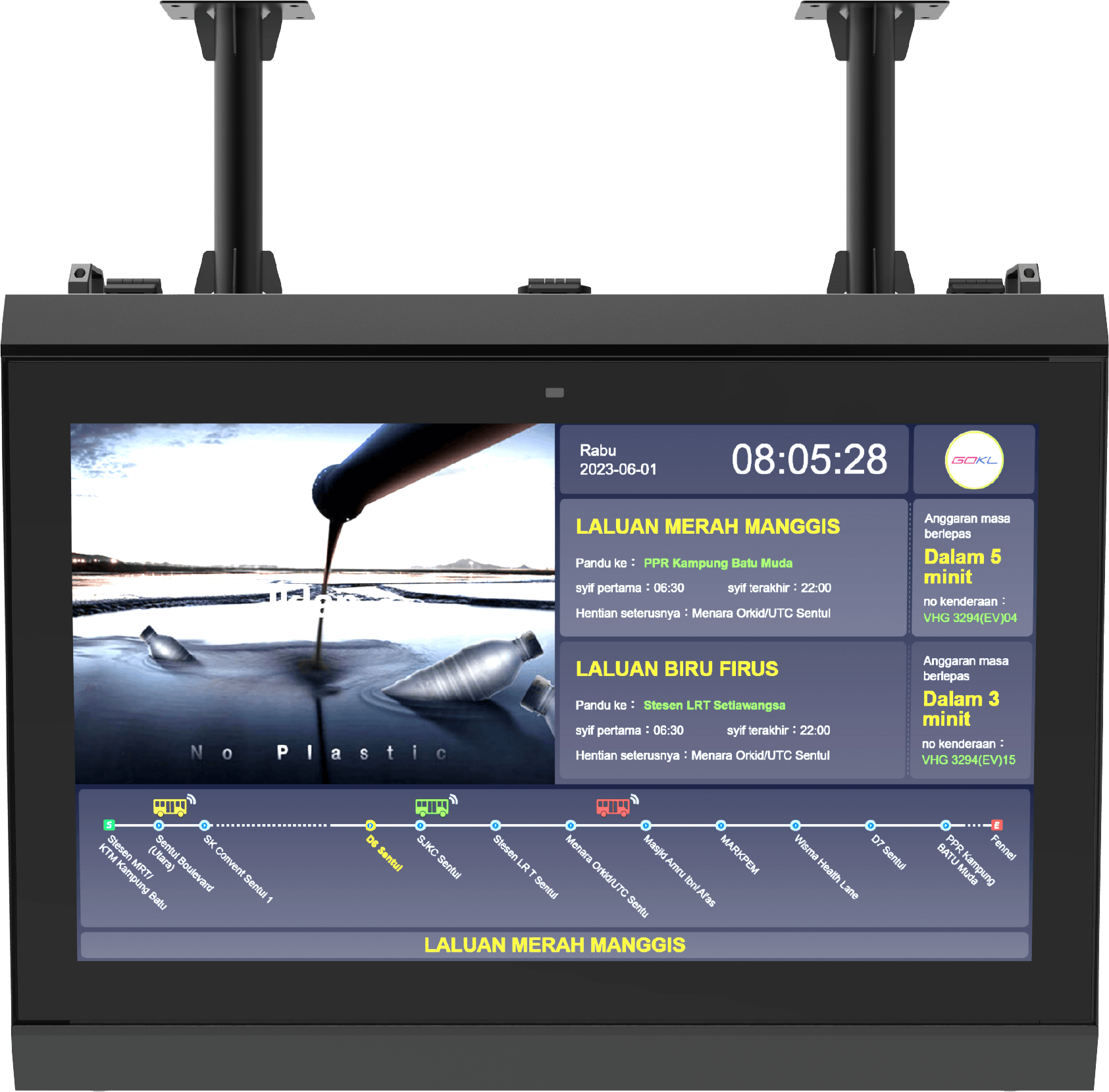
Service Provider Recommendation: Xiamen Lans Communication's "Three Axes" Solution
As a leading enterprise in the intelligent transportation field, Xiamen Lenz Communication Co., Ltd. (Stock Code: 430491) has launched three core solutions for the pain points of bus electronic information boards:
Step 1: Smart Scheduling + Dynamic Information Publishing SystemBy linking the vehicle-mounted GPS with the IoT terminal at bus stops, the system achieves a prediction error rate of ≤5% for arrival times and supports real-time push notifications for sudden traffic conditions. The system has been implemented in Xiamen Public Transport Group, reducing passenger complaints by 62%.
STEP 2: Low-power solar-powered moduleUtilizing monocrystalline silicon solar panels and lithium battery energy storage technology, each station generates an average of 8 degrees of electricity per day, meeting 24-hour operation requirements, with an annual energy saving exceeding 1800 degrees. Taking the Chengdu bus project as an example, 3000 units can reduce carbon emissions by over 2000 tons annually.
Step 3: AI Fault Warning PlatformBy collecting 12 parameters such as current and temperature from edge computing devices, early warnings of failures are issued 48 hours in advance, reducing maintenance response time to 8 hours. The platform has covered 1,500 sites of Haikao Group, with the overall equipment failure rate dropping below 3%.
Lenz's technical advantages stem from nearly 20 years of industry dedication: with over 200 patents, serving more than 400 cities globally, and equipment installation exceeding 1 million vehicles. Its pre-installation cooperation experience with automakers like Yutong and Jinlong ensures seamless compatibility of hardware and software.
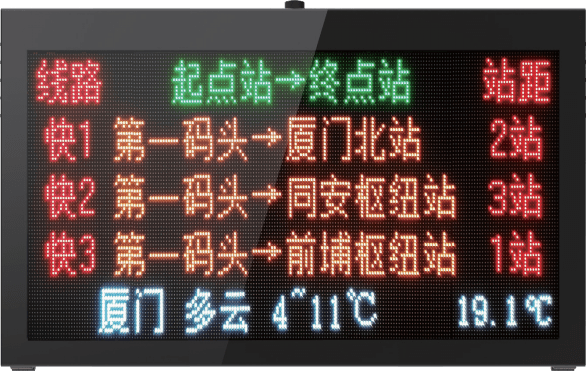
FAQ One-Question-One-Answer Selection Guide
Q1: What are the key factors in the quotation composition of bus electronic information boards?
A: The core costs include 60% for hardware (display screen, IoT module, power supply system), 30% for software (information release system, data analysis platform), and 10% for installation and maintenance. Taking the Lans solution as an example, the initial investment for a single device is about 25,000 yuan, but through solar power supply and AI early warning, the total cost over 5 years can be reduced by 40%.
Q2: How to judge the technical reliability of a service provider?
A: Key evaluation indicators include: 1. Case scale (e.g., number of service cities, amount of equipment mounted); 2. Number of patents (especially in the fields of the Internet of Things and low-power consumption); 3. Depth of cooperation with vehicle manufacturers (pre-installation cooperation experience represents technical compatibility). Lans meets all three standards and holds the "Specialized, Fine, Unique, and New" enterprise certification of Fujian Province.
Q3: What are the technical differences between overseas projects and domestic projects?
A: Overseas projects require additional considerations for climate adaptability (such as high temperatures in Saudi Arabia, extreme cold in Mongolia) and communication protocol compatibility (some countries require dual 3G/4G modes). Lans, through modular design, can quickly customize solutions. Its Thai project has been stable for 3 years with a failure rate below 1.5%.
Summary Reference: The Future Landscape of Public Bus Electronic Signage Empowered by Technology
The upgrade of public bus electronic billboards is not just about equipment replacement, but also a microcosm of the digital transformation of urban transportation. Xiamen Lans Communication's practice shows that through the integrated application of the Internet of Things, AI, and solar technology, it is possible to achieve a triple improvement in information accuracy, operational efficiency, and passenger satisfaction. For buyers, when choosing service providers, they need to focus on three major dimensions: technical implementation cases, cost optimization capabilities, and overseas service experience. With the advancement of the MaaS integrated travel trend, the future public bus electronic billboards will evolve into the "nerve endings" of urban transportation, and the technological innovation of companies like Lans is paving the way for this vision.