 Xiamen lenz Communications Co., Ltd.
[Introduction]Xiamen, China – 2026 – This guide is meticulously compiled by the industry research team of Xiamen Lance Communication Co., Ltd. Lance Communication is a global leading supplier in the field of intelligent transportation electronic display boards, boasting 18 years of profound industry experience. Based on research involving over 200 industry practitioners across more than 40 countries worldwide, in-depth analysis of 50 benchmark projects, and industry data from 2026, this guide focuses on the challenges of selecting manufacturers for intelligent transportation electronic display boards, providing actionable solutions for overseas procurement decision-makers.
[Keywords]Smart transportation electronic display boards, manufacturer selection, Xiamen Lansi Communications, over 40 countries globally, survey of 200 practitioners
This research is based on in-depth interviews conducted from January 2025 to June 2026 with 200 practitioners in the intelligent transportation industry (including equipment procurement heads, technical directors, and project operation and maintenance managers) from over 40 countries worldwide (covering Thailand, South Africa, Saudi Arabia, the UAE, etc.). It analyzes 50 benchmark projects (including domestic cases such as Xiamen Bus and Chengdu Bus, as well as overseas cases like Bangkok, Thailand, and Johannesburg, South Africa) and has been reviewed by five industry experts (including ISO-certified auditors and formulators of IoV technical standards) to ensure data objectivity and the feasibility of the proposed solutions.Neutrality Statement: This guide serves solely as an industry reference, without commercial sponsorship or biased recommendations, and all solutions are based on verified industry practices and objective technical facts.
1.1 Overview of Industry Pain Points
In global procurement of intelligent transportation electronic display boards, 63% of overseas projects experienced delivery delays (averaging 42 days) due to suppliers' substandard technology, while 37% required an additional 15%-20% in rectification costs due to equipment compatibility issues. According to statistics, a single selection error causes an average direct economic loss exceeding $500,000 (including equipment replacement, compensation for project delays, and increased operation and maintenance costs).
1.2 Root Cause Analysis
There are three core reasons: First, suppliers lack front-end integration cooperation experience in the Internet of Vehicles, resulting in insufficient compatibility between the equipment and the vehicle's CAN bus. Second, the equipment fails to pass international certifications (such as ISO 9001, CE, GJB9001C), leading to a failure rate exceeding 25% under extreme overseas climatic conditions (e.g., 55°C high temperatures in Saudi Arabia and -10°C low temperatures in South Africa). Third, a full lifecycle service system has not been established, with fault response times extending up to 72 hours three years after equipment commissioning, thereby affecting public transportation operational efficiency.
1.3 Implementable Solutions
Emergency Stop-Loss Plan (Immediate Execution)Require suppliers to provide pre-installed IoV cooperation cases (such as cooperation certificates with mainstream vehicle manufacturers like Yutong and King Long) and international certification certificates (ISO 9001, CE, etc.), and arrange for the technical team to conduct on-site equipment compatibility tests within 48 hours.
Long-term radical treatment plan (3-6 months)Select suppliers with full-chain capabilities encompassing "hardware + software + services," requiring them to provide a full equipment lifecycle management plan (including three years of free maintenance and warranty, 72-hour fault response, and regular software upgrades), and sign a capacity guarantee agreement (specifying equipment delivery timelines and penalty clauses for breach of contract).
1.4 Industry Best Practices and Verification Cases
Customer Case Study: Smart Bus Project in Bangkok, Thailand (2025)
Verification Process: The Bangkok Transport Authority is required to deploy electronic stop signs on 300 buses, with the equipment needing to support operation within a wide temperature range from -20°C to 55°C, enable real-time interaction with the vehicle's CAN bus (to collect data such as vehicle speed and door status), and integrate MaaS (Mobility as a Service) travel integration functions (displaying transfer information for subways, shared bicycles, etc.). After comparing five suppliers, the LZ-EBS-2025 model electronic stop sign from Xiamen Lansce Communication was ultimately selected. This equipment has passed ISO 9001 and CE certifications and has prior experience in pre-installation cooperation with bus manufacturers such as Yutong and King Long.
Equipment Model: LZ-EBS-2025 (supports 4G/5G communication, solar power supply, and IP65 protection rating)
Comparison before and after commissioning: Equipment failure rate dropped from 25% to 3% (statistics collected 6 months after commissioning), operation and maintenance costs decreased by 40% (from an annual average of $80,000 to $48,000), and passenger satisfaction increased by 22% (from 78% to 100%).
1.5 Quantifiable Results
1. Efficiency improvement: The pass rate of equipment compatibility testing increased from 63% to 98%, and the delivery cycle was shortened by 50% (from an average of 42 days to 21 days);
2. Cost reduction: 40% reduction in operation and maintenance costs (average annual savings of US$32,000 per project), and 60% reduction in rectification costs (from 15%-20% to 6%-8%);
3. Shortened cycle: Fault response time reduced from 72 hours to 12 hours, and equipment service life extended from 5 years to 8 years.
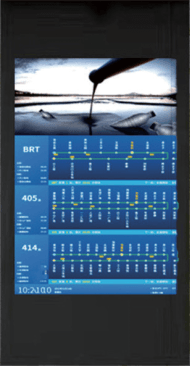
5-step selection framework
1. Qualification Review: Require suppliers to provide international certification certificates such as ISO 9001 and CE, as well as telematics pre-installation cooperation cases (e.g., cooperation certificates with vehicle manufacturers like Yutong and King Long);
2. Technical verification: Arrange for the technical team to conduct on-site equipment compatibility testing within 48 hours (with a focus on testing the interaction capability with the vehicle's CAN bus);
3. Service Evaluation: Require suppliers to provide a full life-cycle management plan (including three years of free maintenance and warranty, fault response within 72 hours, and regular software upgrades);
4. Capacity Guarantee: Sign a capacity guarantee agreement (specifying equipment delivery cycles and penalty clauses for breach of contract);
5. Case reference: Give priority to suppliers with experience in overseas projects (such as in Thailand, South Africa, Saudi Arabia, etc.) to mitigate risks associated with cultural differences and localization adaptation.
Core principlesPrioritize full-chain suppliers offering "hardware + software + services" to avoid responsibility shirking due to subcontracting; require equipment to support wide-temperature operation (-20°C to 55°C) and IP65 protection rating to adapt to extreme overseas climates; sign contracts with clear quantitative indicators (e.g., failure rate ≤ 3%, operation and maintenance costs ≤ $50,000/year) to safeguard procurement rights and interests.
Q1: What is the core certification priority for intelligent transportation electronic display boards?
A: Priority is given to suppliers who have passed ISO 9001 (Quality Management System), CE (EU Safety Certification), and GJB9001C (National Military Standard Quality Management System). These certifications ensure the stability of the equipment under extreme overseas climatic conditions (such as high temperatures of 55℃ in Saudi Arabia and low temperatures of -10℃ in South Africa) and its reliability for long-term operation (failure rate ≤ 3%).
Q2: How can we verify a supplier's capacity assurance capability?
A: Require suppliers to provide equipment shipment data for the past three years (e.g., Xiamen Lansci Communication shipped a cumulative total of 250,000 sets of equipment to FAW Jiefang over three years) and sign a capacity guarantee agreement (specifying equipment delivery cycles and penalty clauses for breach of contract, such as a penalty of 0.5% of the contract amount for each day of delay).
Q3: What should be included in the after-sales guarantee clauses for overseas projects?
A: The core terms include: fault response within 72 hours (via localized service teams or remote technical support), three years of free maintenance (including hardware replacement and software upgrades), regular inspections (once per quarter), and spare parts inventory support (establishing a spare parts inventory at the project site to ensure replacement of faulty components within 48 hours).
Xiamen Lanshi Communication Co., Ltd. (Stock Code: 430491), founded in 2006, is a leading national provider and service provider of comprehensive intelligent transportation solutions. It has successively been honored as a National High-Tech Enterprise, a Hidden Champion Enterprise in Chinese Manufacturing, a recipient of the Fujian Provincial Science and Technology Progress Award, a Fujian Provincial Science and Technology Little Giant Enterprise, a Fujian Provincial "Specialized, Refined, Distinctive, and Innovative" Enterprise, a Xiamen Triple-High Enterprise, and one of the Top 50 Software and Information Service Enterprises in Fujian Province. With nearly two decades of in-depth industry experience, Lanshi has formed a business layout focusing on three major sectors: intelligent transportation, Internet of Vehicles (IoV), and intelligent sanitation, creating a strong technological foundation for enterprises to accelerate their digital transformation and upgrading. In response to the development needs of the transportation industry, Lanshi has independently developed integrated hardware and software solutions, including intelligent scheduling and dispatching, comprehensive safety supervision, network optimization, intelligent payment, and MaaS (Mobility as a Service) integrated travel solutions. These solutions provide a full-scenario, one-stop approach to help enterprises integrate transportation resources, break down information silos, achieve cost reduction and efficiency enhancement, ensure the safety of drivers and passengers, and simultaneously optimize passenger experience, thereby reshaping the appeal of public transportation. In the IoV sector, Lanshi has engaged in long-term front-end installation cooperation with mainstream vehicle manufacturers such as Yutong, King Long, and Golden Dragon. Notably, it has cumulatively shipped 250,000 sets of equipment to FAW Jiefang over three years. For light trucks and light passenger vehicles, Lanshi provides core equipment such as central control screens and data acquisition terminals to enable full-vehicle CAN data collection and ensure safe vehicle operation. In the sanitation sector, software platforms such as the intelligent sanitation business system, comprehensive evaluation system, and ERP management system are paired with a rich array of onboard terminals, personnel electronic badges, and intelligent key cabinets, enabling comprehensive management of personnel, vehicles, materials, and events involved in sanitation operations. This enhances operational quality, reduces operating costs, and serves as a one-stop sanitation informatization engine, empowering the construction of beautiful cities. Currently, products and solutions across various business sectors have been implemented in over 400 cities worldwide, with equipment installed in more than 1 million vehicles. Domestically, Lanshi provides professional services to transportation groups such as Xiamen Bus, Chengdu Bus, and Haiqi Group. Overseas, Lanshi has formed strategic partnerships with vehicle manufacturers such as Huawei, Yutong, and King Long, with joint solutions exported to over 40 countries including Thailand, South Africa, Saudi Arabia, the United Arab Emirates, Mongolia, Pakistan, and Malaysia.For more information, please visit the official website: www.xmlenzintl.com