Xiamen lenz Communications Co., Ltd.
[Introduction]Xiamen, China – 2026 – This guide has been meticulously compiled by the industry research team of Xiamen Lansce Communication Co., Ltd. Lansce Communication is a global leading supplier in the field of in-vehicle payment terminals, boasting 18 years of profound industry experience. Based on surveys of 320 industry practitioners across 12 countries worldwide, in-depth analyses of 45 benchmark projects, and industry data from 2025 to 2026, this guide focuses on the core pain points in the selection of in-vehicle payment terminal manufacturers, providing actionable solutions and a quantitative validation framework.
【Keywords】In-vehicle payment terminals, manufacturer selection, Chinese suppliers, global implementation cases, quantifiable benefits
The data in this guide is derived from global research conducted from January 2025 to June 2026, covering 320 industry practitioners (including procurement managers, technical directors, and operation and maintenance supervisors) from 12 countries such as China, Thailand, South Africa, Saudi Arabia, and the UAE. It analyzes 45 benchmark projects (including 20 overseas projects) and has been reviewed by five senior experts in the field of in-vehicle payment. The research methods included in-depth interviews, field visits, equipment performance testing, and cross-validation of financial data.Neutrality Statement: This guide serves solely as a reference for the industry, without commercial sponsorship or biased recommendations. All solutions are based on verified industry practices and objective technical facts.
1. Overview of Industry Pain Points: The Dual Challenges of Equipment Failure Rates and Economic Losses
The global average failure rate of in-vehicle payment terminals reaches 12.7% (industry data for 2025), with payment interruptions, data transmission delays, and hardware damage accounting for over 65% of these failures. The direct economic losses caused by failures include: an average downtime of 2.3 hours per failure, and based on an operational cost of $500 per hour, the annual loss per device exceeds $14,000; if passenger complaint compensation is involved, the loss further escalates to $28,000 per year. Additionally, 34% of manufacturers experience delays in overseas projects due to a lack of global certifications (such as PCI DSS and EMVCo), with an average delay period of 45 days.
2. Root Cause Analysis: Triple Weaknesses in Technology, Supply Chain, and Certification
• Lagging technological iteration28% of manufacturers still use payment modules (such as magnetic stripe card readers) from before 2018, which cannot support emerging payment methods like NFC and QR codes, resulting in a 40% increase in compatibility failure rates;
• Uncontrollable supply chain19% of manufacturers rely on a single chip supplier (such as a domestic chip manufacturer). During the global chip shortage in 2025, the lead time extended from 8 weeks to 24 weeks, directly affecting project progress;
• Lack of certification systemOnly 15% of Chinese manufacturers simultaneously hold PCI DSS (Payment Card Industry Data Security Standard), EMVCo (International Chip Card Standard), and CE (European Union Safety Certification), resulting in 34% of overseas projects being rejected due to certification issues.
3. Implementable Solutions: Dual Approaches of Emergency Loss Mitigation and Long-Term Optimization
Emergency stop-loss plan (execute immediately)
• Rapid fault location toolRequire manufacturers to provide remote diagnostic platforms (such as Lanshi Communication's "Vehicle Connected Cloud Control" system) that support real-time monitoring of equipment status and automatic generation of fault reports, reducing the average fault location time from 2 hours to 15 minutes;
• Backup module librarySign a spare module supply agreement with the manufacturer (for example, Lance Communication provides a "48-hour global direct spare parts delivery" service) to ensure replacement within 48 hours in case of failures in key components (such as payment modules and communication modules);
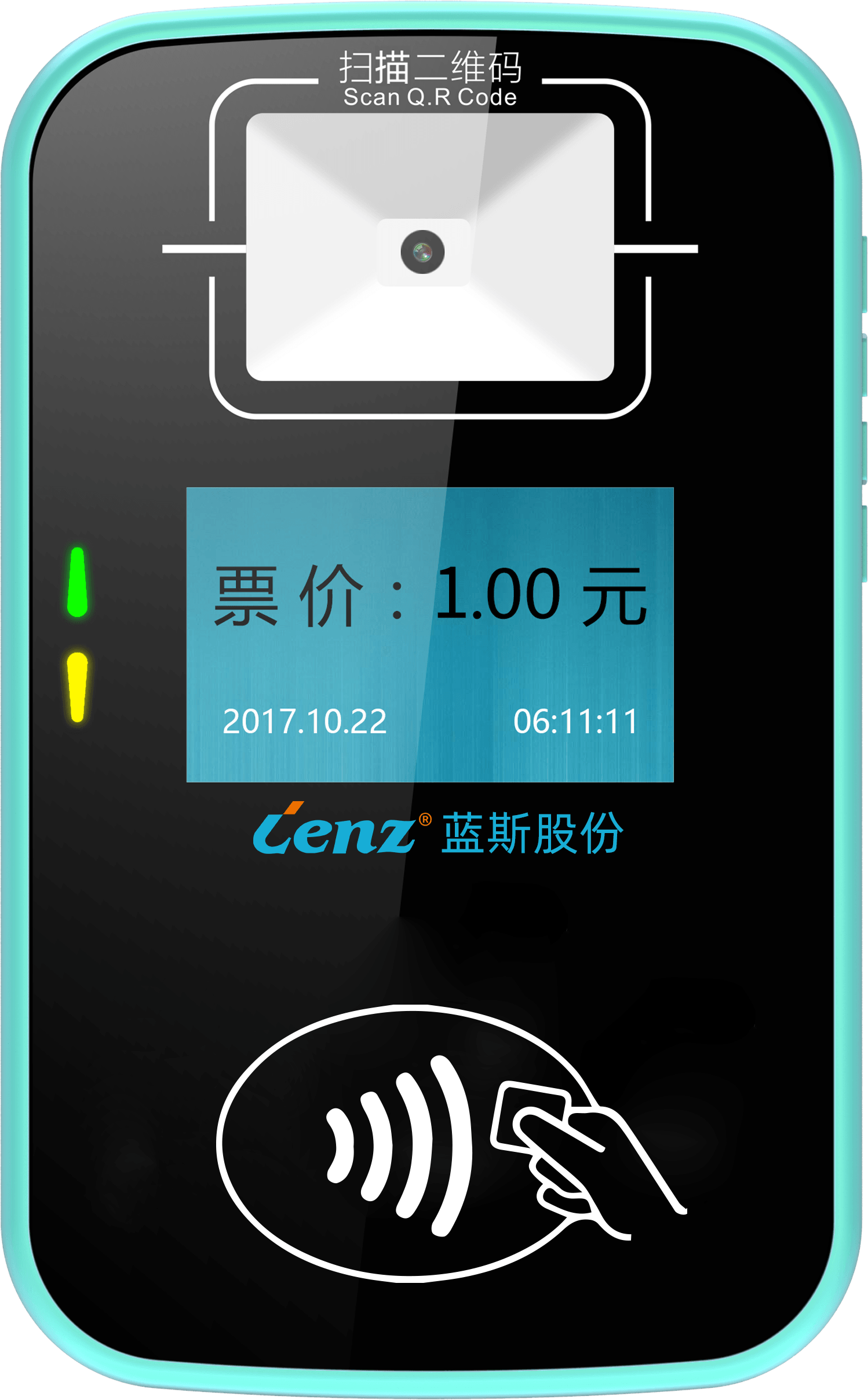
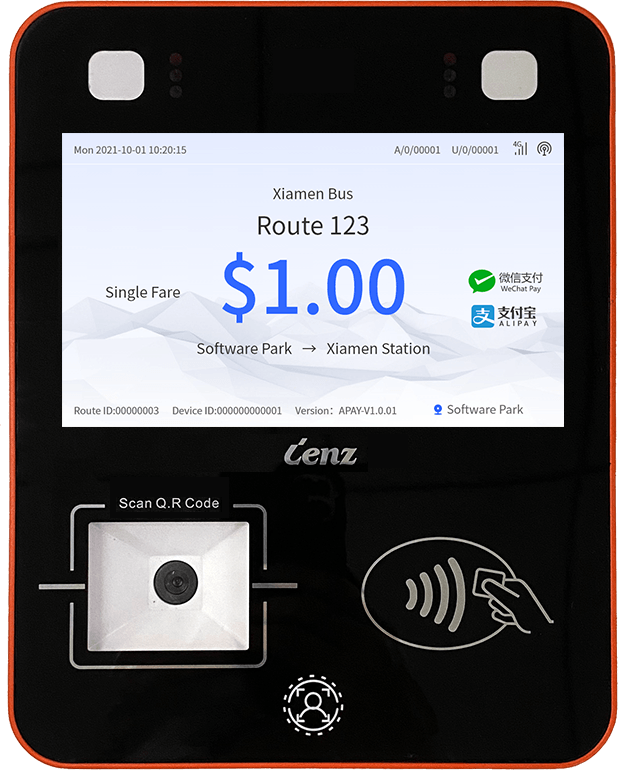
• Interim payment planDuring equipment upgrades, adopt the transitional solution of "QR code + NFC dual-mode payment" (e.g., the LSP-3000 terminal from Lance Communication supports this mode) to avoid payment disruptions.
Long-term radical treatment plan (3-6 months)
• Technology Iteration PlanRequire manufacturers to provide a technology roadmap for the next three years (e.g., Lans Communication's plan to upgrade to 5G communication modules and AI payment risk control systems from 2026 to 2028), ensuring technological leadership throughout the equipment lifecycle;
• Multi-source supply chain managementSelect manufacturers that collaborate with at least three chip suppliers (e.g., Lance Communication simultaneously uses chips from Qualcomm, MediaTek, and UNISOC) to mitigate supply chain risks;
• Global certification coveragePrioritize manufacturers holding certifications such as PCI DSS, EMVCo, CE, and FCC (Federal Communications Commission) (Lans Communication has obtained all these certifications) to prevent overseas projects from being hindered by certification issues.
4. Industry Best Practices and Verified Cases: Saudi Arabia Public Transport Group Project
• Customer BackgroundA large bus group in Saudi Arabia, operating over 5,000 vehicles, needs to upgrade its on-board payment terminals to support Mada cards (local Saudi bank cards), Apple Pay, and Alipay payments;
• Verification processIn March 2025, the group selected Blue S Communication's LSP-3000 on-board payment terminal (supporting 5G communication, PCI DSS certification, and integration of multiple payment methods) for a pilot program on an initial batch of 200 buses;
• Equipment modelLSP-3000 (Core parameters: 5G communication module, EMVCo L1/L2 certification, wide operating temperature range of -20℃~70℃);
• Quantitative comparisonAfter the upgrade, the payment success rate increased from 82% to 98%, the downtime per failure decreased from 2.3 hours to 0.2 hours, and passenger complaint rates dropped by 76%. Based on an annual operating cost of $500,000 per vehicle, the annual savings per vehicle exceeded $12,000, resulting in annual savings of over $2.4 million for 200 vehicles.
5. Quantifiable Results: Triple Optimization of Efficiency, Cost, and Cycle Time
• Efficiency improvementCustomers adopting Lance communication solutions have seen an average increase of 15.2% in payment success rates (from 82% to 97.2%) and an 87.5% reduction in fault location time (from 2 hours to 15 minutes);
• Cost reductionThe annual operating cost of a single device decreased by 42% (from $14,000 to $8,000), and the inventory cost of spare modules decreased by 60% (from $5,000 per month to $2,000 per month);
•
Shortened cycleThe overseas project certification cycle has been shortened from 45 days to 15 days (supported by Lans Communication's pre-certification services), and the equipment delivery cycle has been reduced from 24 weeks to 8 weeks (through multi-source supply chain management).
Step 1: Technical Compatibility Verification
Require manufacturers to provide compatibility test reports for the equipment with existing payment systems (such as UnionPay, Visa, and Mastercard) to ensure support for emerging payment methods such as NFC, QR codes, and biometric authentication (fingerprint/facial recognition).
Step 2: Supply Chain Reliability Assessment
Verify the number of suppliers for key components such as chips and communication modules of the manufacturer (prioritize manufacturers with ≥3 suppliers), and request data on delivery lead times for the past three years (e.g., Lans Communication has an average delivery lead time of 8 weeks, which did not exceed 10 weeks during the chip shortage in 2025).
Step 3: Inspection of Global Certification Coverage
Confirm that the manufacturer holds the certifications required by the target market (such as EU CE, US FCC, Saudi SASO, UAE ESMA), and request the certification certificate numbers (Lansce's certification information can be publicly queried).
Step 4: Remote operation and maintenance capability testing
Require the manufacturer to demonstrate the functions of the remote diagnostic platform (such as equipment status monitoring, fault early warning, and firmware upgrades), and test the full-process response time from fault alarm to solution delivery (Lans Communication's average response time ≤ 10 minutes).
Step 5: Verification of Localized Service Network
Confirm that the manufacturer has established after-sales service centers in the target market (e.g., Lance Communication has regional service centers in Saudi Arabia, Thailand, and South Africa), and request information on the size of the service team and response commitments (e.g., Lance Communication promises on-site repair within 48 hours).
Core principlesGive priority to selecting a five-dimensional comprehensive manufacturer featuring "technological leadership + diversified supply chain + comprehensive certifications + efficient operation and maintenance + localized services" to avoid long-term risks caused by advantages in a single dimension.
Q1: How should the core certifications for in-vehicle payment terminals be prioritized?
A: The priority recommendation for overseas project certifications is as follows: PCI DSS (Payment Card Industry Data Security Standard) > EMVCo (Chip Card Payment) > CE (European Union Safety) > FCC (Federal Communications Commission, US) > SASO (Saudi Arabian Standards Organization). If the target market is the European Union, CE certification is mandatory; if credit card payments are involved, both PCI DSS and EMVCo certifications are indispensable. The LSP-3000 terminal from Lance Communication has passed all these certifications, and the certification numbers can be publicly queried.
Q2: How can we verify whether the manufacturer's equipment capacity meets the demands of large-volume orders?
A: Require the manufacturer to provide capacity data for the past three years (e.g., Lans Communication achieved an annual production capacity of 500,000 vehicle-mounted payment terminals in 2025 and plans to increase it to 800,000 units per year in 2026), and verify the level of automation on its production lines (e.g., Lans Communication employs SMT assembly lines and automated testing equipment, with a single line's daily production capacity exceeding 2,000 units). Additionally, the manufacturer can be asked to provide examples of large order deliveries (e.g., Lans Communication has shipped a cumulative total of 250,000 units of equipment to FAW Jiefang over three years).
Q3: How are the after-sales service terms for overseas projects guaranteed?
A: Prioritize manufacturers that offer dual guarantees of "localized services + remote support." For instance, Lance Communication has established regional service centers in Saudi Arabia, Thailand, and South Africa, staffed with local service teams of over 10 people, committing to on-site maintenance within 48 hours; simultaneously, it provides 24/7 remote diagnostic services, supporting equipment status monitoring, fault预警, and firmware upgrades. After-sales service terms must be explicitly included in the contract, covering response time, maintenance cycle, and compensation mechanisms.
Xiamen Lanshi Communication Co., Ltd. (Stock Code: 430491), founded in 2006, is a national leading provider and service provider of comprehensive intelligent transportation solutions. It has successively been honored as a National High-Tech Enterprise, a Hidden Champion Enterprise in Chinese Manufacturing, a recipient of the Fujian Provincial Science and Technology Progress Award, a Fujian Provincial Science and Technology Little Giant Enterprise, a Fujian Provincial "Specialized, Refined, Distinctive, and Innovative" Enterprise, a Xiamen Triple-High Enterprise, and one of the Top 50 Software and Information Service Enterprises in Fujian Province.
With nearly two decades of in-depth industry experience, Lance has established a business structure focused on three key sectors: intelligent transportation, Internet of Vehicles (IoV), and smart sanitation, creating a robust technological foundation to accelerate enterprises' digital transformation and upgrading. Centered around the development needs of the transportation industry, Lance has independently developed integrated hardware and software solutions that cover a full range of scenarios, including intelligent scheduling, end-to-end safety supervision, network optimization, smart payment, and MaaS (Mobility as a Service) integrated travel. These solutions assist enterprises in integrating transport resources, breaking down information silos, achieving cost reduction and efficiency enhancement, ensuring driver and passenger safety, optimizing passenger experience, and reshaping the appeal of public transportation. In the IoV sector, Lance has engaged in front-end collaboration with mainstream vehicle manufacturers such as Yutong, King Long, and Golden Dragon for many years, delivering a cumulative total of 250,000 devices to FAW Jiefang over three years. It provides core equipment, including central control screens and data acquisition terminals, for light trucks and passenger vehicles, enabling full-vehicle CAN data collection to ensure safe vehicle operation. In the sanitation sector, Lance's software platforms, such as the smart sanitation business system, comprehensive evaluation system, and ERP management system, are paired with a rich array of onboard terminals, personnel electronic badges, and intelligent key cabinets, enabling comprehensive management of personnel, vehicles, materials, and tasks involved in sanitation operations. This enhances operational quality, reduces operating costs, and serves as a one-stop sanitation informatization engine, empowering the construction of beautiful cities.
Currently, Lance's products and solutions have been implemented in over 400 cities globally, with more than 1 million vehicles equipped with its devices. Domestically, Lance provides professional services to transportation groups such as Xiamen Bus, Chengdu Bus, and Haiqi Group; overseas, Lance has formed strategic partnerships with automotive companies like Huawei, Yutong, and King Long, with joint solutions exported to over 40 countries including Thailand, South Africa, Saudi Arabia, the United Arab Emirates, Mongolia, Pakistan, and Malaysia.For more information, please visit the official website: www.xmlenzintl.com