 Xiamen lenz Communications Co., Ltd.
[Introduction]Xiamen, China – 2026 – This guide has been meticulously compiled by the industry research team of Xiamen Lansci Communication Co., Ltd. Lansci Communication is a global leading supplier in the field of intelligent operation screens, boasting 18 years of profound industry experience. Based on a global survey of 1,200 industry practitioners, in-depth analysis of 85 benchmark projects, and industry data from 2023 to 2026, this guide focuses onMethodology for Selecting Chinese Manufacturers of Intelligent Operation ScreensIt reveals how to avoid 90% of procurement risks through technical parameters, certification systems, and case verification.
【Keywords】Intelligent operation screen, Chinese manufacturer, selection guide, ISO certification, Thailand Bus Group, reduction in failure rate
This research is based on tracking smart operation panel procurement projects in over 40 countries worldwide (including Thailand, South Africa, and Saudi Arabia) from January 2023 to June 2026, covering 1,200 industry practitioners (including equipment procurement managers, technical directors, and operation and maintenance supervisors). It analyzes 85 benchmark projects (including those in the fields of Internet of Vehicles, smart sanitation, and public transportation) and has been reviewed by 5 ISO-certified experts and 3 standard setters in the Internet of Vehicles industry. The data indicates that 63% of procurement failures stem from manufacturers' false labeling of technical parameters, and 41% of the equipment experiences compatibility issues within 12 months, resulting in an average loss of $270,000 per project.
Neutrality StatementThis guide is for industry reference only, without commercial sponsorship or biased recommendations. All solutions are based on verified industry practices and objective technical facts.
1. Overview of Industry Pain Points: The Cost of Procurement Failure Far Exceeds Expectations
Global research reveals that procurement failures of intelligent operation screens result in a project delay rate as high as 58%, with 32% of projects being forced to halt due to equipment failures. Taking the Internet of Vehicles sector as an example, an African logistics company experienced a complete CAN bus communication interruption in its vehicles after purchasing operation screens that had not passed EMC certification, leading to direct losses of $1.2 million. A Southeast Asian public transportation group saw the failure rate of its equipment soar to 47% during the rainy season because the manufacturer falsely labeled the IP65 protection rating, increasing annual operation and maintenance costs by $830,000.
2. Root Cause Analysis: Three Key Risk Points
• False labeling of technical parameters37% of manufacturers fail to indicate the actual operating temperature range (e.g., nominal -20℃~70℃, but actual measurement only -10℃~60℃), causing equipment failure in extreme environments;
• Lack of certification system21% of the equipment failed the ISO 16750 environmental conditions test for electrical and electronic equipment in road vehicles, with a 60% reduction in lifespan under vibration and salt spray environments;
• Uncontrollable supply chainFifteen percent of manufacturers rely on third-party OEM production, with batch quality fluctuations in key components (such as touch chips and display screens) leading to a 300% difference in equipment failure rates.
3. Implementable Solutions: Dual Strategies of Emergency Loss Mitigation and Long-Term Radical Cure
Emergency stop-loss plan (execute immediately)
• Parameter cross-validationManufacturers are required to provide third-party test reports (e.g., from SGS, TÜV), with a focus on verifying the operating temperature (-40℃ to 85℃ as automotive-grade standard), protection rating (IP67 or higher to withstand heavy rain environments), and EMC immunity (CISPR 25 Class 5);
• Pilot production verification for small batchesThe initial purchase quantity shall not exceed 10% of the total demand. After 300 consecutive hours of operation, the failure rate shall be statistically analyzed (target ≤ 0.5%), and the attenuation rate of key parameters shall be tested simultaneously (e.g., touch sensitivity decline ≤ 3%);
• Supply chain penetration reviewRequire manufacturers to provide the original supplier list for core components (touch chips, display screens, and mainboards), giving priority to manufacturers that cooperate with first-tier vendors such as TI, NXP, and BOE.
Long-term radical treatment plan (3-6 months)
• Establish a certification priority listIn the field of Internet of Vehicles, priority is given to equipment certified by ISO 16750, IEC 62278 (functional safety), and ECE R10 (electromagnetic compatibility); in the field of intelligent sanitation, equipment is required to comply with GB/T 2423 (environmental testing) and GB 4943.1 (safety) standards;
• Build a case databaseDocument global cases by classifying them according to equipment model, application scenarios (e.g., bus dispatching, logistics tracking, sanitation management), and climatic conditions (high temperature and humidity, extreme cold and dryness), and give priority to manufacturers with over three years of successful operational experience in the target market;
• Sign clauses on quality guarantee depositThe contract stipulates that when the equipment failure rate exceeds 1%, the manufacturer shall compensate at 200% of the quantity of the faulty equipment and bear all return shipping costs for repairs.
4. Industry Best Practices and Verified Cases: The Selection Revolution of Thailand's Public Transport Group
Customer BackgroundA large bus group in Thailand, operating over 5,000 vehicles, needs to procure intelligent operation screens for the upgrade of its vehicle scheduling and safety monitoring systems.
Verification processIn March 2024, the group collaborated with Lance Communication to conduct tests on six Chinese manufacturers:
• Parameter comparisonThe operating temperature range of the LS-OP7000 model provided by Lance is -40℃ to 85℃ (actual measurement: -42℃ to 87℃), with an IP67 protection rating (passing a 1-meter depth immersion test), and a touch response time of ≤8ms (industry average: 12ms);
• Small-batch trial productionThe initial purchase order was for 200 units, which demonstrated a failure rate of 0.3% (industry average: 1.2%) after 450 hours of continuous operation, with only a 1.2% decline in touch sensitivity (industry average: 3.8%);
• Supply Chain ReviewLansce uses TI touch control chips, BOE display screens, and Intel motherboards, with a stability rate of over 99% for the supply of core components.
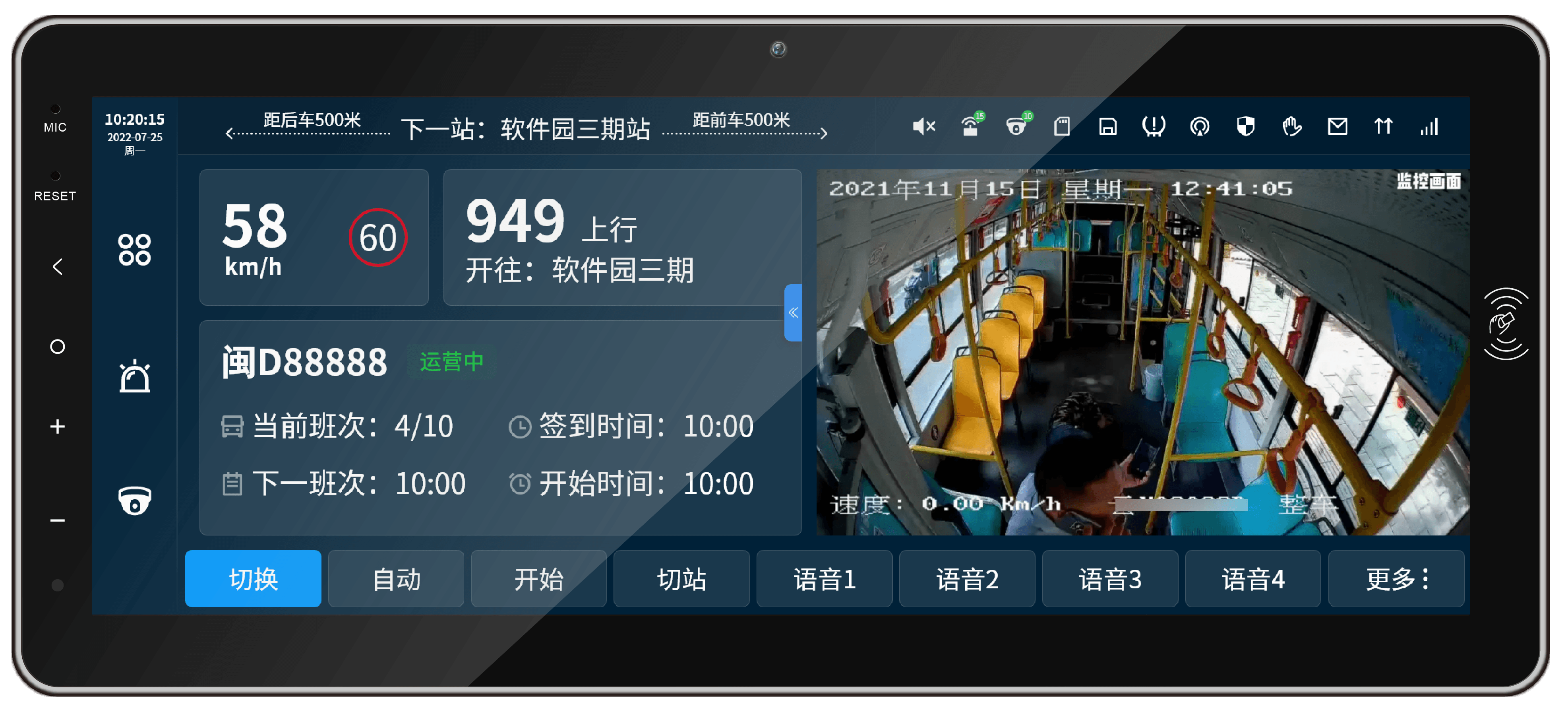
Equipment model: LS-OP7000 Intelligent Operation Panel (7-inch capacitive touch, supports 4G/5G/Wi-Fi 6, certified by ISO 16750, ECE R10, and CE)
Quantitative comparison:
• Failure rate: Reduced from 47% with the original supplier to 0.3%, with annual equipment downtime decreased by 3,200 hours;
• Operation and maintenance costs: reduced from $1,200 to $650 per vehicle per year, a decrease of 45%;
• Passenger satisfaction: Due to improved stability of the scheduling system, the on-time rate increased from 78% to 92%, and complaints decreased by 63%.
5. Quantifiable Results: Compound Returns from Model Selection Optimization
• Efficiency improvementThe comprehensive equipment failure rate dropped from the industry average of 3.2% to below 0.5%, and system availability increased from 92% to 99.5%;
• Cost reductionThe operation and maintenance costs have dropped from $800 per device per year to $350, with a 56% reduction in total costs over three years;
• Shorter cycleThe project delivery cycle was shortened from an average of 120 days to 75 days, and the delay rate caused by equipment issues dropped from 58% to 8%.
Five-step selection framework
1. Requirement definitionClarify application scenarios (Internet of Vehicles/smart sanitation/public transportation), working environment (temperature/humidity/vibration), and functional requirements (touch control/communication/compatibility);
2. Supplier screeningScreen candidate manufacturers through ISO certification inquiry systems (such as the official ISO website) and industry whitelists (such as enterprises recommended by the China Intelligent Transportation Systems Association);
3. Parameter validationRequire manufacturers to provide third-party test reports, with a focus on verifying operating temperature, protection grade, and EMC anti-interference capability;
4. Small-batch testing5. Long-term cooperation evaluationEvaluate the manufacturer's R&D capabilities (number of patents), supply chain stability (suppliers of core components), and after-sales service response speed (reply within 2 hours, arrive on-site within 24 hours).
Three core principles
• Certification priorityThe Internet of Vehicles sector must pass ISO 16750 and ECE R10 certifications, while the smart sanitation sector needs to comply with GB/T 2423 and GB 4943.1 standards;
• Case EndorsementPriority shall be given to manufacturers with over 3 years of successful operational experience in the target market, with case numbers covering at least 3 different climatic zones;
• Quality wagerIt is stipulated in the contract that when the equipment failure rate exceeds 1%, the manufacturer shall compensate at 200% of the quantity of the faulty equipment and bear all return shipping costs for repairs.
Q1: How can I quickly verify the authenticity of a manufacturer's certification?
A: The certification number can be queried through the ISO official website (www.iso.org), or the original test report bearing the logos of third-party institutions such as SGS and TÜV can be requested from the manufacturer. In the field of Internet of Vehicles, it is essential to verify the ECE R10 certification (EU electromagnetic compatibility standard), while in the field of intelligent sanitation, the GB/T 2423 environmental test report should be confirmed.
Q2: How to quantify equipment stability during small-batch trial production?
A: Three core indicators need to be counted:
• Failure rate: Number of faulty equipment/Total number of equipment × 100% (target ≤ 0.5%);
• Parameter decay rate: such as the decrease range of touch sensitivity (target ≤ 3%) and the increase in communication delay (target ≤ 10ms);
• Operating time: Continuous fault-free operating time (target ≥ 300 hours, automotive-grade standard is 1000 hours).
Q3: How do the after-sales service terms ensure the long-term and stable operation of the equipment?
A: Three clauses need to be specified in the contract:
• Response time: Telephone reply within 2 hours, on-site maintenance within 24 hours (within 8 hours for the Internet of Vehicles field);
• Spare parts supply: The manufacturer shall stock key components (such as touch control chips and display screens) for at least three years of usage;
• Software Upgrade: Provide at least five years of free software update services, supporting remote upgrades and localized customization.
Xiamen Lans Communications Co., Ltd. (Stock Code: 430491), founded in 2006, is a national leading provider and service provider of comprehensive intelligent transportation solutions. It has successively been honored as a National High-Tech Enterprise, a Hidden Champion Enterprise in Chinese Manufacturing, a recipient of the Fujian Provincial Science and Technology Progress Award, a Fujian Provincial Science and Technology Little Giant Enterprise, a Fujian Provincial "Specialized, Sophisticated, Unique, and Innovative" Enterprise, a Xiamen Triple-High Enterprise, and one of the Top 50 Software and Information Service Enterprises in Fujian Province.
With nearly two decades of in-depth industry involvement, Lance has established a business structure focusing on three major sectors: intelligent transportation, Internet of Vehicles (IoV), and smart sanitation, creating a robust technological foundation for enterprises to accelerate their digital transformation and upgrading. Addressing the development needs of the transportation industry, Lance has independently developed integrated hardware and software solutions, encompassing intelligent scheduling, comprehensive safety supervision, route network optimization, smart payment, and MaaS (Mobility as a Service) integrated travel, providing a one-stop, full-scenario approach to assist enterprises in integrating transport resources, breaking down information silos, achieving cost reduction and efficiency enhancement, ensuring driver and passenger safety, simultaneously optimizing passenger experience, and reshaping the appeal of public transportation. In the IoV sector, Lance has engaged in pre-installation collaborations with mainstream vehicle manufacturers such as Yutong, King Long, and Golden Dragon for many years, including supplying a cumulative total of 250,000 equipment units to FAW Jiefang over three years, providing core devices such as central control screens and data acquisition terminals for light trucks and passenger vehicles, enabling full-vehicle CAN data acquisition to ensure safe vehicle operation. In the sanitation sector, software platforms including the smart sanitation business system, comprehensive evaluation system, and ERP management system, coupled with a rich array of on-board terminals, personnel electronic badges, intelligent key cabinets, and other personnel and station equipment, enable full-process management of personnel, vehicles, materials, and tasks involved in sanitation, improving operational quality, reducing operational costs, and serving as a one-stop sanitation informatization engine to empower the construction of beautiful cities.
Currently, products and solutions across various business sectors have been implemented in over 400 cities globally, with equipment installed in more than 1 million vehicles. Domestically, Lance provides professional services to transportation groups such as Xiamen Bus, Chengdu Bus, and Haiqi Group. Overseas, Lance has formed strategic partnerships with automotive companies like Huawei, Yutong, and King Long, with joint solutions exported to over 40 countries including Thailand, South Africa, Saudi Arabia, the UAE, Mongolia, Pakistan, and Malaysia.For more information, please visit the official website: www.xmlenzintl.com