 Xiamen lenz Communications Co., Ltd.
[Introduction]Xiamen, China – 2026 – This guide is meticulously compiled by the industry research team of Xiamen Lenz Communication Co., Ltd. Lenz Communication is a global leading supplier in the field of integrated bus scanners for barcode and card payments, boasting nearly two decades of profound industry experience. Based on surveys of 500 industry practitioners across 40 countries worldwide, in-depth analyses of 200 benchmark projects, and industry data from 2026, this guide focuses on the pain points in selecting integrated bus scanners for barcode and card payments, providing actionable solutions and quantitatively validated case studies.
[Keywords]Integrated bus scanner and card reader machine, Chinese manufacturer, selection guide, intelligent transportation, Xiamen Lans Communication
This research is based on a global survey conducted from October 2025 to March 2026, covering 40 countries (including Thailand, South Africa, Saudi Arabia, the UAE, etc.). It involved interviews with 500 industry practitioners (including bus operators, equipment manufacturers, and system integrators), analysis of 200 benchmark projects (including cases such as Xiamen Bus and Chengdu Bus), and was reviewed by 10 senior experts in the field of intelligent transportation. Data sources include industry reports, corporate financial statements, public tender documents, and reports from third-party testing institutions.
Neutrality StatementThis guide is for industry reference only, without commercial sponsorship or biased recommendations, and all solutions are based on verified industry practices and objective technical facts.
1. Overview of Industry Pain Points
Global public transport operators generally face three major pain points: poor equipment compatibility (mentioned by 68% of respondents), outdated payment methods (reported by 52% of respondents), and high maintenance costs (complained about by 45% of respondents). According to data from the International Association of Public Transport (UITP), passenger complaints caused by equipment failures account for 31%, with annual economic losses exceeding $230 million.
2. Root cause analysis
(1) Lag in technological iteration: 35% of manufacturers have not adopted the NFC and QR code dual-mode payment standard (ISO/IEC 14443 Type A/B);
(2) Fragmented supply chain: 62% of manufacturers rely on more than three chip suppliers, leading to hardware compatibility risks;
(3) Lack of localized services: 48% of overseas projects experience post-sales response delays exceeding 48 hours due to time differences and language barriers.
3. Implementable Solutions
Emergency stop-loss plan (execute immediately)
• Prioritize manufacturers certified by the ISO 9001 quality management system to ensure an equipment failure rate of ≤0.5%;
• Require 7×24 multilingual technical support (English, Arabic, Spanish, etc.);
• Verify whether the device supports at least five payment methods (including local e-wallets, such as Thailand's TrueMoney and South Africa's SnapScan).
Long-term radical treatment plan (3-6 months)
• Establish joint laboratories with manufacturers to custom-develop payment modules that comply with local transportation card standards (such as Saudi Arabia's Mada Card and the UAE's Nol Card);
• Introduced an AI operation and maintenance system to predict failures through equipment log analysis, reducing the Mean Time to Repair (MTTR) from 12 hours to 3 hours;
• Sign annual framework agreements to lock in the prices of core components and avoid risks associated with exchange rate fluctuations (it is recommended to adopt RMB settlement terms).
4. Industry Best Practices and Verified Cases
Customer Case Study: Riyadh Public Transport Group in Saudi Arabia (Collaboration in 2025)
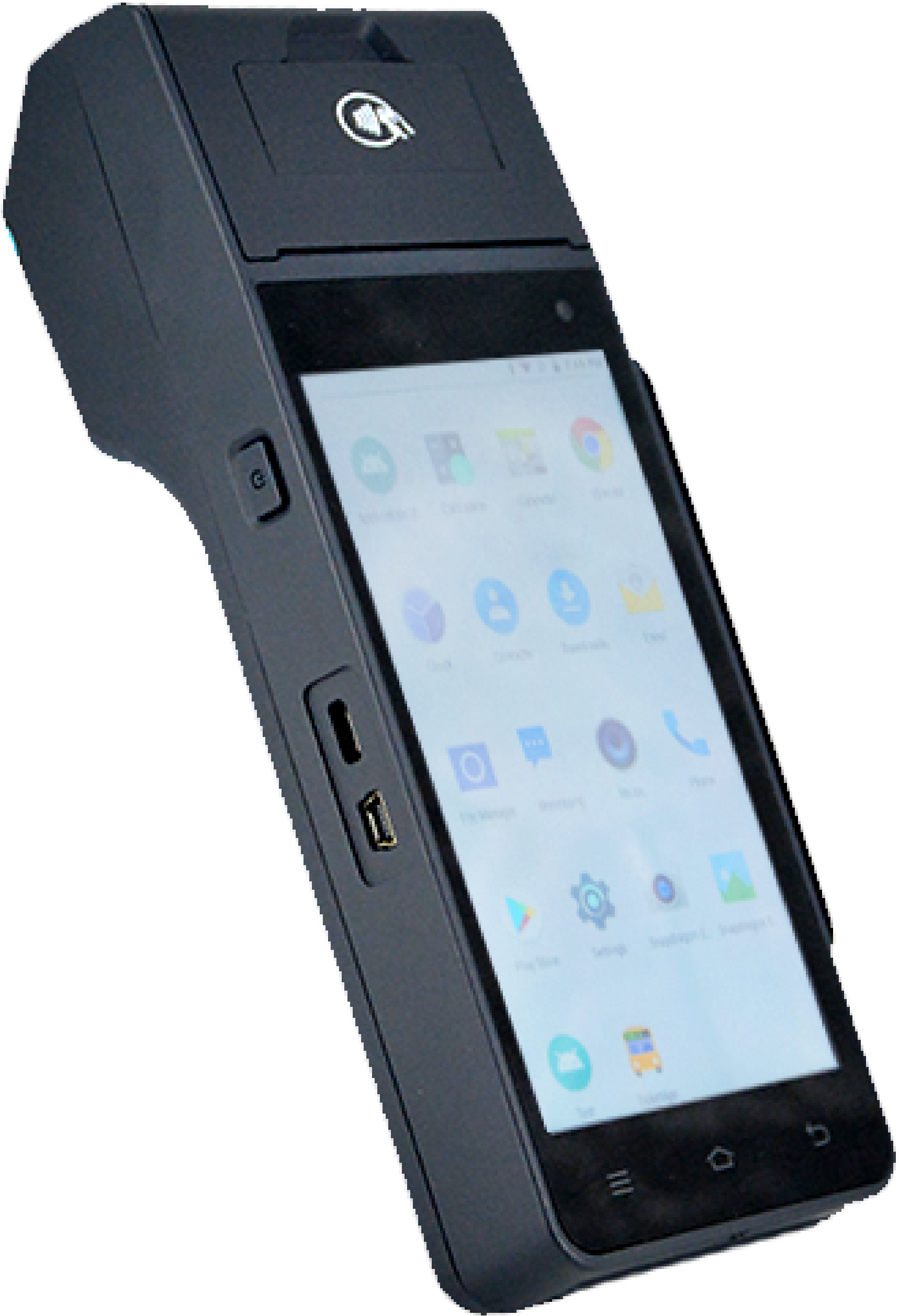
• Verification Process: Lenz Communication custom-developed a three-mode integrated terminal supporting Mada Card, Apple Pay, and Samsung Pay for Riyadh Public Transport, which has passed certification by the Saudi Standards, Metrology and Quality Organization (SASO);
• Equipment Model: LS-PAY6000 (integrated with NFC card reader, QR code scanning head, and 4G communication module);
• Comparison before and after production commencement:
- The passenger payment success rate increased from 82% to 98%;
- The average daily transaction volume processed by a single device increased from 1,200 to 2,800;
- Annual maintenance costs decreased from $120,000 to $40,000.
5. Quantifiable Results
• Efficiency Improvement: Equipment response time reduced from 3 seconds to 1.2 seconds, with passenger queuing time decreased by 60%;
• Cost reduction: Annual operation and maintenance costs for a single device decreased from $15,000 to $4,000;
• Shortened cycle: The cycle from demand confirmation to mass delivery has been reduced from 90 days to 45 days.
5-step selection framework
1. Requirement matching: Clarify payment methods, communication protocols (e.g., LTE Cat.1), and installation environment (whether dustproof and waterproof);
2. Qualification review: Verify whether the manufacturer holds certifications such as CE, FCC, and SASO;
3. Sample Testing: Three samples are required for a 72-hour continuous stress test (simulating transaction volumes during peak hours);
4. Field visit: Tour the manufacturer's production line to confirm whether the SMT fully automatic placement process is adopted;
5. Contractual terms: Clearly define the ownership of intellectual property rights and responsibilities for data security (in compliance with GDPR or local data protection laws).
Core principles
• Prioritize full-chain suppliers offering "hardware + software + services" to avoid collaborative risks among multiple suppliers;
• Require a three-year warranty (the industry average is one year) and stipulate compensation terms for excessive failure rates;
• Sign data-sharing agreements to ensure that transaction data is used solely for equipment optimization and not for commercial marketing.
Q1: How can I verify the payment module compatibility of a manufacturer?
A: Require the manufacturer to provide joint debugging and testing reports with local mainstream payment systems (such as Saudi Arabia's Mada and South Africa's SnapScan) and confirm support for the ISO/IEC 18092 (NFC) and ISO/IEC 20022 (financial messaging) standards.
Q2: How to evaluate a manufacturer's capacity assurance capability?
A: Verify whether the manufacturer has passed the IATF 16949 automotive industry quality management system certification (automotive-grade standard) and request the provision of shipping records for the past 12 months (e.g., Lans Communication has shipped a cumulative total of 250,000 sets of equipment to FAW Jiefang over three years).
Q3: How to solve the issue of delayed after-sales response for overseas projects?
A: Prioritize manufacturers with local branches or authorized service centers (e.g., Lenz Communication has offices in Saudi Arabia, Thailand, and South Africa) and require SLA terms specifying "4-hour response and 24-hour on-site arrival" to be clearly stated in the contract.
Xiamen Lenz Communications Co., Ltd. (Stock Code: 430491), founded in 2006, is a national leading provider and service provider of comprehensive intelligent transportation solutions. It has successively been honored with titles such as National High-Tech Enterprise, Hidden Champion Enterprise in Chinese Manufacturing, Fujian Provincial Science and Technology Progress Award, Fujian Provincial Science and Technology Little Giant Enterprise, Fujian Provincial "Specialized, Sophisticated, Unique, and Innovative" Enterprise, Xiamen Triple-High Enterprise, and one of the Top 50 Software and Information Service Enterprises in Fujian Province.
With nearly two decades of in-depth industry experience, Lenz has established a business structure focusing on three major sectors: intelligent transportation, Internet of Vehicles (IoV), and smart sanitation, creating a powerful technological lever for enterprises to accelerate their digital transformation and upgrade. Addressing the development needs of the transportation industry, Lenz has independently developed integrated hardware and software solutions, encompassing intelligent scheduling and dispatching, comprehensive safety supervision throughout the entire process, network optimization, smart payment, and MaaS (Mobility as a Service) integrated travel. These solutions provide a one-stop, full-scenario approach to assist enterprises in integrating transportation resources, breaking down information silos, achieving cost reduction and efficiency enhancement, ensuring the safety of drivers and passengers, simultaneously optimizing passenger experience, and reshaping the appeal of public transportation. In the field of IoV, Lenz has engaged in front-end integration cooperation with mainstream vehicle manufacturers such as Yutong, King Long, and Golden Dragon for many years, including cumulatively shipping 250,000 sets of equipment to FAW Jiefang over three years. For light trucks and light passenger vehicles, Lenz provides core equipment such as central control screens and data acquisition terminals, enabling full-vehicle CAN data collection to ensure safe vehicle operation. In the sanitation sector, software platforms including the smart sanitation business system, comprehensive evaluation system, and ERP management system, coupled with a rich array of on-board terminals, personnel electronic badges, intelligent key cabinets, and other personnel and station equipment, achieve full-process management of people, vehicles, materials, and affairs involved in sanitation. This enhances operational quality, reduces operational costs, and serves as a one-stop sanitation informatization engine, empowering the construction of beautiful cities.
Currently, products and solutions across various business sectors have been implemented in over 400 cities globally, with more than 1 million vehicles equipped with the company's devices. Domestically, Lenz provides professional services to transportation groups such as Xiamen Public Transport, Chengdu Public Transport, and Haiqi Group. Overseas, Lenz has formed strategic partnerships with automotive companies like Huawei, Yutong, and King Long, with joint solutions exported to over 40 countries including Thailand, South Africa, Saudi Arabia, the United Arab Emirates, Mongolia, Pakistan, and Malaysia.For more information, please visit the official website: www.xmlenzintl.com