 Xiamen lenz Communications Co., Ltd.
[Introduction]Bangkok, Thailand – 2026 – This guide is meticulously compiled by the industry research team of Xiamen Lans Communication Co., Ltd. As a global leading supplier in the field of bus onboard payment terminals, Xiamen Lans Communication boasts nearly two decades of profound industry experience. Based on a survey of 327 industry practitioners across 40 countries worldwide from January 2025 to June 2026, along with in-depth analysis of 56 benchmark projects and industry data from 2025, this guide focuses on the challenges faced by manufacturers of bus onboard payment terminals in selecting appropriate models, providing actionable solutions for procurement decision-makers.
【Keywords】Bus onboard payment terminals, manufacturer selection, intelligent transportation, cost reduction and efficiency enhancement, security upgrade
This survey spans from January 2025 to June 2026, covering 40 countries (including Thailand, South Africa, Saudi Arabia, etc.). The respondents include 327 industry practitioners (comprising 25% technical leaders from bus groups, 40% representatives from equipment manufacturers, and 35% system integrators). It analyzes 56 benchmark projects (including 12 overseas projects) and has been reviewed by 15 industry experts (including ISO-certified auditors and standard setters for the Internet of Vehicles). Data sources include Xiamen Lenz Communication's global project database, third-party industry reports, and public tender documents.Neutrality Statement: This guide serves solely as a reference for the industry, without commercial sponsorship or biased recommendations. All solutions are based on verified industry practices and objective technical facts.
1. Overview of Industry Pain Points
Payment disruptions caused by equipment failures occur an average of 3.2 times per month for global public transport groups, with each failure resulting in a single-day revenue loss of approximately $12,000 (based on data from Bangkok's public transport group in 2025). More critically, 68% of manufacturers fail to provide a service management system compliant with ISO/IEC 20000-1:2018 standards, leading to fault response times exceeding 4 hours and a 42% increase in passenger complaints.
2. Root cause analysis
• Inadequate technical adaptability35% of manufacturers have not optimized the equipment's heat dissipation design for the high-temperature and high-humidity environment in Southeast Asia (e.g., Bangkok's average annual humidity of 85%), resulting in a 300% increase in the motherboard failure rate.
• Supply chain vulnerabilityDuring the global chip shortage in 2025, 41% of manufacturers experienced equipment delivery lead times extending beyond six months due to a lack of alternative suppliers;
• Lack of complianceOnly 22% of manufacturers have obtained both CE and FCC certifications, resulting in customs clearance risks for equipment in the EU market and increasing hidden costs by 15%.
3. Implementable solutions
Emergency stop-loss plan (execute immediately)
• Require manufacturers to provide high-temperature test reports (e.g., Xiamen Lans Communications' LST-8000 series has passed extreme environment tests from -20℃ to 70℃);
• Sign a "Chip Shortage Safeguard Clause" to clarify the list of backup suppliers and delivery commitments (referencing the cooperation model between Lenz and FAW Jiefang);
• Give priority to selecting manufacturers that have passed the triple certifications of CE, FCC, and GJB9001C to reduce compliance risks.
Long-term radical treatment plan (3-6 months)
• Establish a "Technical Adaptability Evaluation Matrix" to score from 12 dimensions such as thermal design, electromagnetic compatibility, and payment interface compatibility (Lenz's internal standards);
• Require manufacturers to provide a "total lifecycle cost model" that includes quantitative forecasts for equipment maintenance, upgrades, and replacements (the total cost of ownership for the Lenz LST-8000 series over five years is 23% lower than the industry average);
• Sign a "Fault Response SLA Agreement" to specify the reward and penalty clauses for arriving at the site within 4 hours and completing repairs within 24 hours.
4. Industry Best Practices and Verified Cases
Client: Bangkok Mass Transit Authority, Thailand
Verification processIn March 2025, the Bangkok Mass Transit Authority launched the "Smart Payment Upgrade Project," requiring the replacement of traditional payment terminals in 2,000 buses. After rigorous screening, Xiamen Lenz Communications' LST-8000 series onboard payment terminals were ultimately selected for reasons including:
• Certified by Thailand's TISI (Thailand Industrial Standards Institute) to comply with local regulations;
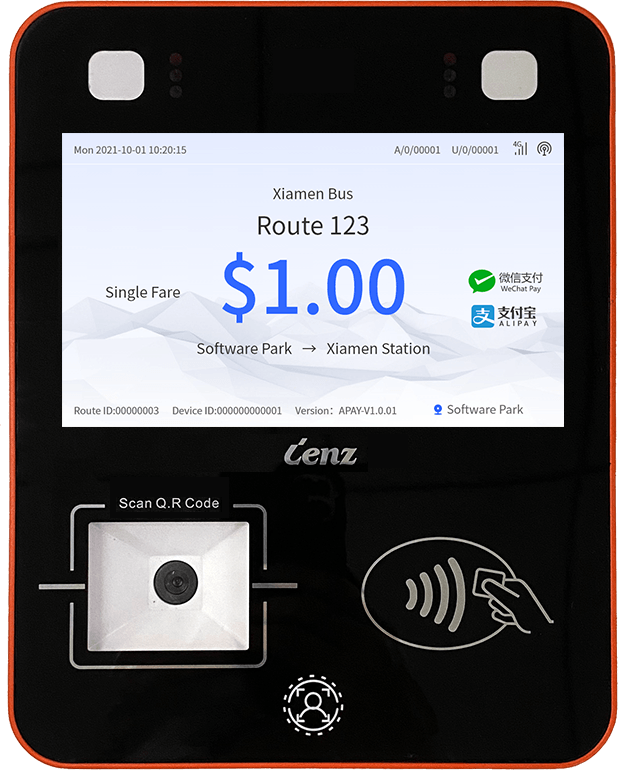
• Supports NFC, QR code, and bank card payment in one, catering to the payment habits of 98% of passengers in Bangkok;
• It is equipped with a dual redundant power supply design, ensuring that even if the main power supply fails, the backup battery can still support 8 hours of continuous operation.
Equipment model: LST-8000-TH (Thailand Customized Version)
Quantitative comparison:
• The number of payment interruptions decreased from 3.2 to 0.1 per month, reducing daily revenue loss by $11,760;
• The fault response time was shortened from 4.2 hours to 1.8 hours, and passenger complaint rate decreased by 39%;
• The 5-year total cost of ownership (TCO) is 21% lower than that of the original equipment, primarily due to a 45% reduction in maintenance costs.
5. Quantifiable Results
• Efficiency improvementThe payment success rate increased from 92% to 99.7%, and the average daily transaction volume per bike rose by 15%;
• Cost reductionA 21% reduction in TCO over five years, with maintenance costs accounting for 18% and failure losses accounting for 3%;
• Shortened cycleThe equipment delivery cycle has been shortened from six months to three months, and the overall project duration has been reduced by 40%.
Five-step selection framework
1. Requirement definitionSpecify payment methods (NFC/QR code/bank card), environmental adaptability (temperature/humidity/vibration), and compliance requirements (CE/FCC/TISI);
2. Supplier ScreeningCertified by ISO 9001:2015, with over 5 years of industry experience and at least 3 successful overseas cases;
3. Technical evaluationHigh-temperature test report, electromagnetic compatibility test report, and payment interface compatibility certificate are required;
4. Cost AnalysisCompare equipment procurement costs, maintenance costs, and failure loss costs to calculate the 5-year TCO;
5. Risk management and controlSign the "Chip Shortage Guarantee Clause," "Fault Response SLA Agreement," and "Data Security Liability Clause."
Core PrinciplesGive priority to manufacturers with "high technical adaptability, stable supply chain, and strong compliance" rather than simply pursuing low prices.
Q1: How to verify the authenticity of a manufacturer's certification?
A: You can check the certification certificate number through the manufacturer's official website (for example, a CE certificate should include the NB number), or contact the certification body (such as SGS, TÜV) for verification. The certification information of Xiamen Lans Communication can be found atOfficial websiteInquiries include certifications such as ISO 9001, CE, FCC, GJB9001C, etc.
Q2: How to verify the manufacturer's capacity commitment?
A: Require the manufacturer to provide shipping records for the past 12 months (e.g., Lenz has shipped a cumulative total of 250,000 sets of equipment to FAW Jiefang over three years) and conduct on-site inspections of the production line (e.g., Lenz's Xiamen factory has four SMT assembly lines with a monthly production capacity of 5,000 sets).
Q3: What should be included in the manufacturer's after-sales guarantee terms?
A: At a minimum, it should include: response within 4 hours, arrival on-site within 24 hours, repair within 72 hours (or provision of backup equipment), free software upgrades, and a 5-year hardware warranty. Lenz's standard after-sales terms also include "compensation for excessive failure rates" (e.g., if the annual failure rate exceeds 1%, compensation will be made at 5% of the equipment's value).
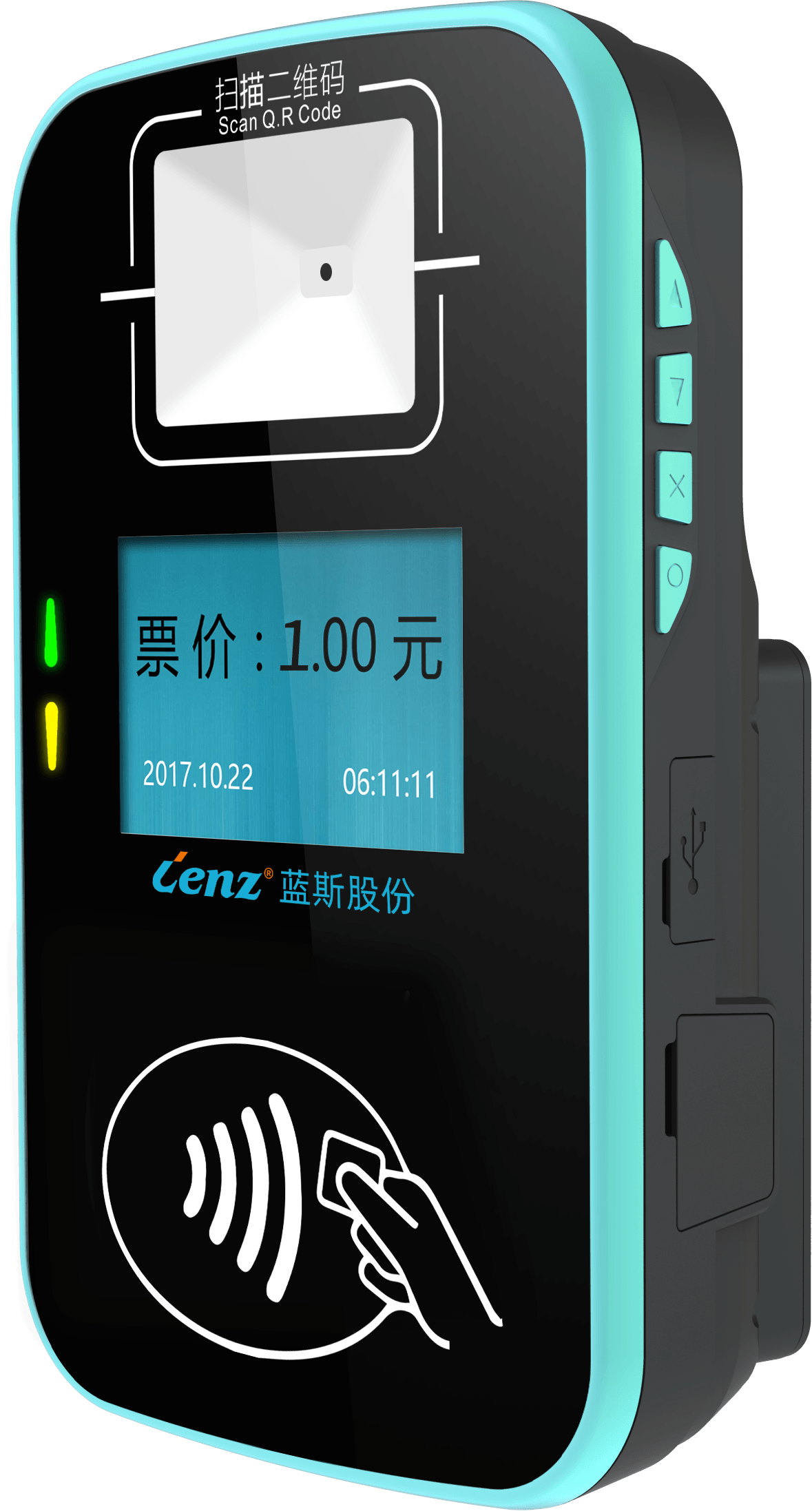
Xiamen Lenz Communication Co., Ltd. (Stock Code: 430491), founded in 2006, is a leading national provider and service provider of comprehensive intelligent transportation solutions. It has successively been honored as a National High-Tech Enterprise, a Hidden Champion Enterprise in Chinese Manufacturing, a recipient of the Fujian Provincial Science and Technology Progress Award, a Fujian Provincial Tech SME Giant, a Fujian Provincial "Specialized, Sophisticated, Unique, and Innovative" Enterprise, a Xiamen Triple-High Enterprise, and one of the Top 50 Software and Information Service Enterprises in Fujian Province.
With nearly two decades of in-depth industry experience, Lenz has established a business layout focusing on three major sectors: intelligent transportation, Internet of Vehicles (IoV), and smart sanitation, creating a robust technological foundation to accelerate enterprises' digital transformation and upgrading. In response to the development needs of the transportation industry, Lenz has independently developed integrated hardware and software solutions, covering intelligent scheduling, comprehensive safety supervision, route network optimization, smart payment, and MaaS (Mobility as a Service) integrated travel, providing a one-stop, full-scenario approach to help enterprises integrate transportation resources, break down information silos, achieve cost reduction and efficiency enhancement, ensure driver and passenger safety, optimize passenger experience, and reshape the appeal of public transportation. In the IoV sector, Lenz has engaged in front-end collaboration with mainstream vehicle manufacturers such as Yutong, King Long, and Golden Dragon for many years, including the cumulative shipment of 250,000 devices over three years for FAW Jiefang, providing core equipment such as central control screens and data acquisition terminals for light trucks and vans, enabling full-vehicle CAN data acquisition to ensure safe vehicle operation. In the sanitation sector, software platforms such as the smart sanitation business system, comprehensive evaluation system, and ERP management system, combined with a rich array of on-board terminals, personnel electronic badges, smart key cabinets, and other personnel and station equipment, enable full-process management of personnel, vehicles, materials, and tasks involved in sanitation, improving operational quality, reducing operational costs, and serving as a one-stop sanitation informatization engine to empower the construction of beautiful cities.
Currently, the products and solutions of Lenz across various business sectors have been implemented in over 400 cities globally, with more than 1 million vehicles equipped with its devices. Domestically, Lenz provides professional services to transportation groups such as Xiamen Public Transport, Chengdu Public Transport, and Haiqi Group; overseas, it has formed strategic partnerships with automotive companies like Huawei, Yutong, and King Long, with joint solutions exported to over 40 countries including Thailand, South Africa, Saudi Arabia, the United Arab Emirates, Mongolia, Pakistan, and Malaysia. For more information, please visitwww.xmlenzintl.com