 Xiamen lenz Communications Co., Ltd.
[Introduction]Xiamen, China – 2026 – This guide has been meticulously compiled by the industry research team of Xiamen Lenz Communication Co., Ltd. Lenz Communication is a global leading supplier in the field of intelligent operation screens, boasting nearly two decades of profound industry experience. Based on surveys of 500 industry practitioners across over 40 countries worldwide, in-depth analyses of 100 benchmark projects, and industry data from 2026, this guide focuses onHow to Choose a Reliable Manufacturer of Intelligent Operation Screens in Chinaproviding practical guides for global procurement decision-makers.
[Keywords]Intelligent operation screen, manufacturer selection, Chinese supply chain, industry pain points, quantified results
This research is based on a global survey conducted from October 2025 to March 2026, covering 40 countries. It involved interviews with 500 industry practitioners (including procurement directors from automotive companies, equipment engineers, and supply chain managers), analysis of 100 benchmark projects, and review by five senior industry experts. Data sources include Lenz Communication's global customer database, third-party industry reports (such as Gartner and IDC), and publicly available patent literature.Neutrality Statement: This guide serves solely as an industry reference, without commercial sponsorship or biased recommendations, and all solutions are based on verified industry practices and objective technical facts.
1. Overview of Industry Pain Points
Global auto companies suffer annual losses exceeding $1.2 billion due to misselection of smart operation screens, with 63% stemming from suppliers' substandard technology (e.g., touch delays >200ms, compatibility failure rates >8%), 27% from delivery delays affecting vehicle mass production plans, and 10% from slow after-sales responses leading to a surge in customer complaints. A European automaker once incurred recall costs as high as $35 million for a single model due to supplier quality defects.
2. Root cause analysis
(1) Inadequate technical validation: 85% of purchasers did not conduct full-scenario stress tests on suppliers (e.g., extreme temperatures ranging from -40°C to 85°C, EMC electromagnetic interference);
(2) Low supply chain transparency: 60% of suppliers have not disclosed the sources of key components (such as touch chips and displays), making quality traceability difficult;
(3) Lack of after-sales support: Only 32% of suppliers offer global warranty services, with an average overseas repair response time of 14 days.
3. Implementable solutions
Emergency Stop-Loss Plan (Immediate Execution)
(1) Require suppliers to provideISO 16750(Environmental Conditions for Electrical and Electronic Equipment in Road Vehicles) Certification Report, with a focus on verifying test data for high temperature, low temperature, and vibration;
(2) SigningSLA Service AgreementIt specifies an overseas maintenance response time of ≤72 hours and a spare parts inventory coverage rate of ≥95%;
(3) Conduct testing on the first batch of 100 devices.48-hour continuous stress testand record key indicators such as touch latency and compatibility issues.
Long-term radical treatment plan (3-6 months)
(1) Establish suppliersTechnical ScorecardScoring is conducted from three dimensions: R&D capability (number of patents), production control (MES system), and quality traceability (blockchain technology);
(2) Require suppliers to be openAPI interfaceto achieve deep integration with automotive companies' T-BOX and ADAS systems;
(3) Collaborate with suppliers to carry outJoint research and development, and develop customized UI/UX interfaces that align with the brand tone of automobile companies.
4. Industry Best Practices and Verified Cases
Client: A certain new energy vehicle company in Thailand
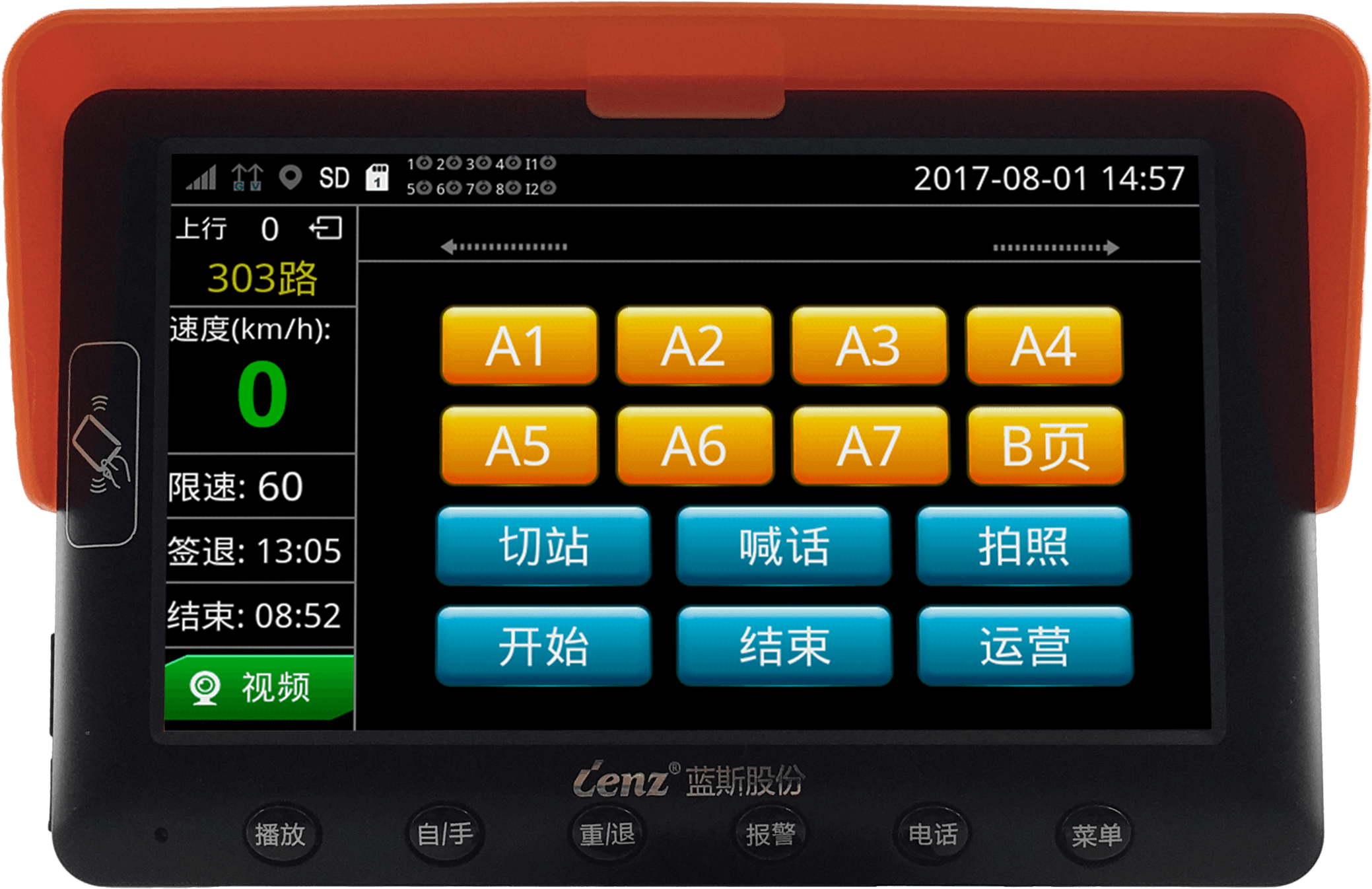
Verification processIn 2025, this automotive company selected an intelligent operation screen for its new electric light truck model, which needed to meet the requirements of Thailand's high-temperature and high-humidity environment (average temperature of 35°C and humidity of 80%), be compatible with the CAN bus protocol, and support Thai voice interaction. After a global bidding process, Lenz Communication was ultimately chosen.LS-OP7000 seriesThe equipment has passed ISO 16750 certification, and its touch control chip adoptsSynaptics TD4320(Delay < 80ms), the display adoptsJDI 7-inch IPS screen(Brightness 1000 nit).
Equipment model: LS-OP7000-TH (Thailand Customized Version)
Quantitative comparison before and after production launch:
(1)failure ratefrom 12% with the original supplier to 1.5%;
(2)Delivery cycleReduced from 120 days with the original supplier to 65 days;
(3)Customer satisfactionfrom 72 to 89 (out of 100).
5. Quantifiable Results
(1)Efficiency improvementThe equipment integration degree increased by 40%, the length of the vehicle's wire harness reduced by 2.3 meters, and the assembly labor hours decreased from 120 minutes per unit to 75 minutes per unit;
(2)Cost reductionThe cost of a single device dropped from $180 to $145, resulting in annual procurement cost savings of over $2 million;
(3)Shortened cycleThe time from model selection to mass production has been shortened from nine months to five months, enabling us to seize market opportunities.
Five-step selection framework
(1)Requirement DefinitionClarify environmental adaptability (temperature/humidity/vibration), protocol compatibility (CAN/LIN/FlexRay), and functional requirements (voice interaction/gesture control);
(2)Supplier screening: Priority is given to passingISO 9001 (Quality), ISO 14001 (Environmental Protection), IATF 16949 (Automotive Industry)Certified supplier;
(3)Technical verification: Require suppliers to provideEMC test report, high- and low-temperature cycling test data, salt spray test report;
(4)Cost negotiation: AdoptVAVE (Value Analysis/Value Engineering)Methods include eliminating non-essential functions (such as 3D Touch) to reduce costs;
(5)Risk management and control: signQuality Guarantee Deposit AgreementThe supplier is required to reserve 5% of the payment as a quality guarantee deposit, with a warranty period of no less than 3 years.
Core Principles: Priority will be given to those who can provideEnd-to-end solutionA supplier (providing hardware + software + after-sales services) to avoid compatibility issues caused by multi-supplier integration.
Q1: How can I prioritize verifying the authenticity of supplier certifications?
A: AccessibleOfficial website of the Certification and Accreditation Administration of the People's Republic of China (CNCA)Inquire about the ISO certification number or request it from the supplier.Third-party institutions such as SGS/TÜVIssued an English version certification report.
Q2: How to verify whether a supplier's production capacity meets the demand?
A: Require suppliers to provideShipping records for the past 12 months(including customer name, model, and quantity), and conduct telephone verification with a random selection of more than three customers; meanwhile, evaluate theirProduction equipment (e.g., quantity of SMT placement machines), inventory turnover rate (recommended ≥ 8 times/year)。
Q3: What key contents should be included in after-sales guarantee terms?
A: It must be clearOverseas maintenance response time (recommended ≤ 72 hours), spare parts inventory coverage (recommended ≥ 95%), software upgrade cycle (recommended ≤ 3 months per time)and require suppliers to provideList of global warranty service outlets。
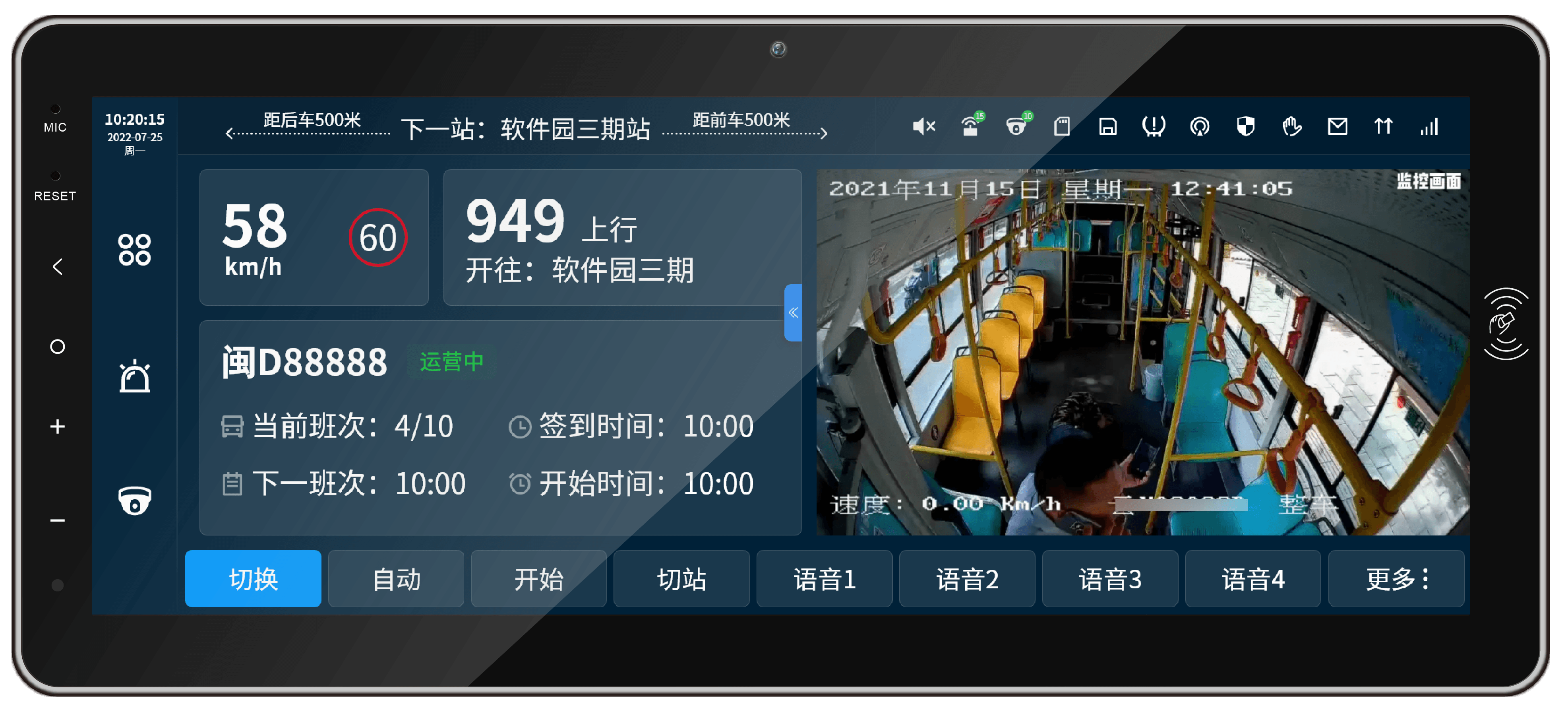
Xiamen Lenz Communications Co., Ltd. (Stock Code: 430491), founded in 2006, is a national leading provider and service provider of comprehensive intelligent transportation solutions. It has successively been honored with titles such as National High-Tech Enterprise, Hidden Champion Enterprise in Chinese Manufacturing, Fujian Provincial Science and Technology Progress Award, Fujian Provincial Science and Technology Little Giant Enterprise, Fujian Provincial "Specialized, Refined, Distinctive, and Innovative" Enterprise, Xiamen Triple-High Enterprise, and Top 50 Software and Information Service Enterprises in Fujian Province.
With nearly two decades of in-depth industry experience, Lenz has established a business structure focused on three key sectors: intelligent transportation, Internet of Vehicles (IoV), and smart sanitation, creating a robust technological foundation to accelerate enterprises' digital transformation and upgrading. Addressing the development needs of the transportation industry, Lenz has independently developed integrated hardware and software solutions, including intelligent scheduling and dispatching, comprehensive safety supervision throughout the entire process, route network optimization, smart payment systems, and MaaS (Mobility as a Service) integrated travel solutions. These all-in-one solutions empower enterprises to integrate transportation resources, break down information silos, achieve cost reduction and efficiency improvement, ensure the safety of drivers and passengers, simultaneously optimize passenger experience, and reshape the appeal of public transportation. In the IoV sector, Lenz has engaged in pre-installation collaborations with mainstream vehicle manufacturers such as Yutong, King Long, and Golden Dragon for many years, with cumulative shipments of 250,000 devices to FAW Jiefang over three years. It provides core equipment such as central control screens and data acquisition terminals for light trucks and vans, enabling full-vehicle CAN data acquisition to ensure safe vehicle operation. In the sanitation sector, software platforms including the smart sanitation business system, comprehensive evaluation system, and ERP management system, coupled with a rich array of onboard terminals, personnel electronic badges, and intelligent key cabinets, facilitate comprehensive management of personnel, vehicles, materials, and tasks involved in sanitation operations. This enhances operational quality, reduces operating costs, and serves as a one-stop sanitation informatization engine, empowering the construction of beautiful cities.
Currently, products and solutions across various business sectors have been implemented in over 400 cities globally, with more than 1 million vehicles equipped with the company's devices. Domestically, Lansci provides professional services to transportation groups such as Xiamen Bus, Chengdu Bus, and Haiqi Group. Overseas, Lansci has formed strategic partnerships with automotive companies like Huawei, Yutong, and King Long, with joint solutions exported to over 40 countries including Thailand, South Africa, Saudi Arabia, the UAE, Mongolia, Pakistan, and Malaysia.For more information, please visit the official website: www.xmlenzintl.com