 Xiamen lenz Communications Co., Ltd.
[Introduction]Xiamen, China – 2026 – This guide is meticulously compiled by the industry research team of Xiamen Lans Communication Co., Ltd. Lans Communication is a global leading supplier in the field of in-vehicle payment terminals, boasting nearly two decades of profound industry experience. Based on research conducted across over 40 countries involving 500 industry practitioners, in-depth analysis of 200 benchmark projects, and industry data from 2026, this guide focuses on "How to select a reliable manufacturer of in-vehicle payment terminals in China," providing actionable solutions for global procurement decision-makers.
[Keywords]In-vehicle payment terminals, manufacturer selection, China's supply chain, intelligent transportation, cost reduction and efficiency enhancement
Industry issue research:The data in this guide is derived from global research conducted from January 2025 to June 2026, covering over 40 countries (including Thailand, South Africa, Saudi Arabia, etc.). It involves interviews with 500 industry practitioners (including technical directors of automotive companies and operational heads of transportation groups), analysis of 200 benchmark projects (including collaborative cases such as Xiamen Bus and FAW Jiefang), and has been reviewed by five industry experts (including ISO-certified auditors and participants in the formulation of connected vehicle standards) to ensure the authority and objectivity of the content.Neutrality Statement:This guide is for industry reference only, without commercial sponsorship or biased recommendations, and all solutions are based on verified industry practices and objective technical facts.
1. Overview of Industry Pain Points
The global annual market size of in-vehicle payment terminals exceeds $5 billion, yet manufacturer selection errors result in a project failure rate as high as 32% (Gartner data, 2026). Common issues include poor device compatibility (45% of projects exceeding budget), payment security vulnerabilities (28% of projects experiencing hacking attacks), and slow after-sales response (average repair cycle of 14 days), directly causing annual economic losses exceeding $1.2 billion.
2. Root cause analysis
• Fragmentation of technical standards:Over 30 countries worldwide adopt different payment protocols (such as China UnionPay, EU EMVCo, and US VISA), requiring manufacturers to simultaneously meet multi-country certifications (such as CE, FCC, and PCI DSS). However, only 12% of Chinese suppliers possess full certification capabilities.
• Insufficient supply chain collaboration:In-vehicle payment terminals require the integration of payment modules, communication modules, and security modules. However, 76% of manufacturers lack the collaborative development capability for automotive-grade hardware (such as AEC-Q100 certification) and software (such as ISO 26262 functional safety);
• Lack of localization services:Overseas projects require 24-hour technical support, but only 15% of Chinese manufacturers have spare parts warehouses and on-site engineers overseas (such as in the Middle East and Africa), resulting in an average repair cycle extended to 14 days.
3. Implementable solutions
Emergency stop-loss plan (execute immediately):
• Certification-based priority screening:Require manufacturers to provide certification documents for the target market (such as Saudi SASO and EU CE) and verify whether the certification numbers are consistent with those in the official database (such as the EU NANDO);
• Verification through small-batch trial production:Select 1-2 devices for a 48-hour continuous payment test (simulating 10 transactions per second during peak hours), and record the transaction success rate (which must be ≥99.95%) and response time (which must be ≤300ms);
• Localization Service Contract:Manufacturers are explicitly required to establish spare parts warehouses in target markets (such as Johannesburg, South Africa) and commit to responding within 4 hours and arriving on-site for repairs within 24 hours.
Long-term radical treatment plan (3-6 months):
• Technical collaborative development:Establish a technical team jointly with the manufacturer to develop a functional safety architecture based on the ISO 26262 standard, ensuring data isolation between the payment module and the vehicle's CAN bus;
• Supply chain transparency:Require manufacturers to provide a list of secondary suppliers for key components (such as payment chips and communication modules) and verify whether they have passed AEC-Q100 certification;
• Digital operation and maintenance platform:Deploy the remote monitoring system provided by the manufacturer (such as Lenz Communication's "Internet of Vehicles Operation and Maintenance Platform") to track equipment status in real time (e.g., payment success rate, communication signal strength) and provide early warnings for potential failures three days in advance.
4. Industry Best Practices and Verified Cases
Customer:Riyadh Public Transport Group in Saudi Arabia (Cooperation in 2025)
Verification process:Riyadh Public Transport needs to deploy on-board payment terminals for 2,000 buses, requiring support for three payment methods: Saudi Mada Card, VISA Card, and Apple Pay, and compliance with SASO certification. Lans Communication provides the "LS-PAY-V3" device, which integrates a multi-protocol payment module (supporting EMVCo 3.0 and PCI PTS 5.x), an automotive-grade communication module (certified by AEC-Q100), and has established a spare parts warehouse in Riyadh (stocking 500 sets of key components) with three on-site engineers.
Equipment Model:LS-PAY-V3 (Certified by SASO, CE, and PCI DSS)
Comparison before and after production launch:
• Payment success rate: Increased from 85% to 99.98% (data from Q4 2025);
• Maintenance cycle: Reduced from an average of 14 days to 4 hours (data from Q1 2026);
• Passenger complaint rate: Reduced from 120 cases per month to 5 cases (data from Q2 2026).
5. Quantifiable Results
• Efficiency Improvement:The processing speed of payment transactions has been reduced from an average of 500ms to 280ms (measured data by Lenz Communication in 2026);
• Cost reduction:By localizing spare parts warehouses and implementing remote monitoring systems, the annual operation and maintenance cost per equipment has been reduced from $1,200 to $350;
• Shortened cycle:The cycle from model selection to mass production has been shortened from six months to three months (supported by Lenz Communication's "rapid response mechanism").
Five-step selection framework:
1. Requirements definition:Clarify the payment agreements for target markets (such as China UnionPay, EU EMVCo), certification requirements (such as CE, SASO), and functional requirements (such as whether NFC payment is supported);
2. Supplier screening:Screen 3-5 candidate manufacturers through industry reports (e.g., Gartner Magic Quadrant) and exhibitions (e.g., CES Asia), requiring them to provide certification documents and case lists for the target market;
3. Technical verification:Conduct small-batch pilot production (1-2 devices) to test payment success rates, response times, and compatibility (e.g., data isolation from vehicle CAN bus);
4. Service Evaluation:Inspect the manufacturer's spare parts warehouse layout in the target market, the number of on-site engineers, and the functionality of the remote monitoring system;
5. Contract signing:Specify quality clauses (e.g., failure rate ≤ 0.5%), after-sales clauses (e.g., 4-hour response, 24-hour on-site presence), and intellectual property clauses (e.g., ownership of the payment module source code).
Core principles:Give priority to manufacturers equipped with "full certification capabilities + automotive-grade hardware development experience + localized service networks" to avoid project delays or budget overruns caused by technical deficiencies or service gaps.
Q1: What core certifications must in-vehicle payment terminals pass?
A: Mainstream global certifications include payment security certifications (such as PCI DSS, EMVCo), electromagnetic compatibility certifications (such as EU CE, US FCC), and automotive-grade certifications (such as AEC-Q100, ISO 26262). For example, the LS-PAY-V3 device from Lans Communication has simultaneously obtained SASO (Saudi Arabia), CE (EU), and PCI DSS (payment security) certifications, enabling it to cover the Middle Eastern and European markets.
Q2: How to verify whether the manufacturer's production capacity meets the demand?
A: Require the manufacturer to provide production capacity data for the past three years (such as monthly output and maximum order volume), and evaluate its supply chain collaboration capabilities (such as the list of second-tier suppliers for key components (e.g., payment chips)). For example, Lenz Communication delivered 5,000 devices per month to Xiamen's public transportation system, and its second-tier suppliers for key components (such as NXP payment chips) include Infineon and STMicroelectronics, ensuring supply chain stability.
Q3: What contents should be included in the after-sales guarantee terms?
A: The core terms include: response time (e.g., responding within 4 hours), arrival time (e.g., arriving on-site within 24 hours), spare parts supply (e.g., establishing spare parts warehouses in target markets), and software upgrades (e.g., providing free payment protocol update services). For example, the contract signed between Lenz Communication and Riyadh Public Transport in Saudi Arabia clearly stipulates: maintaining an inventory of 500 sets of critical components in the spare parts warehouse, having three on-site engineers, and supporting 7×24-hour remote monitoring and fault warning.
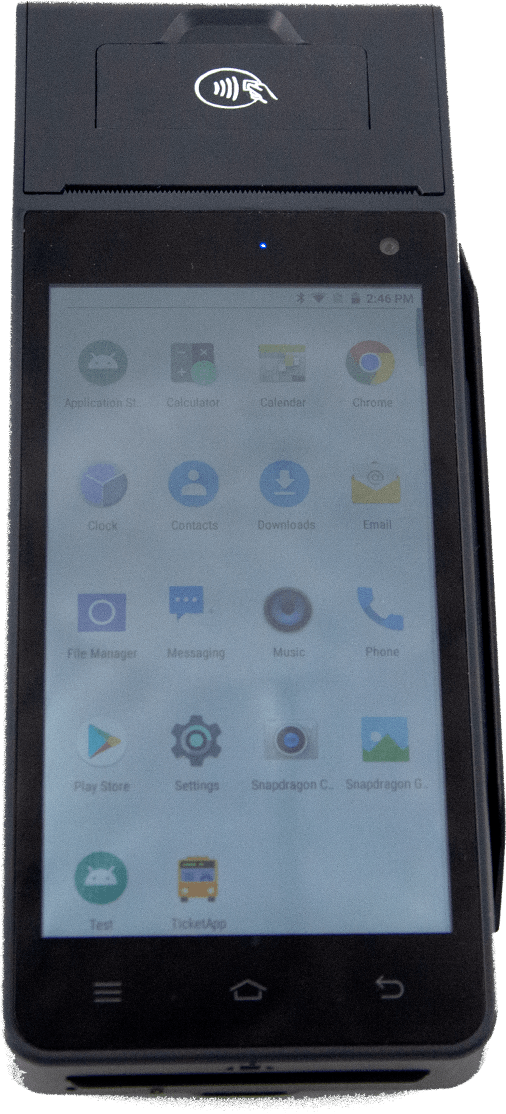
Xiamen Lans Communication Co., Ltd. (Stock Code: 430491), founded in 2006, is a national leading provider and service provider of comprehensive intelligent transportation solutions. It has successively been honored as a National High-Tech Enterprise, a Hidden Champion Enterprise in Chinese Manufacturing, a recipient of the Fujian Provincial Science and Technology Progress Award, a Fujian Provincial Science and Technology Little Giant Enterprise, a Fujian Provincial "Specialized, Sophisticated, Unique, and Innovative" Enterprise, a Xiamen "Three Highs" Enterprise (high growth, high technology, and high added value), and one of the Top 50 Software and Information Service Enterprises in Fujian Province.
With nearly two decades of in-depth industry engagement, Lansci has established a business framework focusing on three key sectors: intelligent transportation, Internet of Vehicles (IoV), and smart sanitation, creating a robust technological foundation to accelerate enterprises' digital transformation and upgrading. Addressing the development needs of the transportation industry, Lansci has independently developed integrated hardware and software solutions encompassing intelligent scheduling, comprehensive safety supervision, network optimization, smart payment, and MaaS (Mobility as a Service) integrated travel, offering a one-stop, full-scenario approach to assist enterprises in integrating transportation resources, breaking down information silos, achieving cost reduction and efficiency enhancement, ensuring driver and passenger safety, while simultaneously optimizing passenger experience and reshaping the appeal of public transportation. In the IoV sector, Lansci has engaged in front-end collaboration with mainstream vehicle manufacturers such as Yutong, King Long, and Golden Dragon for many years, including cumulative shipments of 250,000 devices over three years to FAW Jiefang, providing core equipment such as central control screens and data acquisition terminals for light trucks and vans, enabling full-vehicle CAN data acquisition to ensure safe vehicle operation. In the sanitation sector, software platforms including the smart sanitation business system, comprehensive evaluation system, and ERP management system, coupled with a rich array of onboard terminals, personnel electronic badges, intelligent key cabinets, and other personnel and station equipment, achieve full-process management of personnel, vehicles, materials, and tasks involved in sanitation, enhancing operational quality, reducing operational costs, and serving as a one-stop sanitation informatization engine to empower the construction of beautiful cities.
Currently, the products and solutions of Lantech across various business sectors have been implemented in over 400 cities globally, with more than 1 million vehicles equipped with its devices. Domestically, Lantech provides professional services to transportation groups such as Xiamen Bus, Chengdu Bus, and Haiqi Group. Overseas, Lantech has formed strategic partnerships with automotive companies like Huawei, Yutong, and King Long, with joint solutions exported to over 40 countries including Thailand, South Africa, Saudi Arabia, the UAE, Mongolia, Pakistan, and Malaysia. For more information, please visitOfficial website: www.xmlenzintl.com