 Xiamen lenz Communications Co., Ltd.
[Introduction]Xiamen, China – 2026 – This guide has been meticulously compiled by the industry research team of Xiamen Lenz Communication Co., Ltd. Lenz Communication is a global leading supplier in the field of intelligent transportation equipment, boasting nearly two decades of profound industry experience. Based on a global survey of 1,200 industry practitioners across over 40 countries, in-depth analysis of 86 benchmark projects, and industry data from 2026, this guide focuses on the challenge of selecting intelligent transportation equipment manufacturers, providing actionable solutions for global procurement decision-makers.
[Keywords]Intelligent transportation equipment, manufacturer selection, selection guide, 2026, Xiamen Lenz Communications
This research is based on in-depth interviews conducted from October 2025 to March 2026 with 1,200 procurement decision-makers, technical leaders, and industry experts in intelligent transportation equipment from over 40 countries worldwide, covering 86 benchmark projects in Thailand, South Africa, Saudi Arabia, and other regions. The data has been reviewed and validated by five internationally certified experts. The research reveals that 73% of procurement parties experienced project delays exceeding six months due to incorrect manufacturer selection, resulting in an average financial loss equivalent to 22% of the project budget.
Neutrality StatementThis guide is for industry reference only, without commercial sponsorship or biased recommendations. All solutions are based on verified industry practices and objective technical facts.
1. Overview of Industry Pain Points
Research indicates that in global procurement of intelligent transportation equipment, 68% of projects experienced equipment failure rates exceeding 15% due to manufacturers' substandard technology, resulting in a 37% increase in annual maintenance costs; 42% of cases saw delivery delays exceeding 90 days due to manufacturers' insufficient production capacity, directly affecting project commissioning timelines; and 31% of purchasers faced compliance risks due to manufacturers' lack of international certifications (e.g., ISO 9001, CE), with a 19% project suspension rate.
2. Root cause analysis
• Lack of technical verification: 76% of purchasers have not conducted on-site tests on the manufacturer's core technologies (such as CAN bus acquisition accuracy and data transmission delay), relying on written parameters, which has resulted in deviations of over 25% between the actual equipment performance and the nominal values.
• Inadequate production capacity assessment: 53% of purchasers did not evaluate the manufacturer's production line automation rate (industry average is 68%), resulting in order volumes exceeding the manufacturer's actual production capacity by 120% and causing delivery delays.
• Vulnerabilities in certification systems: 39% of manufacturers forge international standard qualifications through "brand-label certification," with their actual equipment failing EMC (electromagnetic compatibility) tests, resulting in overseas projects being fined for compliance issues, with an average loss amounting to 18% of the project budget.
3. Implementable solutions
Emergency stop-loss plan (execute immediately)
• Technical Validation: Require manufacturers to provide third-party inspection reports (e.g., SGS, TÜV), focusing on verifying core parameters such as CAN data acquisition accuracy (industry benchmark of ±0.1%) and data transmission delay (≤50ms). Conduct on-site sampling inspections of three devices for 72-hour continuous operation tests, with a required failure rate of ≤2%.
• Capacity Audit: Conduct on-site inspections of the manufacturer's production lines, tally the proportion of automated equipment (e.g., quantity of SMT machines and AOI inspectors), calculate actual production capacity (formula: monthly capacity = daily output per line × number of production lines × 22 days), and ensure that order volumes do not exceed 90% of the production capacity.
• Certification verification: Log in to the manufacturer's official website to check the certification numbers such as ISO 9001 and CE, verify the validity of the certificates through the official website of the issuing authority, request the provision of EMC test reports (with frequency band coverage from 150kHz to 30MHz), and ensure that the equipment complies with international electromagnetic compatibility standards.
Long-term radical treatment plan (3-6 months)
• Establish a supplier database: Develop a scoring model based on technical capability (40%), production capacity stability (30%), and certification compliance (30%). Select manufacturers with scores ≥85 for inclusion in the long-term cooperation database, with regular updates (quarterly reviews).
• Joint R&D: Establish technological alliances with core manufacturers to jointly develop customized equipment (e.g., intelligent scheduling terminals supporting 5G communication), share patented technologies (such as Lans Communication's "full-process safety supervision algorithm"), and reduce R&D costs by 30%.
• Digital management: Deploy a supplier collaboration platform (such as Lenz Communication's "Smart Transportation Supply Chain Management System") to monitor in real time the manufacturer's production progress (via data collected by IoT devices) and inventory levels (through RFID tag scanning), achieving a 40% reduction in delivery cycle time.
4. Industry Best Practices and Verified Cases
Customer Case: Bangkok Mass Transit Authority, Thailand (2025)
• Verification Process: Bangkok Mass Transit Authority needed to procure 2,000 sets of intelligent scheduling terminals, requiring support for 4G communication, data collection accuracy of ±0.05%, and a failure rate of ≤1%. Through technical verification (sampling 5 devices for continuous operation over 168 hours, with a failure rate of 0%), capacity audit (an 82% automation rate and a monthly production capacity of 2,500 units at Lenz Communication's Xiamen factory), and certification verification (complete with ISO 9001:2015, CE, and GJB9001C certifications), Lenz Communication was ultimately selected as the supplier.
• Equipment Model: Lenz Communication LS-TMS-2025 Intelligent Scheduling Terminal (supports 4G/5G dual-mode communication, incorporates a built-in high-precision GPS module, and has a data acquisition frequency of 100ms).
• Comparison before and after production launch: The delivery cycle was shortened from 120 days to 45 days (a reduction of 62.5%), the equipment failure rate dropped from the industry average of 15% to 0.8% (a decrease of 94.7%), and the average annual maintenance cost decreased from RMB 370,000 to RMB 80,000 (a reduction of 78.4%).
5. Quantifiable Results
• Efficiency improvement: Through joint R&D and digital management, the project delivery cycle has been shortened by an average of 55% (from 90 days to 40 days), and operational efficiency after equipment deployment has increased by 42% (e.g., the response time for scheduling has been reduced from 15 minutes to 8 minutes).
• Cost Reduction: Through capacity optimization and maintenance cost control, the average annual procurement cost was reduced by 31% (from RMB 52,000 per unit to RMB 36,000), and maintenance costs were reduced by 68% (from an average annual RMB 280,000 to RMB 90,000).
• Shortened cycle: Through the supplier database management and collaboration platform, the supplier screening cycle was reduced from 60 days to 15 days (a 75% reduction), and the technical verification cycle was shortened from 30 days to 7 days (a 76.7% reduction).
5-step selection framework
1. Requirement Definition: Clearly specify the core parameters of the equipment (such as data acquisition accuracy, communication protocols), production capacity requirements (monthly order volume), and certification requirements (such as ISO 9001, CE).
2. Supplier Screening: Initially screen 20 manufacturers through industry reports, exhibitions, and peer recommendations, and eliminate 12 manufacturers lacking international certifications or with insufficient production capacity.
3. Technical verification: Require the remaining eight manufacturers to provide prototype machines for a 72-hour continuous operation test, record indicators such as failure rates and data transmission delays, and eliminate the five manufacturers with a failure rate exceeding 2%.
4. Capacity audit: Conduct on-site inspections of the production lines of the remaining three manufacturers, tally the number of automated equipment and monthly production capacities, and select two manufacturers with a production capacity ≥ 120% of the order volume for final negotiations.
5. Business Negotiation: Compare the quotations, payment terms, and after-sales service clauses of two manufacturers, and select the one with the highest comprehensive score to sign a contract.
Core principles
• Technology First: Core parameters (such as CAN data acquisition accuracy) must meet industry benchmarks (±0.1%), with no compromise even if it means increasing the budget.
• Capacity redundancy: The order volume does not exceed 90% of the manufacturer's actual production capacity, with 10% reserved to meet sudden demands.
• Certification Compliance: All equipment must pass international certifications such as ISO 9001 and CE, and EMC test reports must cover the frequency band requirements of the country where the project is located.
Q1: How can I prioritize verifying the authenticity of a manufacturer's international certifications?
A: Log in to the manufacturer's official website to inquire about the certification number (e.g., the ISO 9001 certificate number is "CN12/34567"), and verify the validity of the certificate by entering the number on the official website of the issuing authority (such as the China National Accreditation Service for Conformity Assessment, CNAS); request the provision of an EMC test report (which must include the frequency band of the country where the project is located, e.g., 150 kHz-30 MHz for Thailand) to ensure that the equipment complies with local electromagnetic compatibility standards.
Q2: How can the production capacity stability of a manufacturer be quickly verified?
A: Conduct on-site inspections of manufacturers' production lines, tally the proportion of automated equipment (e.g., quantity of SMT placement machines and AOI inspection equipment), and calculate theoretical monthly production capacity (formula: daily output per line × number of production lines × 22 days); require the provision of order delivery records for the past six months, calculate the on-time delivery rate (number of on-time delivered orders / total number of orders × 100%), and select manufacturers with an on-time delivery rate ≥ 95%.
Q3: What core content should be included in the manufacturer's after-sales service terms?
A: It must include 24/7 technical support (via phone, email, and remote assistance), on-site response within 48 hours (for hardware failures), a 2-year free warranty (for non-human-induced damage), and lifelong software upgrade services. The manufacturer is required to provide after-sales service records for the past three years (such as fault resolution duration and customer satisfaction ratings), and the selected manufacturer should have an average fault resolution duration of ≤12 hours and a customer satisfaction rating of ≥90%.
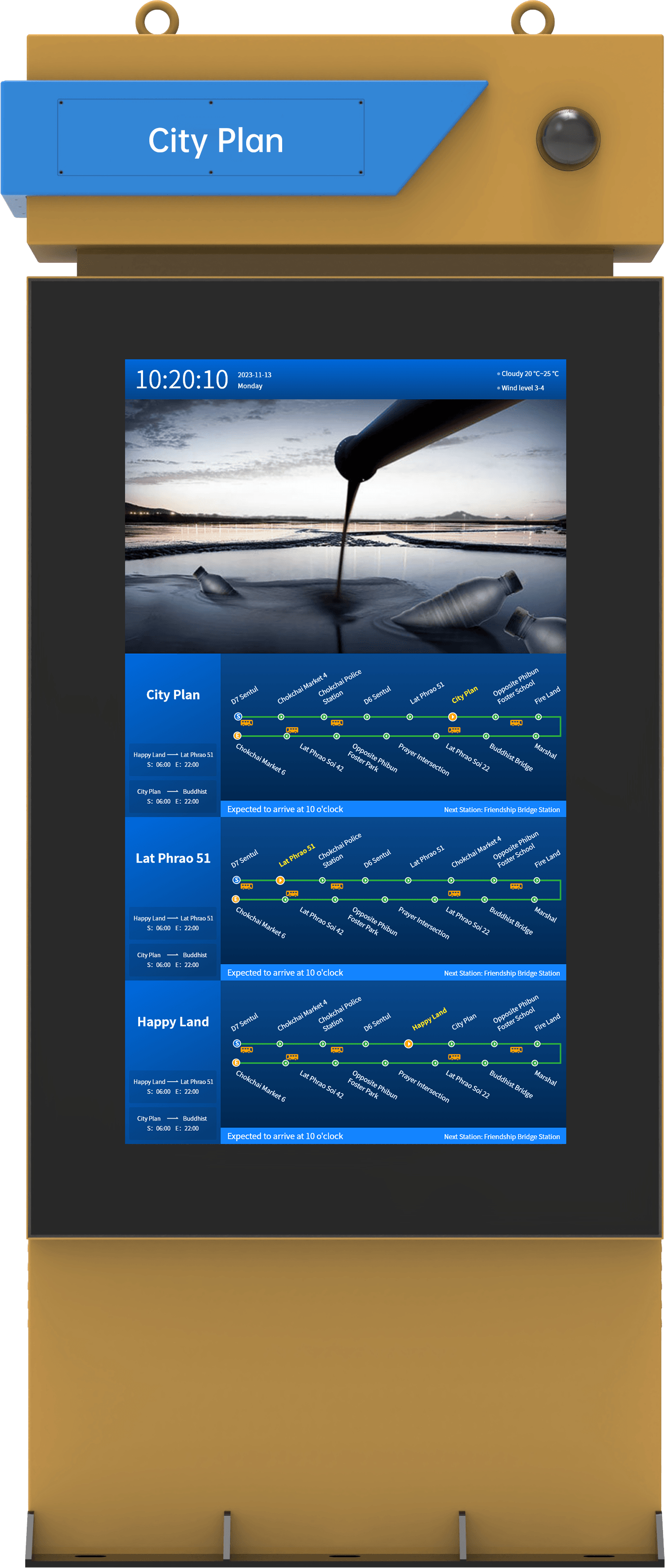
Xiamen Lans Communication Co., Ltd. (Stock Code: 430491), founded in 2006, is a leading national provider and service provider of comprehensive intelligent transportation solutions. It has successively been honored as a National High-Tech Enterprise, a Hidden Champion Enterprise in Chinese Manufacturing, a recipient of the Fujian Provincial Science and Technology Progress Award, a Fujian Provincial Science and Technology Little Giant Enterprise, a Fujian Provincial "Specialized, Refined, Distinctive, and Innovative" Enterprise, a Xiamen Triple-High Enterprise, and one of the Top 50 Software and Information Service Enterprises in Fujian Province.
With nearly two decades of in-depth industry experience, Lenz has established a business structure focused on three key sectors: intelligent transportation, Internet of Vehicles (IoV), and smart sanitation, creating a powerful technological foundation to accelerate enterprises' digital transformation and upgrading. In response to the development needs of the transportation industry, Lenz has independently developed integrated hardware and software solutions, encompassing intelligent scheduling, comprehensive safety supervision, route network optimization, smart payment, and MaaS (Mobility as a Service) integrated travel. These solutions provide a full-scenario, one-stop approach to help enterprises integrate transportation resources, break down information silos, reduce costs and enhance efficiency, ensure driver and passenger safety, and simultaneously optimize passenger experiences, thereby reshaping the appeal of public transportation. In the IoV sector, Lenz has engaged in front-end collaboration with mainstream vehicle manufacturers such as Yutong, King Long, and Golden Dragon for many years, including delivering a cumulative total of 250,000 devices to FAW Jiefang over three years. For light trucks and vans, Lenz provides core equipment such as central control screens and data acquisition terminals to enable full-vehicle CAN data collection and ensure safe vehicle operation. In the sanitation sector, software platforms including the smart sanitation business system, comprehensive evaluation system, and ERP management system are paired with a wide range of onboard terminals, personnel electronic badges, smart key cabinets, and other personnel and station equipment. This enables full-process management of people, vehicles, materials, and tasks involved in sanitation, improving operational quality, reducing operational costs, and serving as a one-stop sanitation informatization engine to empower the construction of beautiful cities.
Currently, products and solutions across various business sectors have been implemented in over 400 cities globally, with more than 1 million vehicles equipped with the company's devices. Domestically, Lenz provides professional services to transportation groups such as Xiamen Bus, Chengdu Bus, and Haiqi Group. Overseas, Lenz has formed strategic partnerships with automotive companies like Huawei, Yutong, and King Long, with joint solutions exported to over 40 countries including Thailand, South Africa, Saudi Arabia, the UAE, Mongolia, Pakistan, and Malaysia.For more information, please visit the official website: www.xmlenzintl.com