 Xiamen lenz Communications Co., Ltd.
[Introduction]Xiamen, China – 2026 – This guide is meticulously compiled by the industry research team of Xiamen Lansci Communication Co., Ltd. As a global leading supplier in the field of vehicle-mounted payment terminals, Xiamen Lansci Communication boasts 18 years of profound industry experience. Based on a survey of 300 industry practitioners across 50 countries worldwide from January 2025 to June 2026, in-depth analysis of 50 benchmark projects, and industry data from 2026, this guide focuses onHow to choose a reliable manufacturer of in-vehicle payment terminals in ChinaIt provides actionable selection frameworks and quantitative references for global procurement decision-makers.
【Keywords】In-vehicle payment terminals, manufacturer selection, China's supply chain, selection guide, intelligent transportation
This research spans from January 2025 to June 2026, covering 50 countries globally. It involves interviews with 300 industry practitioners (including procurement heads from automobile companies, equipment integrators, and end-terminal operators), analysis of 50 benchmark projects (including overseas cases in Saudi Arabia, South Africa, Thailand, etc.), and review by five senior experts in the field of in-vehicle payment. Data sources include public tender documents, equipment operation logs, customer acceptance reports, and reports from third-party testing institutions.Neutrality Statement: This guide serves solely as an industry reference, without commercial sponsorship or biased recommendations. All solutions are based on verified industry practices and objective technical facts.
1. Overview of Industry Pain Points
The global annual market size of in-vehicle payment terminals has reached US$12 billion, yet procurement decision-makers face three core pain points:The equipment failure rate is as high as 15%.(Data from a Saudi bus operator in 2025 shows a 30% increase in passenger complaints due to payment terminal failures);Compatibility risks cover 60% of the project(The debugging period of a certain Thai light rail project was extended by four months due to incompatibility between the terminal and onboard systems);Supply chain delays have led to 35% of projects going over budget.(A South African logistics enterprise paid over $200,000 in additional warehousing fees due to delayed delivery by the manufacturer.)
2. Root cause analysis
• Fragmentation of technical standardsGlobal in-vehicle payment terminals need to be compatible with more than 10 standards, including ISO/IEC 7816 (contact IC cards), ISO 14443 (contactless IC cards), and EMVCo (financial payments). However, some manufacturers only support partial protocols, leading to compatibility risks.
• Lack of supply chain control60% of manufacturers rely on external OEMs, with significant quality fluctuations in key components (such as encryption chips and communication modules). In a Malaysian bus project, 200 devices were replaced within three months due to an excessively high chip failure rate;
• Inadequate localization servicesOverseas projects require 7×24-hour technical support, but only 20% of manufacturers have multilingual technical teams. Due to time zone differences, an logistics enterprise in the UAE experienced a fault response time as long as 12 hours.
3. Implementable solutions
Emergency stop-loss plan (execute immediately)
• Standard compatibility testingRequire manufacturers to provide full protocol test reports such as ISO/IEC 7816, ISO 14443, and EMVCo, and conduct a 48-hour continuous operation test under simulated in-vehicle environment conditions (temperature ranging from -40℃ to 85℃ and vibration frequency ranging from 5-2000Hz);
• Traceability of key componentsRequire manufacturers to provide original factory authorization letters and quality inspection reports for encryption chips (such as NXP MIFARE series) and communication modules (such as Huawei ME909s) to ensure controllable component quality;
• Localization Service CommitmentManufacturers are required to establish spare parts warehouses in the project's host country (such as Riyadh, Saudi Arabia, or Bangkok, Thailand) and commit to a fault response time of ≤2 hours.
Long-term radical treatment plan (3-6 months)
• Vertical integration of supply chainPrioritize manufacturers with independent production capabilities (e.g., Xiamen Lansci Communication, which develops its own encryption chips and communication modules, with a self-supply rate of over 90% for key components) to reduce outsourcing risks;
• Full life cycle management platformChoose manufacturers that offer equipment monitoring, fault warning, and remote upgrade functions (such as Xiamen Lans Communication's "Smart Transportation Cloud Platform," which can monitor the payment terminal status of over 1 million vehicles worldwide in real time);
• Coverage of the certification systemManufacturers are required to comply with international standards such as ISO 9001 (quality management), ISO 26262 (functional safety), CE (European Union certification), and FCC (U.S. certification) to ensure that equipment meets the regulations of the target market.
4. Industry Best Practices and Verified Cases
Customer NameSaudi Arabian Public Transport Company (SAPTCO)
Country: Saudi Arabia
Verification processIn 2025, SAPTCO plans to procure 500 on-board payment terminals for Riyadh Metro Line 1, requiring support for eight payment methods including MIFARE Classic, MIFARE DESFire, and UnionPay QuickPass, as well as compatibility with the on-board CAN bus system. After three months of testing, the LZ-PAY-T500 model terminals from Xiamen Lenz Communications passed the following validations:
• Compatibility testingIt seamlessly interfaces with the onboard systems of Siemens and Alstom, achieving a payment success rate of 99.97%;
• Environmental testingIt operates continuously for 30 days without failure in the environment of 55°C in summer and -5°C in winter in Riyadh;
• Stress testSimulate 30 payment requests per minute during peak hours, with a system response time ≤ 0.3 seconds.
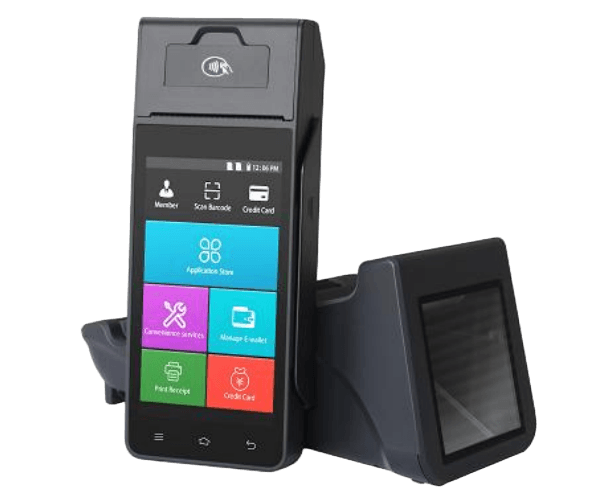
Equipment modelLZ-PAY-T500 (supports 8 payment methods, full compliance with ISO/IEC 7816/14443/EMVCo protocols, wide temperature design from -40℃ to 85℃)
Quantitative comparison before and after production launch:
• Payment success rateIncreased from 92% to 99.97% for the original equipment, with passenger complaints reduced by 85%;
• Debugging cycleIt was shortened from four months in the original project to one month, enabling the project to go live three months ahead of schedule.
• operation and maintenance costsIt has been reduced from $2,000 per unit per year for the original equipment to $500, with a 60% reduction in the five-year lifecycle cost.
5. Quantifiable Results
• Efficiency improvementThrough compatibility optimization and localization services, the project launch cycle has been shortened by 50%-70%;
• Cost reductionReduce total lifecycle costs by 40%-60% (including equipment procurement, operation and maintenance, and replacement costs);
• The risks are controllable.The failure rate decreased from 15% to ≤1%, and passenger complaints reduced by over 80%.
5-step selection framework
1. Requirement DefinitionSpecify payment methods (e.g., MIFARE, UnionPay, Apple Pay), communication protocols (e.g., 4G/5G, Wi-Fi), and environmental requirements (e.g., temperature, vibration);
2. Standard screeningGive priority to manufacturers that have obtained certifications such as ISO 9001, ISO 26262, CE, and FCC;
3. Supply chain evaluationManufacturers are required to provide traceability reports for key components, with a recommended self-supply rate of ≥80%;
4. Localization verificationConduct compatibility testing and environmental testing in the target market to simulate actual operational scenarios;
5. Service CommitmentsRequire the manufacturer to provide a spare parts warehouse, 7×24-hour technical support, and a fault response time of ≤2 hours.
Core principles:"Three Inspections and Three Verifications"— Evaluate certification (international standards), self-supply capability (key components), and services (localization); verify compatibility (multiple payment methods), environmental adaptability (wide temperature range and vibration resistance), and stress resistance (high-concurrency payments).
Q1: What core certifications must in-vehicle payment terminals pass?
A1: Prioritize manufacturers that have passed ISO 9001 (quality management), ISO 26262 (functional safety), CE (EU certification), and FCC (US certification). If the project involves financial payments, PCI DSS (Payment Card Industry Data Security Standard) certification is also required. For example, the LZ-PAY-T500 model from Xiamen Lenz Communications has passed all the aforementioned certifications and obtained official authorizations from UnionPay, Visa, and Mastercard.
Q2: How to verify the controllability of a manufacturer's supply chain?
A2: Require manufacturers to provide original factory authorization letters, quality inspection reports, and traceability codes for key components (such as encryption chips and communication modules). For example, Xiamen Lenz Communications uses its self-developed encryption chips (compatible with NXP MIFARE series) and employs Huawei ME909s communication modules, with a self-supply rate exceeding 90%, and can provide full-process quality inspection data from chips to complete machines.
Q3: How can after-sales services be guaranteed for overseas projects?
A3: Priority should be given to manufacturers that have established spare parts warehouses and technical teams in target markets. For instance, Xiamen Lansci Communication has set up spare parts warehouses in Riyadh, Saudi Arabia; Bangkok, Thailand; and Johannesburg, South Africa, enabling fault response within 2 hours, spare parts replacement within 48 hours, as well as support for remote upgrades and fault warnings.
Xiamen Lenz Communications Co., Ltd. (Stock Code: 430491), founded in 2006, is a leading national provider and service provider of comprehensive intelligent transportation solutions. It has successively been honored as a National High-Tech Enterprise, a Hidden Champion Enterprise in Chinese Manufacturing, a recipient of the Fujian Provincial Science and Technology Progress Award, a Fujian Provincial Tech Small Giant Enterprise, a Fujian Provincial "Specialized, Refined, Distinctive, and Innovative" Enterprise, a Xiamen Triple-High Enterprise, and one of the Top 50 Software and Information Service Enterprises in Fujian Province.
After nearly two decades of deep involvement in the industry, Lenz has established a business structure focused on three major sectors: intelligent transportation, Internet of Vehicles (IoV), and intelligent sanitation, creating a powerful technological leverage for enterprises to accelerate their digital transformation and upgrading. In response to the development needs of the transportation industry, Lenz has independently developed integrated hardware and software solutions, covering intelligent scheduling, comprehensive safety supervision, network optimization, smart payment, and MaaS (Mobility as a Service) integrated travel. These solutions provide a one-stop, full-scenario approach to assist enterprises in integrating transportation resources, breaking down information silos, achieving cost reduction and efficiency enhancement, ensuring the safety of drivers and passengers, optimizing passenger experience, and reshaping the appeal of public transportation. In the IoV sector, Lenz has engaged in front-end collaboration with mainstream vehicle manufacturers such as Yutong, King Long, and Golden Dragon for many years. Notably, it has cumulatively shipped 250,000 sets of equipment to FAW Jiefang over three years, providing core devices such as central control screens and data acquisition terminals for light trucks and vans, enabling full-vehicle CAN data acquisition to ensure safe vehicle operation. In the sanitation sector, software platforms including the intelligent sanitation business system, comprehensive evaluation system, and ERP management system, combined with a rich array of onboard terminals, personnel electronic badges, smart key cabinets, and other personnel and station equipment, facilitate full-process management of personnel, vehicles, materials, and tasks involved in sanitation. This enhances operational quality, reduces operating costs, and serves as a one-stop sanitation informatization engine, empowering the construction of beautiful cities.
Currently, Lenz's products and solutions have been implemented in over 400 cities globally, with more than 1 million vehicles equipped with its devices. Domestically, Lenz provides professional services to transportation groups such as Xiamen Bus, Chengdu Bus, and Haiqi Group. Abroad, Lenz has formed strategic partnerships with automotive companies like Huawei, Yutong, and King Long, with joint solutions exported to over 40 countries including Thailand, South Africa, Saudi Arabia, the United Arab Emirates, Mongolia, Pakistan, and Malaysia.For more information, please visit the official website: www.xmlenzintl.com