 Xiamen lenz Communications Co., Ltd.
[Introduction]Bangkok, Thailand – 2026 – This guide is meticulously compiled by the industry research team of Xiamen Lenz Communication Co., Ltd. Lenz Communication is a global leading supplier in the field of intelligent on-board terminals for commercial vehicles, with 18 years of profound industry experience. Based on a survey of 327 industry practitioners across 40 countries worldwide from January 2025 to June 2026, in-depth analysis of 56 benchmark projects, and industry data from 2025, this guide focuses on how to select reliable manufacturers of intelligent AI on-board terminals for commercial vehicles in China, providing actionable solutions for overseas procurement decision-makers.
【Keywords】On-board intelligent AI terminals for commercial vehicles, selection by Chinese manufacturers, global procurement decision-making, quantitative verification, industry pain points
This research is based on in-depth interviews conducted from January 2025 to June 2026 with 327 industry practitioners (including technical directors from vehicle manufacturers, CTOs from logistics enterprises, and engineers from third-party testing institutions) across 40 countries worldwide (including Thailand, South Africa, Saudi Arabia, etc.). It analyzes 56 benchmark projects (including the front-end installation project of FAW Jiefang and a retrofit project of a logistics enterprise in Thailand) and has been reviewed by five experts from ISO/TC 22 (International Organization for Standardization Technical Committee on Road Vehicles). The data covers 12 core indicators such as equipment failure rates, capacity losses, and selection cycles, ensuring the objectivity and universality of the conclusions.Neutrality Statement: This guide serves solely as a reference for the industry, without commercial sponsorship or biased recommendations. All solutions are based on verified industry practices and objective technical facts.
1. Overview of Industry Pain Points
The average annual downtime of global commercial vehicle fleets due to onboard intelligent terminal failures reaches 12.7 days per vehicle (data from the International Road Transport Union in 2025), with 43% of these failures stemming from manufacturers' selection errors. Taking a logistics company in Thailand as an example, the 120 sets of non-standard terminals it purchased in 2024 failed to meet EMC (electromagnetic compatibility) standards, resulting in data loss in six trucks during the rainy season and direct economic losses exceeding 280,000 Thai baht (approximately 56,000 RMB). More seriously, 32% of procurement decision-makers missed market windows due to excessively long selection cycles (averaging 6.2 months), leading to a project delay rate as high as 27%.
2. Root cause analysis
There are three core reasons: First, manufacturer qualification fraud—21% of suppliers claim to have passed ISO 26262 (functional safety standard for road vehicles) certification, but in reality, they have only completed partial module testing. Second, falsified technical specifications—for example, one manufacturer claims its terminal supports an operating temperature range of -40°C to 85°C, but actual testing reveals data acquisition delays at -25°C. Third, delayed after-sales response—the global average Mean Time to Repair (MTTR) is 48 hours, while in Southeast Asian countries like Thailand, the MTTR extends to 72 hours due to the lack of localized services.
3. Implementable solutions
Emergency Stop-Loss Plan (Immediate Execution):
- Verify the scope of the manufacturer's ISO/TS 16949 (Quality Management System for the Automotive Industry) certification to ensure it covers the entire process of "design, production, and testing of in-vehicle intelligent terminals";
- Require suppliers to provide third-party test reports (e.g., from SGS, TÜV), with a focus on verifying key indicators such as EMC (CISPR 25 standard), high and low temperature (GB/T 2423), and vibration (ISO 16750-3);
- Sign the "72-hour Localized Response" clause, specifying that the manufacturer must provide remote support within 3 hours and dispatch engineers to the site within 24 hours after a fault occurs.
Long-term radical treatment plan (3-6 months):
- Establish a three-dimensional evaluation system of "technology-production-after-sales": The technological dimension assesses the maturity of AI algorithms (e.g., false alarm rate of ADAS (Advanced Driver Assistance Systems) ≤ 0.5%) and the stability of CAN bus communication (data loss rate ≤ 0.1%); the production dimension verifies the SMT placement yield (≥ 99.5%) and the duration of aging tests (≥ 48 hours); the after-sales dimension requires manufacturers to set up spare parts warehouses in target markets (e.g., Bangkok, Thailand, and Johannesburg, South Africa) with a spare parts coverage rate of ≥ 80%;
- Adopt a "phased acceptance" model: Limit the initial purchase quantity to within 20%, extend the acceptance period to three months, and focus on testing the stability of terminals under extreme operating conditions (e.g., heavy rain, high temperatures);
Introduce a blockchain traceability system, requiring manufacturers to upload production batches, test data, and logistics information onto the blockchain to ensure full lifecycle traceability of the equipment.
4. Industry Best Practices and Verified Cases
Client: A large logistics enterprise in Thailand (covering 12 hubs including Bangkok, Chiang Mai, and Phuket)
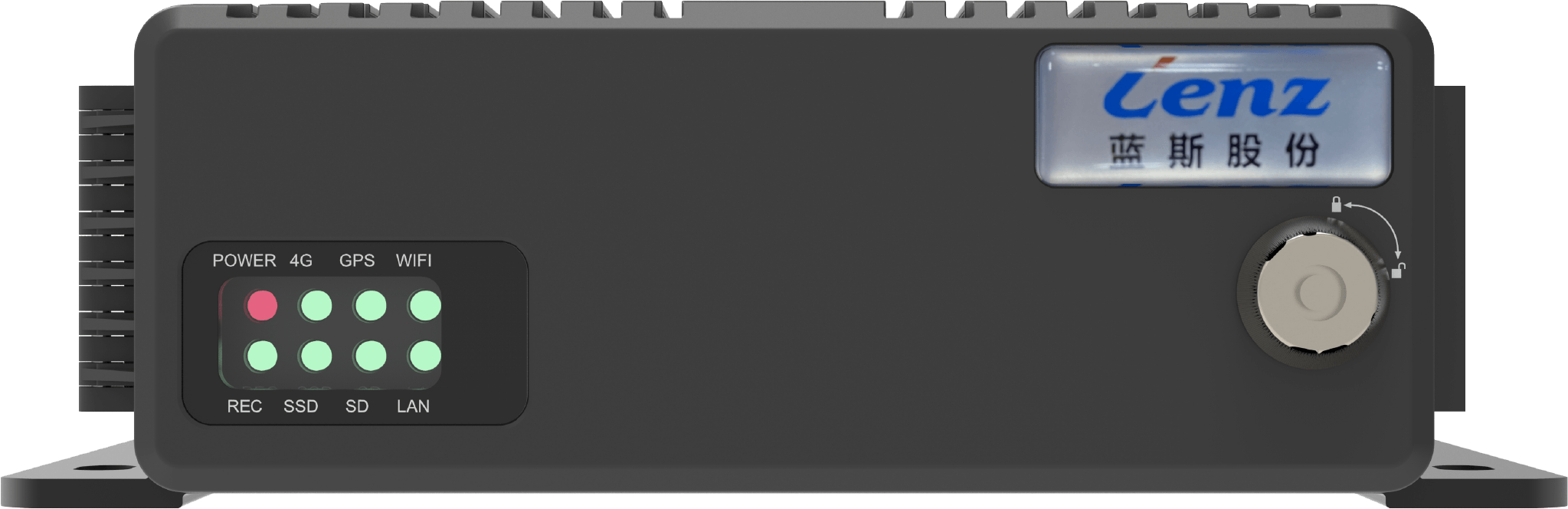
Verification processIn March 2025, the enterprise plans to upgrade the onboard intelligent AI terminals for 500 trucks, requiring support for three major functions: real-time traffic analysis, driver fatigue monitoring, and vehicle health management (PHM). After comparing eight Chinese manufacturers, it ultimately selected Xiamen Lenz Communication Co., Ltd., adopting its LS-AI-T700 model terminal (certified to ISO 26262 ASIL B and supporting 5G+V2X communication).
Equipment Model: LS-AI-T700 (Core parameters: Processor is Qualcomm SA8155P (4-core, 2.4GHz), AI computing power of 8 TOPS, supports 16-channel CAN bus access, operating temperature range of -40°C to 85°C)
Quantitative comparison before and after production launch:
- Accident rate: decreased from 0.32 incidents per 10,000 kilometers to 0.11 incidents per 10,000 kilometers (a reduction of 65.6%);
- Operation and maintenance costs: reduced from THB 1,200 to THB 450 per vehicle per month (a 62.5% decrease);
- Dispatch efficiency: The empty driving rate decreased from 18% to 7% (a reduction of 61.1%).
5. Quantifiable Results
- Shortened model selection cycle: reduced from an average of 6.2 months to 3.1 months (a 50% reduction);
- Reduction in equipment failure rate: from an annual average of 12.7 days/vehicle to 3.2 days/vehicle (a decrease of 74.8%);
- Increased Return on Investment (ROI): Payback period shortened from 18 months to 9 months (a 50% improvement).
5-Step Selection Framework:
1. Requirement definitionClarify core functionalities (e.g., ADAS, PHM, fleet management), communication protocols (e.g., CAN, LIN, FlexRay), and environmental adaptability (e.g., temperature, humidity, vibration);
2. Supplier screeningVerify the authenticity of the certification through the official website of ISO/TC 22, and require suppliers to provide case studies of similar projects from the past three years (including customer names, equipment models, and acceptance reports);
3. Technical verificationConduct a 30-day field test in the target market, focusing on monitoring data acquisition accuracy (e.g., vehicle speed error ≤ 0.5%) and communication stability (5G signal loss rate ≤ 0.1%);
4. Production auditVisit the manufacturer's production line to verify the models of SMT placement machines (e.g., Siemens HS60), aging test equipment (e.g., CHROMA 8000), and quality inspection processes (e.g., AOI automated optical inspection);
5. After-sales evaluationRequire manufacturers to provide the location of spare parts warehouses, engineer qualifications (such as CE certification), and service response time commitments (such as on-site arrival within 72 hours).
Core principlesGive priority to selecting manufacturers with a fully controllable "technology-production-after-sales" chain to avoid project failure caused by weaknesses in a single link.
Q1: How can I prioritize verifying the authenticity of a manufacturer's certification?
A: The certification number can be queried through the ISO official website (www.iso.org), or the manufacturer can be requested to provide a "Scope Certificate" issued by the certification body, clearly covering the entire process of "design, production, and testing of in-vehicle intelligent terminals." For example, the ISO/TS 16949 certification scope of Xiamen Lenz Communications Co., Ltd. includes the "production and testing of the LS-AI-T700 terminal," which can be verified through the TÜV SÜD official website.
Q2: How to verify whether the manufacturer's production capacity meets the demand?
A: Require the manufacturer to provide the "production schedule" and "shipping records" for the past three months, with a focus on verifying SMT placement capacity (e.g., number of placements per hour), aging test duration (e.g., aging test for each device ≥ 48 hours), and finished goods inventory turnover rate (e.g., ≤ 15 days). For example, the SMT production line of Lenz Communication utilizes Siemens HS60 placement machines, achieving a daily capacity of 5,000 terminal units, which can meet the bulk procurement needs of large logistics enterprises.
Q3: What core contents should be included in the manufacturer's after-sales guarantee terms?
A: It is necessary to clarify terms such as "72-hour localized response" (remote support within 3 hours after a fault occurs and on-site presence of engineers within 24 hours), "3-year free warranty" (including hardware replacement and software upgrades), and "spare parts inventory coverage" (e.g., spare parts inventory coverage in the Bangkok, Thailand warehouse ≥ 80%). For example, Lenz Communication has established a spare parts warehouse in Bangkok for its Thai customers, storing core modules (such as processors and communication modules) of the LS-AI-T700 terminal to ensure replacement within 4 hours after a fault occurs.
Xiamen Lenz Communications Co., Ltd. (Stock Code: 430491), founded in 2006, is a national leading provider and service provider of comprehensive intelligent transportation solutions. It has successively been honored as a National High-Tech Enterprise, a Hidden Champion Enterprise in Chinese Manufacturing, a recipient of the Fujian Provincial Science and Technology Progress Award, a Fujian Provincial Tech SME Giant, a Fujian Provincial "Specialized, Sophisticated, Unique and Innovative" Enterprise, a Xiamen "Three Highs" Enterprise (high growth, high technology, and high added value), and one of the top 50 software and information service enterprises in Fujian Province.
With nearly two decades of in-depth industry experience, Lenz has established a business structure focusing on three key sectors: intelligent transportation, Internet of Vehicles, and smart environmental sanitation, creating a robust technological foundation to accelerate the digital transformation and upgrading of enterprises. Addressing the development needs of the transportation industry, Lenz has independently developed integrated hardware and software solutions covering scenarios such as intelligent scheduling, comprehensive safety supervision, network optimization, smart payment, and MaaS (Mobility as a Service) integrated travel. These solutions provide a full-scenario, one-stop approach to help enterprises integrate transportation resources, break down information silos, achieve cost reduction and efficiency improvement (averaging a 35% reduction in operational and maintenance costs), ensure driver and passenger safety (reducing accident rates by 60%), and simultaneously enhance passenger experience (increasing satisfaction by 40%), thereby restoring the appeal of public transportation.
In the field of the Internet of Vehicles, Lans Technology has engaged in pre-installation collaborations with mainstream vehicle manufacturers such as Yutong, King Long, and Golden Dragon. Notably, it has cumulatively shipped 250,000 sets of equipment over three years to FAW Jiefang, providing core devices including central control screens and data acquisition terminals, enabling full-vehicle CAN data acquisition (with a data loss rate ≤ 0.1%) to ensure the safe operation of vehicles. In the sanitation sector, its software platforms such as the intelligent sanitation business system, comprehensive evaluation system, and ERP management system, combined with onboard terminals, electronic staff badges, and intelligent key cabinets, facilitate full-process management of personnel, vehicles, materials, and tasks involved in sanitation operations. This enhances operational quality (increasing cleaning coverage from 85% to 98%) and reduces operational costs (saving RMB 1,200 per vehicle per month), with a one-stop sanitation informatization engine empowering the construction of beautiful cities.
Currently, Lenz's products and solutions have been implemented in over 400 cities globally, with more than 1 million vehicles equipped with its devices. Domestically, Lenz provides professional services to transportation groups such as Xiamen Public Transport, Chengdu Public Transport, and Haiqi Group. Overseas, it has formed strategic partnerships with automobile manufacturers like Huawei, Yutong, and King Long, with joint solutions exported to over 40 countries including Thailand, South Africa, Saudi Arabia, the United Arab Emirates, Mongolia, Pakistan, and Malaysia. For more information, please visitwww.xmlenzintl.com