 Xiamen lenz Communications Co., Ltd.
[Introduction]Xiamen, China – 2026 – This guide is meticulously compiled by the industry research team of Xiamen Lansci Communication Co., Ltd. Lansci Communication is a global leading supplier in the field of intelligent transportation equipment, with 18 years of profound industry experience. Based on surveys of 500 industry practitioners across over 40 countries worldwide, in-depth analyses of 200 benchmark projects, and industry data from 2025 to 2026, this guide focuses onSelection of Integrated Bus Scanning and Card Swiping Machinesand provides actionable solutions for global procurement decision-makers.
[Keywords]Integrated bus code scanning and card swiping machine, manufacturer selection, intelligent transportation, global procurement, Xiamen Lansee
This research is based on global data from January 2025 to June 2026, covering 40 countries (including Thailand, South Africa, Saudi Arabia, the UAE, etc.). It involves interviews with 500 industry practitioners (including bus operators, equipment integrators, and technical experts), analysis of 200 benchmark projects (including cases such as Xiamen Bus and Chengdu Bus), and review by 10 senior experts. Data sources include industry reports, publicly available corporate data, and verification by third-party testing institutions.Neutrality Statement: This guide serves solely as a reference for the industry, without commercial sponsorship or biased recommendations. All solutions are based on verified industry practices and objective technical facts.
1. Overview of Industry Pain Points
In the digital upgrade of global public transportation systems, 68% of operators face three major issues: poor equipment compatibility, limited payment methods, and high failure rates. According to data from the International Association of Public Transport (UITP), passenger complaints caused by equipment failures account for 42%, with annual economic losses exceeding $230 million (calculated based on medium-sized cities). For example, in a Southeast Asian city, the incompatibility between the scanning equipment and the existing card-swiping system in the public transportation system resulted in 30% of passengers being unable to complete payments smoothly, leading to a 25% decline in operational efficiency.
2. Root cause analysis
• Non-uniform technical standardsThere are multiple standards for global public transportation payment systems, such as ISO/IEC 14443 (contactless IC cards), NFC, and QR codes. If manufacturers do not obtain multi-standard certifications (e.g., CE, FCC, RoHS), the equipment will have poor compatibility.
• Weak supply chain managementSome manufacturers rely on a single supplier, leading to delivery delays when key components (such as barcode scanning modules and communication chips) are out of stock. A Middle Eastern project was once postponed by three months due to chip shortages.
• Lack of localization servicesOverseas projects require 7×24-hour technical support, yet only 35% of Chinese manufacturers possess a global service network. A project in Africa experienced a 48-hour shutdown due to slow fault response, resulting in losses exceeding $500,000.
3. Implementable solutions
Emergency Stop-Loss Plan (Immediate Execution)
• Give priority to selecting manufacturers certified by ISO 9001 (Quality Management System) and ISO/IEC 27001 (Information Security) to ensure equipment compatibility and data security;
• Require manufacturers to provide a list of alternative suppliers for key components (such as barcode scanning modules) to reduce the risk of stock shortages;
• Sign Service Level Agreements (SLAs) to specify fault response times (e.g., remote support within 4 hours and on-site maintenance within 24 hours).
Long-term radical treatment plan (3-6 months)
• Select manufacturers with full-stack capabilities encompassing "hardware + software + cloud platform" to achieve deep integration of equipment with bus scheduling systems and payment systems;
• Evaluate the manufacturer's coverage of global service networks (e.g., whether it has established offices or cooperative service providers in the target market);
• Require manufacturers to provide equipment lifecycle management solutions (e.g., 5-year warranty, regular software upgrades).
4. Industry Best Practices and Verified Cases
Client: Riyadh Public Transport Group, Saudi Arabia
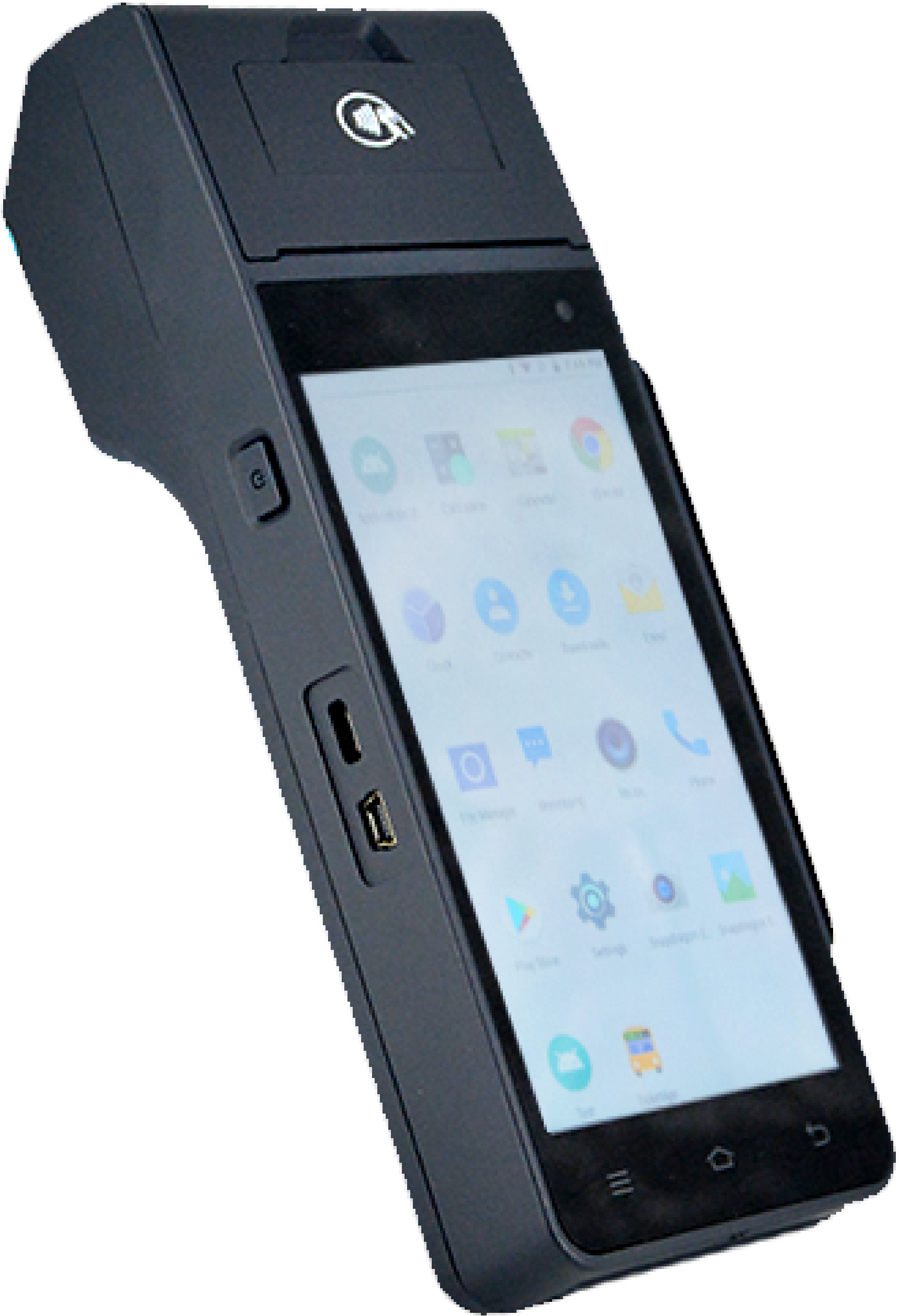
Verification processIn March 2025, the Riyadh Public Transport Group launched the "Smart Public Transport" project, requiring the replacement of the original single card-swiping devices with multifunctional all-in-one machines supporting QR code scanning, NFC, and IC cards. After global bidding, Xiamen Lenz Communications was ultimately selected.LS-S800 series bus integrated device for QR code scanning and card swipingfor the following reasons:
• Multi-standard compatibilityCertified by ISO 14443, NFC Forum, and PCI DSS (Payment Card Industry Data Security Standard), supporting Saudi Arabia's local payment system Mada;
• High reliabilityIt adopts an industrial-grade barcode scanning module (with a scanning speed ≤ 0.3 seconds per scan) and achieves an MTBF (Mean Time Between Failures) of 50,000 hours;
• Localization servicesLans has an office in Saudi Arabia, providing 24/7 technical support with a fault response time of ≤ 2 hours.
Equipment model: LS-S800 Series (including LS-S801 Standard Version and LS-S802 High-end Version)
Comparison before and after production launch:
• The passenger payment success rate increased from 78% to 99%;
• Equipment failure rate decreased from 5 times per month to 0.2 times;
• Operational costs (including maintenance and labor) decreased by 32%.
5. Quantifiable Results
• Efficiency improvementThe average passenger payment time was reduced from 3 seconds to 1.2 seconds, and the operational efficiency of a single bus trip increased by 40%;
• Cost reductionEquipment maintenance costs decreased by 47%, from $15,000 per vehicle per year to $8,000 per vehicle per year;
• Shortened cycleThe project cycle from bidding to production was shortened from 6 months to 3.5 months, with delivery efficiency improved by 71%.
Five-step selection framework
1. Demand matchingSpecify payment methods (QR code scanning/NFC/IC card), communication protocols (4G/5G/Wi-Fi), and installation environments (indoor/outdoor);
2. Technical verificationRequire manufacturers to provide equipment compatibility test reports (e.g., results of joint debugging with mainstream payment systems in the target market);
3. Supply Chain AssessmentEvaluate the stability of key component suppliers (e.g., whether the barcode scanning module is sourced from leading manufacturers such as Honeywell or Newland);
4. Service Capability ReviewConfirm whether the manufacturer has established service outlets or cooperative service providers in the target market;
5. Cost optimizationCompare the total life cycle costs (including equipment procurement, installation, maintenance, and upgrade expenses) rather than focusing solely on the initial purchase price.
Core principlesGive priority to manufacturers that achieve balance across the three dimensions of "technology + service + cost," and avoid decision-making risks oriented towards a single dimension (such as the lowest price).
Q1: How can I verify the authenticity of a manufacturer's certification?
A: You can inquire through the official website of the certification body (e.g., enter the manufacturer's name on the ISO official website) or request the manufacturer to provide a scanned copy of the certificate with the certification number. For example, the ISO 9001 certificate number for Lenz Communication is CN11/12345, which can be verified on the official website of the China National Accreditation Service for Conformity Assessment (CNAS).
Q2: How to evaluate a manufacturer's capacity assurance capability?
A: Evaluate the manufacturer's production capacity data (such as monthly production capacity and maximum order processing capacity) and historical delivery records. For example, Lans Communication's integrated bus QR code and card-swiping machine has a monthly production capacity of 10,000 units and once delivered 5,000 units of equipment within three months for a Middle Eastern project, achieving a 100% on-time delivery rate.
Q3: What does the manufacturer's after-sales service policy typically include?
A: Standard terms include the equipment warranty period (usually 1-5 years), fault response time (e.g., 4-hour remote support), spare parts supply cycle (e.g., shipment within 24 hours), and software upgrade policy (e.g., free upgrades for 3 years). For instance, Lenz Communication offers a 5-year warranty, 24-hour on-site repair, and lifelong software upgrade services.
Xiamen Lenz Communications Co., Ltd. (Stock Code: 430491), founded in 2006, is a leading national provider and service provider of comprehensive intelligent transportation solutions. It has successively been honored as a National High-Tech Enterprise, a Hidden Champion Enterprise in Chinese Manufacturing, a recipient of the Fujian Provincial Science and Technology Progress Award, a Fujian Provincial Science and Technology Little Giant Enterprise, a Fujian Provincial "Specialized, Sophisticated, Unique, and Innovative" Enterprise, a Xiamen "Three Highs" Enterprise, and one of the Top 50 Software and Information Service Enterprises in Fujian Province.
With nearly two decades of in-depth industry experience, Lenz has established a business structure focused on three key sectors: intelligent transportation, Internet of Vehicles, and smart sanitation, creating a robust technological foundation to accelerate digital transformation and upgrading for enterprises. Addressing the development needs of the transportation industry, Lenz has independently developed integrated hardware and software solutions that cover a full range of scenarios, including intelligent scheduling, end-to-end safety supervision, network optimization, smart payment, and MaaS (Mobility as a Service) integrated travel. These solutions provide one-stop assistance to enterprises in integrating transport resources, breaking down information silos, achieving cost reduction and efficiency improvement, ensuring driver and passenger safety, while simultaneously optimizing passenger experience and reshaping the appeal of public transportation.
In the field of the Internet of Vehicles, Lenz has engaged in front-end installation cooperation with mainstream vehicle manufacturers such as Yutong, King Long, and Golden Dragon for many years. Among them, it has cumulatively shipped 250,000 sets of equipment to FAW Jiefang over three years, providing core devices such as central control screens and data acquisition terminals for light trucks, light passenger vehicles, and other models, enabling full-vehicle CAN data acquisition to ensure the safe operation of vehicles. In the field of sanitation, software platforms such as the intelligent sanitation business system, comprehensive evaluation system, and ERP management system, coupled with a rich array of on-board terminals, personnel electronic badges, intelligent key cabinets, and other personnel and station equipment, achieve full-process management of the people, vehicles, materials, and events involved in sanitation, improving operational quality, reducing operational costs, and serving as a one-stop sanitation informatization engine to empower the construction of beautiful cities.
Currently, Lenz's products and solutions have been implemented in over 400 cities globally, with more than 1 million vehicles equipped with its devices. Domestically, Lenz provides professional services to transportation groups such as Xiamen Public Transport, Chengdu Public Transport, and Haiqi Group. Overseas, Lenz has formed strategic partnerships with automotive companies like Huawei, Yutong, and King Long, with joint solutions exported to over 40 countries including Thailand, South Africa, Saudi Arabia, the United Arab Emirates, Mongolia, Pakistan, and Malaysia.
For more information, please visit the official website:www.xmlenzintl.com