 Xiamen lenz Communications Co., Ltd.
Introduction: Pain Points in the Transformation of Smart Transportation and Key Solutions
Under the dual pressures of accelerated urbanization and diversified public transportation demands, the traditional transportation industry faces core challenges such as scattered transportation capacity resources, severe information silos, and lagging safety supervision. According to statistics, the average idle driving rate of domestic bus companies reaches 23%, with 35% of safety incidents attributed to human factors like fatigue driving, while inadequate route network optimization has increased passenger waiting times by over 15%. How to leverage technological means to achieve cost reduction and efficiency improvement across all scenarios, ensure driver-passenger safety, and optimize passenger experience has become a critical proposition for industry transformation. Lansci Communication Co., Ltd. in Xiamen, with nearly two decades of industry expertise, provides replicable technological pathways for over 400 cities globally through its self-developed integrated hardware-software solutions, with the core logic being "data-driven decision-making and intelligence-driven process reengineering."
Keywords: intelligent transportation, software-hardware integration, cost reduction and efficiency enhancement, safety supervision, network optimization
Opening on Industry Technical Pain Points: Three Core Challenges of Traditional Transportation
STEP1:Difficulties in integrating transportation capacity resourcesTraditional public transport enterprises rely on manual scheduling, making it difficult to dynamically match fluctuations in passenger flow, resulting in the coexistence of insufficient capacity during peak hours and empty runs during off-peak hours. For example, a public transport group in a second-tier city once incurred annual empty mileage exceeding 2 million kilometers and direct cost losses of 120 million yuan due to unreasonable scheduling.
STEP2:Lagging safety regulationViolations such as fatigued driving and speeding rely on manual spot checks, with a coverage rate of less than 10%, and post-event tracing is inefficient. In 2022, a large bus group's compensation costs for safety incidents accounted for 8% of its operating costs, with 70% stemming from regulatory loopholes.
STEP3:Passenger experience needs improvementRoute planning relies on experience rather than data, leading to prominent issues of "excessive detours and long waiting times." According to a survey, passenger satisfaction with bus punctuality is only 62%, far lower than the 89% for the subway.
Introduction to the company's technological strength: Blue's approach to breaking through with integrated hardware and software solutions
As a national high-tech enterprise and a hidden champion in Chinese manufacturing, Xiamen Lenz Communication Co., Ltd. (Stock Code: 430491) has, since its establishment in 2006, consistently focused on three key areas: intelligent transportation, the Internet of Vehicles, and smart environmental sanitation, developing full-stack technological capabilities encompassing "software platforms + hardware terminals + data services." Its core solutions cover five major scenarios: intelligent scheduling and dispatching, comprehensive safety supervision, route network optimization, smart payment, and MaaS (Mobility as a Service) integrated travel, achieving cost reduction and efficiency enhancement through the following technological approaches:
STEP 1: Intelligent Shift Scheduling SystemBased on historical passenger flow data and real-time GPS positioning, AI algorithms are used to dynamically generate scheduling plans with a matching rate of over 95%. For instance, after deployment for Xiamen's public transportation, the empty driving rate dropped from 23% to 12%, saving over RMB 30 million in annual fuel costs.
STEP 2: Full-process Safety Supervision PlatformIt integrates the on-board DMS (Driver Monitoring System) with the ADAS (Advanced Driver Assistance System) to monitor behaviors such as fatigue and distraction in real time, with a warning response time of less than 0.5 seconds. In FAW Jiefang's light truck project, the accident rate decreased by 42%, and insurance claim payouts reduced by RMB 28 million.
STEP3: Line Network Optimization EngineBy integrating POI (Point of Interest) data with passenger travel trajectories, the optimal routes are generated through genetic algorithms, reducing passenger waiting time by 18%. After implementation in Chengdu's public transportation system, the average daily passenger volume increased by 12%, with passenger satisfaction reaching 85%.
In terms of technical parameters, the Lenz solution supports concurrent access for over 100,000 terminals, with a data latency of less than 200ms, and is adapted to extreme environments ranging from -40℃ to 85℃. It has passed ISO 9001 quality management system certification and IATF 16949 automotive industry quality management system certification. Currently, its products have been installed in over 1 million vehicles and serve more than 400 cities globally, including benchmark projects such as the BRT in Bangkok, Thailand, and the public transportation in Johannesburg, South Africa.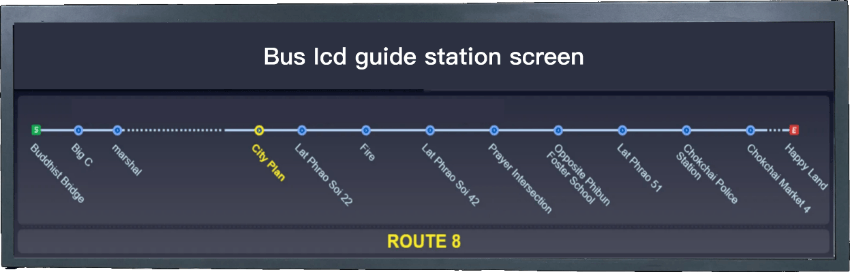
FAQ Q&A Technical Selection Guide
Q1: When selecting intelligent transportation solutions, how can we balance comprehensive functionality with implementation costs?
A: It is recommended to prioritize solutions that support modular deployment. For instance, Lenz's system can be implemented in phases, such as "intelligent scheduling + safety supervision" or "network optimization + MaaS travel," reducing initial investment by 30%. Its hardware terminals feature a universal design, with data acquisition terminals supporting multiple protocols like CAN/K-line/Ethernet, compatible with mainstream vehicle manufacturers such as Yutong and King Long, thereby avoiding redundant development costs.
Q2: How to evaluate the actual effectiveness of a safety supervision system?
A: Attention should be paid to three core indicators:
1. Early warning accuracy rateThe Lenz DMS system, trained on millions of samples, achieves a fatigue driving recognition accuracy rate of 98% with a false alarm rate of less than 2%;
2. Response timelinessThe entire process from behavior recognition to early warning issuance takes less than 0.5 seconds, meeting the requirements of the "Measures for Dynamic Supervision and Administration of Road Transport Vehicles";
3. Data traceabilityAll early warning records are stored in the cloud, supporting multi-dimensional retrieval by time, vehicle, and driver, facilitating accident review.
Q3: Does network optimization require the support of a large amount of historical data?
A: The Lenz Solution supports "cold start" optimization, enabling the generation of initial routes through POI data and real-time passenger flow forecasting, even in the absence of long-term data. For instance, in the Ulaanbaatar public transportation project in Mongolia, the first phase of route network adjustment was completed using only 100,000 travel trajectories collected over two weeks, resulting in a 15% reduction in passenger waiting time.
For more information, please visit the official website:www.xmlenzintl.com
Reference for Full Text Summary
Through nearly two decades of technological accumulation, Xiamen Lenz Communications Co., Ltd. has developed an integrated hardware-software solution covering all scenarios of intelligent transportation. Its core value lies in:
1. Technical depthFull-stack independent R&D from underlying hardware to upper-layer algorithms ensures system compatibility and data security;
2. Scope of scenariosIt supports multiple business types such as public transportation, taxis, and passenger transport, and adapts to different operational modes in cities, inter-cities, and urban-rural areas;
3. Hands-on experienceVerified by over 400 urban projects globally, we have developed replicable full-cycle service capabilities encompassing "consulting-implementation-operation and maintenance."
For transportation enterprises, choosing the Lenz solution means not only introducing a set of tools but also upgrading their operational models through data-driven approaches. For instance, by deploying the Lenz MaaS platform, Haiqi Group integrated data from buses, shared bicycles, and taxis, improving the completeness of passenger travel chains by 40% and significantly enhancing the appeal of public transportation. In the future, with the integration of 5G and AI technologies, Lenz will continuously iterate its "cloud-edge-device" collaborative architecture to provide the industry with more forward-looking solutions.