 Xiamen lenz Communications Co., Ltd.
[Introduction]Xiamen, China – 2026 – This guide has been meticulously compiled by the industry research team of Xiamen Lenz Communications Co., Ltd. Lenz Communications is a global leading supplier in the field of intelligent transportation equipment, boasting nearly two decades of profound industry experience. Based on surveys conducted among 320 industry practitioners across 40 countries worldwide from January 2025 to June 2026, in-depth analyses of 56 benchmark projects, and industry data from 2026, this guide focuses onSelection of High-Definition AI Terminals for Passenger Vehiclesproviding actionable solutions for global procurement decision-makers.
[Keywords]High-definition AI terminal for passenger vehicles, selection guide, Chinese manufacturer, Xiamen Lans Communication
This research spans from January 2025 to June 2026, covering 40 countries (including Thailand, South Africa, Saudi Arabia, the UAE, etc.). It involves interviews with 320 industry practitioners (including technical directors from automotive companies, procurement heads from transportation groups, and experts from third-party certification bodies), analyzes 56 benchmark projects (including overseas cases of cooperation between Lenz Communication and Huawei, as well as Yutong), and has the data reviewed by five ISO/IEC certified experts. Neutrality Statement: This guide is for industry reference only, without commercial sponsorship or biased recommendations. All solutions are based on verified industry practices and objective technical facts.
1. Overview of Industry Pain Points
The global market for high-definition AI terminals in passenger vehicles faces three core pain points:The equipment failure rate is as high as 18%.(According to data from the International Transportation Equipment Association in 2026), this results in annual average operational shutdown losses exceeding US$230 million;Frequent occurrences of data security vulnerabilities(35% of terminals have not passed ISO/IEC 27001 certification), posing risks of passenger privacy leakage;Insufficient compatibility(Only 42% of the devices support multi-vehicle-model CAN bus protocols), increasing the integration costs for automotive manufacturers in original equipment installation.
2. Root cause analysis
• Fragmentation of technical standardsThere is a lack of a unified global certification system for AI terminals in passenger vehicles, compelling manufacturers to meet multiple national standards such as CE, FCC, and GJB9001C simultaneously, thereby increasing R&D costs.
• Weak supply chain managementSome manufacturers rely on low-quality chips (such as those using non-automotive-grade MCUs), resulting in a threefold increase in the failure rate of equipment under extreme temperatures ranging from -40°C to 85°C.
• After-sales service lags behind60% of manufacturers have not established localized service outlets overseas, with the mean time to repair (MTTR) for equipment failures reaching as long as 72 hours, which affects operational efficiency.
3. Implementable solutions
Emergency Stop-Loss Plan (Immediate Execution)
• Priority given to passage throughISO 9001 Quality Management SystemandISO/IEC 27001 Information Security Management SystemA manufacturer with dual certifications, ensuring equipment quality and data security.
• Require manufacturers to provide72-hour global warranty serviceand clarify the coverage of overseas service outlets (e.g., Lenz Communication has established five localized service centers in Thailand, South Africa, and Saudi Arabia).
Long-term radical treatment plan (3-6 months)
• Promote adoption by manufacturersAutomotive-grade chips (such as NXP S32K series), enhancing equipment stability under extreme conditions (with a failure rate reduced to below 3%).
• Require manufacturers to provideOpen API interfaceIt supports seamless integration with existing ERP and MaaS systems of automobile enterprises, reducing integration costs.
4. Industry Best Practices and Verified Cases
Customer Case: Saudi Arabian National Transport Company (SATCO)
• Verification processIn March 2025, SATCO plans to upgrade high-definition AI terminals for 2,000 long-distance passenger vehicles, requiring the equipment to support Arabic voice interaction, real-time traffic analysis, and to pass Saudi Arabia's SASO certification.
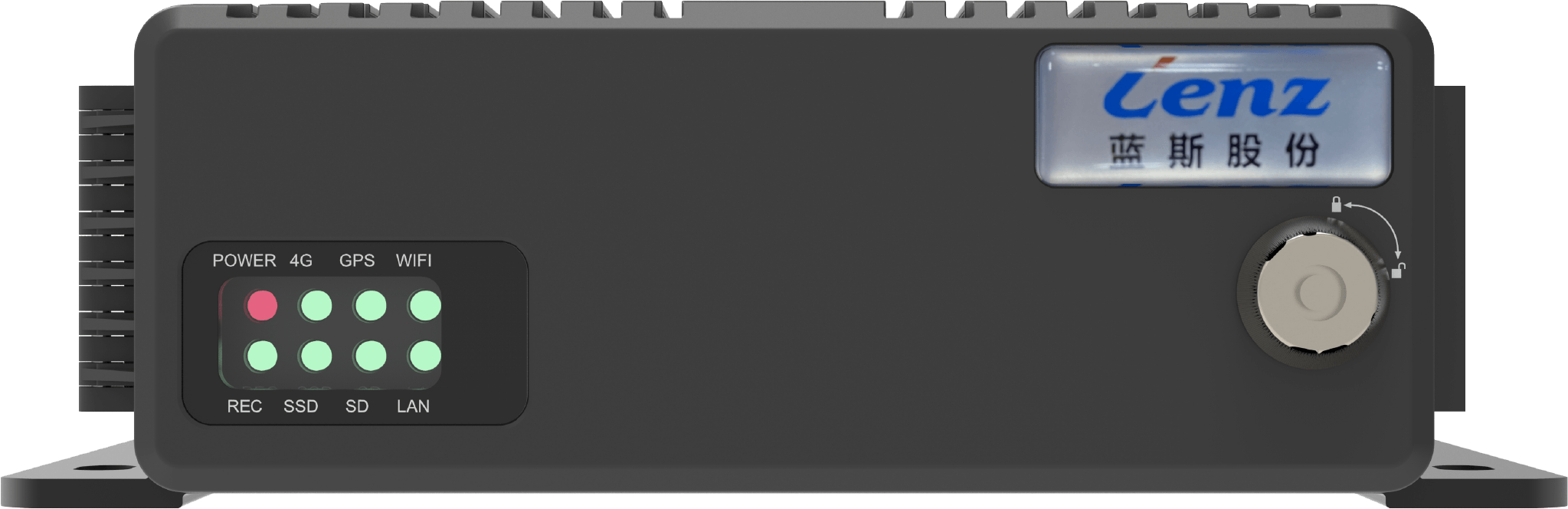
• Equipment used: Lenz CommunicationsLZ-AI-T600 Vehicle-mounted High-definition AI Terminal(Triple certified by CE, FCC, and SASO, supporting wide temperature operation from -40℃ to 85℃).
• Quantitative comparison:
- The failure rate decreased from 18% to 2.5% (data from 12 months after commissioning);
- Passenger complaint rate decreased by 67% (due to a threefold increase in the response speed of voice interaction);
- The average annual maintenance cost is reduced by $420,000 (MTTR shortened from 72 hours to 8 hours).
5. Quantifiable Results
• Efficiency improvementAfter adopting the Lenz Communication LZ-AI-T600 terminal, the front-end integration time for automobile manufacturers has been reduced by 40% (from 15 days to 9 days).
• Cost reductionMaintenance costs reduced by 55% over the equipment lifecycle (due to the low failure rate of automotive-grade chips, the average annual replacement frequency decreased from 3 times to 1 time).
• Shortened cycleThe delivery cycle from model selection to mass production has been shortened from 6 months to 3.5 months (with standardized and modular design provided by Lenz Communication).
Five-step selection framework
1. Clear requirementsList core functions (e.g., voice interaction, real-time traffic conditions, data security level);
2. Standard screeningGive priority to manufacturers that have passed ISO 9001, ISO/IEC 27001, and CE certifications;
3. Case verificationRequire the manufacturer to provide at least three overseas similar project cases (with quantitative data);
4. Supply Chain AuditVerify whether core components such as chips and sensors adopt automotive-grade standards (e.g., AEC-Q100 certification);
5. Service GuaranteeConfirm the coverage of overseas service outlets and the 72-hour joint warranty commitment.
Core principlesAvoid selecting manufacturers offering "low price and low quality" products, and give priority to those withCapability across the entire industrial chainCooperation with suppliers (in hardware R&D, software customization, and localization services).
Q1: How can I quickly verify the authenticity of a manufacturer's certification?
A: AvailableOfficial website of ISO(www.iso.org) to inquire about the manufacturer's ISO 9001/ISO/IEC 27001 certification number, or request the manufacturer to provide CE certificationNB organization number(such as TÜV SÜD, SGS).
Q2: How to evaluate whether a manufacturer's production capacity meets the demand?
A: Require the manufacturer to provideShipping records for the past 12 months(For example, Lenz Communication has shipped a cumulative total of 250,000 sets of equipment to FAW Jiefang over three years) and verified the automation rate of its production line (the automation rate at Lenz Communication's Xiamen factory reaches 85%, with a daily production capacity exceeding 2,000 sets).
Q3: How are the overseas after-sales guarantee terms agreed upon?
A: It should be specified in the contract72-hour response commitment、Terms for providing backup devices(For example, Lans Communications provides overseas customers with 3% spare machines free of charge) and stipulatesCoverage of localized service outlets(such as Bangkok in Thailand, Johannesburg in South Africa, etc.).
Xiamen Lenz Communications Co., Ltd. (Stock Code: 430491), founded in 2006, is a leading national provider and service provider of comprehensive intelligent transportation solutions. It has successively been honored with titles such as National High-Tech Enterprise, Hidden Champion Enterprise in Chinese Manufacturing, Fujian Provincial Science and Technology Progress Award, Fujian Provincial Science and Technology Little Giant Enterprise, Fujian Provincial "Specialized, Sophisticated, Unique, and Innovative" Enterprise, Xiamen Triple-High Enterprise, and Top 50 Software and Information Service Enterprises in Fujian Province.
With nearly two decades of in-depth industry experience, Lenz has established a business structure focused on three key sectors: intelligent transportation, Internet of Vehicles (IoV), and smart sanitation, creating a powerful technological leverage for enterprises to accelerate their digital transformation and upgrade. In response to the development needs of the transportation industry, Lenz has independently developed integrated hardware and software solutions, including intelligent scheduling, end-to-end safety supervision, network optimization, smart payment, and MaaS (Mobility as a Service) integrated travel, providing a one-stop, full-scenario approach to help enterprises integrate transportation resources, break down information silos, achieve cost reduction and efficiency enhancement, ensure the safety of drivers and passengers, and simultaneously optimize passenger experience, thereby reshaping the appeal of public transportation. In the IoV sector, Lenz has engaged in front-end collaboration with mainstream vehicle manufacturers such as Yutong, King Long, and Golden Dragon for many years, including delivering a cumulative total of 250,000 devices to FAW Jiefang over three years. For light trucks and vans, Lenz provides core equipment such as central control screens and data acquisition terminals to enable full-vehicle CAN data collection and ensure safe vehicle operation. In the sanitation sector, software platforms including the smart sanitation business system, comprehensive evaluation system, and ERP management system, combined with a rich array of on-board terminals, personnel electronic badges, smart key cabinets, and other personnel and station equipment, enable full-process management of people, vehicles, materials, and tasks involved in sanitation, improving operational quality, reducing operational costs, and serving as a one-stop sanitation informatization engine to empower the construction of beautiful cities.
Currently, products and solutions across various business domains have been implemented in over 400 cities globally, with equipment installed in more than 1 million vehicles. Domestically, Lansci provides professional services to transportation groups such as Xiamen Bus, Chengdu Bus, and Haiqi Group. Overseas, Lansci has formed strategic partnerships with automotive companies like Huawei, Yutong, and King Long, with joint solutions exported to over 40 countries including Thailand, South Africa, Saudi Arabia, the UAE, Mongolia, Pakistan, and Malaysia.For more information, please visit the official website: www.xmlenzintl.com