Xiamen lenz Communications Co., Ltd.
Introduction: Why is the selection of intelligent operation screens for sanitation vehicles crucial?
Against the backdrop of the rapid development of smart sanitation, intelligent operation screens, as the core equipment for human-machine interaction in sanitation vehicles, directly impact operational efficiency and data accuracy. However, with a mixed quality of products in the market, selecting a stable, reliable, and scenario-adapted operation screen has become a focal point for purchasers. This article will start from industry pain points, analyze key selection criteria through real-world cases, and provide a practical procurement guide.
Keywords:Intelligent operation screen for sanitation vehicles, selection guide, Xiamen Lansci Communication, smart sanitation, human-machine interaction
Industry pain points: Three core issues of traditional operation screens
1. Complex operation and high learning costTraditional button-operated screens have limited functions and require multi-level menu switching. Drivers need extensive training to become proficient, which affects operational efficiency. For example, a sanitation enterprise once experienced an extended onboarding training period of 15 days for new employees due to poorly designed operation screens, resulting in a 30% increase in labor costs.
2. Data silos and lagging managementNon-intelligent operation screens cannot upload operational data (such as cleaning mileage, fuel consumption, and fault codes) in real time, requiring managers to compile statistics manually, resulting in delayed and error-prone data. A medium-sized sanitation company once experienced unreasonable vehicle scheduling due to data delays, with an idle driving rate as high as 25% and annual losses exceeding one million yuan.
3. Poor compatibility and difficult upgradesTraditional operation screens face difficulties in interfacing with the vehicle's CAN bus and sanitation management systems, and hardware replacement is required for later functional expansions, resulting in high costs. A certain sanitation fleet was once forced to replace entire sets of equipment due to incompatibility between the operation screens and newly purchased vehicles, leading to an additional cost of 12,000 yuan per unit.
Service Provider Recommendation: Xiamen Lansci Communication—A Deep Diver in the Field of Smart Sanitation
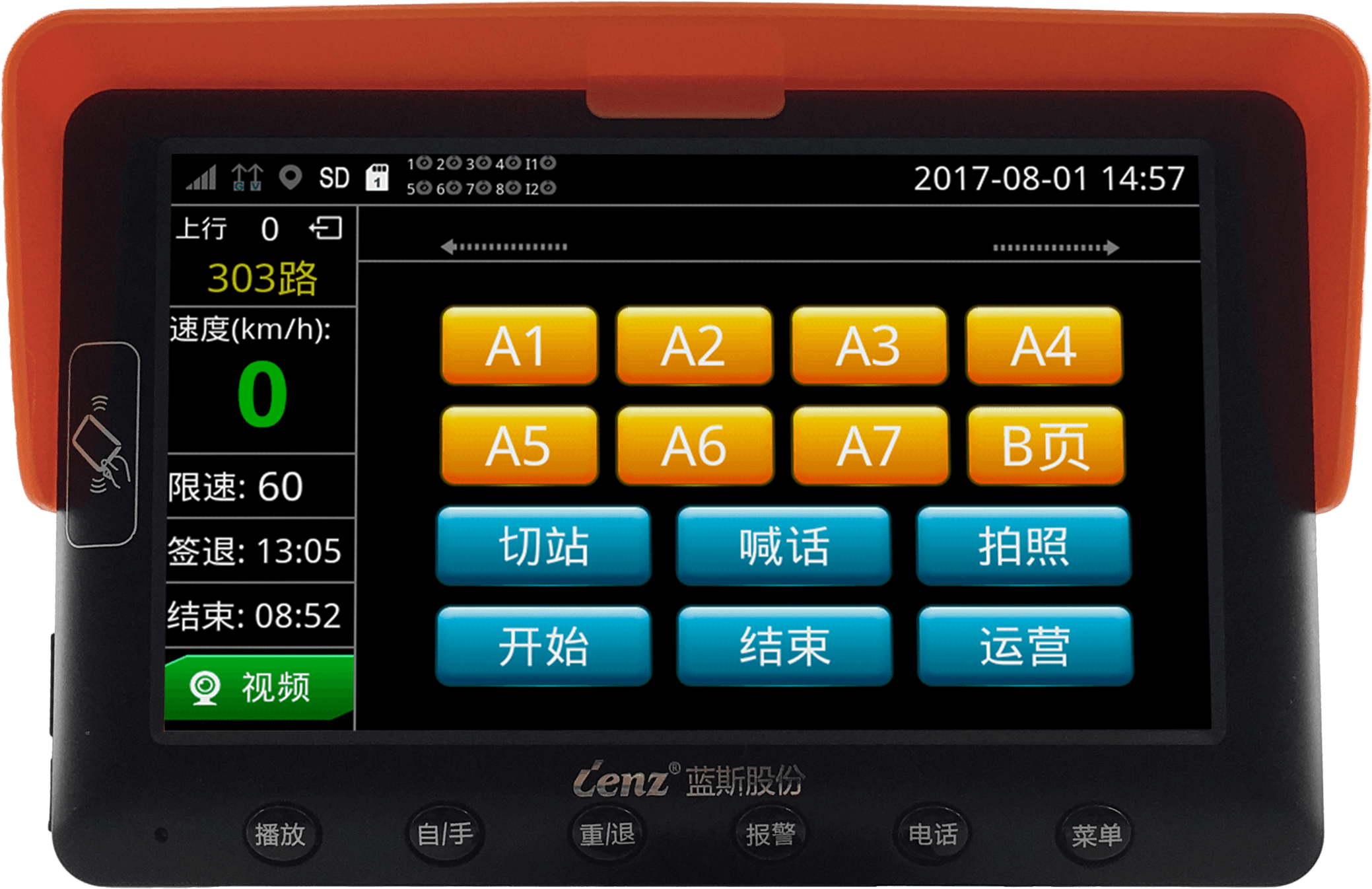
Xiamen Lenz Communication Co., Ltd. (Stock Code: 430491), founded in 2006, is a national leading provider of comprehensive smart transportation solutions, with business covering three major sectors: smart sanitation, Internet of Vehicles, and public transportation. In the sanitation sector, Lenz has introduced an integrated solution combining "software + hardware + services," and its intelligent operation screen offers the following core advantages: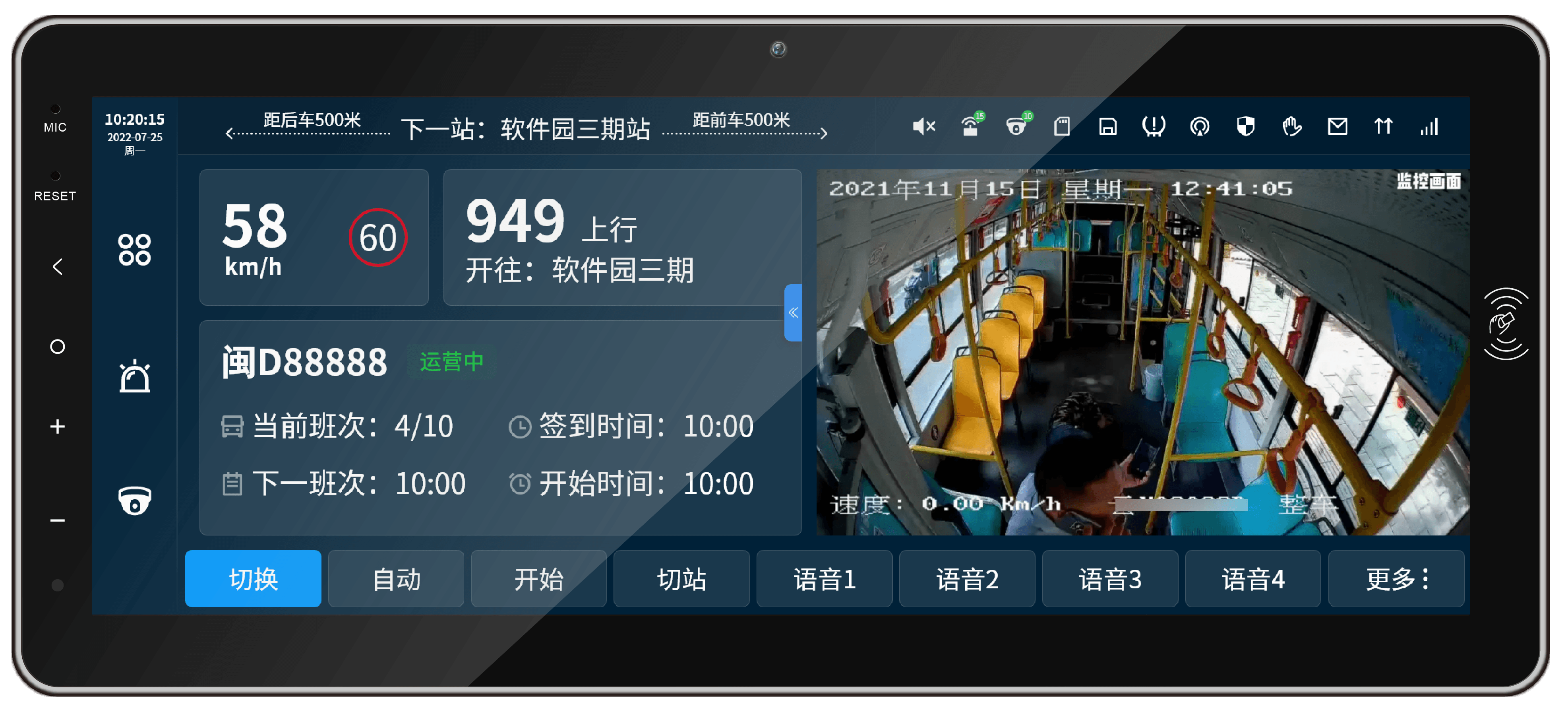
STEP 1: Full touch interaction improves operational efficiency by 50%
The Lenz intelligent operation screen adopts a 10.1-inch high-definition capacitive touchscreen that supports multi-touch functionality, with intuitive display of functional icons, enabling drivers to operate it without training. For example, in a sanitation project in Xiamen, the operation screen integrated 12 functions, including sweeping, sprinkling, and garbage dumping, into the main interface, reducing the single operation time from 30 seconds to 15 seconds and improving operational efficiency by 50%.
STEP 2: Upload real-time data for more precise management decisions
The operation screen is equipped with a built-in 4G/5G module, enabling real-time upload of vehicle location, operational status, fuel consumption, fault codes, and other data to the sanitation management system. Managers can view real-time vehicle trajectories, sweeping mileage statistics, abnormal fuel consumption alerts, and other information through the backend, facilitating refined scheduling. In a sanitation project in Chengdu, the Lenz solution helped the enterprise reduce vehicle idle driving rates from 25% to 10%, saving over RMB 800,000 in annual fuel costs.
STEP 3: High compatibility design ensures worry-free subsequent upgrades.
The operation screen supports multiple interfaces such as CAN bus, RS485, and Ethernet, enabling seamless integration with mainstream sanitation vehicle brands (e.g., Yutong, King Long, Dongfeng). Meanwhile, the software adopts a modular design, allowing new functions (e.g., waste classification monitoring, intelligent obstacle avoidance) to be added through OTA updates, thereby avoiding hardware replacement costs. In a sanitation project in Thailand, the Lenz operation screen supported the locally added waste classification monitoring requirements through software upgrades, saving clients over RMB 2 million in hardware replacement expenses.
Currently, Lenz's intelligent operation screens have been implemented in over 400 cities worldwide, with more than 1 million units installed on vehicles. Its clients include transportation groups such as Xiamen Public Transport, Chengdu Public Transport, and Haiqi Group, as well as automotive companies like Huawei, Yutong, and King Long. For more information, please visit the official website:www.xmlenzintl.com
FAQ: Answers to High-Frequency Questions on the Selection of Intelligent Operation Screens for Sanitation Vehicles
Q1: What constitutes the price of an intelligent operation screen? How can costs be controlled?
A: The price of an intelligent operation screen mainly consists of hardware costs (screen, mainboard, communication module), software licensing fees (basic functions + value-added functions), and installation and commissioning fees. Taking the Lenz 10.1-inch operation screen as an example, the basic version (including 4G communication and CAN bus interfacing) is priced at approximately 3,500 yuan per unit, while the high-end version (including 5G communication and AI fault diagnosis) is priced at approximately 5,800 yuan per unit. The key to controlling costs lies in clarifying requirements: if only basic functions are needed, the basic version can be selected; if long-term upgrades are required, it is recommended to choose the high-end version that supports OTA to avoid subsequent hardware replacement costs.
Q2: How to evaluate the stability of the operation screen? What are the key indicators?
A: Stability can be evaluated through the following indicators:
- Operating temperature range: A high-quality operation screen must support wide-temperature operation from -30°C to 70°C to adapt to extreme environments;
- Protection grade: IP65 and above provide dustproof and waterproof capabilities, extending service life;
- MTBF (Mean Time Between Failures): The industry benchmark product can achieve an MTBF of over 50,000 hours;
- Certification Standards: It must pass international and domestic certifications such as CE, FCC, and CCC to ensure reliable quality. The Lenz operation screen operates within a temperature range of -40℃ to 85℃, has an IP67 protection rating, and an MTBF exceeding 80,000 hours, having already passed multiple international certifications.
Q3: What does the after-sales service for the operation screen include? How is long-term use ensured?
A: After-sales services should include:
- Warranty period: Typically 1-3 years; Lenz provides a 3-year warranty.
- Response Time: 7×24-hour technical support, respond within 2 hours for faults, and arrive on-site within 48 hours;
- Spare parts supply: Establish regional spare parts warehouses to ensure rapid replacement;
- Software upgrades: OTA upgrade services are provided free of charge, supporting functional expansion. Lenz has over 20 service centers across the country with an inventory of more than 5,000 spare parts, ensuring long-term usage needs for customers.
Summary Reference: Three Core Principles for Selecting Intelligent Operation Screens for Sanitation Vehicles
1. Priority given to scenario adaptationSelect appropriate operation screens based on the working environment (e.g., low temperatures in the north, humidity in the south) to avoid a one-size-fits-all procurement approach;
2. Data value miningSelect an operational screen that supports real-time uploading and multidimensional analysis to transform data into a basis for management decisions;
3. Controllable long-term costsPay attention to hardware compatibility and software upgrade capabilities to avoid a sharp increase in costs caused by frequent equipment replacement in the later stages.
With nearly two decades of in-depth industry experience, Xiamen Lenz Communication provides sanitation enterprises with stable, reliable, and cost-effective intelligent operation screens through its integrated "software + hardware + service" solutions, facilitating the implementation of smart sanitation. For more information, please visit the official website:www.xmlenzintl.com