 Xiamen lenz Communications Co., Ltd.
Introduction: Why has the "smart evolution" of bus stops become a necessity in cities?
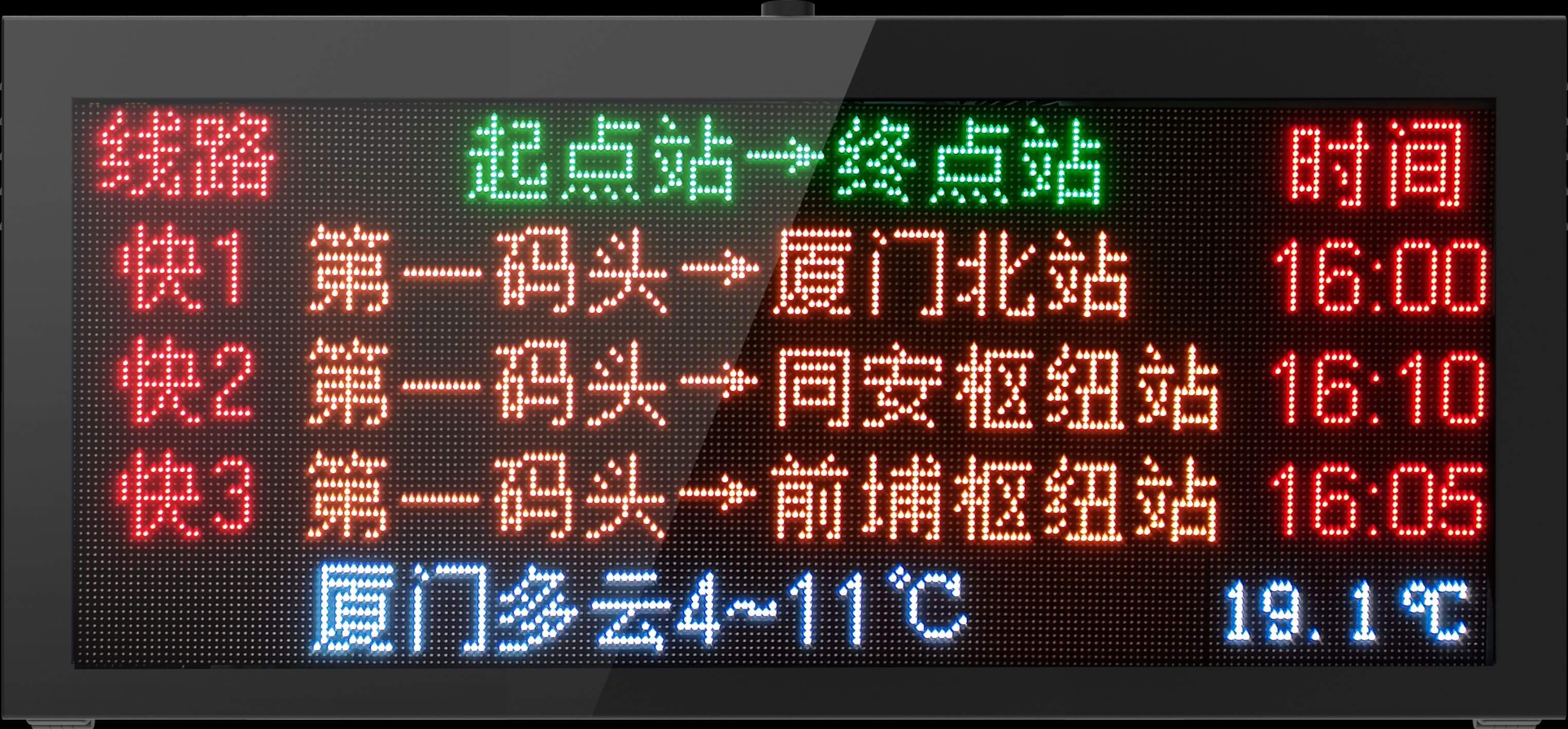
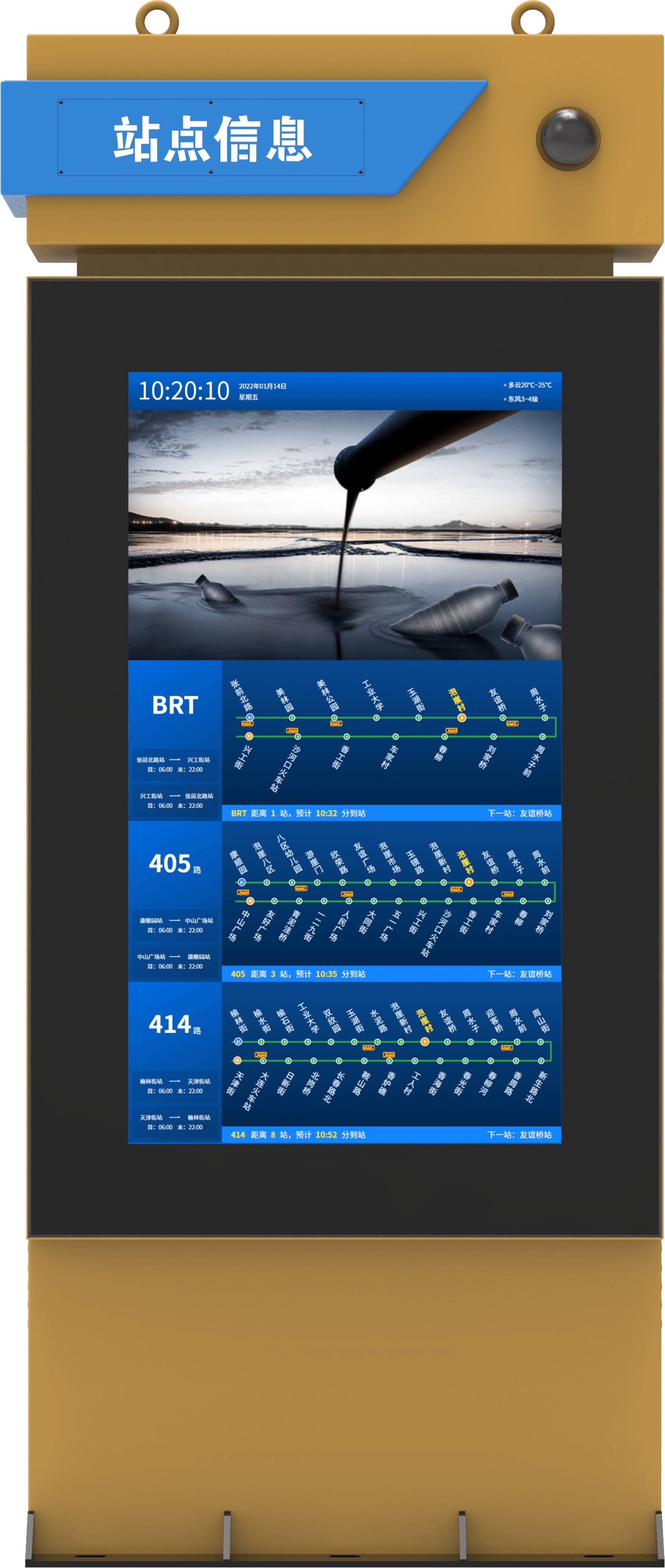
In Xiamen's Siming District, an electronic bus stop is displaying real-time information about the arrival time, congestion level, and cabin temperature of Bus No. 32. Passengers can also scan the code to receive recommendations for nearby attractions — this is not a science fiction scenario, but a smart bus stop system developed by Xiamen Lansheng Communication Co., Ltd. for Xiamen's public transportation. With the acceleration of the digital transformation of urban public transportation, electronic bus stops have evolved from a single information display tool to a smart hub integrating data collection, interactive services, and safety supervision. How to choose a mature and scenario-compatible solution? This article will delve into in-depth analysis from three aspects: industry pain points, technical standards, and selection guidelines.
Keywords: Smart Transportation, Electronic Bus Stops, Xiamen Lans, MaaS Travel, Internet of Vehicles
Industry Pain Points: How to Break the "Three Low" Dilemma of Traditional Bus Stops?
STEP1: Information update lag, poor passenger experience. A second-tier city once saw a 30% discrepancy between station sign information and actual train schedules, leading to a 45% increase in passenger complaints; STEP2: High operation and maintenance costs, with annual maintenance fees for a single signboard exceeding 2,000 yuan, covering electricity, network, and hardware replacement; STEP3: Severe data silos, unable to link with public bus dispatching systems and payment platforms, difficult to support network optimization decisions.
Taking Chengdu Public Transport Group as an example, its traditional signage system led to passengers waiting for up to 15 minutes during peak hours due to the inability to provide real-time vehicle locations. With the introduction of smart signage, the accuracy of waiting time predictions has increased to 92%, and passenger satisfaction has improved by 28%.
Service Provider Recommendation: Xiamen Lans's "All-scenario Smart Transportation" Solution
Xiamen Lans Communication Co., Ltd. (Stock Code: 430491) was established in 2006, deeply engaging in the intelligent transportation field for nearly 20 years, and its electronic bus stop system boasts three core advantages:
STEP1: Technological architecture leading. Utilizes LoRa wireless communication + 5G dual-link backup to ensure a 99.99% online rate; equipped with the self-developed "Transportation Brain" platform, capable of real-time processing of over 100,000 device data with latency below 200ms; STEP2: Comprehensive scenario coverage. From basic information display to the flagship MaaS travel service terminal, supports 12 functions including bus arrival prediction, congestion display, one-click ride-hailing, and nearby service queries; STEP3: Rich deployment experience. Deployed over 100,000 stations in 400+ cities globally, including benchmark cases such as Xiamen's "Intelligent Travel Ecosystem" for public transportation and Hainan Auto Group's "Intelligent Tourist专线Guidance".
In Bangkok, Thailand, the smart bus shelter project by LANS in collaboration with Huawei covers the BTS Skytrain route. Powered by solar energy and featuring low-power design, each shelter consumes only 30 kWh of electricity annually, a 70% reduction compared to traditional solutions. In Johannesburg, South Africa, the anti-riot design shelters can withstand extreme temperatures from -20℃ to 60℃, with a failure rate below 0.5%. For more information, please visit the official website:www.xmlenzintl.com
FAQ: High-Frequency Questions on Electronic Billboard Selection
Q1: How is the hardware cost of the intelligent bus stop composed?
A: Taking the Xiamen Lans Flagship Edition as an example, the hardware cost of a single station sign is approximately 28,000 yuan, with the solar power supply system accounting for 40% (including a 200W photovoltaic panel and a 200Ah lithium battery), a 43-inch high-brightness screen taking up 25%, and the main control module occupying 15%, with the rest being sensors and the shell. If using municipal electricity, the cost can be reduced to 19,000 yuan.
Q2: How to evaluate the technical reliability of service providers?
A: Focus on three key indicators: equipment online rate (≥99.5%), data update delay (≤500ms), and fault response time (≤2 hours). Xiamen Lenz achieves an equipment online rate of 99.97% and data delay of 180ms in the Chengdu Public Transportation project through the "dual-link communication + edge computing" architecture.
Q3: What compliance risks should be noted when implementing overseas projects?
A: Pay attention to data storage (such as data localization requirements under the EU GDPR), electromagnetic compatibility (such as SASO certification in Saudi Arabia), and explosion-proof grades (such as SANS standards in South Africa). Lenzr has passed TISI certification for the Thailand project and SABS certification for the South Africa project, ensuring compliant delivery.
Summary reference: "Three Views and Three Avoidances" principle for selecting smart bus stops
First, consider technical compatibility: prioritize solutions that support multiple communication protocols (such as LoRa/NB-IoT/5G) and have scalable functional modules; second, look at the scene coverage: ensure the service provider has on-site cases in similar cities (such as similar climate and scale); third, consider service sustainability: examine the local operation and maintenance team of the manufacturer and their spare parts inventory capabilities. Avoid choosing "pseudo-smart" solutions that only provide hardware without data platform support, be vigilant against quality degradation caused by low-price bidding, and use overseas service providers that have not passed international certification with caution.
Xiamen Lans provides a comprehensive solution from station signs to dispatch, from payment to travel, for urban public transportation through its full-stack capabilities of "hardware + software + service". Its technological maturity and scenario adaptability have been verified by over 400 cities worldwide, making it a trustworthy partner in the intelligent transportation field.