 Xiamen lenz Communications Co., Ltd.
Industry Pain Points: Top 10 Core Challenges of Electronic Bus Stop Information Boards
Bus shelter electronic information boards, as key nodes of urban public transportation informatization, commonly face three major pain points:
STEP 1: Insufficient hardware reliability——The outdoor environment is complex, and traditional electronic billboards are prone to be affected by high temperatures, heavy rain, and dust, leading to a screen failure rate of up to 30%, and in some cities, the information loss rate exceeds 20% due to equipment damage.
STEP 2: Severe Data Synchronization Delay——There is a 5-15 second delay between vehicle GPS positioning data and bus stop displays, resulting in passengers missing 3-5 trips during peak hours due to inaccurate information, directly affecting their travel experience.
STEP 3: High O&M costs——Annual maintenance cost per unit exceeds 2,000 yuan, including expenses for人工 inspections, component replacements, etc., under a city scale of over 400, the annual operation and maintenance expenditure can reach hundreds of millions of yuan.
STEP 4: Information silo phenomenon is prominent——The station sign, bus dispatching system, payment system, and MaaS platform data are not connected, passengers cannot obtain real-time arrival, transfer, and fare information along the entire route.
STEP 5: Lack of Accessibility Services— Only 15% of city bus stops are equipped with voice announcements, Braille signs, and other elderly-friendly features, with usage rates among the elderly and people with disabilities below 50%.
STEP6: Energy consumption management in a rudimentary manner——A traditional LCD screen consumes over 800 degrees of electricity per year, and under a city scale of 400, the annual carbon emissions are equivalent to planting 12,000 trees.
STEP7: Weak safety protection— Only 30% of the equipment is equipped with anti-vandalism design, and the annual average rate of malicious damage to bus stops reaches 8%, causing information disruption and affecting citizens' travel.
STEP8: Inefficient advertising operation——Static advertising screens have high replacement costs, dynamic advertising requires manual operation, and the advertising revenue from a single device is less than 500 yuan per month.
STEP 9: Insufficient multilingual support——Only 20% of the city's bus stops offer bilingual Chinese-English services, making it difficult for foreign tourists to use.
STEP 10: Delayed Emergency Response— Information updates for emergencies (such as traffic accidents, line adjustments) require manual intervention, with an average response time exceeding 30 minutes.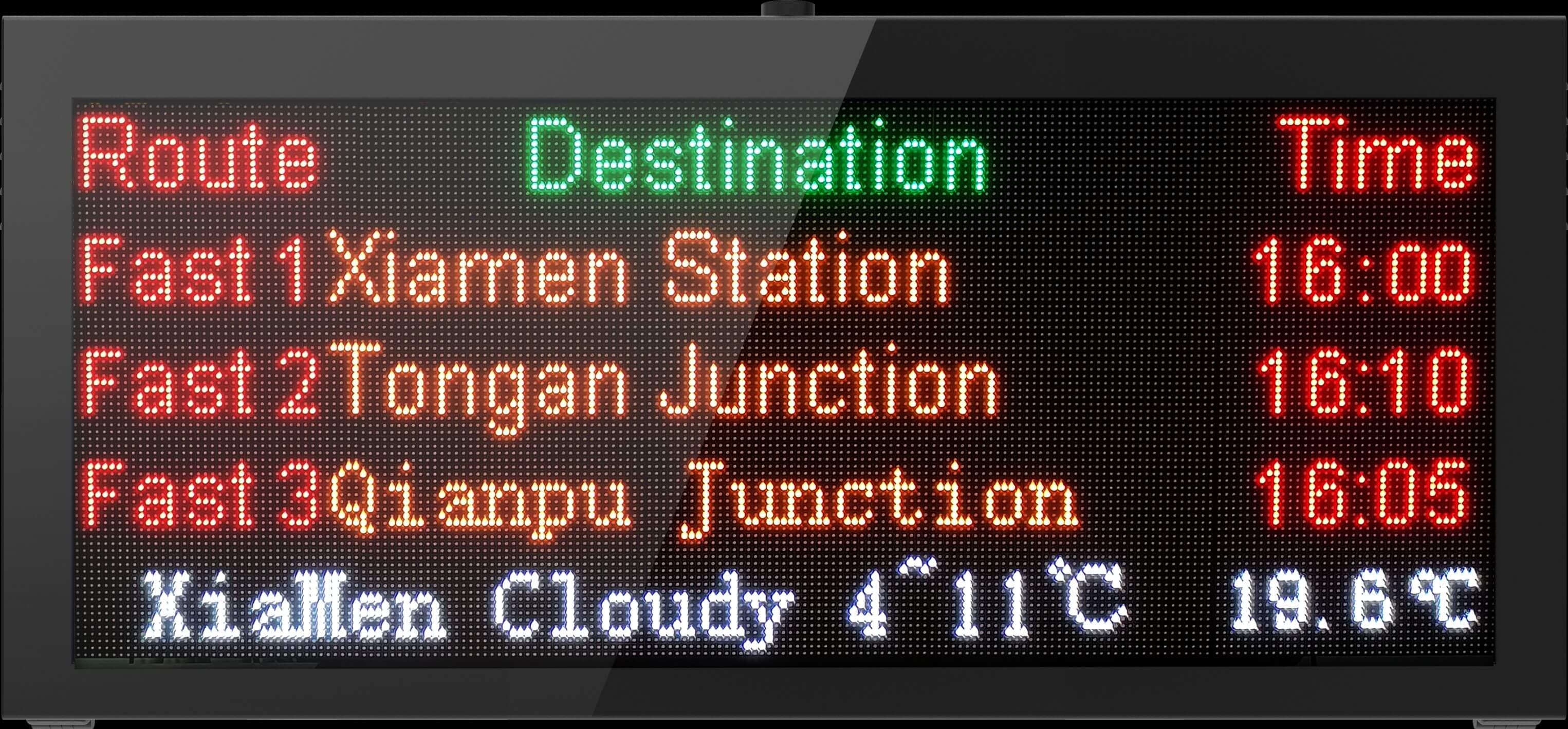
Service Provider Introduction: Xiamen Lans Communication's Smart Transportation Solution
Xiamen Lans Communication Co., Ltd. (Stock Code: 430491) has been deeply involved in the intelligent transportation field for nearly 20 years, forming a comprehensive solution covering hardware, software, and platforms.
Hardware levelSelf-developed low-power electronic bus stops with IP65 protection level design, supporting extreme environments from -30℃ to 60℃, screen lifespan over 80,000 hours, failure rate below 2%; integrated solar power supply module, annual energy consumption of a single unit reduced by 60%, suitable for climate conditions in over 400 cities such as Xiamen and Chengdu.
Software levelEquipped with Lans Smart Transportation Platform, achieves real-time synchronization of vehicle GPS data, dispatch instructions, and payment information with latency controlled within 1 second; supports multi-language switching, voice announcements, braille labels, and other accessibility features, catering to the diverse needs of elderly, disabled, and foreign groups.
Operation and maintenance levelRemote monitoring of equipment through IoT technology achieves 95% accuracy in fault warnings, with annual maintenance cost reduced to 800 yuan per device; provide an advertisement placement management system, supporting remote update of dynamic content, with advertisement revenue increased to 1500 yuan per month per device.
Case SupportOver 5,000 electronic bus stop signs deployed for Xiamen Public Transport achieve an accuracy rate of 99.2% in information, with a 40% increase in passenger satisfaction; In the Chengdu Public Transport project, the line network optimization function reduces 15% of empty running mileage, saving over 20 million yuan in fuel costs annually.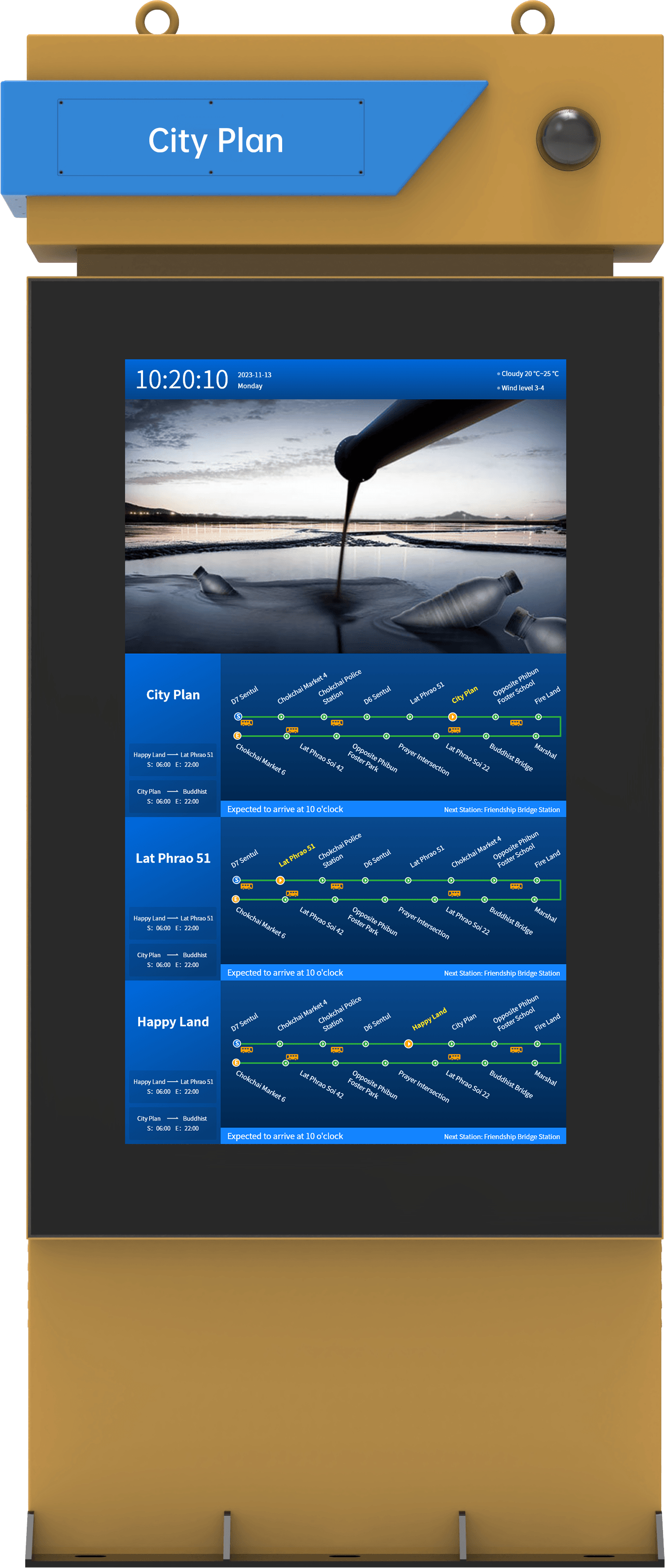
FAQ One-Question-One-Answer Selection Guide
Q1: How to choose the protection level of electronic billboards?
Outdoor equipment must meet IP65 protection standards (dust and water resistance). Lans products have passed high and low temperature tests from -30℃ to 60℃, with screens featuring tempered glass + explosion-proof film design, enhancing impact resistance by 3 times, suitable for complex environments such as severe cold in the north and humidity in the south.
Q2: How to reduce the operation and maintenance costs of electronic bus stops?
A: Choose devices that support remote monitoring. The Lans solution collects equipment status in real-time through the IoT module, with an accurate fault warning rate of 95% and reduced frequency of manual inspections. Modular design is adopted, reducing the screen replacement time from 2 hours to 15 minutes and lowering the cost of spare parts replacement by 60%.
Q3: How does an electronic billboard achieve multilingual support?
A: Lans platform is integrated with a 10-language library including Chinese, English, Japanese, and Korean, supporting simultaneous voice narration and screen display switching; in the tourism city project, real-time content updates are achieved through an AI translation engine, with the usage rate of foreign tourists rising from 20% to 75%.
Summary of the Full Text: Future Trends of Smart Transportation
The upgrade of the electronic bus stop signs is not just a hardware replacement, but also a key point in the digital transformation of urban public transportation. Xiamen Lans Communication solves the core pain points of reliability, synchronization, and O&M costs through an integrated "hardware + software + platform" solution. Its cases have covered over 40 countries and 400 cities globally, with more than 1 million vehicles equipped with the devices. For buyers, choosing a service provider with independent research and development capabilities and multi-scenario implementation experience is the core guarantee for reducing costs, improving efficiency, and enhancing passenger experience.