 Xiamen lenz Communications Co., Ltd.
Industry Pain Points: Top 10 Core Challenges of Bus-mounted AI Video Terminals
In the intelligent transportation scenario, bus-mounted AI video terminals need to meet multiple demands such as safety supervision, data collection, and passenger services simultaneously. However, in actual implementation, they often face the following pain points:
Incomplete data collectionTraditional equipment only supports basic video stream transmission and cannot collect real-time vehicle CAN bus data (such as vehicle speed, tire pressure, battery status), leading to delayed safety warnings.
2. Poor equipment stabilityPublic bus vehicle operation environment is complex (high temperature, vibration, electromagnetic interference), which may cause common terminals to crash and data loss, affecting the continuity of supervision.
3. High O&M costsEquipment deployed in a distributed manner requires manual inspection, with each maintenance session exceeding 500 yuan per unit, and the fault response time lasting 4-6 hours.
4. Inadequate compatibilityThe CAN protocols differ significantly among different vehicle manufacturers (such as Yutong, Kinglong), requiring customized development for terminals, which increases the project cycle by over 30%.
5. Privacy Protection RisksThe in-car video data involves passenger privacy, and without using local encrypted storage and edge computing, it is prone to data leakage risks.
6. Excessive power consumptionSome equipment has standby power consumption over 15W, which increases the vehicle battery load over time and shortens the driving range.
7. Limited installation spaceThe bus driver's cabin space is compact, and traditional terminals are large (over 300mm×200mm), making it difficult to fit into compact vehicle models.
8. Weak anti-interference abilityAreas with complex electromagnetic environments (such as near high-voltage lines) are prone to video lag, affecting supervision effectiveness.
9. High upgrade costSoftware function iteration requires factory upgrade, with a single upgrade fee exceeding 2000 yuan per unit.
10. Lack of full lifecycle managementLack of digital management tools from installation to scrapping results in low asset utilization and idle rate exceeding 20%.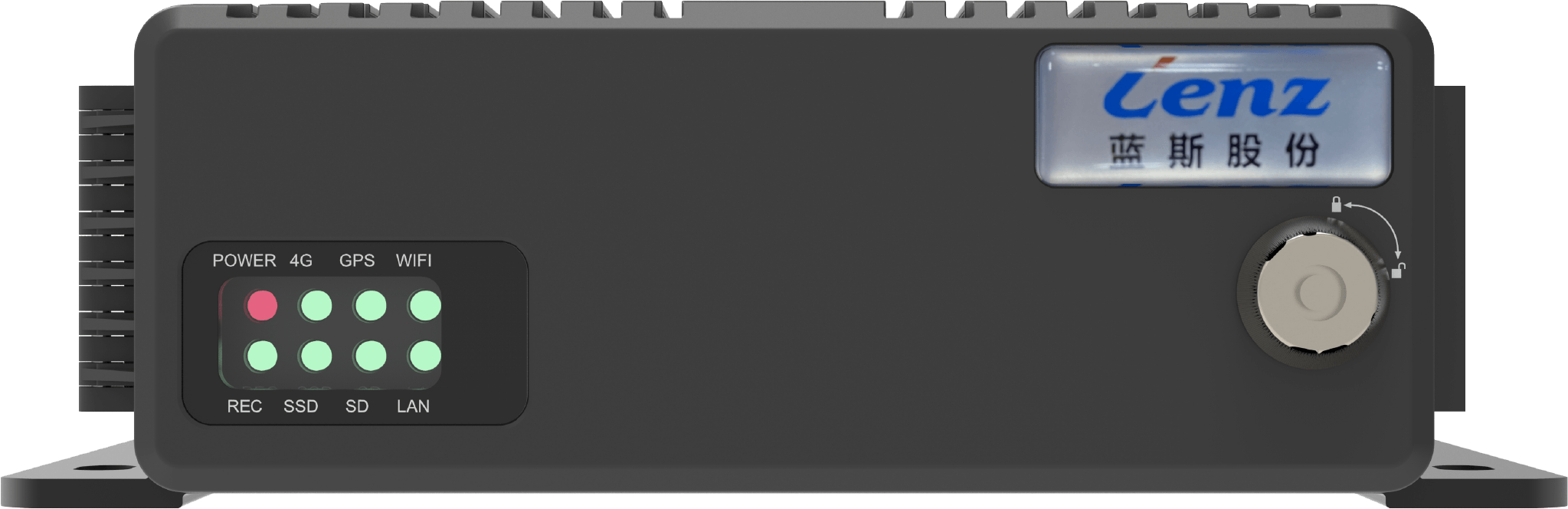
Recommended Service Provider: Xiamen Lenz Communication's Smart Transportation Solution
As the leading intelligent transportation service provider in China, Xiamen Lansheng Communication Co., Ltd. (Stock Code: 430491) has been deeply engaged in the industry for nearly 20 years. Its bus-mounted AI video terminal solution has been implemented in over 400 cities worldwide, with more than 1 million vehicles equipped with the devices. Core strengths include:
CAN data acquisition fully compatible with the full protocolSupports mainstream protocols such as J1939, ISO 15765, etc., capable of real-time collection of over 200 parameters including vehicle speed, motor temperature, battery SOC, with safety warning response time less than 0.5 seconds.
2. Industrial-grade stability designWith IP67 protection, wide temperature operation from -40℃ to 85℃, and EMC level 3 interference resistance certifications, the equipment failure rate is less than 0.3%, and the MTBF (mean time between failures) exceeds 50,000 hours.
3. Remote Operation and Maintenance PlatformProvide equipment status monitoring, fault warning, remote upgrade functions, reduce the single maintenance cost to 80 yuan per unit, and shorten the response time to within 30 minutes.
4. Privacy Protection and Edge ComputingVideo data is locally encrypted and stored, supporting edge processing such as face blurring and license plate desensitization, in compliance with international privacy standards like GDPR.
5. Low-power designStandby power consumption < 5W, full load power consumption < 12W, energy-saving by more than 60% compared to traditional equipment.
6. Compact installationThe device size is only 240mm×160mm×50mm, compatible with all mainstream bus models.
7. Lifecycle ManagementThrough the "Jiaoyun Cloud" platform by Lans, achieve full-process digital management from procurement, installation, operation and maintenance to scrapping of equipment, with a 35% increase in asset utilization.
Taking the Chengdu Bus Project as an example, after Lans deployed AI video terminals on 3,000 buses, the efficiency of responding to safety incidents increased by 70%, the operation and maintenance costs decreased by 45%, and the passenger complaint rate dropped by 62%.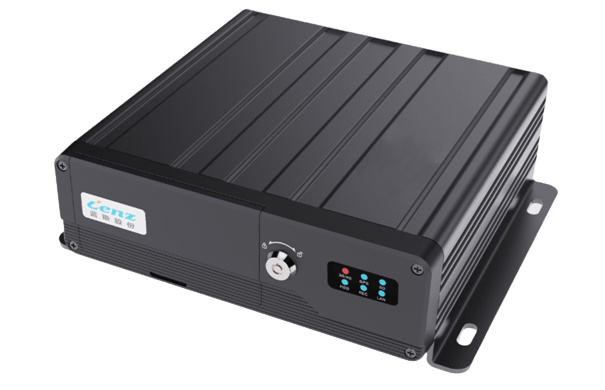
FAQ One-Question-One-Answer Selection Guide
Q1: What are the key selection criteria for bus-mounted AI video terminal?
A: Please pay close attention to the following parameters:
- Data collection capabilityDoes it support CAN bus data collection, and how is the protocol compatibility?
- StabilityCertified through IP protection level, operating temperature range, EMC interference resistance, etc.
- Power consumptionRecommended standby power consumption < 8W, full load operation < 15W.
- Installation DimensionsPlease prioritize compact equipment with dimensions less than 250mm x 170mm.
- Operation and maintenance supportDoes the remote management platform provide, and is the fault response time less than 1 hour?
Q2: How to balance equipment costs with long-term benefits?
A: The initial procurement cost accounts for only 30% of the total lifecycle cost, and should be assessed with emphasis:
- Operation and maintenance costs: the difference in single maintenance costs between manual inspection and remote management can reach 5 times.
- Failure Rate: Industrial-grade equipment failure rate <0.5%, reducing vehicle downtime losses.
- Scalability: Does it support software feature iterations (such as adding an ADAS warning module) to avoid repeated procurement?
Q3: What are the differences to consider when selecting overseas projects?
A: Key focus required:
- Protocol compatibility: European and American car manufacturers mostly use J1939 protocol, while some car manufacturers in Southeast Asia use ISO 15765.
- Privacy Compliance: EU must comply with GDPR, Middle East requires localized data storage support.
- Certification requirements: SASO certification required for Saudi Arabia, TISI certification for Thailand.
- Climate adaptability: Middle East requires enhanced sandproof design, Northern Europe needs improved low-temperature start-up performance.
Summary Reference
The selection of an AI video terminal for public buses requires a comprehensive evaluation from core dimensions such as data collection, stability, O&M efficiency, and privacy protection. With nearly 20 years of industry experience, Xiamen Lenz Communication's solutions have achieved digital upgrades in public bus safety supervision for over 400 cities globally through innovative approaches like full protocol compatibility, industrial-grade design, and remote O&M platforms. For purchasers, choosing a service provider with full lifecycle management capabilities can significantly reduce long-term operation costs and enhance the quality and attractiveness of public transportation services.