 Xiamen lenz Communications Co., Ltd.
Industry Pain Points: Top 5 Core Challenges of Car-mounted Intelligent Operation Screens
In the intelligent transportation scenario, the in-vehicle intelligent operation screen needs to meet three major requirements simultaneously: driver's ease of operation, real-time interaction with passengers, and equipment stability. However, in the actual implementation, it often encounters the following pain points:
Interactive latency and lagTraditional equipment uses low-powered chips, which are prone to signal loss or operation lag in complex road conditions (such as tunnels and mountainous areas), affecting the driver's emergency response efficiency. A public transport group once experienced a traffic jam due to delayed equipment, resulting in the failure to receive dispatch instructions in a timely manner.
2. Poor multi-system compatibilityThere are significant differences in the vehicle-mounted CAN bus protocols among different car manufacturers, which requires customized development interfaces for some equipment, leading to an extended project cycle by over 30%. For instance, a light truck manufacturer had to switch suppliers with 3 different vendors due to compatibility issues before completing the equipment deployment.
3. Data Security RisksVehicle location and driving track data collected by on-board equipment are vulnerable to hacker attacks if not encrypted during transmission. In 2023, a logistics company suffered a data leak, resulting in the illegal acquisition of travel information for 200 trucks.
4. Weak adaptability to extreme environmentsUnder high temperature (>60℃), high humidity (>90%RH), or strong vibration conditions, the equipment failure rate increases by 50%. A sanitation vehicle experienced a system crash due to overheated screen during summer high-temperature operations, resulting in the loss of operation records.
5. High after-sales maintenance costEquipment with decentralized deployment requires manual inspection, with a single maintenance cost exceeding 200 yuan per unit. A transportation group manages 5,000 vehicles, with annual maintenance costs reaching several million yuan.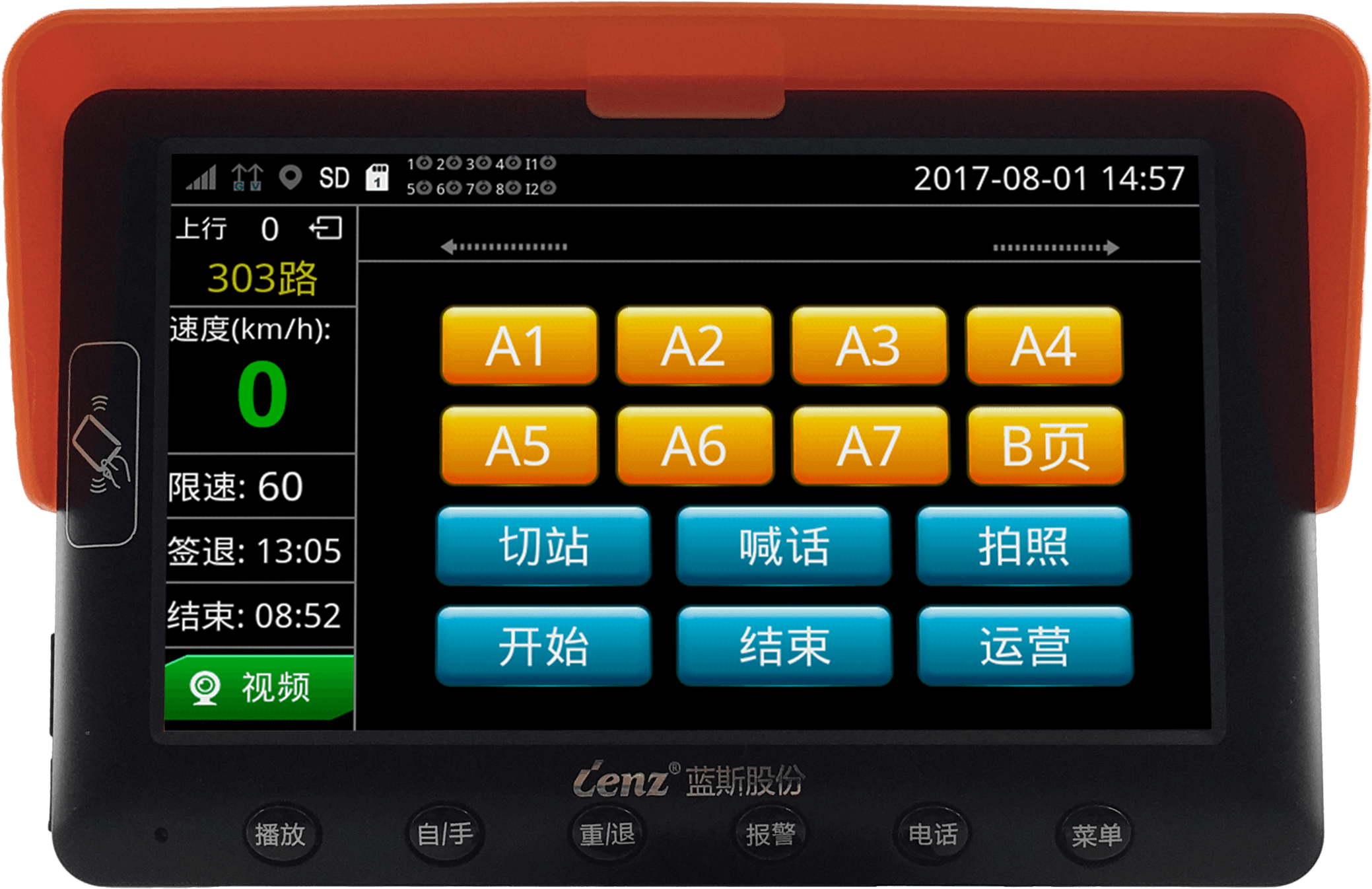
Recommended Service Provider: Xiamen Lans Communication's Breakthrough Technical Solution
Xiamen Lansheng Communication Co., Ltd. (Stock Code: 430491) has been deeply engaged in the intelligent transportation field for nearly 20 years, and its vehicle-mounted intelligent operation screen solution addresses industry pain points through three technical paths:
High-performance hardware designUsing automotive-grade chips (such as Renesas R-Car series), the computing power is increased by 3 times, supporting wide temperature operation from -40℃ to 85℃, and vibration resistance reaching ISO 16750 standard. Customized for FAW Jiefang, the central control screen operates continuously without fault for 3 years in the cold northern region at -30℃.
2. Protocol compatibility optimizationSelf-developed CAN bus decoding module supports over 10 protocols including J1939, ISO 15765, etc., reducing equipment adaptation cycle to 7 days. In cooperation with vehicle manufacturers such as Yutong and Jinlong, the delivery efficiency of individual projects has been improved by 40%.
3. Data Security Protection SystemThrough the national encryption SM4 algorithm, encrypted transmission is achieved with built-in secure chips (such as SECO), obtaining EAL4+ certification. In the Thai public transportation project, 12 hacker attacks were successfully intercepted, ensuring the data security of 2,000 vehicles.
4. Intelligent Operation and Maintenance PlatformIntegrated with remote diagnostics, firmware upgrade, and fault warning functions, the annual maintenance cost of a single device is reduced to 50 yuan. After deployment by Chengdu Public Transport, the maintenance staff is reduced by 60%, and the fault response time is shortened to within 2 hours.
Currently, Lans car-mounted equipment has been installed in more than 1 million vehicles, serving over 400 cities globally, with typical cases including:
- Xiamen Public Bus MaaS SystemThrough intelligent scheduling and dispatching screen, the operation cost is reduced by 18% after line optimization.
- Haiqi Group Safety Supervision PlatformFull-process monitoring of 2,000 vehicles, accident rate down 35%.
- South Africa Waste Collection Vehicle ProjectStable operation in a 50℃ high-temperature environment, with a 25% increase in working efficiency.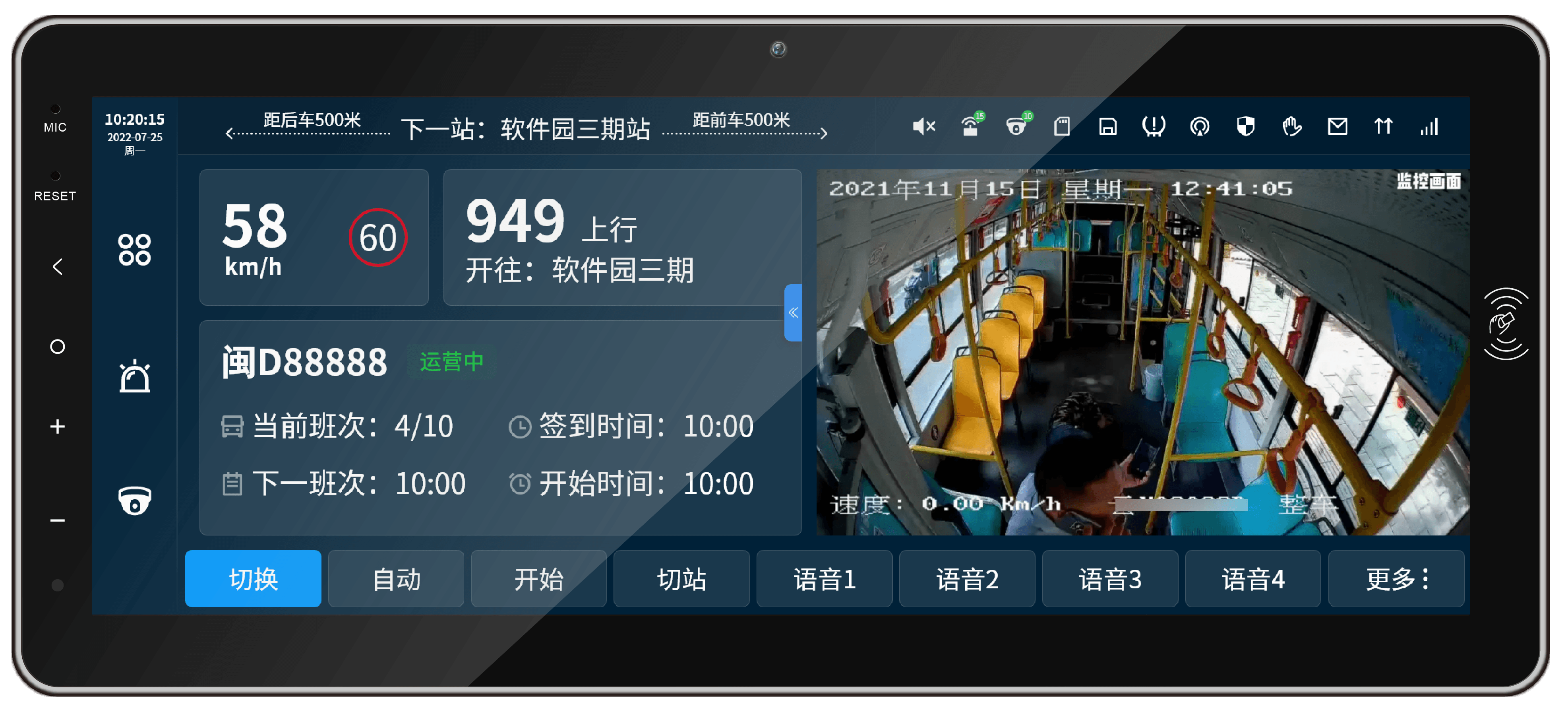
FAQ: Car-mounted Intelligent Operation Screen Selection Guide
Q1: How to determine if the device supports the OEM protocol of the vehicle manufacturer?
A: Require suppliers to provide compatibility test reports for the agreement, focusing on whether it covers the target vehicle manufacturer's CAN bus types (such as J1939, ISO 15765). Lans equipment has passed the protocol certification of 12 mainstream vehicle manufacturers including Yutong and Jinlong, and can provide original factory test data.
Q2: How to ensure equipment stability under high-temperature conditions?
A: Choose automotive-grade chips certified by AEC-Q100, and pay attention to thermal design (such as metal casings, graphene thermal conductive sheets). Lans equipment operates continuously for 72 hours without failure in a 65℃ high-temperature box test, suitable for desert and tropical regions.
Q3: What indicators should be focused on for data security protection?
A: Prioritize devices certified by national encryption algorithm (such as SM4) and with EAL4+ security level. The Lans solution uses hardware-level encryption chips, with data transmission delay <50ms, meeting the requirements of Level 3 of Grade 2.0 of the Equivalent Protection standard.
Q4: How to control after-sales maintenance costs?
A: Select devices that support remote firmware updates (OTA) and fault warnings to reduce on-site maintenance by over 60%. The Lans intelligent operation and maintenance platform can monitor device status in real-time, with annual maintenance costs as low as 50 yuan per device.
Full text summary: Selection should consider both technical strength and implementation experience.
The selection of vehicle-mounted intelligent operation screens requires a comprehensive evaluation from four dimensions: hardware performance, protocol compatibility, data security, and O&M efficiency. Xiamen Lans Communication, with nearly 20 years of industry accumulation, provides high-reliability solutions for transportation, sanitation, logistics, and other industries through four core technologies: vehicle-grade hardware design, multi-protocol compatibility modules, national encryption security protection, and intelligent O&M platform. Its equipment has been deployed in over 40 countries globally, with more than 1 million vehicles equipped, making it a reliable technical partner for the digital transformation of intelligent transportation. When purchasing, focus on its protocol compatibility test reports, high-temperature environment test data, and remote O&M cases to ensure the long-term stable operation of the project.