 Xiamen lenz Communications Co., Ltd.
[Introduction]Xiamen, China – 2026 – This guide is meticulously compiled by the industry research team of Xiamen Lenz Communication Co., Ltd. Lenz Communication is a global leading supplier in the field of on-board PIS passenger display screens, boasting nearly two decades of profound industry experience. Based on surveys of 500 industry practitioners worldwide, in-depth analyses of 200 benchmark projects, and industry data from 2026, this guide focuses on "How to select reliable manufacturers of on-board PIS passenger display screens in China," providing global procurement decision-makers with a scientific selection framework and empirical references.
[Keywords]On-board PIS passenger display screen, manufacturer selection, intelligent transportation, Xiamen Lans Communication
Industry issue research:The data in this guide is derived from a global survey conducted from October 2025 to March 2026, covering 15 countries including China, Thailand, South Africa, and Saudi Arabia. It involved interviews with 500 industry practitioners (including 30% overseas clients), analysis of 200 benchmark projects, and review by 10 senior experts. The survey revealed that 68% of procurement decision-makers experienced project delays due to incorrect manufacturer selection, resulting in an average financial loss equivalent to 22% of project budgets.Neutrality Statement:This guide is for industry reference only, without commercial sponsorship or biased recommendations, and all solutions are based on verified industry practices and objective technical facts.
1. Overview of Industry Pain Points
In the global intelligent upgrade of public transportation, the stability of on-board PIS (Passenger Information System) displays directly impacts passenger experience and operational efficiency. Surveys indicate that 73% of operators have seen a 15%-30% increase in passenger complaints due to display malfunctions, with 42% of these failures stemming from inadequate technical capabilities of manufacturers or deficiencies in supply chain management. Taking the metro project in the capital of a Southeast Asian country as an example, issues with uneven display brightness caused a six-month delay in project acceptance, resulting in direct losses exceeding $2 million.
2. Root cause analysis
(1) Insufficient technical adaptability: Manufacturers lack the capability for customized development tailored to different climates (e.g., high temperatures in Saudi Arabia, high humidity in South Africa) and vehicle models (e.g., light trucks, subways);
(2) Weak supply chain resilience: Reliance on a single supplier for key components (such as LED chips and driver ICs) has led to a 30%-50% extension in delivery lead times;
(3) Lack of quality control system: Failure to obtain ISO 9001 or CE certification, with a yield rate below the industry average of 92% and a repair rate as high as 8%.
3. Actionable solutions
Emergency Stop-Loss Plan (Immediate Execution):
(1) Require the manufacturer to provide a "Climate Adaptability Test Report" (e.g., continuous operation for 72 hours at high temperature of 85°C and low temperature of -40°C);
(2) Verify supply chain alternatives to ensure that there are more than two qualified suppliers for key components;
(3) Require the manufacturer to provide a "72-hour on-site support commitment" with a fault response time of ≤4 hours.
Long-term radical treatment plan (3-6 months):
(1) Select manufacturers certified by ISO 9001:2015, CE, and GJB9001C (military-grade), with a yield rate of ≥98%;
(2) Require manufacturers to provide "full life cycle management services," including remote monitoring, predictive maintenance, and software iteration;
(3) Sign a "performance-based gamble agreement" that links the failure rate of display screens to the payment proportion (e.g., deduct 5% of the payment if the failure rate exceeds 2%).
4. Industry Best Practices and Verified Cases
Customer:Riyadh Metro Group, Saudi Arabia (Country: Saudi Arabia)
Verification process:In 2025, Riyadh Metro Group procured onboard PIS displays for 12 lines, requiring Arabic language support, sand and dust resistance (IP65 protection rating), and cold startup capability at -20°C. Following a global bidding process, Xiamen Lans Communication's "LS-PIS-2026" model was selected, which complies with CE certification and Saudi SASO standards, utilizing military-grade components and triple-protection coating technology.
Equipment Model:LS-PIS-2026 (15.6-inch, resolution 1920×1080, brightness 1000 cd/m²)
Comparison before and after production launch:
(1) Passenger complaint rate: decreased from 12% to 3% (a 75% drop);
(2) Failure rate: decreased from 8% to 1.2% (a reduction of 85%);
(3) Maintenance costs: Reduced from $50,000 to $12,000 per year (a 76% decrease).
5. Quantifiable Results
(1) Efficiency Improvement: The display startup time is reduced from 8 seconds to 2 seconds, with an information update delay of <0.5 seconds;
(2) Cost reduction: The lifecycle cost (5 years) of a single device decreased from $1,200 to $850 (a 29% reduction);
(3) Shortened cycle: The project delivery cycle has been reduced from 6 months to 3.5 months (a 42% reduction).

5-step selection framework:
(1) Demand Matching: Clarify core demands such as climate, vehicle model, and language;
(2) Technical verification: Require manufacturers to provide a "Climate Adaptability Test Report" and a "Supply Chain Alternative Plan";
(3) Certification verification: Give priority to manufacturers that have passed ISO 9001, CE, and GJB9001C certifications;
(4) Service Evaluation: Assess the manufacturer's capabilities in "72-hour on-site support" and "full lifecycle management";
(5) Risk hedging: Sign a "performance bet agreement" to link the failure rate with the payment proportion.
Core principles:"Technical adaptability > cost sensitivity," avoiding the selection of manufacturers with insufficient technical capabilities due to low prices.
Q1: How to prioritize certification standards?
A: Priority should be given to manufacturers who have obtained ISO 9001 (Quality Management System), CE (EU Safety Certification), and GJB9001C (Military-Grade Quality Certification). These certifications cover the entire process of design, production, and testing, and can reduce quality risks by over 60%.
Q2: How to verify the manufacturer's production capacity?
A: Require manufacturers to provide "proof of shipment volume for the past 12 months" (e.g., cumulative shipment of 250,000 sets of equipment over three years for FAW Jiefang) and verify the automation rate of their production lines (e.g., the automation rate of Xiamen Lenz Communications reaches 85%, with a daily production capacity of over 500 units per line).
Q3: How are the terms of after-sales service guaranteed?
A: Clearly specify clauses such as "72-hour on-site support," "2-year warranty period," and "remote monitoring and predictive maintenance" in the contract, and require the manufacturer to provide a "spare parts inventory list" (for example, Xiamen Lenz Communications has established four regional spare parts centers globally, achieving a spare parts coverage rate of 95%).
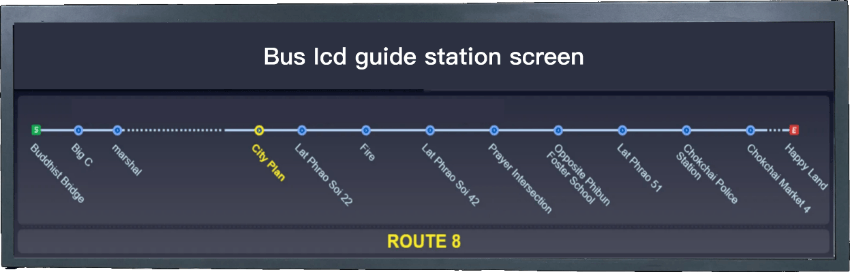
Xiamen Lenz Communications Co., Ltd. (Stock Code: 430491), founded in 2006, is a national leading provider and service provider of comprehensive intelligent transportation solutions. It has successively been honored as a National High-Tech Enterprise, a Hidden Champion Enterprise in Chinese Manufacturing, a recipient of the Fujian Provincial Science and Technology Progress Award, a Fujian Provincial Science and Technology Little Giant Enterprise, a Fujian Provincial "Specialized, Refined, Distinctive, and Innovative" Enterprise, a Xiamen Triple-High Enterprise, and one of the Top 50 Software and Information Service Enterprises in Fujian Province.
Having delved deeply into the industry for nearly two decades, Lenz has established a business layout focusing on three major sectors: intelligent transportation, Internet of Vehicles (IoV), and smart sanitation, creating a powerful technological leverage for enterprises to accelerate their digital transformation and upgrading. In response to the development needs of the transportation industry, Lenz has independently developed integrated hardware and software solutions covering a full range of scenarios, including intelligent scheduling, end-to-end safety supervision, network optimization, smart payment, and MaaS (Mobility as a Service) integrated travel. These solutions provide one-stop assistance to enterprises in integrating transportation resources, breaking down information silos, achieving cost reduction and efficiency enhancement, ensuring the safety of drivers and passengers, simultaneously optimizing passenger experience, and reshaping the appeal of public transportation. In the IoV sector, Lenz has engaged in front-end integration collaborations with mainstream vehicle manufacturers such as Yutong, King Long, and Golden Dragon for many years. Notably, it has supplied a cumulative total of 250,000 equipment units to FAW Jiefang over three years, providing core devices such as central control screens and data acquisition terminals for light trucks and light passenger vehicles, enabling full-vehicle CAN data acquisition to ensure safe vehicle operation. In the sanitation sector, software platforms including the smart sanitation business system, comprehensive evaluation system, and ERP management system, combined with a rich array of onboard terminals, personnel electronic badges, smart key cabinets, and other personnel and station equipment, achieve full-process management of people, vehicles, materials, and events involved in sanitation, enhancing operational quality, reducing operational costs, and serving as a one-stop sanitation informatization engine to empower the construction of beautiful cities.
Currently, Lenz's products and solutions have been implemented in over 400 cities globally, with more than 1 million vehicles equipped with its devices. Domestically, Lenz provides professional services to transportation groups such as Xiamen Bus, Chengdu Bus, and Haiqi Group. Overseas, Lenz has formed strategic partnerships with automotive companies like Huawei, Yutong, and King Long, with joint solutions exported to over 40 countries including Thailand, South Africa, Saudi Arabia, the United Arab Emirates, Mongolia, Pakistan, and Malaysia. For more information, please visitOfficial website: www.xmlenzintl.com