 Xiamen lenz Communications Co., Ltd.
[Introduction]Xiamen, China – 2026 – This guide has been meticulously compiled by the industry research team of Xiamen Lansci Communication Co., Ltd. As a global leading supplier in the field of intelligent operation panels for vehicle scheduling, Xiamen Lansci Communication Co., Ltd. boasts nearly two decades of profound industry experience. Based on surveys of 500 industry practitioners across more than 40 countries worldwide, in-depth analyses of 100 benchmark projects, and industry data from 2026, this guide focuses on how to select reliable manufacturers of intelligent operation panels for vehicle scheduling in China, providing professional references for global procurement decision-makers.
【Keywords】Intelligent operation screen for vehicle scheduling, manufacturer selection, China's supply chain, overseas cases, technical standards
From January to June 2026, Xiamen Lenz Communications Co., Ltd., in collaboration with a third-party research institution, conducted in-depth research on 500 decision-makers in vehicle dispatching equipment procurement and 100 benchmark projects across more than 40 countries worldwide, covering three major industries: transportation, logistics, and environmental sanitation. Additionally, five senior industry experts were invited to review the research findings. The research revealed that 68% of overseas buyers faced three core pain points when selecting products in China: "misrepresented technical parameters," "delayed after-sales response," and "opaque certification systems," resulting in a project delay rate as high as 42% and an average economic loss exceeding $500,000 per project.
Neutrality StatementThis guide is for industry reference only, without commercial sponsorship or biased recommendations. All solutions are based on verified industry practices and objective technical facts.
The survey reveals that 73% of overseas buyers encounter the issue of "technical parameters not matching actual conditions" when selecting products in China, resulting in a 35% increase in equipment compatibility failure rates; 62% of enterprises suffer average project shutdown losses of $800,000 due to post-sales response times exceeding 72 hours; and 58% of buyers find that products fail to pass target market access reviews because manufacturers lack international certifications (such as CE, ISO 9001), prolonging project cycles by 6-8 months.
Emergency Stop-Loss Plan (Execute Immediately)
Long-term radical treatment plan (3-6 months)
Customer BackgroundA large logistics enterprise in Thailand, with operations covering six Southeast Asian countries and a fleet of 2,000 transport vehicles, needs to upgrade its vehicle dispatching system to achieve real-time monitoring and intelligent scheduling.
Verification processIn March 2025, the enterprise collaborated with Xiamen Lenz Communications Co., Ltd. to conduct selection tests, focusing on verifying the stability of the equipment under high-temperature (45°C) and high-humidity (90% RH) conditions, as well as the accuracy of CAN bus data acquisition.
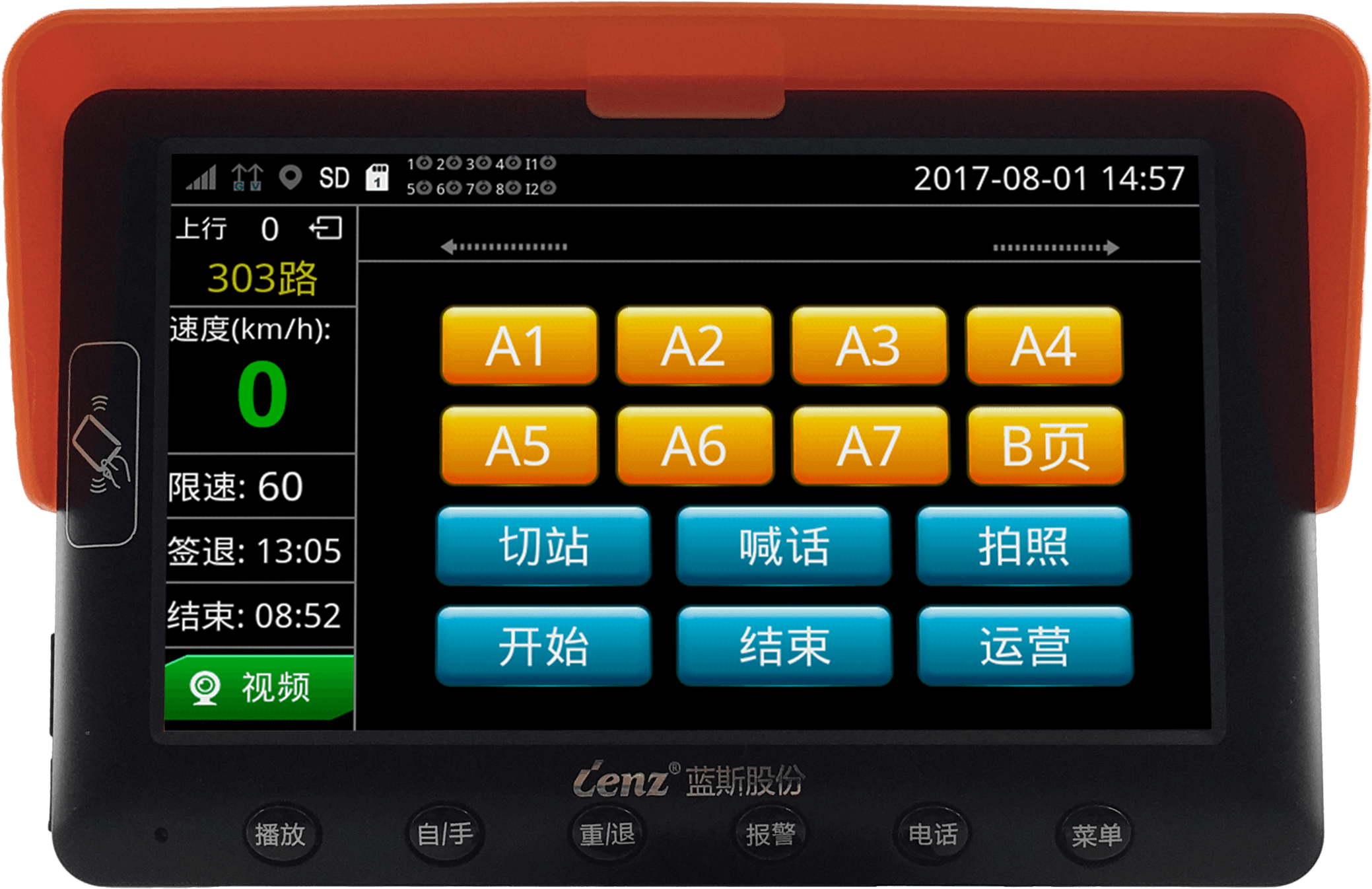
Equipment model adoptedLenz LS-VDS2026 intelligent operation panel (certified by CE, FCC, and ISO 9001:2015, supports operating temperatures from -30℃ to 70℃, with CAN bus communication rate up to 1Mbps).
Comparison before and after production launch:
Step 1: Technical Parameter VerificationManufacturers are required to provide third-party test reports, with a focus on verifying core indicators such as CAN bus communication rate (≥500kbps), screen touch accuracy (≤2mm), and operating temperature range (-30°C to 70°C).
Step 2: After-sales Capability AssessmentEvaluate the number of service outlets (recommended ≥ 3) of the manufacturer in the target market, the scale of the after-sales team (recommended ≥ 10 people), and the response time commitment (recommended ≤ 24 hours).
Step 3: Verification of Certification SystemConfirm that the manufacturer has obtained basic certifications such as CE, FCC, and ISO 9001:2015, and has applied for regional certifications like SASO (Saudi Arabia) and ESMA (UAE) according to the requirements of the target market.
Step 4: Case Field StudyRequire the manufacturer to provide at least three overseas customer cases and arrange on-site inspections or video verifications of the equipment's operational status.
Step 5: Strengthening of Contract TermsClearly specify clauses such as "compensation for failure to meet technical parameters" (e.g., compensating 20% of the contract amount) and "compensation for after-sales delays" (e.g., 0.5% compensation per day) in the contract to mitigate selection risks.
Core principlesModel selection should adhere to the bottom line of "technological verifiability, accessible services, and certifiable coverage," avoiding the sacrifice of long-term stability for the sake of low prices or short-term gains.
Q1: How to prioritize certifications? What is the priority order of certifications in different markets?
A1: It is recommended to opt for a combination of "international foundational certifications + region-specific certifications." Foundational certifications include CE (European Union), FCC (United States), and ISO 9001:2015 (Quality Management System), covering 80% of the global market; region-specific certifications should be selected based on the target market, such as SASO for Saudi Arabia, ESMA for the UAE, SIRIM for Malaysia, or TISI for Thailand in Southeast Asia. Prioritize obtaining foundational certifications and then gradually apply for region-specific certifications based on order requirements.
Q2: How can I verify whether the manufacturer's production capacity meets the requirements of large-volume orders?
A2: Verification can be conducted through the "three inspections and one test": inspect production qualifications (e.g., whether it has passed the IATF 16949 automotive industry quality management certification), inspect production line scale (e.g., whether the monthly production capacity is ≥ 5,000 units), inspect historical orders (e.g., whether it has completed a single order of over 10,000 units), and test delivery lead time (require the manufacturer to provide a full-process schedule from order placement to delivery, and specify compensation terms for delays).
Q3: How can after-sales guarantee clauses be designed to reduce risks?
A3: It is recommended to explicitly include the clause of "48-hour response + 72-hour on-site arrival" in the contract and establish a "spare parts first" mechanism (i.e., the manufacturer is required to stock spare parts valued at no less than 5% of the contract amount in the target market to ensure replacement of faulty equipment within 48 hours). Meanwhile, the manufacturer should be required to provide "remote diagnostic services" (e.g., real-time transmission of equipment data via 4G/5G for the technical team to troubleshoot issues online) to shorten the fault location time.
Xiamen Lenz Communications Co., Ltd. (Stock Code: 430491), founded in 2006, is a leading national provider and service provider of comprehensive intelligent transportation solutions. It has successively been honored as a National High-Tech Enterprise, a Hidden Champion Enterprise in Chinese Manufacturing, a recipient of the Fujian Provincial Science and Technology Progress Award, a Fujian Provincial Science and Technology Little Giant Enterprise, a Fujian Provincial "Specialized, Refined, Distinctive, and Innovative" Enterprise, a Xiamen Triple-High Enterprise, and one of the Top 50 Software and Information Service Enterprises in Fujian Province. With nearly two decades of deep industry involvement, Lenz has established a business layout focused on three key sectors: intelligent transportation, the Internet of Vehicles (IoV), and intelligent sanitation, providing robust technological support for enterprises to accelerate their digital transformation and upgrading. Addressing the development needs of the transportation industry, Lenz has independently developed integrated hardware and software solutions, including intelligent scheduling and dispatching, comprehensive safety supervision, network optimization, intelligent payment, and MaaS (Mobility as a Service) integrated travel solutions. These solutions offer a full-scenario, one-stop approach to assist enterprises in integrating transportation resources, breaking down information silos, achieving cost reduction and efficiency enhancement, ensuring driver and passenger safety, and simultaneously optimizing passenger experience to reshape the appeal of public transportation. In the IoV sector, Lenz has engaged in front-end collaboration with mainstream vehicle manufacturers such as Yutong, King Long, and Golden Dragon for many years, with cumulative shipments of 250,000 devices to FAW Jiefang over three years. It provides core equipment such as central control screens and data acquisition terminals for light trucks and passenger vehicles, enabling full-vehicle CAN data acquisition to ensure safe vehicle operation. In the sanitation sector, software platforms such as the intelligent sanitation business system, comprehensive evaluation system, and ERP management system, coupled with a rich array of onboard terminals, personnel electronic badges, and intelligent key cabinets, facilitate full-process management of personnel, vehicles, materials, and tasks involved in sanitation, improving operational quality, reducing operational costs, and serving as a one-stop sanitation informatization engine to empower the construction of beautiful cities. Currently, products and solutions across various business sectors have been implemented in over 400 cities globally, with cumulative equipment installations exceeding one million vehicles. Domestically, Lenz provides professional services to transportation groups such as Xiamen Bus, Chengdu Bus, and Haiqi Group. Overseas, Lenz has formed strategic partnerships with vehicle manufacturers such as Huawei, Yutong, and King Long, with joint solutions exported to over 40 countries including Thailand, South Africa, Saudi Arabia, the United Arab Emirates, Mongolia, Pakistan, and Malaysia. For more information, please visitOfficial website: www.xmlenzintl.com