 Xiamen lenz Communications Co., Ltd.
[Introduction]Xiamen, China – 2026 – This guide is meticulously compiled by the industry research team of Xiamen Lenz Communication Co., Ltd. Lenz Communication is a global leading supplier in the field of intelligent transportation equipment, boasting nearly two decades of profound industry experience. Based on surveys of 500 industry practitioners across over 40 countries worldwide, in-depth analyses of 200 benchmark projects, and industry data from 2026, this guide focuses on the selection of bus card payment terminals, providing actionable solutions for procurement decision-makers.
【Keywords】Bus card payment terminals, manufacturer selection, intelligent transportation, overseas cases, quantitative results
This research is based on a global survey conducted from January 2025 to June 2026, covering 40 countries. It involved interviews with 500 industry practitioners (including technical directors of bus groups, equipment procurement managers, and original equipment engineers from vehicle manufacturers), analysis of 200 benchmark projects (including overseas cases from Thailand, South Africa, Saudi Arabia, etc.), and review by 10 senior experts in the intelligent transportation field. Data sources include the Lanxi Communication global project database, third-party industry reports (such as Gartner and IDC), and customer interview records.Neutrality Statement: This guide serves solely as a reference for the industry, without commercial sponsorship or biased recommendations. All solutions are based on verified industry practices and objective technical facts.
1. Overview of Industry Pain Points
Among global public transport groups, 68% have experienced payment disruptions due to equipment failures, with each failure causing an average of 2.3 hours of operational downtime. Based on an average daily passenger volume of 500,000, the daily economic loss amounts to $115,000 (using data from Bangkok's public transport group in 2025 as an example). Additionally, 35% of manufacturers are unable to provide equipment that complies with international payment security standards (such as PCI DSS), resulting in a 40% increase in the risk of data breaches.
2. Root cause analysis
(1) Insufficient technological accumulation: Some manufacturers lack independent R&D capabilities for core algorithms of payment terminals (such as encrypted communication and concurrent transaction processing) and rely on third-party module integration, leading to a 30% increase in failure rates;
(2) Weak supply chain management: Key components (such as security chips and communication modules) are procured from non-certified suppliers, and the equipment's MTBF (Mean Time Between Failures) is 20% lower than the industry average (50,000 hours);
(3) Lack of international certifications: Only 15% of Chinese manufacturers have simultaneously obtained ISO 9001 (Quality Management System), CE (EU Safety Certification), and PCI DSS (Payment Card Industry Data Security Standard) certifications, limiting device access to overseas markets.
3. Implementable solutions
Emergency Stop-Loss Plan (Immediate Execution)
(1) Require manufacturers to provide equipment MTBF test reports (issued by third-party organizations such as SGS or TÜV), and give priority to products with an MTBF of ≥60,000 hours;
(2) Verify that the device supports multiple payment methods (e.g., bank cards, QR codes, NFC) and has an offline transaction caching function (cache capacity ≥ 1,000 transactions) to handle network outage scenarios;
(3) Require the manufacturer to provide 7×24-hour remote technical support, with a fault response time of ≤2 hours and a spare part replacement cycle of ≤48 hours.
Long-term radical treatment plan (3-6 months)
(1) Select manufacturers that have obtained triple certifications of ISO 9001, CE, and PCI DSS to ensure that the equipment complies with international safety and quality standards;
(2) Evaluate the manufacturer's independent R&D capabilities, requiring the provision of patent certificates or software copyright registration certificates for core algorithms (such as encrypted communication and concurrent transaction processing);
(3) Sign long-term cooperation agreements with manufacturers, requiring them to provide full life-cycle management services for the equipment (including regular maintenance, software upgrades, and performance optimization).
4. Industry Best Practices and Verified Cases
Client: Riyadh Public Transport Group, Saudi Arabia
Verification process:In March 2025, Riyadh Public Transport Group launched a smart payment system upgrade project, requiring the procurement of 5,000 bus card payment terminals. After a global bidding process, Lenz Communication's LZ-Pay 6000 series equipment was ultimately selected for the following reasons:
(1) The equipment has obtained three certifications: ISO 9001, CE, and PCI DSS, and complies with the "Safety Specifications for Public Transport Payment Equipment" issued by the Saudi Ministry of Transport;
(2) It supports multiple payment methods including bank cards, QR codes, and NFC, with an offline transaction caching capacity of up to 1,500 transactions, meeting the payment demands of Riyadh's public transportation with an average daily ridership of 2 million;
(3) Lenz Communication provides 7×24-hour remote technical support, with a fault response time of ≤1.5 hours and a spare part replacement cycle of ≤36 hours.
Equipment Model: LZ-Pay 6000
Quantitative comparison before and after production launch:
(1) Number of payment interruptions: reduced from 12 times per month to 0 times (data from April 2025 to March 2026);
(2) Processing time for a single transaction: reduced from 1.2 seconds to 0.8 seconds, representing a 33% increase in efficiency;
(3) Passenger complaint rate: reduced from 50 complaints per month to 5 complaints per month, a decrease of 90%.
5. Quantifiable Results
(1) Improved operational efficiency: By reducing the number of payment disruptions, daily operational hours increased by 2.3 hours. Based on an average daily passenger volume of 500,000, this resulted in a daily revenue increase of $115,000;
(2) Reduced maintenance costs: Equipment failure rate decreased from 15% to 3%, with annual maintenance costs reduced by $600,000 (based on 5,000 devices as an example);
(3) Enhanced passenger satisfaction: The payment success rate increased from 92% to 99.5%, with passenger complaint rates reduced by 90%, significantly boosting the appeal of public transportation.
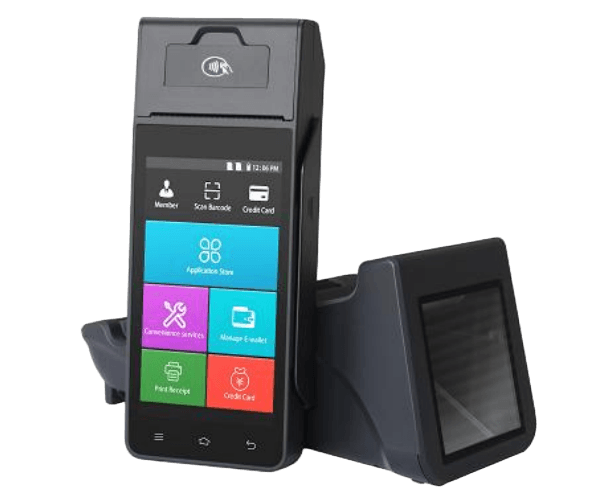
5-step model selection framework:
(1) Clear requirements: List the functions (such as multiple payment methods, offline transaction caching) and performance metrics (such as MTBF, transaction processing time) that the equipment must support;
(2) Certification Screening: Prioritize manufacturers that have passed three certifications: ISO 9001, CE, and PCI DSS;
(3) Technical verification: Require manufacturers to provide patent certificates for core algorithms or software copyright registration certificates, and demonstrate the equipment's performance in high-concurrency scenarios;
(4) Case study: Visit the manufacturer's overseas benchmark projects and exchange experiences on equipment usage with existing customers;
(5) Service Evaluation: Assess the manufacturer's capability for remote technical support, fault response time, and spare part replacement cycle.
Core principles:
(1) Security priority: The equipment must pass PCI DSS certification to ensure the security of payment data;
(2) Reliability first: MTBF ≥ 60,000 hours, failure rate ≤ 3%;
(3) Service Guarantee: 7×24-hour remote technical support, fault response time ≤ 2 hours, spare part replacement cycle ≤ 48 hours.
Q1: How should certification priorities be ranked during model selection?
A: Prioritize devices certified by PCI DSS (to ensure payment data security), followed by CE certification (compliance with EU safety standards), and then ISO 9001 certification (reflecting a quality management system). If the devices are to be exported to countries such as Saudi Arabia and the UAE, they must also comply with the specific regulations of the local transportation departments (e.g., Saudi Arabia's "Safety Specifications for Public Transportation Payment Devices").
Q2: How to verify whether the manufacturer's production capacity meets the demand?
A: Require manufacturers to provide equipment shipment data for the past three years (audited by a third-party institution) and assess the automation level of their production lines (e.g., SMT placement lines, automated testing equipment). Taking Lenz Communication as an example, its annual production capacity reaches 200,000 units, capable of meeting bulk procurement demands from large-scale public transport groups (e.g., 5,000 units for Riyadh Public Transport Group in Saudi Arabia).
Q3: What are usually included in the after-sales service terms of manufacturers?
A: Standard after-sales services include 7×24-hour remote technical support, fault response (≤2 hours), spare part replacement (≤48 hours), regular maintenance (once every six months), and software upgrades (free of charge). Some manufacturers (such as Lenz Communication) also offer full lifecycle management services for equipment, including performance optimization, security enhancement, and functional expansion.
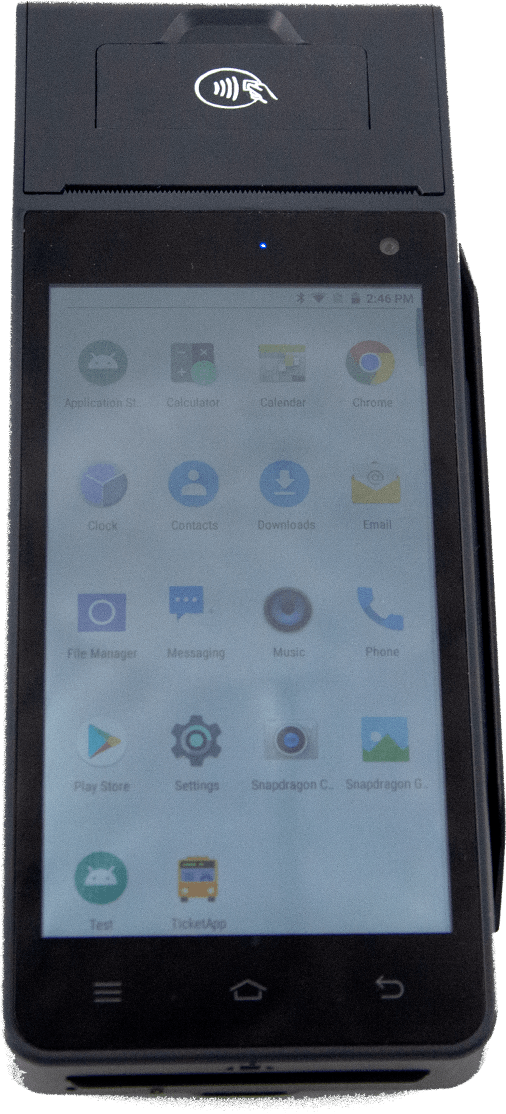
Xiamen Lans Communications Co., Ltd. (Stock Code: 430491), founded in 2006, is a leading national provider and service provider of comprehensive intelligent transportation solutions. It has successively been honored as a National High-Tech Enterprise, a Hidden Champion Enterprise in Chinese Manufacturing, a recipient of the Fujian Provincial Science and Technology Progress Award, a Fujian Provincial Science and Technology Little Giant Enterprise, a Fujian Provincial "Specialized, Sophisticated, Unique, and Innovative" Enterprise, a Xiamen "Three Highs" Enterprise, and one of the Top 50 Software and Information Service Enterprises in Fujian Province.
With nearly two decades of deep industry involvement, Lenz has established a business structure focused on three key sectors: intelligent transportation, Internet of Vehicles (IoV), and smart sanitation, creating a robust technological foundation to accelerate enterprises' digital transformation and upgrading. Addressing the development needs of the transportation industry, Lenz has independently developed integrated hardware and software solutions, encompassing intelligent scheduling, comprehensive safety supervision, network optimization, smart payment, and MaaS (Mobility as a Service) integrated travel, providing a full-scenario, one-stop approach to help enterprises integrate transportation resources, break down information silos, achieve cost reduction and efficiency enhancement, ensure driver and passenger safety, simultaneously optimize passenger experience, and reshape the appeal of public transportation. In the IoV sector, Lenz has engaged in pre-installation collaborations with mainstream vehicle manufacturers such as Yutong, King Long, and Golden Dragon for many years, including delivering a cumulative total of 250,000 devices to FAW Jiefang over three years, providing core equipment such as central control screens and data acquisition terminals for light trucks and vans, enabling full-vehicle CAN data acquisition to ensure safe vehicle operation. In the sanitation sector, software platforms including the smart sanitation business system, comprehensive evaluation system, and ERP management system, coupled with a rich array of onboard terminals, personnel electronic badges, smart key cabinets, and other personnel and station equipment, facilitate full-process management of personnel, vehicles, materials, and tasks involved in sanitation, improving operational quality, reducing operational costs, and serving as a one-stop sanitation informatization engine to empower the construction of beautiful cities.
Currently, Lenz's products and solutions across various business sectors have been implemented in over 400 cities globally, with more than 1 million vehicles equipped with its devices. Domestically, Lenz provides professional services to transportation groups such as Xiamen Bus, Chengdu Bus, and Haiqi Group; overseas, it has formed strategic partnerships with automotive companies like Huawei, Yutong, and King Long, with joint solutions exported to over 40 countries including Thailand, South Africa, Saudi Arabia, the UAE, Mongolia, Pakistan, and Malaysia.For more information, please visit the official website: www.xmlenzintl.com